

Russian Defense Ministry : Andrei Belousov : Ministers of Defence of the SCO member countries
https://t.me/mod_russia_en/26634
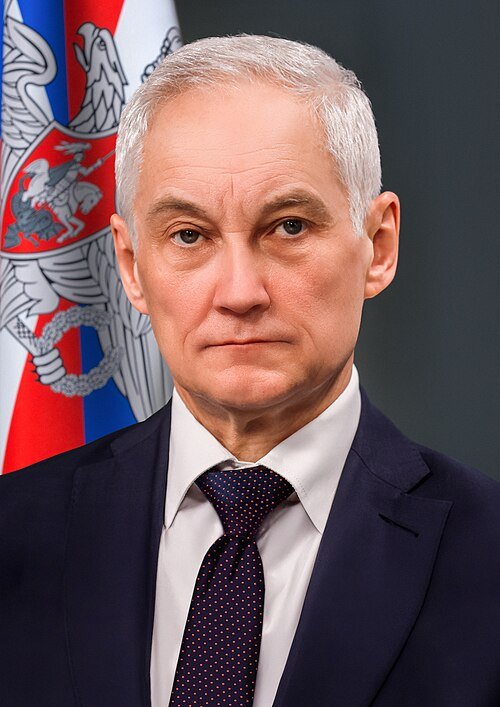
Russian Defence Minister Andrei Belousov outlines main hotbeds of regional tension in SCO area
‘In order to maintain global dominance, the United States and the collective West are destroying the foundations of the global security architecture. Their aggressive course exacerbates geopolitical divisions, undermines strategic stability and key peace agreements,’ said Andrei Belousov.
According to the Minister of Defence of the Russian Federation, there has been a ‘significant increase in the conflict potential’ in the world.
‘At the same time, the role of international institutions has been decreased,’ he noted.
‘We advocate for diplomatic way to resolve the conflict. We welcome the efforts of the SCO countries, including Pakistan, to bring it to an end. This is an important step towards restoring stability in the Middle East,’ the Russian Defence Minister said.
Noting that the United States and Israel carried out an attack against one of the SCO member states, the Islamic Republic of Iran, he stressed that ‘the Russian Federation strongly condemned this unprovoked aggression at all levels’.
‘We reiterate our condolences on the irrecoverable loss of Iranian statesmen and military leaders, civilians, including children killed during U.S. and Israeli attacks,’ said Andrei Belousov.
He also stated that Russia considers the striving of extra-regional states to ensure military presence and solve logistical issues in Central Asia unacceptable, and is seriously concerned about the situation in Syria, Lebanon, and Afghanistan.
‘We are closely monitoring the attempts of extra-regional states to ensure military presence and logistical missions in Central Asia. We consider this unacceptable,’ said Andrei Belousov.
According to him, ‘the situation in Syria, Lebanon, and the humanitarian catastrophe in the Gaza Strip are of great concern’.
‘There are risks of militants entering neighbouring countries from crisis zones. Including in the SCO space,’ the Russian Defence Minister noted.
‘The unstable situation is still in Afghanistan. It remains the main source of transnational crime and terrorist threat,’ said Andrei Belousov.
He also stressed that ‘the activity of the United States in the Asia-Pacific region continues to have a negative impact on stability’.
‘They are seeking to transform the regional security system into an American-centric one by strengthening Washington-controlled military and political structures. Such actions provoke tension, undermine regional stability, increase the risks of armed conflicts,’ the Russian Defence Minister noted.
‘The activity of the United States of America in supporting the Kiev regime has been reduced amid an increase in aid from European countries to Ukraine. The EU is increasingly drawn into the conflict, financing it and supplying weapons,’ the Russian Defence Minister said.
At the same time, he noted that the production and logistical supply chains of Western weapons to Kiev are closely monitored and deliberately made public.
In particular, Andrei Belousov recalled that on 15 April, the media published a list of enterprises in Europe that produce and supply strike UAVs and components to Ukraine to launch strikes on Russian territory.
‘Such actions contribute to a sharp escalation of the military and political situation on the entire European continent and could lead to unpredictable consequences,’ the Russian Defence Minister stated.
Andrei Belousov outlined promising areas for the Organisation countries cooperation.
He also said, that Russia had invited SCO countries to take part in the Tsentr 2026 strategic command post exercise.
‘All SCO countries were invited to the event. We are counting on the participation of military contingents and observers,’ said Andrei Belousov.
The Russian Defence Minister reminded those present that from 28 September to 3 October, according to the plans of the Russian Armed Forces, the Tsentr 2026 strategic command post exercise is held.
At the same time, he noted that the preparation of these strategic manoeuvres takes into account ‘unique experience gained during the special military operation and special features of combat operations in modern armed conflicts’.
The Russian Defence Minister also stated the need to increase military cooperation within the framework of the SCO.
‘As part of our meeting, we suggest that we focus on the following tasks. At first, to increase military cooperation in the SCO. To identify threats in a timely manner and develop joint response measures. At second, pay attention to joint operational and combat training to ensure military security,’ said Andrei Belousov.
To this end, the Minister of Defence of the Russian Federation proposed, in particular, to continue conducting the Peace Mission joint anti-terrorist command post exercises, and to expand their scope, topics and information coverage.
Andrei Belousov identified the further strengthening of the SCO interaction with other international security structures as another task.
‘First of all, it concerns CSTO and CIS,’ the Russian Defence Minister noted.
He stressed that ‘the current situation clearly demonstrates the need to develop common approaches to strengthening peace and stability’.
‘The conflicts provoked by the West have led to the total collapse of the Euro-Atlantic model, the mechanisms of which have become tools of geopolitical pressure,’ the Russian Defence Minister noted.
In this regard, he reminded those present that Russian President Vladimir Putin’s initiative to create an equal and indivisible Eurasian security architecture is designed to overcome existing challenges.
‘The focus is on reducing the risks of escalating tensions into large-scale conflicts and on stabilising the military and political situation. We believe that the SCO is an important element in achieving this goal,’ the Russian Defence Minister noted.
He expressed confidence that ‘the results of today’s work will contribute to increasing cooperation through the defence agencies of the SCO countries, strengthening the authority of the Organisation in the international arena, and ensuring regional security’.