

Russia Security Council Secretary Sergey Shoigu: NATO still remains a key threat to Russia’s national security
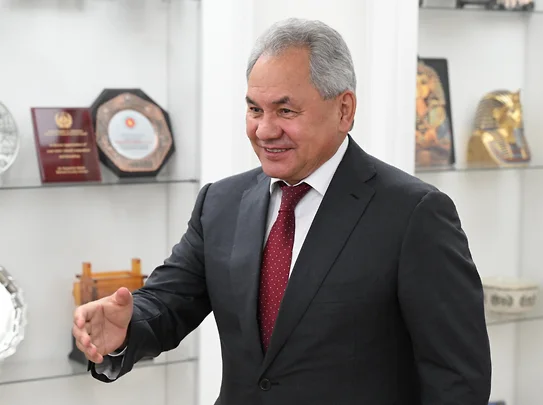
The importance of this interview lies in the fact that Mr. Shoigu brings real numbers to the table regarding NATO’s military strength. He also outlines without a shadow of doubt that the US has taken over NATO.
According to official data, the alliance’s armed forces consist of over 4 million personnel, and they have more than 50,000 tanks and armored vehicles, more than 7,000 combat aircraft, and over 750 warships. This significant increase in the defense budget will only strengthen this potential. In addition, we should not forget that the alliance countries have a fleet of about 350 military and civilian satellites, which are already being actively used against Russia in the Ukrainian conflict. This does not include the thousands of Starlink satellites.
This is not peanuts but quality is not commented upon. It is a mistake to underestimate US power and ambitions.
—
Russian Security Council Secretary Sergei Shoigu on the United States, Europe, and NATO (Kommersant and translated with Yandex).
European NATO member states intend to continue purchasing weapons for Ukraine from the United States, which seeks to reduce its own spending on supporting Kyiv. At the same time, the European allies of the United States intend to begin sharply increasing their own defense budgets. The Secretary of the Russian Security Council Sergei Shoigu spoke about the consequences of these decisions for Russia and the alliance itself in an interview with Kommersant’s special correspondent Elena Chernenko.
— On Monday, US President Donald Trump commented on the situation in Ukraine and announced that he had reached an agreement with the EU to supply weapons to Kiev. He emphasized that all the costs would be borne by Europe. Can we say that Washington and Brussels have switched to a new model of supporting the Ukrainian government?
— This approach has long been promoted by Donald Trump, who during his election campaign repeatedly declared that “this is not his war” and called on Europe to bear greater financial responsibility for its own security. He also promised to force Europeans to buy weapons in the interests of the Kiev regime, refusing gratuitous supplies. It is no coincidence that U.S. Ambassador to NATO Matthew Whitaker emphasized that the days when Washington spent an unlimited amount of its taxpayers’ money to help Ukraine are over, and now the burden lies on the shoulders of European citizens.
— This year’s alliance summit was one of the shortest, lasting only about three hours, and its declaration was less than two pages long. How do you assess the main outcomes of the event?
— If earlier all member countries of the alliance had formally equal rights, although they carried out their activities under the leadership of Washington, now the United States openly dominates NATO, while the rest are only their vassals. It is no coincidence that US Secretary of State Marco Rubio called the meeting in The Hague “the Donald Trump summit”. After all, it was he who forced the Europeans to commit to increasing defense spending to 5% by 2035.
European vassals, against the background of American statements about their readiness to withdraw from NATO and withdraw some of their troops from Europe if the allies do not take greater financial responsibility for their own security, agreed to all the demands of the current US president. However, the sincerity of their intentions raises great doubts.
The NATO summit was held according to Donald Trump’s script
In addition, the facts speak for themselves. For example, even NATO founding members such as Canada, Italy, Portugal, and Luxembourg have not yet reached the 2% target set in 2014. However, they have at least promised to increase their defense budgets.
In Madrid, for example, they immediately emphasized that they would not be able to meet these requirements, promising to increase their spending to only 2.1% of their GDP. Belgium, on the other hand, has stated that it is “unrealistic” to meet NATO’s requirements. Brussels expects to reach the 2.5% GDP level only by 2034.
It is no coincidence that the first results of the new defense budget will be announced in 2029, when Donald Trump’s presidential term ends.
It cannot be ruled out that the Europeans, who have made deception an integral part of their foreign policy strategy, are planning to cheat the President of the United States by breaking their commitments.
— What exactly do you mean?
— By agreeing to increase defense spending, European countries have left themselves with loopholes. Of the 5% allocated for basic military needs, 3.5% is set aside for the so-called related defense and security expenses. In this context, European countries may resort to various tactics. They may attempt to disguise the expenses associated with the development of civilian infrastructure as the aforementioned “related” expenses. For example, the costs of building roads, ports, bridges, transport hubs and airports, developing telecommunications networks, and purchasing ammunition and special equipment for emergency services.
It turns out that NATO’s recommendations can only be followed formally.
This can be confirmed by the decision of the Italian authorities. Rome recently announced that it intends to implement an infrastructure project that is “strategically important for national and international security” at the expense of defense budget items. More specifically, the Italian government plans to build a bridge connecting the mainland with Sicily.
Italy is incorporating an expensive infrastructure project into NATO’s defense goals.
However, we should not forget that NATO is still one of the key threats to the national security of the Russian Federation. According to official data, the alliance’s armed forces consist of over 4 million personnel, and they have more than 50,000 tanks and armored vehicles, more than 7,000 combat aircraft, and over 750 warships. This significant increase in the defense budget will only strengthen this potential. In addition, we should not forget that the alliance countries have a fleet of about 350 military and civilian satellites, which are already being actively used against Russia in the Ukrainian conflict. This does not include the thousands of Starlink satellites.
— In the declaration adopted at the end of the NATO summit, the word “Ukraine” appears only twice, and then only in one sentence. In your opinion, can we say that NATO’s interest in supporting Kyiv has decreased?
— It is not surprising that the Ukrainian issue has become secondary and frankly toxic this year. It is noteworthy that Hungary, the United States, Slovakia, and Turkey did not want to see Vladimir Zelensky at the summit, as stated by Hungarian Prime Minister Viktor Orban.
At the same time, the leader of the Kiev junta was promised further support, as well as further tranches of military and financial assistance.
However, the Europeans have another loophole here, as the costs of supporting Ukraine will be included in the calculation of defense spending.
It should be noted that American aid has always accounted for a significant portion of the total amount. Since 2022, the alliance countries have allocated over \$234 billion to support the regime of Volodymyr Zelensky, with more than half of this amount provided by the United States. It is not surprising that, in response to Washington’s announcement of a suspension of military aid to Ukraine, the well-known “von-Commissioner” immediately demanded an increase in corresponding supplies from the EU.
However, European NATO member states still need to increase their own military spending in accordance with the decisions made at the NATO summit in The Hague.
Let me give you an example. If NATO countries spent \$1.5 trillion on military spending in 2024, it would amount to around \$4 trillion by 2035. This is a staggering amount. To achieve the agreed-upon spending levels, the alliance countries will need significant resources. Where can they be found? Naturally, the release of resources will primarily come from reducing social programs and increasing borrowing, as well as increasing the tax burden on the European population and businesses.
— At the same time, Europeans want to increase their own defense spending as part of their obligations in the EU.
— Absolutely. In this regard, the publication of the White Paper on European Defense, Readiness 2030, in March of this year is noteworthy. The document provides for the allocation of €800 billion to strengthen the EU’s defense capabilities by 2030. Essentially, this amount aligns with the targets set at the NATO summit in The Hague.
Thus, the Europeans have prepared another way for themselves to pass off the previously agreed increase in defense spending as an acceptance of Donald Trump’s demands. Another scam!
Despite the manipulation of the figures mentioned, an increase in military spending will lead to a significant deterioration in the macroeconomic indicators of the European Union countries.
Against this backdrop, the already exorbitant debts of NATO countries continue to grow. For example, by the end of 2024, the German government’s debt exceeded €2.6 trillion, accounting for approximately two-thirds of Germany’s GDP. London’s borrowing exceeds its GDP, amounting to over €3 trillion in absolute terms. This raises the question of how they will repay their debts.
In order to minimize the risks of serious discontent among its citizens, it is possible that the EU will decide to use illegally frozen, or, to be more precise, stolen, Russian state funds.
Western allies are trying to figure out where to get the weapons promised by the US president for Ukraine
Europeans are discussing the possibility of transferring almost €200 billion held in the Belgian securities clearing house Euroclear to more risky assets with higher returns. They believe that this method will allow them to avoid accusations of stealing sovereign capital. It is worth noting that they have “earned” approximately €7 billion in interest for the year 2024. The EU naively believes that they can get away with misappropriating these funds and keep them forever. However, the time will come when they will have to answer for every stolen cent.
In general, stealing and exploiting other people’s money is a common practice in the West. This has happened with Libyan, Syrian, and Afghan money, for example.
The EU members hope that this initiative will allow them to achieve their goal of becoming an independent military force in addition to their economic and political union. The EU’s commitment to militarizing the European space is evident. Not only are they willing to collaborate on the production of weapons, but they have also agreed to jointly procure, store, transport, and manage critical raw materials for the defense sector. This decision has been made by more than ten countries, including England, Germany, Italy, Canada, and Poland.
But the Baltic states have gone the furthest in their Russophobia.
Having forgotten about their socio-economic and demographic problems, they suddenly became concerned about creating innovative NATO training grounds together with the Netherlands and Sweden. According to their plan, these training grounds will serve as an important foundation for implementing a plan for the early introduction of new technologies. Apparently, fawning over “big brother” is more important than preserving a rapidly declining population. The numbers are well-known.
If we look at the current situation as a whole, despite the serious economic difficulties, the countries of the alliance, especially the EU, do not intend to reduce the level of militancy. However, aware of the challenges in fulfilling their commitments, they will try to mitigate the damage to their political positions and achieve the desired results through various strategies.
— What do you think is pushing the EU member states to continue imposing new sanctions on Russia, despite the significant damage to their national economies? To what extent does this comply with international law and common sense?
— Currently, the United States, the European Union, and their allies have imposed various types of restrictive measures on more than 60 countries.
Unfortunately, sanctions arbitrariness has become commonplace and is now part of the new global reality.
In Europe itself, all basic rights and freedoms have been violated, and all talk of democracy and freedom of speech has turned into empty chatter. The slightest disagreement with the government’s general line is strictly punished, and any opposition political force that criticizes the current government is removed from elections, and its leaders are labeled as pro-Russian marginals. Despite this, Europeans continue to impose completely illegitimate sanctions on countries and regimes they dislike, while demagogically claiming their commitment to “true democratic values.” We are ready to remind Europeans and provide them with comprehensive explanations of what true democracy and the protection of human rights and freedoms are.
In this case, there is no need to talk about the common sense of European politicians. Just imagine the level of irresponsible adventurism and hatred towards Russia and any other country pursuing a sovereign course that would lead to the destabilization of decades-old economic and political stability and widespread discontent among the population due to growing socio-economic problems.
— What do you mean?”
— Take Germany, for example. In the recent past, it was considered the driving force of the European economy. However, the extreme anti-Russian hysteria, support for the criminal regime in Kiev, and the resulting unprecedented defense spending and refusal to import energy resources from Russia have quickly pushed the German economy into recession, leading to deindustrialization and an increase in the national debt, which now exceeds 60%. Almost all sectors of the economy, from metallurgy, the automotive industry, and manufacturing to brewing, are experiencing a downturn that Germany has not seen since the mid-20th century, when the Soviet Union overthrew the criminal Nazi regime.
Today, Berlin is forced to save even such formerly highly profitable auto giants as BMW, Mercedes, and Volkswagen, by negotiating with Washington to reduce tariffs on imported cars and components from the EU.
Most of the layoffs are expected to be in the industrial sector, with around 30 companies announcing plans to cut more than 20,000 jobs. These include car manufacturers such as Porsche and Audi. The layoffs are also expected to affect the healthcare, energy, and construction sectors.
In the midst of this growing crisis, German Chancellor Friedrich Merz announced plans to triple the Bundeswehr’s budget during the recent NATO summit in The Hague, aiming to create the largest conventional army in Europe.
Speaking in the Bundestag, he officially confirmed the government’s plans to increase defense spending to 3.5% of GDP by 2029, which amounts to €153 billion in monetary terms. Additionally, the German Chancellor reiterated his support for increasing sanctions pressure on Russia and emphasized the importance of negotiating with Moscow from a position of strength.
This brings to mind historical parallels with Adolf Hitler, who sought to enslave the entire world but was thwarted by the Soviet Union, which he referred to as a “colossus with feet of clay and no head” in the lead-up to World War II. However, it was this “colossus” that ultimately crushed the aspiring artist.
Germany becomes Ukraine’s main military ally
Friedrich Merz and his coalition partners should not forget the terrible price that humanity, including the German people, has paid for the unbridled ambitions, the incitement to war, and the deaths of millions of people that his infamous compatriot has been responsible for. Although we are talking about Europe, it is worth noting that Japan has also failed to learn the bitter lessons of its relatively recent militaristic past and its desire to enslave other countries and peoples. Why should ordinary citizens suffer from the adventurism and incompetence of the German government? I am confident that the German people will answer this and many other unpleasant questions at the polls. I am not sure that the current Berlin authorities will be satisfied with the German response.
Now, as for the part of your question that relates to the legal aspect of the imposition of sanctions and other restrictive measures by the West, primarily by European states. European bureaucrats cannot help but know that the use of restrictive measures is legal and permissible only by decision of the UN Security Council and only in cases where there is a threat to international peace and security. This rule is clearly stated in Chapter VII of the UN Charter. Having lost its head from impunity, Brussels is passing new anti-Russian sanctions packages by the dozen, not realizing that it is not only weakening the economic systems of European countries, but also putting itself outside the norms of international law, primarily the fundamental documents of the United Nations. At the same time, the World Trade Organization, which should be responsible for setting the rules of international trade, prefers to remain on the sidelines, demonstrating complete helplessness and powerlessness.
— How would you comment on the plans of several Western countries to establish an anti-Russian special tribunal for the crime of aggression against Ukraine?
— There is nothing fundamentally new for us in this endeavor. After the start of the special military operation, the West, primarily European structures, began to intensify its anti-Russian policy, the central element of which is an attempt to punish Russia through existing and newly established international legal mechanisms.
Take, for example, the International Criminal Court (ICC), which has completely transformed itself and become an obedient puppet in the hands of the collective West. Today, the ICC has proven to be completely incapable of fulfilling its primary function of prosecuting individuals responsible for genocide and war crimes, including high-ranking citizens of Western countries and NATO member states who have a long history of committing crimes against humanity. I am referring to the NATO bombing of Yugoslavia, which was a blatant violation of international law and resulted in significant human casualties and destruction.
Against this backdrop, Zelensky’s lavish signing of an agreement with the Secretary General of the Council of Europe, Alain Berset, to establish a so-called special tribunal, which is yet another clumsy attempt to further fuel anti-Russian propaganda, seems absurd and sacrilegious. This institution, which exists only on paper, has even less in common with universally recognized norms of international law than the now-completely illegitimate ICC.
– why?
— First of all, the Council of Europe does not have the authority to establish criminal tribunals or define acts of aggression. Although this could be the end of the matter, I would like to point out that foreign experts in the field of international law, primarily from Western countries, have already expressed serious doubts about the legitimacy and effectiveness of the special tribunal, which does not have the authority to detain or convict anyone. Additionally, there have been significant disagreements among the initiators of this questionable structure regarding its funding.
Apparently, the Brussels and Strasbourg curators of such projects are so blinded by Russophobia that they do not bother to conduct a thorough legal review of the hastily established anti-Russian sanctions mechanisms.
By the way, thanks to the ICC and the United States, a new term has appeared in the history of world jurisprudence: “sanctioned prosecutor.”
— Are there any prospects for resuming the dialogue between Russia and Europe in this context?
— Of course, there are. We can all see that there is a growing number of Europeans who doubt the correctness of Brussels’ policy of unconditional opposition to Russia. However, these sentiments are being suppressed in the most harsh way possible. For example, the recent scandal surrounding the elections in Romania. However, the longer the EU continues to ignore the interests of its own citizens and worsen their well-being under the pretext of the “Russian threat,” the more difficult it will be for them to silence the voices of those who seek mutually beneficial cooperation with Russia and peaceful coexistence with our country.
It was guided by this key principle that the President of the Russian Federation put forward the concept of forming a Eurasian security architecture last year.
We are ready for an equal dialogue with Europe.
It is up to the European capitals to decide on their tactics, but I would like to recall the words of the great Russian commander Suvorov: “The Russian is distinguished by his faith, loyalty, and intelligence. It is futile for all of Europe to march on Russia; they will find Thermopylae, Leonidas, and their own graves there.”
Related Posts
-
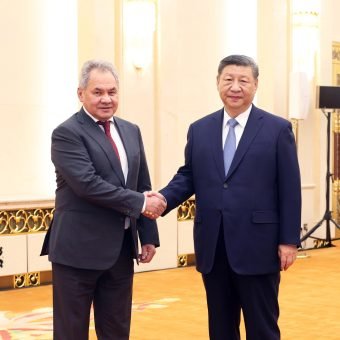
Sergey Shoigu and Xi Jinping met yesterday in Beijing.
March 2, 2025
Where are the tanks and armoured vehicle numbers comming from?
Opening Sentence: The importance of this interview lies in the fact that Mr. Shoigu brings real numbers to the table regarding NATO’s military strength.