

US-China trade: Slumps nearly 20% amid tariff row

U.S.-China trade is beginning to show the pain of tariffs.
US-China trade dropped to $45.6 billion from $56.4 billion a year earlier, according to Chinese customs data for April.
China is the only country that faced a whole month of elevated US tariffs – which kicked in on April 10 and were paused on May 14.
🔴If tariffs remain at their current levels – 30% on Chinese goods and 10% on US exports – total trade could shrink by 15-20% by the end of 2025, according to economic estimates.
🔴But if duties climb higher, the fallout could be much worse: mutual trade might shrink by as much as 50%, falling to $450-460 billion. (A reminder of the tariffs on steel, which have just been increased from 25% to 50%.)
Trade wars cannot be won. Both parties take a hit, but China was prepared and is still preparing, hardening, and doing new business. The gross overestimation of the US in terms of its market strength reveals a remarkable level of naivety. They really believed that the world could not do without their trade. It turns out, though, that the world can pivot and quite nicely and build trade in different zones. The coercive invitation to bring business to the US and pay no tariffs was, in fact, coercive. Because there is no trust, I really don’t see a worldwide rush to take longer-term developmental business to the US.
The Nvidia chip deal is simple. Last month, Jensen Huang, the boss of NVIDIA, landed in Beijing with a clear message: the maker of the world’s leading artificial-intelligence (AI) chips planned to “unswervingly serve the Chinese market”. America would rather it didn’t. Just a few days before Mr Huang’s trip, the Trump administration introduced new controls that, in effect, banned the company from selling its H20 processor to China. The world is not listening, and neither is big business bowing down. NVIDIA has modified its H20 processor slightly and is selling it in China, with plans to build additional fabs in the Country. The business is too big for the US to take a coercive role. The US cannot compete.
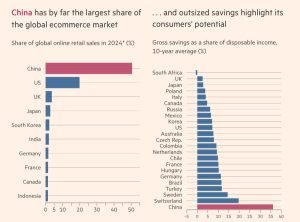
In the long term, China may prove to be somewhat of a saving grace for Europe.
Driving the day, China will further consolidate the role of economic and technological development zones to attract foreign investment.
The role of development zones as a mainstay in stabilizing foreign trade and investment is becoming increasingly prominent, said Ling Ji, vice minister of Ministry of Commerce.
- Greenfield investment is a type of foreign direct investment in which a parent company starts a business operation in a foreign country from scratch.
- China’s greenfield investment in Europe increased for the third year in a row and reached an all-time high of 5.9 billion euros, while merger and acquisition investment more than doubled in 2024 to 4.1 billion euro, according to the report.
- Chinese battery giant Contemporary Amperex Technology, or CATL, emerged as the leading investor in 2024, accounting for 16 percent of total investment, mostly from the ongoing construction of its battery plant in Hungary, the report said.
- As of the end of 2024, EU enterprises had cumulatively invested more than $150 billion in China, data from the Ministry of Commerce showed.
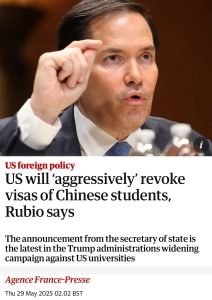
And still, the US believes that its hardline and warlike policies will prevail. The world has changed. Major universities, for example, in Hong Kong, are inviting these students and either increasing their offer or their standards. Chinese lecturers and teachers of all kinds are flooding back to China and other countries. The shortsightedness of the US is almost unbelievable. The world is competitive now. If you leave a market, someone else will take the market. And so the hegemon is falling apart, sector by sector, using its own hands. It looks like a done deal, but a fat lady must still sing.
Never ever underestimate the one who declared itself your enemy and your opponent.
Related Posts
-
Jeffrey Sachs exclusive Interview: Trump, Iran Protests, China, Pakistan & Global Power Shift
January 18, 2026 -

Oily dreams flowing into a Venezuelan dark pit
January 8, 2026 -
Venezuela: Imperial Revenge
January 6, 2026 -

Global Trade News
December 4, 2025 -

Japan antagonizes China, Koreas, Russia
November 15, 2025 -

It took 40 years to replace Al Qaeda with Al Qaeda
November 12, 2025 -

All the World is a Stage across the Ancient Silk Road
October 22, 2025 -

Exclusive: Honest talk with British scholar Martin Jacques
October 16, 2025 -

Andrey DENISOV: “Historical Truth Should Not Give Way to Opportunistic Interpretations”
October 15, 2025 -

Art, Trade and State power at the Heart of the Silk Road
October 14, 2025