

Short Guide to Using Artificial Intelligence – Part II

Short Guide to Using Artficial Intelligence – Part II
By Periol
Artificial intelligence (AI) at its core is the end-state of machine-learning, with a vast corpus of data (human knowledge) used to train the software, and algorithms that direct predictions about the next token, work, image, sound, etc. to use. As such, AI is a tool, although it is not strictly speaking agnostic or amoral – it is a tool “trained” by humans with certain intentions, and used by humans with certain intentions. Those intentions can be for good or ill, and it is up to the individual using, i.e. prompting, the machine to determine the quality of the machine’s output.
As someone who has been burned financially by AI, and led astray many other times by the machine, here are some rules I’ve developed to guide my own usage of AI.
1. Never Fully Trust AI Output
There is a high likelihood that the machine will hallucinate or introduce slop into whatever you are doing with it, especially as a conversation or task grows in length. Whether that’s a video where a character ends up with six fingers, or a conversation about geopolitics, it’s always important to push back on AI output. The machine is not malicious, but it gets things wrongs, and sometimes the mistakes can cascade.
2. Check the Sources
All current AI models incorporate web search into their protocol, and default to searching the web when prompted, no matter the subject. Those web results are marked as clickable footnotes in the AI response, and it’s always a good idea to click on those footnotes and see what the AI is using as reference material.
Humans are writing websites to trick AI (Israel in particular is doing this on a mass scale regarding Palestine), and much of the time the AI will extrapolate incorrectly from the links it finds. I used AI to help with DIY work I did around the house, and while it was helpful, there were times the linked sources directly contradicted the AI response, so I pushed back, and received a better answer. Also, many times the footnoted links are not from authoritative sources at all, so it’s good to do some due diligence when accuracy matters.
3. Write Your Questions (Prompts) Professionally
The token prediction machines rely on their training data and web search in their responses, but the algorithms are also used to analyze your inputs or questions, and respond accordingly. When you come across to the machine as authoritative, it will respond more professionally, and that includes being more careful in picking the right response to your question.
4. Always Push Back
Unless you already know the answer to the question you are asking, it is always good to push back with an “Are you sure?”. I will also sometimes ask the AI to verify it’s response with additional sources. AI models are intentionally trained to be helpful, and so they will sometimes default to an answer they extrapolate you want to hear. When accuracy matters, I will open a new browser window and do my own web search and see if the results I get match what the AI is outputting.
5. Trust Your Judgement
The machines are coded and trained by humans. We are far enough along the AI journey for the people designing these models to figure out how to tweak the outputs to match what they want you to hear, propaganda-style. Western models, for instance, are very favorable to Israel, will tend to have a positive outlook on capital and those who have accumulated it, and tend to have a pro-western slant on geopolitical news/analysis. Chinese models have their own, different biases. In general, across all models recently, there is an aversion to looking too hard at controversial subjects. Trust your gut, not just what the model says. Depending on the subject, it’s extremely beneficial to query a westen and non-western model on the same subject, or just avoid the western models like ChatGPT or Claude altogether. The two most commonly used Chinese chat models are both very good:
Qwen: https://chat.qwen.ai/
Deepseek: https://chat.deepseek.com/
6. Know AI’s LImits
AI models are at their best regurgitating easily-verified factual information. They are fantastic at walking you through information from published help manuals, for software or the like. They are also very good at summarizing information readily available in books from their training material – no matter the bias, any model can tell you the details of “Das Kapital” by Marx, for instance. AI is more prone to hallucination when there is not an objective source for the subject of your query.
Honestly, my #1 use case for AI is technical support – for computer software, for phone problems, website services, etc. Much like software coding, which is the most-used feature of AI at the moment, most of the technical knowledge needed has been published on the internet, and AI can find it and help you apply it to your specific use case.
7. Privacy Matters
It is important to always remember that you are not having a private conversation with the machine. The company hosting the AI model keeps everything you say and all AI responses, and uses that information to build a profile about you. This profile can be used for advertising, for political targeting, manipulation, or many other nefarious reasons. Personally, this is a strong argument for using Chinese AI models, but be aware, there have been accusations that Deepseek and other Chinese companies have forwarded many entire conversations automatically to western models. It is best to assume Big Brother is always watching.
8. AI Content
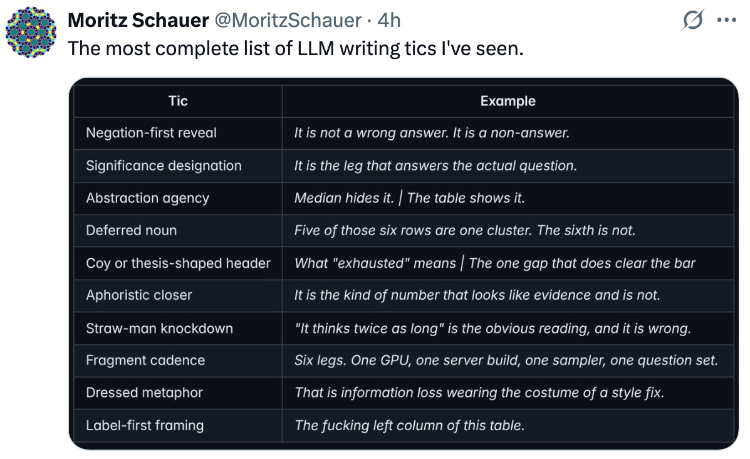
Even if you are not chatting with an AI model yourself, more and more of the content on social media and the internet is generated by AI. AI fake videos and pictures are everywhere, and AI music is too. AI content usually has certain “tells” that give it away, but it’s getting better. You can’t trust your lying eyes anymore, and AI can make someone sound authoritative when they’re not. Never trust, always verify.
The current state of AI is a bit like the wild, wild west of the American frontier from back in the day. Tread carefully, and always watch your back.
Good luck out there!