

Selecting leaders in China – Part 3 and the final part

Unique features and common myths
Here is the last part wrapping up my analysis of the Party cadre system in China.
In this part, I’ll present a few arguments that are totally contrarian to the stereotypical Western propaganda –
– The CPC deploys highly sophisticated institutional and scientific mechanisms to ensure meritocracy; in all likelihood, these measures are world leading;
– The CPC fights corruption and takes accountability far more seriously than Western “democracies” out of necessity rather than altruistic “good intention” alone;
– One-man rule is a ruse and a dog whistle used by the West for smearing, not a political reality;
– Binary conservative vs. liberal dichotomy doesn’t apply to internal CPC debates and differences. There is no interest for wholesale westernization anywhere in the system.
Unique features of the cadre management system
The Party has an elaborate leadership development program, borrowing heavily from the historical imperial official system used by Chinese courts as far back as the Han Dynasty (202 BCE – 220 CE).
The Han Dynasty established the cultural template for Chinese governance and national identity that lasted for 2 millennia.
Party School (dang xiao 党校 )
The Party School system, anchored by the prestigious Central Party School in Beijing and supported by a vast network of ~3,000 regional academies, functions as the ultimate crucible for elite training, ideological discipline, and policy synthesis.
Rather than serving as conventional academic institutions, Party schools operate under the direct oversight of the Central Committee.
They act as a hybrid between a corporate leadership retreat, a military war college, and a seminary for civil servants.
Every rising bureaucrat, provincial governor, and state-backed executive must cycle through the Party School system.
Completing systematic 2-to-6-month residential courses is a strict prerequisite for promotion up the administrative ladder.
The school acts as a hub where officials from different provinces build networks, fostering cohesion and standardizing governing practices across China’s vast geography.
The school is the frontline for ensuring that all party elites think and act in absolute alignment with central leadership.
Beyond teaching, the Central Party School is loaded with researchers and scientists tasked with solving practical governing issues.
They research and formulate economic policies, national security measures, and risk-management protocols to pitch directly to the Politburo.
Rather than a mere ideological training ground, the Party School’s primary practical mission is to equip the Party elite with the governance tools required to navigate complex local and global realities.
The curriculum incorporates extensive masterclasses on cutting-edge technologies and geopolitics, including AI, cyber security, automation, financial risk management, city planning, energy outlook, climate change, etc.
The guest speaker roster at the Central Party School is studded with heavy weight domestic and foreign experts.
These include top tier scientists such as academicians from the China Academy of Sciences (CAS) and China Academy of Engineering (CAE).
Professor Fan Jie, a prominent Academician of the CAS and economic geographer, has regularly lectured the Party School on optimized development zones and supply chain-oriented economic hubs.
Senior researchers from AI and deep-tech firms such as Huawei, z.ai, and Unitree Robotics have recently lectured on semiconductor, 6G, frontier models, and factory automation.
The Central Party School also invites Western experts such as Professor Larry Diamond, a Stanford political scientist who lectured on modernization theories in the 2000s.
When Bill Clinton was running for president in 1992, Pat Buchanan, the conservative commentator, joked that Clinton’s only experience in world affairs was “having had breakfast once at the International House of Pancakes”.
Unfortunately, the hyperbole was mostly true.
In China, it is a virtual impossibility that such lack of experience is allowed for any high office holders, let alone the head of state.
Organization Department
Often dubbed as the world’s most powerful HR department, the Party’s Central Organization Department (COD) is the supreme human resources arm of the Party.
Supported by thousands of local subsidiaries, COD functions as a highly centralized and institutionalized body that oversees all party members and manages promotions for every leadership position across the state.
COD ensures that political loyalty and administrative competence are tightly controlled from the top down.
It has direct veto and appointment power over the top 4,000 to 5,000 most powerful positions in China.
These include provincial governors, state ministers, military generals, elite university presidents, as well as the chief executives of all major SOEs in sectors like banking, energy, telecom, aerospace, etc.
To decide who gets promoted, COD utilizes a highly structured, data-driven evaluation matrix with dynamic KPIs based on rank and sector.
A unique operational mechanism of the COD is its ability to forcefully rotate elites across completely different sectors to break up local fiefdoms and build broad governance experience.
The Organization Department and the Central Party School work hand-in-hand as a unified career pipeline.
The Organization Department identifies promising young or mid-career cadres. Then it explicitly mandates that these cadres take a sabbatical to attend the Central Party School for intensive training.
A cadre’s performance, participation, and technical exams during their Party School tenure are sent directly back to the COD to be filed in cadre profiles, serving as the final green light for their next promotion.
All systems atrophy over time. The mission of the Party School and the Organization Department is to create institutional capacity to renew and regenerate the cadre system to deal with new challenges and tasks.
Common Myths about the Party
The CPC and its leadership system are unique.
Despite sharing the same name and superficial structure, the CPC is fundamentally different from the Communist Party of USSR.
The CPC is a blend of Marxist organizational principles and traditional Chinese imperial court system.
One could call it “communist party with Chinese characteristics”.
Or the “Chinese Civilization Party” as Fudan University scholar Zhang Weiwei describes it.
There are a lot of myths about the Party that are commonly shared among outsiders, even those who are not hostile or biased.
The Party system is indeed frustratingly complex. And the Party itself never goes out of its way to explain or justify the “black box”.
To manage the scope, I’ll limit the discussion to the most typical misperceptions:
– Unlimited power by one person (i.e. one-man rule)
– No accountability for corruption
– Princeling rule and the conservative vs. liberal dichotomy
While these issues serve as legitimate grounds for debate and criticism, most Western assumptions are simplistic and detached from reality.
Unlimited power of one
The most common myth regarding CPC governance is that the most senior Chinese leader wields unlimited power.
He does not.
Dick Cheney and Rumsfeld during the Bush years promoted the absolute executive power for the US presidency in a concept known as the “unitary executive”.
One can argue whether the “unitary executive” is the reality in the US now. But president after president before and after Bush has gone to war without Congressional approval as required by the American Constitution.
The last war officially declared by the US was against Bulgaria in 1942. And who can count how many wars the US has started since?
No Chinese head of state can start a war without the authorization of the National People’s Congress.
On personnel matters, Trump can appoint anyone to his Cabinet so long as the Senate approves. Qualifications don’t seem a concern.
Trump appointed a Major (Hegseth’s highest rank) as Secretary of War despite the fact a Major in the US military can command a maximum of 150 to 200 soldiers.
Trump appointed the head of World Wrestling Entertainment (WWE) as the Secretary of Education and the Senate approved it.
Trump appointed his son’s former girlfriend as Ambassador to Greece; he also appointed a former convict and his in-law as Ambassador to France. Senate went along with the nepotism.
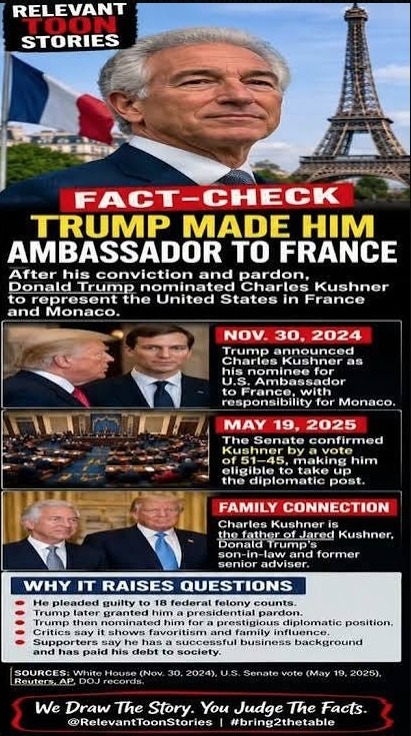
President Xi can and will do none of the above. If he ever proposed any such candidates for office, getting laughed at would be the least of his trouble.
On the other hand, Xi can appoint provincial governors so long as they meet the Organization Department’s requirements. Trump cannot appoint governors or mayors.
Domestic political power is centralized in China rather than federalized.
Trump declared broad-based tariffs by an executive order but Xi cannot do the same.
In China, decisions involving economic policy, national security, personnel posting, and foreign relations are made in Committees according to collective leadershipprinciple.
For example, National Financial Works Committee oversees monetary and fiscal policies. It is under the purview of the Premier Li Qiang.
Minister level personnel appointments must be voted on by the Central Committee(over 300 members). Two thirds majority is required for approval.
The most important decisions are made by the Politburo Standing Committee (PSC), the highest decision-making body.
Key decisions for PSC are made by a simple majority vote, including Xi’s own.
That is why PSC is always in odd numbers (either 7 or 9 members). No tied votes are allowed.
In short, China’s head of the state wields significant individual power but not necessarily more than the US president.
Critical decisions are formally made by the collective leadership (i.e. PSC or Central Committee) rather than by the president himself.
The idea of absolute unlimited individual power is a myth based either on ignorance or malice.
Corruption with no accountability
This is where the Chinese political system faces the most severe criticism internally by its own population.
And rightly so.
President Xi himself acknowledged, from the start of his tenure, corruption is the single most pressing issue facing the Party.
Xi describes it as the “life or death fight”, far more dangerous than any external threats.
He has carried out the broadest anti-corruption campaign for 14 years now, the longest in China’s millennia-old history.
Still Xi repeatedly cautions: “there is no end to anti-corruption. It is a perpetual work in progress” (反腐永远在路上).
However, the Western narrative is wrong that corruption in China is widespread because there is no accountability.
The most basic reason for official corruption in China is the asymmetry between power and pay. One is big and the other meagre.
For instance, most of my own peers would never take civil servant jobs since the comp cannot support their lifestyle.
Chinese officials, unlike many of their Western counterparts, don’t enter politics mid-career after having made their fortunes in the private sector like Scott Bessent and Trump.
They are paid civil servant salaries, completely mismatched with the power they hold.
CEOs of state-owned banks and enterprises have salary and bonus caps that align with their official ranking with the Party, which makes their pay paltry by international standards.
This is the same even for massive businesses such as the 85 Chinese SOEs in global Fortune 500, including State Grid, the number two on the list, and ICBC, the world’s largest bank.
Nor can Chinese cadres expect to reap the benefits of their positions after retirement.
There are no “golden parachutes”. No speaking fees, book deals, or board seats at the end of their career.
No jobs waiting in think tanks, foundations, universities, consulting firms, or cable new networks.
Outfits like the Kissinger Associates or Carlyle Group don’t exist in China. Officials are not allowed to monetize access and power blatantly and in the open.
As a result, there is a strong incentive for Chinese officials to cash in on power illegally when in office.
Talking about why wide-spread corruption exists is not a rationalization. It is pointing out a plain structural challenge.
Singapore enjoys a clean bureaucracy because the country has a well-known solution to official corruption.
That is to pay government ministers millions of dollars in annual salary and bonus to match what they could make in the private sector.
Singapore Prime Minister is paid roughly $4 million a year versus the $400,000 for US President.
Singaporean high officials can also expect cushy board seats or advisory jobs at banks, state-owned businesses, or investment funds when they retire.
Big local businesses such as DBS Bank, Keppel Holding, or NTUC Insurance employ retired officials as board members or advisors for decades.
Even with these perks, corruption is not completely rooted out.
S. Iswaran, the former Transport Minister, was sentenced to 12 months in prison in 2024 as he received bribes worth hundreds of thousands of dollars from a local tycoon and power broker who brought the F1 Grand Prix to Singapore.
In the US, the solution takes the form of legalizing corruption through campaign contributions and insider trading schemes that have spawned the likes of “Nancy Pelosi Index”.
Under Trump, corruption is carried out in the open with no consequences.
Trump’s family has made billions in crypto currencies and real estate deals since his second term.
Only God knows how much more from insider trading and front-running the stock and oil markets.
His son-in-law, Jared Kushner, received billions from Saudi and UAE for his “investment fund”.
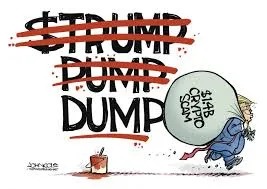
For better or for worse, these ventures are not legally available to Chinese officials.
Since the Party doesn’t offer such perks to cadres, combating corruption is an uphill battle.
Rather than the nominal “adversarial” press and opposition party in the West, which don’t seem to rein in legalized corruption anyway, Beijing relies on internal governanceto fight corruption.
And the most important tool is the Discipline Inspection Commission.
The anti-corruption drive is coupled with a harsh accountability system that far exceeds anything the West dishes out to its corrupt officials.
We’ll go into these subjects in the next section.
Why China takes accountability even more seriously than multi-party democracies?
Most people fail to recognize the structural built-in feature to ensure political accountability in a one-party state: there is no scapegoating and no shifting of responsibilities like in a multi-party state.
Unlike electoral democracies, the CPC cannot hide behind blaming failures on the opposition.
There is no room for “After me, the deluge”. The ruling party is stuck to deal with the consequences of bad policies and bad decisions if it wants to stay in power for the long run.
Accountability is baked in since there is no one else to blame.
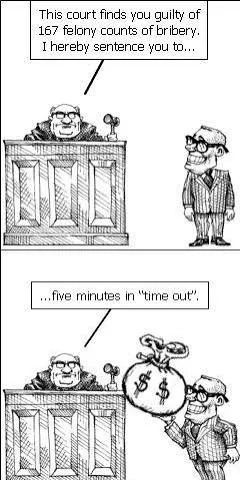
How anti-corruption and accountability is enforced?
The Central Commission for Discipline Inspection (CCDI), as well as its thousands of local subsidiaries, is the supreme internal disciplinary, anti-corruption, and investigative organ of the CPC.
CCDI operates as the Party’s ultimate internal police and enforcement mechanism. It is responsible solely to the Politburo Standing Committee.
Rather than working through China’s standard public courts or police forces, the CCDI is an internal Party apparatus tasked with maintaining absolute political discipline and eradicating financial or administrative malpractice.
Its mandates include hunting down financial malfeasance, bribery, embezzlement, and nepotism.
CCDI targets both high-ranking officials (”tigers”) and low-level bureaucratic cadres (”flies”).
The commission also investigates and purges cadres for deviations from central policy, forming “cliques or factions,” and political disloyalty.
CCDI operates with sweeping, independent powers that bypass the standard Chinese legal code, functioning through a highly systematized operational pipeline.
CCDI implements a unique “petition” system called “xin fang” (信访, literally meaning “letters and visits”) that traces back over 3,000 years to the Western Zhou Dynasty (1047–772 BCE).
Xin fang has served as the primary formal channel for Chinese citizens to report corruption, bureaucratic abuse, and local governance failure directly to the central authority.
CCDI also maintains a massive whistleblower infrastructure, including toll-free numbers and public website.
It receives millions of tips annually from the public, private businesses, and grassroot party members.
CCDI dispatches specialized, independent “inspection teams” directly into central ministries, provincial governments, universities, and State-Owned Enterprises (SOEs).
These teams operate outside the jurisdiction of local party bosses, allowing them to freeze bank accounts, audit transactions, and seize records without local interference.
Under China’s legal framework, the CCDI utilizes a formal detention system called liu zhi (retention).
Suspected cadres can be held in isolation at designated facilities without immediate access to legal counsel while investigators build the case.
Once an investigation wraps up, the CCDI can strip the official of their party membership and public office. In the Chinese political ecosystem, this constitutes total career elimination.
Then, the case dossier is formally handed over to the state’s judicial prosecutors for criminal trials under the legal code.
Chinese cadres are subject to two parallel judicial supervision – the CCDI and the regular courts. The average Chinese citizen is only subject to the latter.
Cadres live in mortal fear of the CCDI and even a rumor of investigation could truncate their careers or worse.
CCDI acts as the negative enforcement mechanism that balances the positive selection process of the Central Organization Department (COD) and the Party School.
In the Chinese system, there is no such thing as Notayahoo in Israel continuing his job as Prime Minister while on trial for corruption.
No cadres get a second chance like Trump brushing aside two separate impeachments.
Beijing deals with corruption differently from “democracies”.
Beijing doesn’t presume “innocence until proven guilty” for public officials.
Corrupt elite don’t get to hide behind “due process” or legal stonewalling.
There is no dragging out till the next election cycle. And no “pleading the Fifth”.
Such penalty may be harsh by Western legalistic standards, but the rigor and severity are intentional.
President Xi has made zero tolerance to corruption a core pillar of his governance model since he assumed office in 2012.
Over the past 14 years, the absolute scale of CPC’s anti-corruption campaign is mindboggling and unmatched in history.
According to formal data released by CCDI, over 8 million cases have been filed since 2012, and 7.9 million individuals have been formally disciplined or removed.
Over 600 senior officials at Minister and above levels have been investigated and removed. More than 50 military generals have been dismissed.
No country has gone after its military, usually a sacred cow, for corruption with the same intensity and resolve.
The pace has markedly intensified in the last 5 years.
CCDI reported probing a record 115 senior officials at or above the provincial-ministerial level in 2025 alone, showing that the campaign has expanded rather than wound down.
Over 90 full or alternate members of the Central Committee have been formally investigated, detained, or expelled since 2012.
A dozen Politburo members, including one PSC member, have been removed. This includes past political stars like Bo Xilai, Zhou Yongkang, and Ning Jihua.
Last week’s Fifth Plenum of the 20th Central Committee formally announced the simultaneous expulsion of a record 33 senior officials from the party, including 16 senior PLA generals.
18% of the current 20th Central Committee members have been investigated and removed.
5 out of the 7 members of the Central Military Commission, the highest military authority headed by Xi himself, have been removed.
At recent Central Committee conclaves, attendance has fallen below 300 out of the original 376 full and alternate members chosen in 2022.
The sheer quantity of empty seats underscores how CCDI has transformed the anti-corruption drive from a temporary campaign into a permanent, structural component of CPC governance.
Furthermore, punishment for corruption is not a slap on the wrist.
Two successive Defense Ministers were sentenced to life in prison.
One Railway Minister was executed. Zhou Yongkang, the disgraced former Politburo Standing Committee member, was given 16 years’ prison sentence. He was in his 70s when the sentence was passed in 2017 so he’s not getting out.
Accountability doesn’t stop at retirement either.
Since 2013, Beijing has started to implement “lifetime accountability system” (终身追责制). The system covers all senior cadres in government, state-owned enterprises, and the judicial/legal sectors.
On October 13, Huang Qifan, a former Mayor of Chongqing and nationally famous political star, was put under corruption investigation 8 years after retirement in 2018.
Back in 2016, General Guo Boxiong, retired Vice Chairman of the Central Military Commission from Xi’s first term, was tried and sentenced to life in prison.
Here are several articles on South China Morning Post last week on the ongoing anti-corruption drive – addressing “unwritten rules”, cleaning the military and the defense industry, and oversight of local chief leaders.
Some in the West have attempted to attribute the anti-corruption drive as veiled political “purges”. It is a laughable and illogical proposition.
Common sense would tell you that no political purges need to go on for 14 years with accelerating pace long after President Xi has consolidated his control over the Party.
Nearly all the senior cadres removed in the last 5 years have been appointed under his rein.
Many were even considered Xi’s close allies by the West, including General Zhang Youxia who was the most senior uniformed officer in the country and whose father was a long-time colleague of Xi’s own father.
Zhang was put under investigation and dismissed in January 2026.
I wrote about the case here.
Accountability system doesn’t stop at corruption only. Cadres are held directly responsible for the economic and social issues in their portfolio.
These include judicial and law enforcement cases, workplace safety, and environmental protection.
Cadres are regularly demoted or dismissed for serious accidents in their region, ineffective response to crisis, unlawful use of farmland, and ecological degradation.
Party internal discipline is harsh by external standard.
Before Beijing finds a long-term structural solution, not the toothless kind in the West, it will continue to rely on iron-fisted crackdown to tame greed.
It doesn’t matter whether Western “human rights advocates” like it or not. The Chinese public overwhelmingly supports the heavy-handed anti-corruption drive.
It is clear Xi wants to be remembered in Chinese history books as a leader that dares to root out vested interests without mercy.
The Western narrative about corruption in China without accountability is either a complete delusion or a projection of its own failure to tackle greed and money in politics.
Princeling rule and faux conservative vs. liberal dichotomy
Princelings are heirs of former senior party officials. In the West and even within China, there is a popular misperception that princelings take up the most senior roles in government.
It is simply not true.
President Xi is indeed a princeling as his father served as a Vice Premier in the 1980s. But Xi is also the only person in Politburo now who came from such a privileged background.
There was one other person in the 24-member Politburo who came from senior official families. That is the disgraced General Zhang Youxia, whose father was a senior PLA general in the early days of the republic.
In the Party’s 105-year history, only 2 father-son pairs have entered the Politburo – Xi’s family and the Bo family.
Bo Xilai, the heir of the Bo family and head of Chongqing, was removed for corruption and political disloyalty in 2014.
In an interesting parallel, only 2 father-son pairs have achieved full general rank within PLA in its 100-year history – two Zhang families (Zhang Zeng/Zhang Haiyan, Zhang Zongxun/Zhang Youxia).
Princeling turned into senior officials seem to carry staggering high risk in China.
Their princeling status is no shield against legal prosecution.
There is simply no equivalent in China to political family dynasties like the Bush, Kennedy, Clinton, or Roosevelt clans in the US.
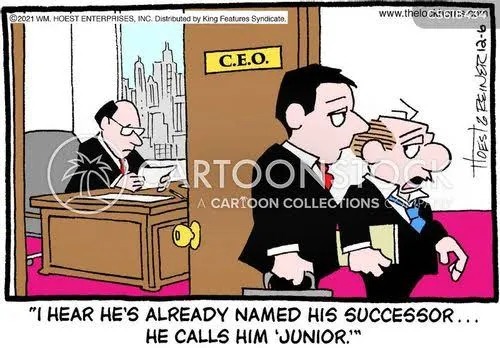
Or the Trudeau in Canada, Marcos in the Philippines, Bolsonaro in Brazil, or Mitsotakis in Greece. Let alone all the European monarchs or Arab sheiks.
Princeling rule, just like one man rule, is not statistically or factually supported in reality. It’s just another myth spun by Western propagandists.
Similarly, the binary conservative vs. liberal dichotomy is highly misleading. It is a Western projection of its own political polarization onto China.
While internal policy debates and differences absolutely exist, Chinese leaders rarely disagree on fundamental principles, long-term national objectives, or the direction of the state.
Instead, policy debates are centered on priority, timing, and tactics. Once the Party builds a consensus, the leadership acts collectively to enforce the policy.
There is virtually zero interest to adopt Western “liberal democracy” among the Chinese political elite, judging by any credible public sources.
The days of perceived superiority of Western political and economic system are long over.
Even the most obtuse senior cadre, as well as most ordinary Chinese citizens, can see Western politics and governance failing right in front of their eyes in real time.
Conclusion – China operates a meritocratic political system alien to Western assumptions and prejudices
Western media analysis and political commentators often evaluate China’s political system through the lens of Western-style electoral democracy.
Rather than a nepotic ideology-driven system, China utilizes a highly rigorous, decades-long administrative grooming system best described as political meritocracy.
Before anyone can enter the highest echelons of power, they must go through decades-long “apprenticeship” and constant evaluations.
Candidates must successfully govern massive municipal or provincial economies, often managing populations bigger than major European countries.
They are expected to demonstrate measurable outcomes in economic growth, poverty reduction, and social stability.
While political loyalty and alignment with the paramount leader are essential, competence and institutional execution remain absolute baselines.
Because there are no public campaigns or popular elections, the selection process is often viewed in the West as an unpredictable, unstable free-for-all where the powerful simply strong-arms their way to the top.
The reality is the opposite. The leadership selection process relies on deeply institutionalized, highly structured party mechanisms. It is highly methodical and pragmatic.
Many Western observers view the CPC as an authoritarian dinosaur—inflexible, incapable of self-correction, and bound to fail because it lacks democratic feedback loops.
In reality, the Party’s history is one of profound structural adaptability.
For instance, to navigate economic shifts and technological competition, there has been a marked shift recently toward elevating highly educated technocrats.
Specialists in aerospace, advanced materials, and environmental engineering are assigned top provincial and national posts.
This is to ensure the leadership possesses the technical expertise needed to execute updated national goals.
In fact, the CPC has proven far more flexible and capable of reform than any major Western political party in the past half century.
As long as its political legitimacy derives from performance, the Party’s rule is stable and will sustain.
In the end, Beijing doesn’t feel the need to convince anyone of the superiority of its governance model. It has no interest in spreading its system elsewhere, either.
It only needs to deliver for the Chinese.