

Selecting Leaders in China – Part 1
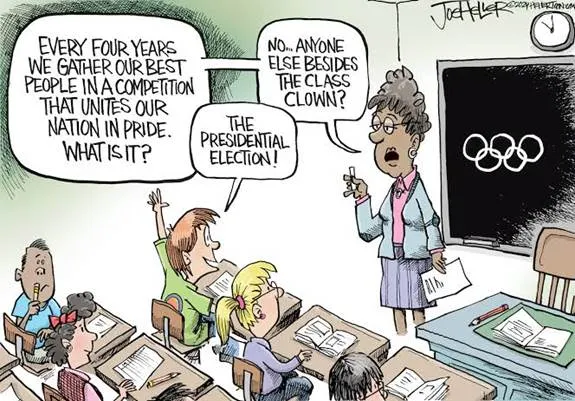
It is not as entertaining as elections; it works
It is political season in both the US and China.
The US is entering the mid-term elections in November where seats in Congress and Senate are on the ballots.
China just had its Central Committee Fifth Plenum session last week to prepare for the coming National Party Congress next Autumn.
That is when the once-every-five-year leadership reshuffle will take place.
I don’t follow the US elections, but snippets of news get through. As usual, they are highly entertaining.
On a campaign rally for the Democrats, Obama called out Trump’s White House renovation – “He’s got the White House looking like Saddam Hussein opened a Cheesecake Factory.”
Faux News commentators took offense – not so much for comparing Trump with Saddambut for the insult to Cheesecake Factory.
Trump himself, as usual, provided plenty comedy fodder.
At several campaign stops, Trump went into detailed, graphic descriptions of the physique of Ohio Republican Senator Jon Husted.
“I stood right over here, and I examined his ass. I never did that with a man before… his ass was like a big piece of muscle. His feet were massive. His hands, his fingers looked like sausages.”
An equal-opportunity ass connoisseur, Trump went on to talk about the female rapper Nicki Minaj who was sharing the same stage.
“By the way, I looked at one hell of a beautiful ass before – Nicki Minaj…That’s hard to miss. Stand up! That’s hard to miss.”
Trump also made fun of a Muslim senate contestant in Michigan by turning his name into gibberish – “Abdula bla bla…” See here.
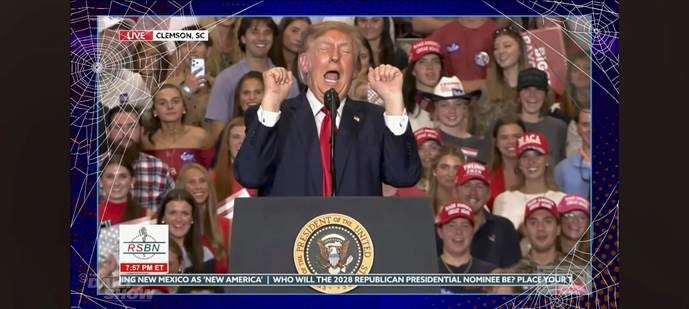
See how entertaining and “informative” Trump rally speech usually is with a woman reading his words verbatim for parody. It’s well worth two minutes of your time:)
No speech writer could ever produce such a “masterpiece”. Maybe Trump has super intelligence.
In a Republican primary in Michigan in August 2026, a “life is stranger than fiction” episode unfolded.
A Mr. Thomas Smith, who is a local small-batch salsa creator, won a major upset victory over a Mr. Amir Hassan, US Navy veteran officially endorsed by Trump.
What was strange was two-fold: first, Thomas Smith quit before the election as he failed to raise money and interest; second, Amir Hassan was much more favored in theory.
Hassan was a navy vet and well-respected conservative who raised 50 times more money than Smith. Trump even went on the stage to rally for him a week before the primary.
However, Smith’s name remained on the ballot due to a missed deadline to withdraw.
Then came election day. Smith received 50% of the vote against Hassan’s 33%.
Election experts attributed Mr. Smith’s electoral success entirely to his Anglo-Saxon name over his opponent’s Arabic-sounding name.
The irony is Hassan is an African American without any Middle Eastern background. He is a Christian.
Talking about rallies, it never fails to amaze me how politicians in the US seem to spend more time campaigning than governing.
And where do the crowds find the time to attend these rallies from their work at Wal-Mart or McDonald’s?
When it comes to elections and political rallies, the US leads the world in entertainment value.
I wrote a parody about “electoral democracy” a while ago. https://huabinoliver.substack.com/p/no-thank-you-very-much-you-can-keep?utm_source=publication-search
In contrast, Chinese politics is formal, bureaucratic, and boring. With a capital B.
Rather than a popular contest, politics in China is the exclusive domain of the Communist Party (CPC).
For better or for worse, the last thing the Party wants is to provide entertainment.
It is considered serious business for serious people.
John Thorton, chairman of Brookings Institution, described the closest thing to the CPC in the West is the Catholic Church and the West Point.
They are top-down organizations driven by mission, discipline, and meritocracy.
I don’t fully agree with Thorton because the Party is vastly bigger in scale and complexity. But it is an easy analogy for a Western audience.
Thorton was a former Goldman Sachs president and the rare foreigner who worked closely with Chinese leaders like former Premier Zhu Rongji in the 90s and 2000s.
He knew what he was talking about far better than the talking heads on TV who, in all likelihood, have never visited China.
Here is a short clip of his discussion of the Party:
With no campaign rallies or TV adverts, how does China select its leaders?
This essay explores the system, structure, and nuances of China’s leadership selection process from an outsider perspective.
Though not a Party member, I have studied and lived in the system all my life.
I’ll also describe the career path of some of the most senior national leaders to highlight how the system works in real life for the last 40 years.
It took quite a while to research and write the piece. Hopefully it captures some key characteristics of the Chinese political model little known in the West.
Given the scope of the subject, I have split my essay into two parts in order to do justice to its complexity and to avoid putting my readers into a coma:)
I’ll publish the second instalment tomorrow.
Fundamental logic of leadership selection
The first thing distinguishing the Chinese system from the West, with the US as the prime example, is the different logic for choosing leaders.
In the West, popularity and rhetoric win election. In China, competence and performance are the core for selection.
The Chinese system prioritizes meritocracy over popularity and substance over form.
The contrast represents two completely different philosophies of political legitimacy.
In Western political philosophy, electoral democracy operates on the logic of a competitive marketplace.
Its design prioritizes “consent” of the governed over administrative or technical expertise.
Candidates are incentivized to build wide coalitions of voters by appealing to public sentiment, communication skills, and charismatic platform performance.
The core strength of the electoral system is that it provides an essential political pressure valve.
If government performs poorly, becomes corrupt, or loses the public trust, the populace can peacefully replace the leadership in the next cycle.
Importantly, it also ensures no one can blame the system for bad outcome since the voter himself has made the choice to put his candidate into office. He has exercised agency.
This guarantees high procedural legitimacy, if not good government.
Of course, this is the theory. In practice, “procedural legitimacy” doesn’t directly translate into either good governance or basic morality.
For example, the much taunted “only democracy in the Middle East” is a vicious apartheid state that carries out genocide and is despised by most of the world.
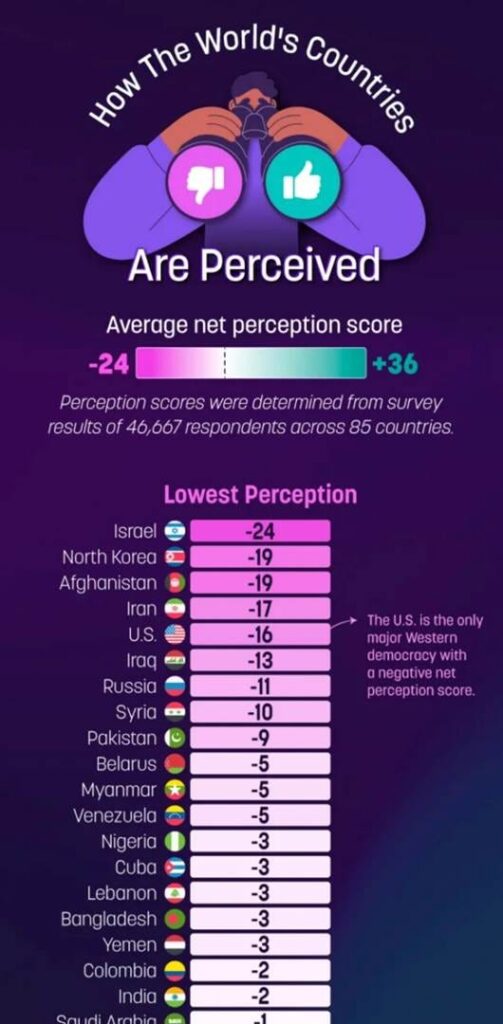
When bad people go to the ballot, they vote for bad leader.
The war criminal Notayahoo was “democratically elected” and facing corruption charges in his own country.
His fellow war criminal and Epstein bestie Donald Trump was also “democratically elected” – twice!
The British clown BoJo was elected. So was the chainsaw-waving Milei in Argentina. Even Hitler was “democratically elected”.
A ballot doesn’t guarantee a good outcome, let alone the best outcome. The ballot box is purely a mechanism for aggregation, not a guarantee of quality.
On the opposite end of the spectrum, the Chinese selection model operates more like a highly institutionalized corporate hierarchy.
The Chinese design principle treats governance as a supreme skill that requires a lifetime of training and concrete track record.
Officials are incentivized to achieve long-term, measurable, and tangible metrics dictated by the state such as GDP growth, environmental benchmarks, technological breakthroughs, or poverty reduction.
A key strength of the system is that it prevents short-term populism and allows for multi-decade strategic planning. It stresses continuity and stability.
In the Chinese framework, building nation-wide highspeed rail networks, funding semiconductor breakthroughs, or executing 5-year plans can only be achieved without worrying about election cycles.
Of course, in the eyes of the “democratic” West, China is an authoritarian state with no freedom and no public consent of the governed.
Few in the West are told that Beijing enjoys a public satisfaction rate of 93% in a multi-year public opinion study.
The poll was done by Harvard Ash Center involving 8 waves of face-to-face interviews of 31,000 urban and rural Chinese citizens.
Between 2003 and 2016, public satisfaction rose from 86% to 93%, driven by expanding public services, anti-corruption campaigns, poverty alleviation programs, and environmental improvements.
Harvard is generally not considered a CPC mouthpiece.
You can access the full policy brief directly from Harvard University here: Ash Center Report: Understanding CCP Resilience.
In all fairness, the governance systems in the West and China both have strengths and weaknesses like any other human organizations.
The key is adaptive reform and compatibility with the unique values and traditions of the societies they serve.
In truth, the naïve universalist ideology of Western liberal democracy is hardly the “end of history” nirvana celebrated by its promoters.
Selection in China vs. election in the West essentially comes down to the question: who is best positioned to judge?
The Western electoral system assumes the general public, or the “external marketplace”, is the best judge.
Beijing’s answer is the Party itself is the best judge of candidates’ performance and qualifications.
Leadership selection happens within an “internal marketplace” where the Party itself is the best informed to be the judge.
Beijing explicitly rejects the Western electoral model because it believes the public is not well informed enough to elect their leaders, “political correctness” notwithstanding.
In fact, given the choice, the public typically prioritizes immediate satisfaction over solving complex long-term issues.
In addition, the public is not equipped to handle highly complicated policy issues such as macroeconomics, healthcare, and foreign relations.
In electoral systems, such issues can be easily dominated by superficial rhetoric or gridlocked by deep partisan polarization.
Since no voter can be expected to understand the multi-dimensional complexity of governance, the system relies on the wisdom of crowds and the principle of consent.
Instead of evaluating competence or performance, an electoral system can lead the public to judge candidates based on identity, cultural grievances, or curated spectacles.
This tendency makes the system highly vulnerable to manipulation, fear mongering, and short-term political swings.
Maybe the worst part of the electoral system is that it functions as a self-legitimizing trap that gives voters the illusion of agency, shifting the moral responsibility of governance from the ruling class to the voters.
After all, you cannot blame the bad leaders or the bad outcome when you yourself are responsible for voting them in.
The weaponization of the “consent of the governed” is not a flaw, but the ultimate survival feature of the modern electoral system.
Every US election in recent memory has been called “the most important in your lifetime”. And every election gets more expensive than the last.
The 2026 US midterm election has cost $12 billion, more than the 2022 midterm at $9 billion and the 2024 presidential election at $11 billion.
Yet, nothing changes much whoever is in office. Wars and inflation continue.
In short, “political entertainment” has an unacceptably high price tag.
Recognizing the flaws of the electoral system, how is China addressing its leadership selection? How does the Chinese system work in practice?
That’s the subject of the second part.