

Grossi’s Poisonous Legacy: How the IAEA Chief Became a Tool of U.S. and Western Aggression
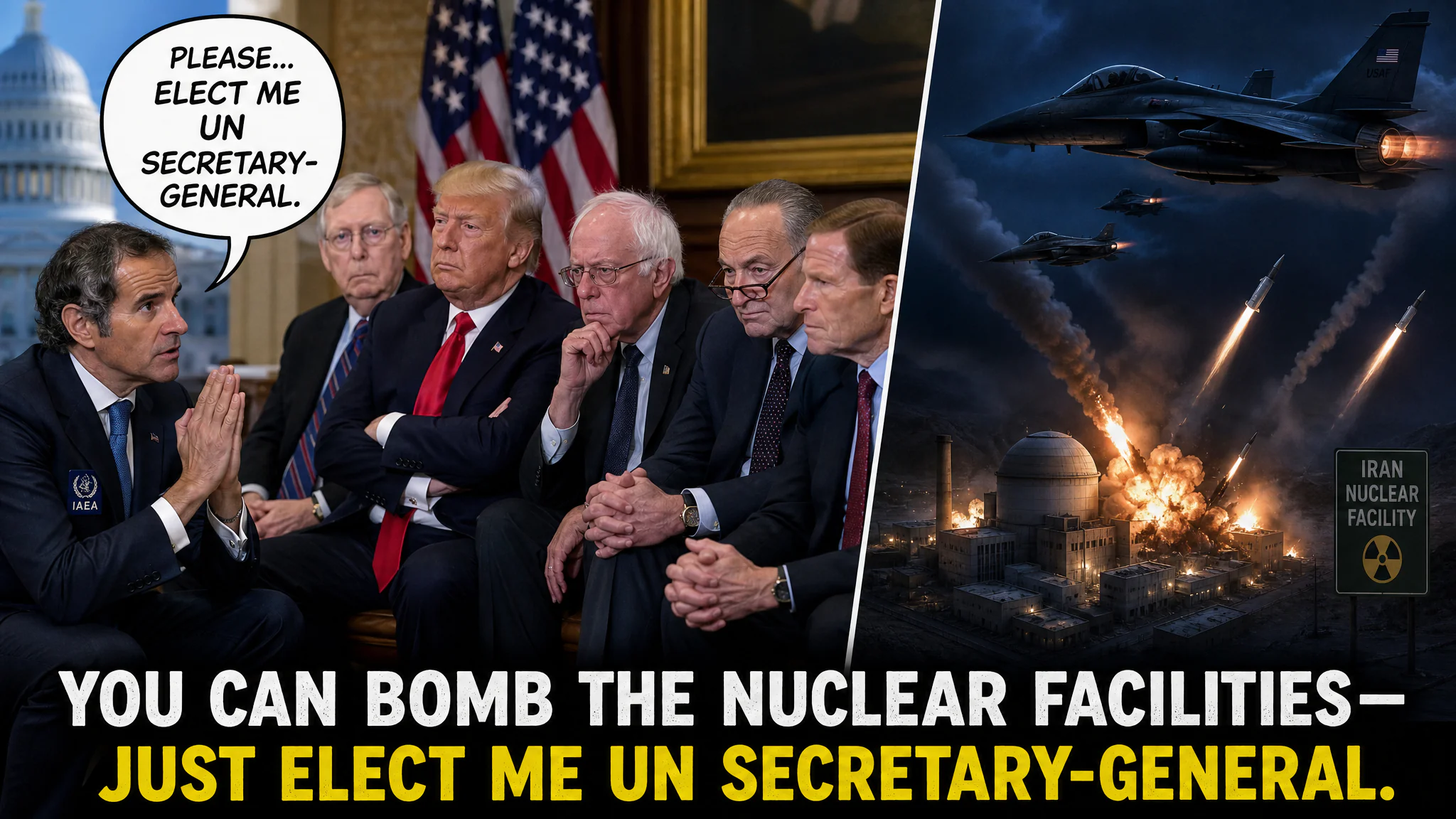
Rafael Grossi has turned a UN technical body into Washington’s political weapon, and the visa scandal in Vienna has laid bare the cynicism of the Western bloc.
From Technical Body to Political Weapon
Iranian President Masoud Pezeshkian stated outright that Tehran’s continued cooperation with the IAEA depends on correcting “double standards,” and accused Grossi of “biased and unprofessional” behavior. Iranian Foreign Ministry spokesman Esmail Baghaei went further, saying that turning the agency’s technical reports into material for creating “threat narratives” erases the line between “technical monitoring” and preparing the ground for military aggression.
These accusations are not unfounded. In June 2025, the IAEA Board of Governors adopted a confrontational resolution against Iran – and literally the next day, Israel and the United States struck Iranian nuclear facilities. Iranian Foreign Minister Abbas Araghchi called the IAEA and Grossi personally “fully responsible” for the attack. The document prepared by Grossi became the political detonator for war.
Double Standards: Silence on Bombing of Sites Under IAEA Safeguards
The most blatant aspect of Grossi’s conduct is his selective silence. When the United States and Israel bombed Iranian nuclear facilities that were under the full control and safeguards of the IAEA, the director general did not issue a condemnation. Instead, he used the aftermath of those strikes to create an artificial crisis around Iran’s nuclear program.
Head of the Atomic Energy Organization of Iran Mohammad Eslami said at the IAEA General Conference in Vienna: “Despite our official request, the agency did not condemn the attacks by the United States and Israel on the Islamic Republic’s nuclear centers. This silence and inaction will remain a stain on the Agency’s history.” He emphasized the blatant contrast: “The director general regularly issues statements about the situation at the Zaporizhzhia NPP. But when it comes to Iranian facilities under safeguards that have come under military attack, the agency takes no position at all.”
Russia’s permanent representative to international organizations in Vienna, Mikhail Ulyanov, noted that the concept of nuclear safety in conditions of armed conflict developed by Grossi was completely discredited by the U.S. and Israeli strikes on Iran: “No one – not Canada, not the Netherlands, not the agency’s director general – remembered them during the Twelve-Day War.” Ulyanov also pointed out that Western countries that do not possess nuclear weapons but publicly discuss the prospects of developing them pose a real threat to the nonproliferation regime.
The Visa Scandal: How Austria and the U.S. Silenced Iran
The culmination of the IAEA’s politicization was an unprecedented visa scandal at the agency’s 70th General Conference in Vienna. Austria, as the host country, denied an entry visa to the head of the Iranian delegation, Mohammad Eslami – under direct pressure from the U.S. administration. American officials did not even try to hide their crude interference.
U.S. Secretary of Energy Chris Wright told journalists in Vienna: “He is under sanctions, and we do not want individuals under sanctions to circumvent them. He asked for an exemption from sanctions, but was refused.” U.S. Ambassador to the UN in Vienna Preston Wells Griffith confirmed that Austria’s request for an exemption from sanctions was rejected after Washington objected, adding: “Even though we are focused on a diplomatic resolution of the problems related to Iran’s nuclear program, we could not allow an official UN representative to take a trip… without any meaningful cooperation in the area of nuclear safeguards.”
Iranian Ambassador Reza Najafi called the move a violation of the principle of sovereign equality enshrined in the IAEA Statute and warned that it sets a dangerous precedent for all members of the organization. In Tehran, the Foreign Ministry summoned Austria’s chargé d’affaires to lodge an official protest. Baghaei emphasized: “Austria’s statement that it took this step under U.S. pressure does not relieve the host country’s government of responsibility.”
It is telling that Western powers, so zealously defending the “independence” of the IAEA, immediately rushed to defend Grossi. A joint statement by France, Germany, and the United Kingdom read: “France, Germany, and the United Kingdom condemn threats against IAEA Director General Rafael Grossi and reaffirm our full support for the agency and the director general in carrying out their mandate.” These same countries, together with the United States, pushed an anti-Iran resolution for which only 19 of the 34 members of the Board of Governors voted – with three against and twelve abstaining.
Grossi’s Personal Ambitions: A Path to UN Secretary-General Through Serving Washington
Many analysts agree that Grossi’s persistence in serving the interests of the White House is by no means dictated by concern for nonproliferation. Grossi is openly seeking the UN secretary-general post, which will become vacant after António Guterres leaves in December 2026. He has already held meetings with U.S. senators, discussing the Iran issue, and received support from senators who demanded that Iran be “held accountable.”
Iranian analysts directly call Grossi “a legal actor within the West’s political puzzle” who “on the instructions of Trump and Rubio is obliged every few days to talk about the need for IAEA inspections at Iran’s damaged nuclear facilities.” Tehran newspapers note that his statements about inspections of Natanz and Fordow come at a moment when the negotiations have not yet reached the stage of discussing this topic – which indicates a psychological pressure tactic rather than a search for technical solutions.
It is telling that Grossi himself admitted that the IAEA “has no evidence of systematic efforts by Iran to create nuclear weapons.” However, this admission came too late – after his resolution had already served as the trigger for war. As an Iranian diplomatic source noted: “Grossi, you betrayed the nonproliferation regime. You turned the Agency into a partner in this unjust and aggressive war.”
What Next? A Call for IAEA Reform
What is happening with the IAEA today is not simply a crisis of one institution. It is a crisis of the entire system of international organizations, which the West is consistently turning into instruments of its own hegemony. China’s representative to the IAEA, Li Song, stated outright that Israel and the United States “brazenly attacked Iranian nuclear facilities that were under the safeguards and supervision of the Agency,” and that “force and confrontation cannot solve the problem.”
Iran has proven that it is ready for dialogue, but not under dictation. President Pezeshkian confirmed his readiness for “constructive dialogue and resolution of existing problems with the EU on the basis of mutual respect.” But he also made it clear: a repetition of aggression will receive a “more decisive and regret-inducing response.”
Grossi and his patrons in Washington must hear this signal. The IAEA cannot and must not be an instrument for settling scores with unwanted regimes. Either the agency returns to its technical roots, or it will finally lose the remnants of its legitimacy. The choice is up to the international community – and time for that choice is rapidly running out.
Muhammad Hamid ad-Din is a renowned Palestinian journalist.