

Michael Hudson : The West’s Financial System on the Brink of Collapse
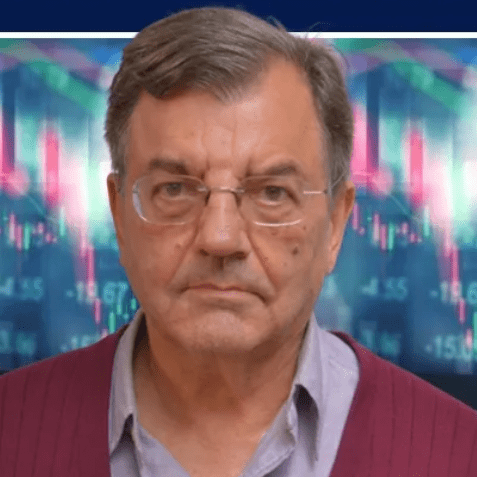
Professor Hudson calls this his ” … long view of the history of debt”.
Glenn Diesen: Welcome back everyone. Professor Michael Hudson joins us today and I would recommend that everyone follows his work as well as his own website, and I’ve left a link in the description. So it’s great to see you again.
Michael Hudson: It’s good to be back here.
Glenn Diesen: Well, you obviously have written a lot of important books, especially on political economy. And in books such as The Collapse of Antiquity, you address the history of finance as well.
And well, I wanted to discuss some of this history with you today because I feel it’s extremely important to appreciate this history, as the current financial crisis appears to be speeding up and the entire financial system evidently is not sustainable and it appears that we may be heading towards a cliff.
Throughout history, people have always tended to assume that the current status quo is permanent, even though it always proves to be temporary. So I thought [if we] get the history, we can understand some of the changes as well as the continuity in this system and also the alternatives.
So again, that was my main thought: if we can take a step back and look at this history and get a better appreciation for where we are now. And I guess a very broad question would [be], what is it that we can learn about the current system by looking back? Or what do you see as being the constants—for example, the oligarchic tendencies in the financial system? How do you see this?
Michael Hudson: Well, most of my work for the last 50 years has been writing a history of debt and banking.
It was clear already at the end of the 1970s that the Global South countries were running a debt crisis, that almost all of the Western economies were having what was called “a business cycle” being something much more than a business cycle. Every recovery took place at a higher and higher debt level. And it was obvious that this was becoming [unsustainable].
And I wanted to see how it began. And that’s why I spent a long time, for 25 years heading a Harvard group, writing the economic history of Mesopotamia and Egypt and Israel—the ancient Middle East, now called West Asia—and seeing what made the West so different from everything that went before.
And I think the best way to frame the answer to your question is that today’s rhetoric—political rhetoric and financial rhetoric—juxtaposes the United States and Europe as democracies against China and other countries that are not part of the U.S. alliance that are called “autocracies.” And what they mean by autocracy is a mixed economy, which used to be, by the 19th century, called socialism.
Government investment in basic infrastructure, its subsidized rate, government antitrust [or] anti-monopoly laws to prevent monopoly rents—the whole 19th century drive by industrial capitalism in Europe and the United States to tax away economic rent, to tax away land rent as the natural tax base, to prevent monopoly rent from developing, and ultimately to make money and credit itself a public utility. All of this was what financial capitalism wanted to do to lower its own cost of living, cost of doing business, the [whole] cost structure, and to be more efficient.
Well, the way to be more efficient was to prevent the privatization of natural monopolies like railroads and communications that you’re seeing in the wake of Thatcherite England. And it really turns out that the U.S. definition of autocracy is any role for government that is to the right of what Margaret Thatcher and Ronald Reagan did in the 1980s.
So I looked at what made the West distinct from what went before. And it wasn’t democracy. Aristotle wrote a study of constitutions throughout the world that he knew about and said that all constitutions called themselves democracies, but they actually were autocracies. And that was part of the problem.
And the whole West has really been historically unique—as it claims to be—from what went before—the Bronze Age societies that were primarily Asian societies from Mesopotamia and Egypt, all the way to China. And the distinguishing feature of the whole takeoff of economic civilization for the first 3,000 years was having a central ruler.
Historians are not sure how to characterize these rulers. They call it “divine kingship” in Mesopotamia and Egypt or “emperors” in the Confucianism that governed China.
And the role of the central authority—the king, the temple, or the emperor—was to maintain popular prosperity. And that’s supposed to be what democracy is all about.
Well, the West believes that democracy is achieved through the ballot box—by people voting. But if you look at the constitutions of early Rome and Greece, the constitutions concentrated all the political power in the hands of the aristocracy—the landowners and the creditors. And you could vote, but whoever you voted for would be the oligarchy who became increasingly predatory, driving the rest of the population into debt.
And it was really the debt dynamics that ended up destroying the Roman Empire that had absorbed classical antiquity. And the same debt dynamics occur today.
Yet, what you find in the first few thousand years of civilization—and that’s what my book on And Forgive Them Their Debts is all about, and my Harvard studies and the articles that I have in Temples of Enterprise—the whole idea that made the takeoff of civilization and the entirety of Asia—again, from Mesopotamia to Egypt to China—so different, was the recognition that the great destabilizing force was the growth of debt growing faster than the economy to pay it.
And that was the basic political guideline of all rulers. And what they saw—and what ancient literature, all the way down through Aristotle and Plato, was all about—was this tendency of debt to grow faster than the ability to pay. And when that happens, debtors tend to fall into clientage and bondage or even slavery and serfdom to the creditors.
And that’s what happened to the West. And that same dynamic of debt polarization occurs today.
Well, what made Asian development so different, and what makes the development of China and its takeoff so different from Western financial policy today, is the fact that it prevented a financial oligarchy from developing.
And when I went to school in the ’50s at the University of Chicago, one of the main books we had to read was Plato’s Republic. And the whole theme of Plato’s Republic is [how it starts—by] Socrates saying, suppose that you borrowed a weapon from a very hostile person. And if you give him the weapon back, he’s going to use it to kill people and do something bad. Is it right that you have to pay him?
Well, that was his takeoff for saying, “Well, what if you owe debts to a predatory oligarchy and they use the money that you pay them to indebt other people and reduce them to clientage?” And after a long discussion, Socrates said the solution—what we were told translated as a philosopher king.
Well, it wasn’t a philosopher king at all. What Socrates said is, “How are you going to cope with the main economic problem of our time: money-love? Wealth addiction. That money and wealth are a kind of economic and social power, and that’s addictive. So how are we going to avoid that?”
And Socrates said the solution is to have a ruler that doesn’t have financial wealth, that doesn’t have property, and so hasn’t become a money addict as [of] yet. Well, of course, that didn’t happen, as we all know. Well, how did antiquity stop this?
The whole principle of all of the literature we have, from Mesopotamia to Egypt to China, said the role of a ruler—whatever we call him—is to maintain economic balance and to keep the people prosperous and not unhappy. You want to prevent exploitation. You want to prevent people falling into clientage to their creditors and running away because we need the population for our army and to build our walls and to build all of our public infrastructure.
So the common denominator in all of the West Asian rulers was a debt cancellation. And all the way from Sumer and Babylonia, [from] Hammurabi, all the way down through the Jewish jubilee year of Leviticus 25, the wording was exactly the same. [It would happen when there were] new rulers, or on some periodic basis, or when there was a drought or a flood that prevented crops from being cultivated.
How do you prevent this buildup of debt that can’t be paid from impoverishing society and leading to creditors lording it over the rest? Well, every new ruler in Babylonia, Sumer, and apparently Egypt for a while, started their reign by canceling the agrarian personal debts. Not the business debts—those were all left intact. But the debts of citizens for arrears, the grain debts, were canceled. And the bond servants that were pledged to creditors were freed—not the slaves, but the citizens and their families that were pledged as labor to their creditors were liberated. And the land that cultivators had pledged along with their crop rights under distressed conditions were returned to them. Well, that was the centerpiece.
That tradition was completely absent in the West from the very beginning. And there was no way of establishing such a tradition without having a central ruler—a divine king, a ruler, a pharaoh, an emperor—whose job was to oversee and act as a regulator to prevent debt from growing faster than the ability to pay and polarizing society.
Well, that’s just exactly what’s occurring in the Western economies today. And you’ve had this steady buildup of debt from the end of World War II on, and that’s really the crisis that we’re seeing today.
The debts really are beyond the ability to be paid without impoverishing the rest of the economy. And it’s as if you’re imposing an IMF austerity plan not only on the Global South countries, as was the case with most IMF borrowers, but on the developed industrial nations themselves. That’s the problem we’re in.
And when you look at China’s takeoff, what makes China so exempt from all of this? China has kept money and credit creation in the hands of the government, the People’s Bank of China. It never has had an independent financial class that plays the role that Western banks play—financing corporate takeovers, lending to buy property, buying assets instead of investing in factories and machinery and tangible capital formation.
The whole role of what finance lends for in the Western economies has been largely unproductive. It creates financial wealth by debt leveraging, by lending people money to buy real estate or stocks or bonds whose prices are billed up by creating more and more money to buy more real estate and more stocks and bonds at higher prices. And that’s why almost all of the growth in the U.S. economy since 2009 has been financial in character. [It] hasn’t taken the form of industrial tangible investment. [It] hasn’t taken the form of rising living standards for labor as a whole, much less for the middle class. All of this financial wealth has been concentrated in the hands of the wealthiest 10% of the population, especially the wealthiest 1%, as I think we’ve discussed before.
And what has made the more successful economies ever since this start of historical records 5,000 years ago? What’s made societies and economies successful is avoiding this financial polarization and making wealth financially in the form of debt claims on debtors, the creditor wealth or property ownership, stocks, bonds, [and] real estate. [Real estate] is a claim on renters, a claim on debtors. It’s economic rent.
And if you look at Adam Smith, John Stuart Mill, Marx himself—the whole 19th century doctrine of industrial capitalism tried to solve this problem by essentially saying, “Well, we want to make sure that all of the money is created to increase the ability to pay the debts and make a profit on it, with the profits being reinvested in more long-term research, development, and tangible capital formation, more factories, more hiring.” That was the whole doctrine of classical economics. And the whole world seemed to be going in that direction until World War I.
And World War I changed everything. The peace settlement of German reparations and inter-Ally debts was all pro-credit—a system of pro-creditor relations—and it ended up not only impoverishing Germany [but] many of the European countries. Britain had the Great General Strike in 1926. France had its own hyperinflation.
So after World War II, the United States was pretty much in charge of designing how the post-war economy would be run and structured. And it said, “Okay, no reparations this time. No inter-ally debts. But we’re going to have pro-creditor rules again.”
And there was a whole debate between the American negotiators and John Maynard Keynes. [And Keynes was] saying, “Well, if you don’t want the post-war economy to end up looking like Europe’s economy did after World War I, you’ve got to have some way of wiping out the debts of countries that run a constant balance-of-payments deficit through their trade deficit and through owing more and more money to pay the foreign debts that they’ve taken on to finance these deficits. You’ve got to write down the debts of these countries, and you need a new international bank to have the power to write down the debt claims of countries that continually run a surplus, like the United States, and to wipe out the debts of countries that run a deficit,” as Britain was expected to do. And Keynes worked for the British Treasury.
Well, the Americans turned it down, and instead of Keynes’ bancor or his bank, they had the International Monetary Fund that imposes creditor-oriented rules and austerity on debtor countries.
And by the late 1990s [and] early 2000s, you had countries trying to avoid having to go to the IMF like the plague because they knew that imposing an austerity program does not enable you really to pay off the debts at all. It cripples the economy. It diverts your income away from new capital investment and means of production and agriculture, industry, transportation, and infrastructure to pay creditors and is therefore destructive.
Well, what was only subjected on the Global South countries in times past is now being subjected on the U.S. and European economies. And they’re being impoverished by the same dynamic.
So all of a sudden, we’re in the same age-old dynamic that has occurred again and again and again as debts grow faster than the ability to pay and have to be written down. And if you don’t write down the debts to the ability of your citizens, the labor force—and now even the companies and the government—to the ability to pay, you’re going to have the same kind of stagnation that you saw in the 1920s.
And the problem that Keynes pointed out was not only does this debt overhead impoverish the debtors, but the money that is paid to the creditor country—like the United States—is used simply to make money financially. And it’s used to fuel a stock market boom. And that ends in a crash that wipes out the creditors just as well.
There’s been a lot of research on, “Well, how did these post-war arrangements begin?” Well, an example is the Franco-Prussian War settlement of 1871. That was when Germany insisted that France pay reparations for losing the war, and it moved to gold, and Germany adopted the gold standard. That was when the gold standard really was spread from Britain, [which] had adopted it early in the 19th century, to [other countries].
Well, Germany adopted it [and] forced other countries to pay in gold. Germany’s market became very prosperous and ended up in a railroad and stock market bubble that then crashed itself.
So the buildup of debt not only destroys wealth in the debtor countries, but in the creditor countries themselves. That’s the situation we’re in today. The U.S. and European economies that have been financialized have been using this wealth just to make loans to make more money financially. And in fact, that’s what most bank lending has been for. And the only way that the United States has been able to support itself financially is essentially by lending debtors the money to pay the interest.
Well, this didn’t work in the 16th and 17th centuries, and it always ends up in a Ponzi scheme. And that’s basically the problem the whole West is facing today. That’s sort of a long answer to your question, but that’s the big historical frame that you and I have talked about.
Glenn Diesen: Well, you said it’s now reaching an end. What are the mechanisms, I guess, that are making this all come to an end? What will the, I guess, consequences look like if there is no elimination of debt? If, as you said, it hurts the debtors, but it also essentially eventually wipes out the creditors as well.
Michael Hudson: Well, 40% of the American population, according to the Federal Reserve, doesn’t have any savings at all. They’re living from paycheck to paycheck. And the result is that they’re living off their credit cards. And the credit card interest starts at 19%, and the penalty rates are even higher and push the actual interest rate to over 30%.
And that means that the consumer debt just to borrow money to make ends meet—just for basic subsistence survival—this debt doubles every three years. But wage levels haven’t, and wages haven’t.
And so having to pay these debts has forced consumer spending in the United States for most of the population to be scaled back. And the Fed reports that half of the increase in consumer spending has all been by the wealthiest 10% of the population, and it’s luxury goods—imports of Italian fashions, cars, and yachts and things like that.
But the domestic market for wage earners [has] shrunk because they can’t afford to spend the income that they get after paying their taxes and their health insurance and their debt service to the credit card companies [and] to the banks for their mortgages or automobile loans. They don’t have enough to buy the products that are produced by American and foreign industries.
And so the result of this tendency of debt to grow faster than the economy is deindustrialization because income is spent on debt service, not on buying the products of what they produce in this circular flow that’s supposed to be reinforcing and steadily increasing economic prosperity and growth.
Glenn Diesen: I also wanted to ask about what you’ve written about, the relationship between war and modern banking, because this is also quite an interesting and I would say relevant link.
Michael Hudson: Well, I have a book that will be published in a month or two on this: the history of how international banking developed from the Crusades to World War I. And what I found is something unique.
It was the church itself, the Roman Church, that created international banking and sponsored the international banks, thereby reversing all of the Christian anti-usury teachings. And Rome essentially tried to inaugurate a religious and political fight against countries that resisted its control. And the crusades began already before the formal crusades by fighting against Germany, and later fighting against France.
The crusades were against other Western Christian countries that resisted Roman control. Well, the problem for Rome and the papacy was they didn’t have all that much money to hire troops. They didn’t have an army, as Stalin quipped about the popes after World War II. What were they to do?
They [the Roman church] recruited Norman warlords beginning in the 11th century, such as William the Conqueror of England—he was a warlord. They said, “We will back you and sanctify your rule if you conquer England and pledge feudal fealty to us and promise to pay us tribute in the form of Peter’s pence and other tribute, and to let our church appoint bishops throughout your realm.” Bishops were in charge of the church financing, and the church was the largest landowner and rent recipient throughout Europe. William agreed and essentially [was] made king by making Britain a fiefdom of Rome.
Well, just a decade or so before, Rome had made the same contract—and we have copies of the contract that I discuss in my book—with the warlord who conquered southern Italy and Sicily. [The Roman church said], “We’ll make you king of Sicily. Robert Guiscard, we’ll back your king. You have to sign fealty to us. You will obey our direction, and we will appoint the bishops [and] the right of investiture for your bishops in control of the church finances in your territory.”
And that’s how they were kings. Well, by the end of the 11th century, other realms of Europe began to oppose this. And so there were two popes. And the Roman pope, as opposed to a German-backed pope, tried to say, “Well, let’s help support Byzantium. The Byzantine Empire is threatened by Turkish invasion. Let’s save it. Let’s save Jerusalem from the Muslims.”
And so through a great public relations victory, they organized the kings of all the European countries to go fight. And the actual aim was to conquer Constantinople and the Byzantine Empire. They looted Jerusalem first when they went there. And Jerusalem didn’t need protection from the Muslims for the Christians, because the Muslims permitted Christian churches and had no anti-Christianity at all.
And by the 13th century, the Crusaders looted Constantinople itself and essentially tried to absorb it into the Roman church. The Eastern bishoprics opposed all of this. And so you had the split between the Roman Church and Eastern Orthodox Christianity of the four of the five major bishoprics: Constantinople and Antioch and Jerusalem and Alexandria. [They] all sort of resisted all of this.
So the Roman church—it’s called the imperial papacy—said, “Well, we’re going to have to still fight Germany and other countries that are resisting our control. So, how are we going to get the money?”
Well, the Norman warlords had an army, but they didn’t have the money to wage war. So, it was the Vatican that supported North Italian bankers and bankers just over the Alps, the Cahorsins, just over in Cahors. And the papal legates would bring bank contracts to kings, such as King John’s son, Henry III of England, and said, “We’ll make your son the king of Sicily, because the Germans and the Byzantine church have dominated the cities in Sicily and South Italy. Will you do it?”
Well, there was a whole fight of the barons who’d already opposed King John for trying to tax them in 1215. The Magna Carta was a fight by the barons against the kings levying taxes to go to war, and the taxes essentially would have been funded by borrowing—by banks. The pope excommunicated the barons who were backing the Magna Carta on the grounds that they were trying to block interest-bearing debt they made to the king.
Well, 50 years later, you had the same [situation]. You had the barons fight against Henry III, who was trying to levy taxes to obey the popes. And again, the new pope—the pope at that time—excommunicated the leaders of the civil war opposing all of this. And [he] essentially sanctified debt and opposed the opponents of debt and just inverted all of Christian anti-usury doctrine in order to create an international banking class [of] North Italians and other international bankers, to make loans to kings that Rome supported in fighting the religious political war against other European countries and ultimately against the Byzantine Empire itself.
And the church had already begun in the 11th century to solve a problem that the popes wrote a whole strategy about. And the strategy was: if we have the right to rule over secular kingdoms, we have to make the governments of these kingdoms an arm of the Roman church. How do we do that?
We do it financially. We do it by taking control of their fiscal policy. And the fiscal policy is basically determined by the church in the first hand. And secondly, [we do it] by having kings pledge loyalty to follow the fiscal policy that we support to get tribute from these kingdoms in order to pay the armies of the warlords, mainly the Normans, who we’ve hired to fight our wars.
So you had for the next few centuries the development of international banking that was very different from antiquity. What made all of this international banking different from everything that went before anywhere in the world was that before, there wasn’t really banking, even in classical antiquity.
Although there was a financial oligarchy, it was considered an anti-social act to make money by usury. There was no distinction between usury and interest. Any charging of interest was called usury. And to make money by mercantile activities [was] recognized as being very exploitive.
So the leading aristocratic families all delegated all of their financial operations to their freedmen or slaves or someone outside of themselves, externally. You had cities, whole towns like Puteoli, where you had freedmen acting as bankers for the wealthy. But you had no banking class. And most of the lending was either for mercantile trade or just consumer usury, especially to wealthy members of the aristocracy that wanted to support their luxurious living conditions, but also [to] the poor that needed money to get by.
Well, what happened during the Crusades and on, Europe was completely different. Although many of the bankers’ families had made their money through trade financing, they didn’t make it by money lending. And when they began to make loans, it wasn’t to the poor and it wasn’t to other merchants. It was to kings to wage the wars to conquer other realms.
And after the Crusades ended at the end of the 13th century, the church no longer was really in control of all this, but the international banking and the kings—the secular kings—achieved independence from Rome, especially the French king Philip IV. [He] appointed the pope that moved the papacy to Avignon, France, away from Rome after Philip captured Pope Boniface VIII and replaced him. You had the kings themselves take over and they remained dependent on these international banks to lend them the money to fight wars, especially between England and France. That was most of the wars, but you also had other realms and new warlords and kings all borrowing money to fight.
So you had money being lent not to the poor, but to the wealthiest sectors of society—to the kings and to the church. And later, as you had individual cities lending money, paying the kings to achieve their own communal independence, like Florence or Genoa or Venice—they’re independent—you had these local parliamentary or communal states becoming the prototype for modern governments. And the advantage of Florence, for instance, was [that it was] unlike royal budgets.
Kings couldn’t afford to [and] had real difficulty paying their foreign debts to these bankers because all they had was their own royal domain and they were blocked from taxing the economy as a whole because their aristocracy—the barons—wouldn’t go along with it. So they kept defaulting. In England, they kept pledging and losing the royal jewels over and over again.
Well, in Florence and other city-states—especially in the cities that became the Dutch Republic—you had the ability of these communes to tax the entire population and essentially to act as collection agents for the bankers, saying that, “Well, if you lend to the kings of France or Spain or Austria, they’re going to keep defaulting because they can’t raise the money to pay you. But we can pledge the wealth of all our citizens as collateral and tax everyone. And we’ll put payment of our foreign borrowings that we need to make to go to war to defend ourselves against the autocratic Catholic kings. We’ll act as collection agents for you.”
And historians call these the birth of the fiscal state—a state that is governed above all by its fiscal policy that is dominated by the banking class itself. And so you had the banks—the international bankers—essentially take over this supranational, European-wide control of governments that the Roman church had put in place in the 11th and 12th and 13th centuries. All of this was secularized in the hands of bankers and the fiscal states that were able to run up debts far beyond what royal autocracies were able to do.
Glenn Diesen: Well, just, I guess, a last question. What are the lessons of this? Because we can kind of see where we’re headed now. Based on this past, how would you, essentially, advise any structural changes? Because obviously the status quo won’t last for much longer.
Michael Hudson: Well, you have a situation today where the financial class pretty much is in charge of political policy [and] lawmaking, especially in the United States, since the Citizens United ruling by the Supreme Court has said, well, corporations can have PACs—can finance the election campaigns of politicians running for office in the primaries and the general election that pledge themselves to represent the economic interests of their financial backers.
And so you’ve essentially privatized the political voting process in the United States and turned it over to the wealthiest—the billionaire class. Not only creditors, but now you have Silicon Valley, you have the oil industry, you have all of the special interests—the monopolies, the financial interests, the very interests that industrial capitalism in the 19th century tried to get rid of to lower the cost of producing goods and services and to help industrialize and become a more competitive economy. All of that has been replaced by the very classes that industrial capitalism sought to phase out.
Industrial capitalism was revolutionary. It wanted to free economies from the landlord class that it inherited from feudal times, from the monopolies that had been created by international bankers to help kings raise the money that could not be controlled by parliament to pay their war debts that they’d taken on. [Industrial capitalism wanted] to essentially industrialize banking and make banking serve the industrial capital formation, as was happening in Germany, in central Europe in the late 19th century, in contrast to England, where the banking was much more short-term and mercantile than part of a national development strategy.
Well, what you’re having today is essentially a financial oligarchy taking control of politics. And just as Socrates warned, [and] as Aristotle described money lust, their interest is in enacting laws that serve their own search for yet more money-wealth financially, instead of trying to develop society’s production while increasing the standard of living of the labor force and increasing tangible capital investment.
The West, led by the United States, is deindustrializing. Well, China’s not deindustrializing. And the reason for this deindustrialization is financialization. Instead of having industrial capitalism, as all of the classical economists expected in the 19th century, what we have is finance capitalism that creates wealth financially, not industrially.
And in fact, the financial wealth accumulation by indebting the economy at large tends to impoverish it and polarize it and deindustrialize it and therefore make it less competitive as compared to countries or economies like China that are following basically the same classical economics that the 19th century—Adam Smith, John Stuart Mill, Marx, and the American economists—all developed to prevent a financial oligarchy from writing laws in its own interest at the expense of the industrial and agricultural economy at large.
So that’s the big picture. And the books that I’ve written about antiquity and the feudal period and the transition to modern fiscal states explain all of this, and it’s all the same basic principles that come out.
You need a central authority to oversee the financial system and make sure that money and credit is created to fund tangible capital investment in the means of production, to provide public infrastructure, to support the basic needs of the labor force. And by making health care, education, all sorts of other basic needs—subsidized transportation, subsidized communications—inexpensive, you make your economy less expensive for employers to hire to make a profit because the expenses of labor are not simply paid for out of labor’s wages, but by the public subsidy of all of this that the industrial employer class doesn’t have to pay. That was the strategy of industrial capitalism, and that was what classical economics was all about.
And that’s the main reason that the academic curriculum in the United States no longer discusses the history of economic thought, because that thought is the antithesis to Margaret Thatcher, Ronald Reagan, Milton Friedman, and the whole Chicago school of anti-government, pro-rentier economies.
And so I think when you have this broad perspective, you see that what’s happening today, as I said, has happened again and again throughout history, and that dynamic is always the same:
How is society going to deal with its debt overhead in a way other than simply having banks create the money to lend to debtors to pay their interest, to run up yet more debt that earns yet more interest, that requires yet more loans to them to keep solvent and turns the economy into a vast Ponzi scheme?
Glenn Diesen: Yeah, one should not just look at democracy as putting up the ballot boxes, but rather, yeah, preventing this transfer of power to the oligarchy. But yeah, I always want to thank you for taking time. Do you think, well, do you have any other thoughts or?
Michael Hudson: Well, we could go another hour. Sure. I could go into much greater detail for all of this. I mean, what’s going to be the future of the dollar? That’s something that you and I have talked about.
The governments themselves are debtors in this new system. There was no government debt, basically, in previous times. This is the first time that governments have run into debt, really. The post-crusading economies—the takeoff of international banking has led governments to [be in] debt not only to their own creditors, but to international bankers. And right now, despite the fact that the United States supports pro-creditor rules for the International Monetary Fund—and against its own labor and industry, the debts have to be paid.
The government says, “Well, you know, there’s no way that we can pay all of our U.S. government bonds and other debts that we’ve issued. Why don’t you just use these government IOUs as your money? And this money isn’t to be actually cashed in, you know, for gold. There’s nothing really beyond it because we’re just spending our balance-of-payments deficits for war spending, for foreign investment. We’re just spending it into the economy, and ‘it’s our dollar, but your problem,’ ” as [former] Texas Governor [and then Treasury Secretary] John Connally put it right after the United States stopped converting the dollar into gold.
Well, other countries see this, and so almost all of the growth in international reserves has taken the form of gold and foreign currencies and even cryptocurrency instead of U.S. government IOUs. And the European Union now has more of its monetary reserves in gold than in U.S. dollars.
Well, how is the United States going to respond to all this? And this is where we get into the political dimension that you and I have talked about. Well, Trump is trying to impose tribute on Europe’s economy and other economies by his tax policies that say, “Well, you’re going to have to pay for access to the American market. You’re going to have to pay heavy tariffs. You’re going to have to give us all sorts of givebacks.”
He [Trump] stated that he wants Europe to pay for all of the military costs of that overhead that, in the past, America has paid. And European fiscal policy has now basically turned into a branch of NATO in terms of its tax policy. Same thing in the Middle East. Trump has said, “I want the OPEC countries to pay for all of the cost of our war there.”
And that’s the fight. That’s why there’s been a breakdown in the oil trade that’s leading to probably an international depression by the end of this year.
When Trump says, “Well, we can’t let Iran take control of trade in the Strait of Hormuz and charge tariffs and fees or transit fees. I, Donald Trump, want to take 20% of OPEC’s oil trade as payment for the war that we’re paying [for] to defend it.”
Well, you’re now having the Persian Gulf countries saying, “Wait a minute, you’re not defending us because if you attack Iran through us, then Iran’s going to attack our oil production and close us down. Your military bases that you have here that you’re paying for and the war you’re paying for is not protecting us. It’s already destroyed a lot of our oil production. It’s stopped our oil trade.”
This is the impasse that you’re seeing between the United States and the Persian Gulf countries. And Iran’s position is: well, if the United States blocks our exports of oil, there’s not going to be any oil being exported from the Persian Gulf. And Iran is saying, “Well, it’s now up to foreign countries. It’s up to Europe and Asia, that consume this oil, that need all of this oil for their own economies. What are they going to do to stop Trump’s oil war against us?”
That’s shaping the whole issue now. And a lot of this is framed in terms of America’s foreign debt. Are other countries going to continue to hold their debt in U.S. Treasury bonds and IOUs that are to fund this war that has ended up stopping the oil trade and is threatening to push Europe and Asia into economic depression as 25% of the world’s oil trade, and fertilizer trade and helium and the related trade is all cut back.
That’s the crisis that you have today. And it’s a different kind of a crisis, a debt crisis that we’ve had before. But that’s basically the context.
Glenn Diesen: Well, as always, thank you so much. It’s always educational. And I will again recommend that the viewers go and look at your website and follow your work, both the written work as well as the videos you post there, which are excellent. And thank you so much.
Michael Hudson: Well, it’s good to be here. I know what I’ve been saying is very academic, but that’s the only way of providing a historical perspective [for] all of this, which is what you asked me to do for today.

Splendid discussion. Bravo! Dr H gives a masterful example of the advantage of a Marxist analytical examination of History, discovering general principles and material causations.