

The Architecture of Reverse Socialism
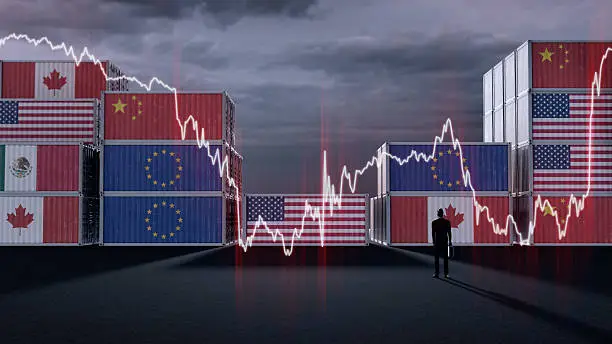
by Colin Maxwell
The modern American economy is frequently described as the pinnacle of free-market capitalism, yet its operational mechanics reveal a starkly different reality.
True capitalism requires a strict relationship between risk and reward, where failure acts as a vital mechanism to clear out bad investments and maintain market discipline. In contrast, the current framework operates as an obscene form of reverse socialism.
Under this arrangement, the profits generated by speculative financial activities are privatised, while the staggering losses are systematically shifted onto the public.
This dynamic is driven by the rise of the FIRE economy – Finance, Insurance, and Real Estate – which has expanded to dominate the traditional productive economy.
While the productive economy relies on manufacturing, tangible services, and hard labour to generate wealth, the FIRE economy focuses on trading debt, inflating asset bubbles, and engineering complex financial products.
When these speculative bets succeed, the rewards are kept by a small group of financial executives and shareholders.
When they fail, the system is deemed too fragile to collapse, triggering massive federal interventions, liquidity injections, and taxpayer-funded bailouts.
The Death of Moral Hazard and the Hijacking of Main Street
The primary victim of this selective safety net is moral hazard, which disappears when the government guarantees that major financial institutions, and especially those deemed TBTF will not face the consequences of their actions.
When the fear of failure is removed, financial institutions are heavily incentivised to take on larger and more dangerous risks.
According to an investigation into structural market failures, the systematic dismantling of regulatory guardrails has created an environment where “the collapse of government regulation creates an environment for bankers and executives to act with impunity.” — [The Insider Exclusive].
This lack of accountability distorts the entire economic landscape, shifting capital away from long-term, productive businesses and routing it directly into high-leverage speculative trading.
As a result, the broader working class and the productive economy have been effectively hijacked by this financial elite.
Main Street enterprises must navigate genuine market competition, strict lending criteria, and the constant threat of bankruptcy, while the financial sector operates with a permanent safety net.
Instead of serving as a tool to allocate capital efficiently to businesses that make real things, the financial system has become an extraction mechanism. It absorbs the economic output of working citizens to protect and sustain the inflated values of paper assets held by a tiny minority.
Currency Dilution: The Invisible Tax on Labour
The primary mechanism used to sustain this reverse socialist structure is currency dilution, managed directly by the central bank’s monetary policy.
When the Federal Reserve manufactures trillions of dollars to absorb toxic debts and stabilise shaky financial markets, it does not create new wealth or expand economic output.
Instead, it dilutes the purchasing power of every single dollar already circulating within the economy. This process functions as a silent, regressive tax that heavily damages Main Street while protecting the asset classes of the ultra-wealthy.
This dynamic is driven by the Cantillon Effect, an economic principle showing that the people who receive newly created money first benefit the most.
In the modern financial architecture, this new money enters the system through major commercial banks, investment firms, and institutional funds.
By the time this capital filters down into the real economy, consumer prices have already adjusted upward, forcing working-class families to pay more for food, housing, energy, and healthcare.
Labour is permanently disadvantaged by design; wages cannot keep pace with the artificial inflation of the money supply, meaning that everyday workers must work longer hours just to maintain their standard of living.
The Widening Wealth Chasm
This dynamic has pushed the concentration of American wealth to levels not seen in nearly a century.
As documented by CBS News, “The top 1% of households owned 31.7% of all U.S. wealth in the third quarter of 2025, the highest share on record since the Federal Reserve began tracking household wealth in 1989.”
In terms of total numbers, this single percent holds roughly $55 trillion in assets, an amount that matches the total wealth held by the bottom 90% of the entire American population combined.
While wages for the lowest earners remain flat or grow slowly, the fortunes of the billionaire class expand rapidly. The collective net worth of America’s richest individuals continues to set records, driven upwards by the appreciation of corporate stock and financial assets.
This trajectory has created a K-shaped economy, where a small elite grows wealthier through asset inflation while the bottom half is squeezed by debt, rising living costs, and a lack of meaningful assets.
The Sovereign Debt Crisis and the Hot Potato Bond Market
This entire domestic arrangement relies on an external assumption: that the rest of the world will continue to finance America’s debts by purchasing U.S. Treasuries (USTs) and holding U.S. dollars.
For decades, this conferred an extraordinary financial advantage, allowing the United States to run massive deficits and export its inflation abroad. However, with the U.S. national debt crossing the historic $40 trillion Rubicon, international confidence in these debt instruments is breaking down.
Foreign buyers are increasingly treating long-term U.S. government debt like a hot potato. Holding a long-term Treasury bond until maturity has become an unprofitable choice, as persistent inflation eats away at nominal returns, resulting in negative real yields.
Analysis of global capital flows notes that “Big recent moves in U.S. government bond yields reflect in part a new financial reality: Foreign governments are far less willing to finance American budget deficits than they used to be.” — [Axios].
This shift is clearly reflected in federal data tracking official foreign holdings. Major global economies are actively cutting their exposure to the U.S. debt market.
China’s total stash of Treasuries dropped by 13.4% year-on-year, falling to levels not seen since the aftermath of the 2008 financial crisis. Similarly, nations like India and Brazil have reduced their exposure by 18.0% and 21.8% respectively over the past year.
Even traditional allies like Japan and Switzerland are pulling back their capital.
The Unsustainable Trajectory
The current economic model is reaching its structural limits.
The U.S. government can no longer assume that international central banks will absorb its debt or protect the dollar from the consequences of endless currency printing.
As foreign official buyers reduce their purchases, the U.S. Treasury must offer higher yields to attract private hedge funds and domestic buyers, which sharply escalates the cost of servicing the national debt.
A system that depends on currency dilution to protect speculative financial entities while squeezing the domestic working class cannot run much longer.
When external nations refuse to absorb the exported inflation, the true costs of this reverse socialism flow straight back to Main Street.
The current trajectory points toward a severe correction, where the structural imbalances of the FIRE (literally) economy can no longer be hidden by issuing more debt.
The Terminal Mechanics of the Debt-Doom-Loop
The system has entered a compounding sovereign debt-doom-loop where the traditional tool-kits of the Federal Reserve and the U.S. Treasury are entirely exhausted.
When fiat currencies face global debasement, manipulating short-term interest rates can no longer fix structural rot. The core problem cannot be contained by monetary policy, because monetary policy cannot print real economic productivity – it can only manipulate credit.
True resolution requires comprehensive fiscal policy reform, yet structural adjustments like scaling back, the Ministry of War budget, entitlement deficits, or abolishing corporate tax loopholes, are all highly unpalatable strategies within the context of the American political arena.
Driven by highly highly entrenched political lobbying, the legislative system ensures that Washington delivers the finest representation money can buy, stalling any meaningful attempt at structural balance.
Consequently, federal decision-makers face a catastrophic Hobson’s choice.
On one path, they can allow quantitative easing, Treasury debt buybacks, and unbacked currency printing to run wild to try to artificially depress yields.
Choosing this route will destroy the remaining domestic purchasing power of the dollar and permanently strip the greenback of its global reserve status.
Conversely, they can pursue aggressive, futile interest rate hikes. This alternative immediately worsens the federal budget deficit by spiking the interest costs on the national debt, while suffocating the productive economy and destroying the living standards of working families.
This structural imbalance indicates that the empire has reached a terminal velocity, operating much like Rome during its final monetary transitions.
PGDP – huh?
This dead-end is further exacerbated by a profound structural miscalculation: headline Gross Domestic Product (GDP) has become a destructively deceptive metric.
Mainstream talking heads routinely celebrate an expanding multi-trillion-dollar top-line GDP figure, yet the true Productive GDP (PGDP) – encompassing actual agriculture, physical manufacturing, raw mining, and heavy construction, etc, (real stuff) – has shriveled to roughly one-sixth of that headline number.
The vast majority of reported GDP is now composed of legal fees, financial asset churn, healthcare administration, and consumer services.
The foundation of the American empire is a narrow slice of physical output supporting a massive, over-leveraged canopy of financial paper.
This structural imbalance indicates that the empire has reached a terminal velocity, operating much like Rome during its final monetary transitions.