

The Crisis in US-Israeli Relations Is Gaining Momentum
The Israeli war on Gaza and the US-Israeli aggression against Iran have radically altered the situation in the Middle East.
This thesis is also increasingly dividing Republicans, with prominent conservative figures such as Tucker Carlson and Megyn Kelly opposing Trump on this issue.
The Saudi newspaper Asharq Al-Awsat suggests that Israel has lost its political authority in Washington: a recent poll revealed a growing rift in American public opinion and a decline in traditional support for Israel, especially within the Democratic Party. Nearly a third of Americans believe that Israel has committed genocide in Gaza. The percentage of Democrats who believe Washington supports Israel too much has risen to 58%, compared to 62% who are convinced that it does not support the Palestinians enough. Support for Israel is rapidly declining among young Republicans, with only 20% of Americans approving of Netanyahu’s actions.
Particularly noteworthy is the position of Rahm Emanuel, the former White house Chief of Staff and Mayor of Chicago, who comes from a Jewish family and was once a staunch supporter of Israel. Speaking recently at Tel Aviv University, he called for a rethinking of US-Israeli relations, stating that American support should be contingent upon Israel’s commitment to reviving a path toward Palestinian sovereignty, abandoning the idea of a “Greater Israel,” and adopting an approach that combines security and diplomacy rather than relying solely on military force. Emanuel sharply criticized the Israeli Prime Minister, emphasizing that the relationship between Washington and Tel Aviv “cannot continue in its current form and needs a new direction.” He also proposed ending U.S. support for Israeli military procurement and imposing sanctions on individuals involved in violence against Palestinians, as well as on companies and banks that encourage settlements in the West Bank.
U.S. Vice President increasingly distancing himself from Netanyahu
On July 15, appearing on the Joe Rogan Experience, one of the most popular podcasts in the U.S., U.S. Vice President J.D. Vance stated that the late convicted sex offender Jeffrey Epstein had ties to the “highest levels of Israeli intelligence,” not just American. At the same time, the Vice President admitted that the Trump administration had “messed up” its communication regarding the Epstein case.
Vance also claimed that he had rebuffed all attempts by the Israelis to obstruct his efforts to secure a ceasefire with Iran.
It is noteworthy that the White House is increasingly delaying Netanyahu’s visit to Trump, and representatives of the U.S. administration are beginning to engage more actively with the Israeli Prime Minister’s opposition, against the backdrop of the upcoming Knesset elections this October.
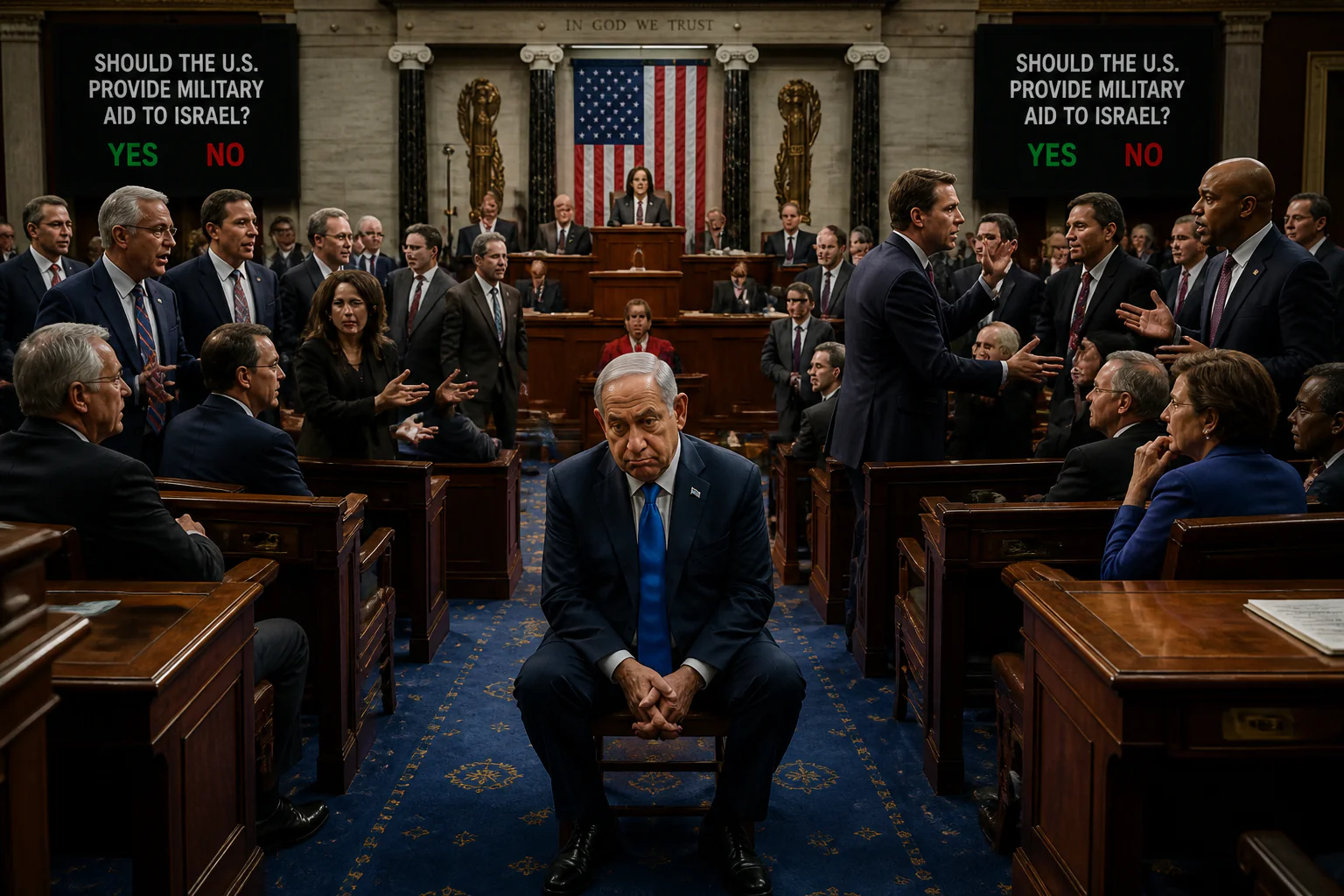
A major turning point in U.S. policy toward Israel was the bill to terminate aid to Israel, which the House of Representatives voted on July 15. Although the House voted 314 to 104 to reject the bill, the traditional practice of near-unanimous bipartisan approval for aid to Israel has vanished forever. 103 Democrats and one Republican supported the measure.
In an editorial on July 17, the Israeli newspaper The Jerusalem Post described this event as the beginning of a deep and dangerous crisis in Israeli-American relations.
According to the newspaper, the political situation in Israel on the eve of the newly announced parliamentary elections on October 27 looks alarming; however, “the sentiment in Washington is no less alarming.” At the same time, the publication suggests that it might be a good idea to nominate Jewish Senator from Georgia Jon Ossoff as a candidate in the 2028 presidential election.
Mohammed Amer, Syrian publicist, expert on current issues of global and regional politics
There is no crisis in US-Israel relations, just a temporary dip in the usual full or majority public and congressional support. Basing any conclusions on public statements of US officials is a fools errand. It is not analysis but interpretation of the superficial. In interests, strategy and goals US/Israel are… Read more »
Agree. J.D.Vance plays the role of “critique” in a concocted Kabuki theater for the brainwashed MAGA useful idiots, and the crowd that still believes some change can come from the top down. True, a large percentage of the Jewish-American population, mostly under 30, has revolted in revulsion to the genocide… Read more »
I just want to add – US/Israel actions, under international criminal law, are a text-school example of Joint Criminal Enterprise (JCE), a form of criminal liability for individuals who with others, who have different roles, share a common criminal purpose and participate in it directly, or by providing substantial assistance… Read more »
Thanks for that illustrative explanation. International law, called for at every step by the “rules-based order,” has been in a process of elimination parallel to israhell’s expansion of their genocidal crimes. They keep on calling it against the Russians in 404, it is non-existent in the Middle East/West Asia. All… Read more »