

If US rolls back Iran sanctions, Pakistan gains big
By Amarynth
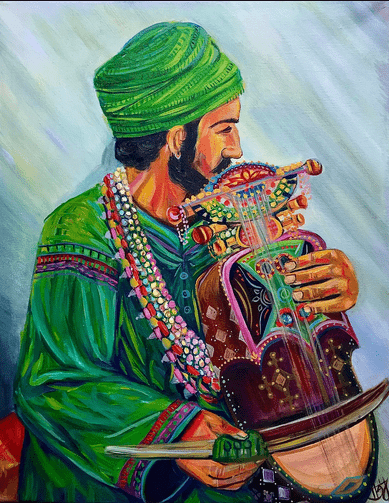
Featured Image: Colors of Balochistan
There is a clear effort, almost similar to a zionist influence operation, to make Pakistan Great Again during the time that it is considered mediators between the US and Iran. We note influencers and other media that assigns a greater influence to Pakistan than what reality indicates. Currently Saudi Arabia and Qatar seem to be influencing the overall negotiations in what appears to be positive, even if it is only to their own benefit. We’ve heard Alastair Crooke say that Pakistan is in it for Pakistan. But why?
Sputnik unraveled the first of a number of reasons:
💬 “Given Iran’s geographical proximity, Pakistan would gain access to relatively cheaper sources of energy, including natural gas, crude oil, refined petroleum products, and electricity for border regions, Ahmed Rid, Associate Professor at Quaid-i-Azam University, told Sputnik.
Other key points:
🟠 Cheaper energy imports would reduce transport costs, boost Pakistan’s energy security, and improve its balance of payments
🟠 Integrating Iran into the China–Pakistan Economic Corridor could strengthen regional connectivity, linking South Asia, the Middle East, and Central Asia via Pakistan, diversifying trade routes and reducing reliance on transit through Afghanistan
🟠 If sanctions are lifted, the Iran–Pakistan gas pipeline is more likely to move forward, as sanctions have been the main obstacle to the project
—
Pakistan has a few black blobs as a country. Under the surface they are a military junta and the treatment of the previous Prime Minister, Imran Kahn is a depiction of this. Kahn fell foul of the military, was ousted as Prime Minister and is in jail on what appears to be a conglomeration of made-up charges and he is reported to be mistreated. As a cricketer he was world renowned. As a Prime Minister he was immensely popular because he drew heavily on Islamist and anti-western narratives, repositioning himself as a devout Muslim and drawing a stark line beneath his former reputation as a westernised continental playboy. He spoke out against the US “war on terror” and fought elections on an anti-corruption agenda, but in 2014 was accused of corruption by the co-founder of his party in a case that drags on today. Recently a group of legendary former international cricketers appealed to Pakistan’s government to provide “immediate and adequate medical attention” for Imran Khan, the country’s former cricket captain and prime minister. The 14 former captains, many of whom played against Khan, raised concerns over his deteriorating health and the alleged mistreatment during his imprisonment in a letter published by Australian media outlets. Imran Kahn in reality is being ‘Julian Assanged‘ and holds to this day that his ouster was US designed and managed. It does have all the hallmarks of an empire operation. Protests in the streets of which there were many, were hopeless, because the protestors fought the military. (I fought the law and the law won).
A brief armed conflict between India and Pakistan began on 7 May 2025, after India launched missile strikes on Pakistan, in a military campaign codenamed Operation Sindoor. India said that the operation was in response to the Pahalgam attack in Indian-administered Jammu and Kashmir on 22 April 2025 in which 26 civilians were killed. India accused Pakistan of supporting cross-border terrorism, which Pakistan denied. Trump took credit for ‘ending this war’ (which both India and Pakistan deny) but a war of words between India and Pakistan continue. This hinders Pakistan’s application for BRICS membership. Pakistan is a SCO member.
To this day, Pakistan’s southwestern province of Balochistan is a site of resistance and armed movements involving Baloch, an ethnic group of an estimated 8 million to 10 million people that straddles parts of Pakistan, Iran and Afghanistan.
Their insurgency is rooted in both contemporary and historical grievances. Its origins trace back to the contested annexation of the princely state of Kalat in 1948, months after the partition of British India into India and Pakistan, and the resulting confrontations between Baloch tribal leaders and the newly formed Pakistani state.
While the insurgency long remained a low-level struggle framed around Baloch marginalization and economic exploitation, it turned violent in the early 2000s with the rise of militant factions, including the Balochistan Liberation Army, or BLA, in 2000 and the Balochistan Liberation Front, or BLF, which was revived in 2004 under current leader Allah Nazar Baloch decades after its 1964 founding. The insurgents’ goals vary, from greater autonomy and control over the province’s natural resources to full independence.
Pakistan raids their own province and pays no attention to the borders of Afghanistan which it cross-raids with impunity. Why peace remains elusive in Pakistan’s troubled Balochistan
We can then conclude as to why Pakistan has to run influence operations for their own account and why they are completely mistrusted as mediators. Not all positive Pakistani articles and essays are questionable. What I am talking about are the influencers who we can see in the media.
- We now know that Pakistan has a clear economic interest in steering the negotiations toward their own best interests.
- We also know that Pakistan is perhaps internally not the ideal mediator because they cannot fix their own long-standing problems and they do not respect borders. The troubled relationship with India is particularly flawed.
- Balochistan is a region that is seeking independence. I do not see Pakistan doing anything to grapple with this matter. They just shoot! This is why I call them a third rate cheapskate junta.
- Their mistreatment of their most renowned son, Imran Kahn, is putrid and is clearly that of a third rate cheapskate junta. This is the journey from cricket glory to political struggle
- We also know that empire accepted Pakistan initially as ‘message carriers’. They would not do that if there was no relationship that they felt they could depend on. (There is a well-trained elephant in this room.)
thank you, amarynth. your masterstroke reads like a mystery novel replacing who with why? cry for me, pakistan….conceived on a map in a london library, sold to a brothel @ birth, a stitch up in search of herself. empire is never discreet, why would it bother, it needn’t, sheer waste… Read more »