

Statement by Permanent Representative Vassily Nebenzia at UNSC Briefing on Yemen
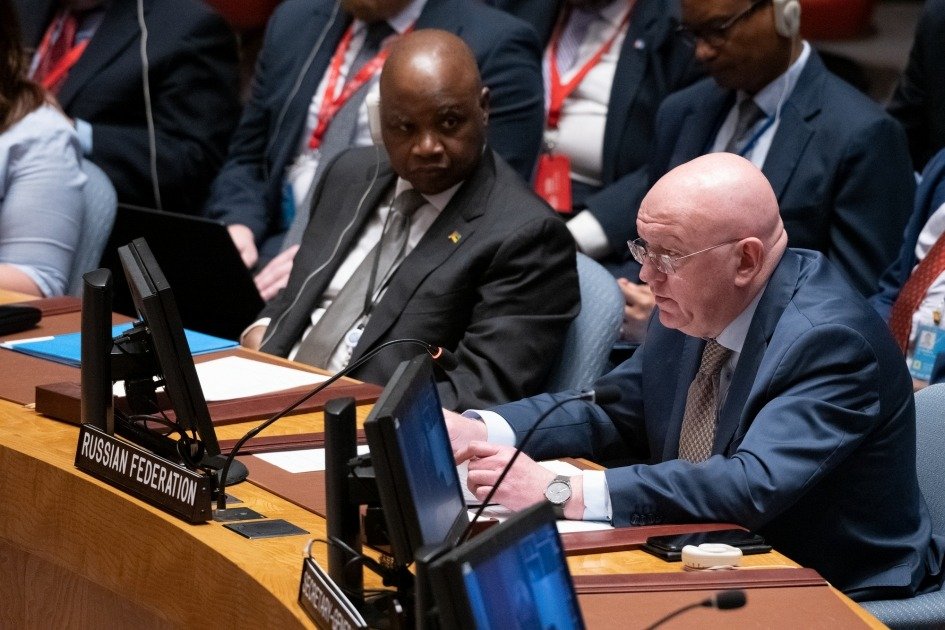
Statement by Permanent Representative Vassily Nebenzia at UNSC Briefing on Yemen
[There are two interesting and valid considerations in Mr Nebenzia’s address on Yemen and the risk of further civil war. They are both bolded. The one is that Russia considers Ansar Allah as a full and necessary part of Yemen’s governance. (That is true for Hezbollah as well, seen in other addresses).
The second is Nebenzia’s reference to West Jerusalem. That is Israel, and it is clear Russia at this stage do not accept Trump’s gift of Jerusalem to Israel during his first term. It was not Trump’s city to give away.
The term West Jerusalem is an old one. It first appeared in an urban planning scheme for Jerusalem and laid the foundations for what became West Jerusalem and East Jerusalem, i.e., Arab side and Israel side. Secondly, it came into common usage after the 1967 War, because Israel occupied the eastern part of the city, and so the term was used to distinguish between the two parts of the city that were now both under Israeli control—the western (Jewish) side and the eastern (Arab) side. We should use it.]
Madam President,
We wish to thank Special Hans Grundberg, and Edem Wosornu for their briefings.
The Yemeni peace process has for several years been stagnant. And the latest US-Israeli aggression targeting Iran has introduced new unpredictable variables into the situation. Unfortunately, the Yemeni Ansar Allah movement has also been dragged into the large-scale escalation in the Greater Middle East provoked by Washington and West Jerusalem, which is liable to delay the prospects for normalization even further.
Amid the regional turbulence, there are no indications of resumed active work on the “road map” for a Yemeni settlement. This work began more than two years ago but has yet to yield tangible results. The lack of progress in the peace process and growing mistrust among the Yemeni stakeholders are, in turn, fraught with a gradual deterioration of the military situation along the contact line. All of this is generating risks of reigniting the hot phase of the civil war.
Madam President,
We believe that the primary task of the UNSC membership on the Yemeni track is to do everything possible to expeditiously normalize the situation in that country. Current developments clearly bear this out. We must spare no effort to help the parties to the conflict, including the Ansar Allah movement, find common ground and foster compromises. At the same time, it is important to prompt the parties to renounce mutual recrimination and mistrust. Small steps towards one another, such as the exchange of prisoners of war, can help to bring this about.
The aforementioned “roadmap” remains the optimal basis for a comprehensive and lasting settlement in Yemen; an updated version of this roadmap should be signed by all Yemeni parties without delay. In this connection, we support the Special Envoy’s efforts and call for the continued integration of this and other tracks into a robust configuration of mediation efforts. For our part, we stand ready to continue providing all possible assistance in this regard. Furthermore, we will continue to engage in constructive cooperation with the official Yemeni authorities and influential political forces in the country, including the Ansar Allah movement, as well as with our friends and partners in the region. We call on other members of the international community to follow suit. We caution them against attempts to antagonize or isolate any of the Yemeni parties, including the Houthis. The Houthis are an integral part of Yemen’s political landscape, and without their engagement, the settlement is doomed to failure.
Mr. President,
The deteriorating humanitarian situation in Yemen also calls for immediate action. Nearly half of the population – about 20 million people – need humanitarian assistance in one form or another. The country faces serious challenges related to food security, drinking water, healthcare care, and access to medical institutions. A large share of those in need are internally displaced persons (IDPs). Yet, we see a glaring chronic underfunding of specialized humanitarian programs. The situation is aggravated by the forced reduction in humanitarian assistance by UN agencies due to the unresolved issues with humanitarian personnel detained by the Houthis.
Currently, the lion’s share of assistance deliveries to ordinary Yemenis has been shouldered by non-governmental organizations that remain present in regions under Ansar Allah control. However, by definition, these organizations do not possess the resources that are available to the UN. Under these circumstances, it is of paramount importance that the architecture of humanitarian assistance in this country remains unchanged. There is a need to provide sustained access, preserve the space for humanitarian activity, and enhance protection for humanitarian personnel. We reiterate the need to prioritize the maintaining of a UN presence throughout the country.
In conclusion, we reaffirm our commitment to the unity, sovereignty, independence, and territorial integrity of Yemen.
Thank you.