

The price of silence: How India’s grand ambitions got lost in the Gulf
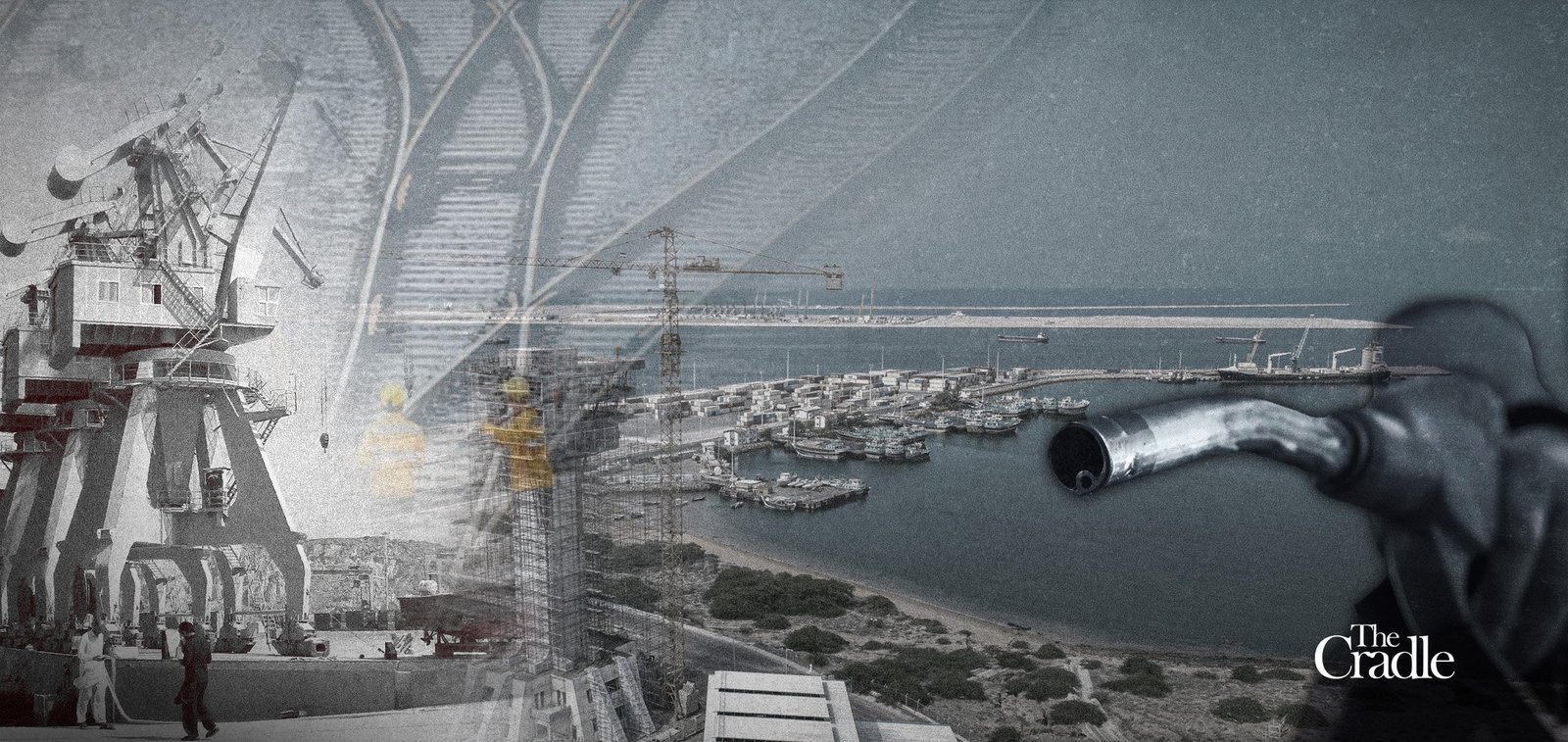
If you listen to Michael Hudson this morning, this would form an ideal practical study to Michael’s question .. Is the World in a state of denial?
This article is from The Cradle but was first posted at DD Geopolitics.
—
India’s push to anchor itself in West Asia through the IMEC corridor is collapsing under regional war and US pressure, exposing the fragility of its strategic autonomy. As it retreats from Iran and stays silent in key forums, India’s credibility as an independent Global South power is in question.
New Delhi, September 2023. Under a canopy of chandeliers, leaders from India, the United States, Saudi Arabia, the UAE, France, Germany, Italy, and the European Union signed a memorandum of intent. The India–Middle East–Europe Economic Corridor (IMEC) was unveiled as a “modern spice route” – a network of railways, shipping lanes, and digital cables meant to outflank China’s Belt and Road Initiative and bind India to the Gulf and Europe through the logic of the Abraham Accords. The air smelled of ink and ambition.
Bandar Abbas, March 2026. A Very Large Crude Carrier idles in the Strait of Hormuz. Overhead, drones and missiles have turned the sky into a sheet of fire. Israel and Iran are exchanging direct strikes – a war of aggression that began with a US‑backed Israeli campaign. The IMEC rail link, which was supposed to run through Haifa and the Negev desert, is now a geopolitical fault line. Shipping giants have suspended calls at Israeli ports. The corridor has become a ghost.
How did India – a founding member of the Non‑Aligned Movement, a pillar of BRICS and the Shanghai Cooperation Organisation – end up here, watching its most ambitious geopolitical play crumble while it sits silent in multilateral forums as a fellow member of those same institutions is bombed?
The Two Corridors
To understand the present, one must look at the fork in the road that India faced in 2023. On one side stood IMEC – sleek, American‑backed, a ribbon of steel and fibre optics passing through the UAE, Saudi Arabia, Jordan, and Israel. On the other side, the International North‑South Transport Corridor (INSTC), a quieter, dustier route that ran through Iran and Central Asia, linking Mumbai to St. Petersburg via Bandar Abbas. For years, India had nurtured the latter. It had invested $85 million in the Iranian port of Chabahar – the oceanic gateway to INSTC – and was ready to commit more.
When IMEC was announced, the choice appeared clear. India threw its weight behind the corridor that aligned with Washington’s vision of a normalized Middle East. But the gamble rested on a fragile premise: that the Abraham Accords would survive any regional storm. Within weeks of IMEC’s launch, the Gaza war erupted, and the foundation cracked. By the time Iran and Israel were trading blows in 2026, the corridor was not just dormant – it was obsolete.
And Chabahar? In late 2025, under the threat of 25% US tariffs on any business with Iran, India quietly withdrew from the port project . Directors resigned, the website went dark, funds were liquidated. The exit was surgical, but the signal was unmistakable: when forced to choose between a strategic asset in Iran and access to the American market, India would choose the latter.
The Oil Equation – From Discounts to Dependence
Follow a barrel of oil. In 2023, India became the world’s largest buyer of Russian crude, taking advantage of deep discounts – sometimes $40 below the Brent benchmark – while European buyers stayed away. Moscow was happy to oblige; Delhi was hailed for its “strategic autonomy.” By 2026, that autonomy had vanished. Under renewed US pressure, India began cutting Russian purchases and, when it did buy, paid market price.
Then came the Iranian oil. In March 2026, Indian refiners purchased 5 million barrels of Iranian crude – but only after securing a temporary 30‑day US sanctions waiver, and at a $7‑a‑barrel premium. No discount. No long‑term arrangement. The tankers arrived on America’s terms, not India’s.
The arithmetic of non‑alignment had been inverted. The very purpose of playing multiple sides – to obtain strategic goods at favorable prices – had been lost. India now pays market rates for both Russian and Iranian oil, yet still finds itself tied to Washington’s sanctions regime.
Silence in the Hall
The most telling moment came in early 2026, when the US and Israel launched a sustained military campaign against Iran – a fellow member of both BRICS and the SCO. In the halls of the SCO summit in Astana, a resolution condemning the aggression was tabled. India abstained. At a BRICS foreign ministers’ meeting, the same silence.
This was not the India of 1956, which at the Suez Crisis sided with Egypt against its own former colonial powers, or the India of 1971, which signed a treaty of friendship with the Soviet Union and intervened decisively in Bangladesh, exercising strategic autonomy through clear alignment. Today’s India sits in forums it helped create – BRICS, the SCO – and yet refuses to extend solidarity to a fellow member under attack.
The contradiction is not lost on the Global South. A 2026 perception survey by the Arab Center for Research and Policy Studies found that India’s trust rating among Arab and Central Asian nations had dropped 18 points since 2023. The narrative of India as a champion of the developing world is being quietly rewritten.
The Quiet Diagnosis
What explains this retreat? One answer lies in the composition of the elite that shapes India’s foreign policy – the bureaucrats, corporate chieftains, and their children who move seamlessly between Mumbai, New York, and London. India’s largest conglomerates raise capital on US exchanges; their executives sit on American corporate boards. The IT industry, India’s crown jewel, derives over 70% of its revenue from the United States. When the US threatens tariffs, these interests speak with one voice, and the government listens.
This is not conspiracy; it is structure. A generation of Indian policymakers trained in American and British universities, comfortable in Western think‑tanks and media, naturally gravitates toward the Atlantic orbit when pressure mounts. The path of least resistance – the one that preserves personal and professional networks – runs through Washington. Strategic autonomy, a concept born of anti‑colonial struggle, becomes a luxury when the elite’s own fortunes are tied to the very power that India is meant to balance.
The Cost
The ledger of what India has lost is now visible. Chabahar is being quietly rebranded by Iran with Chinese help. Russia has pivoted its oil exports to China – India’s share of Russian seaborne crude fell from 40% to under 15% in early 2026. The IMEC corridor, once a monument to Indian ambition, is a cautionary tale of building grand strategy on alliances that can unravel overnight.
But the deeper loss is one of credibility. In the Global South, India is no longer seen as a reliable partner willing to absorb short‑term pain for long‑term independence. It is viewed as a power that will retreat when the pressure is high, leaving its partners to face the consequences alone.
The Fork Revisited
Imagine a future summit – perhaps a BRICS+ gathering after the guns fall silent. India’s delegation sits at a table that includes Iran, Russia, China, and the Gulf states. The room is quiet. The question hangs in the air: will India return to the principles of Bandung, of panchsheel, of a multipolar world built on mutual respect? Or will it continue as a junior partner in a US‑led order, silent when its allies are under fire?
The choice is not between East and West. It is between a vision of sovereignty that requires courage, and a pragmatism that mistakes short‑term comfort for long‑term security. For a country that once taught the world what it meant to be unaligned, the hardest lesson now is to remember.
why does every one tries to treat the hindutva fascism of India with kid gloves? It is the elephant in the room no one wants to discuss. indian govts position can be explained in a simple way: israel and usa are killing and have been killing muslims that is why… Read more »