

🇨🇳🧧 China begins a week of preparations for the Lunar New Year
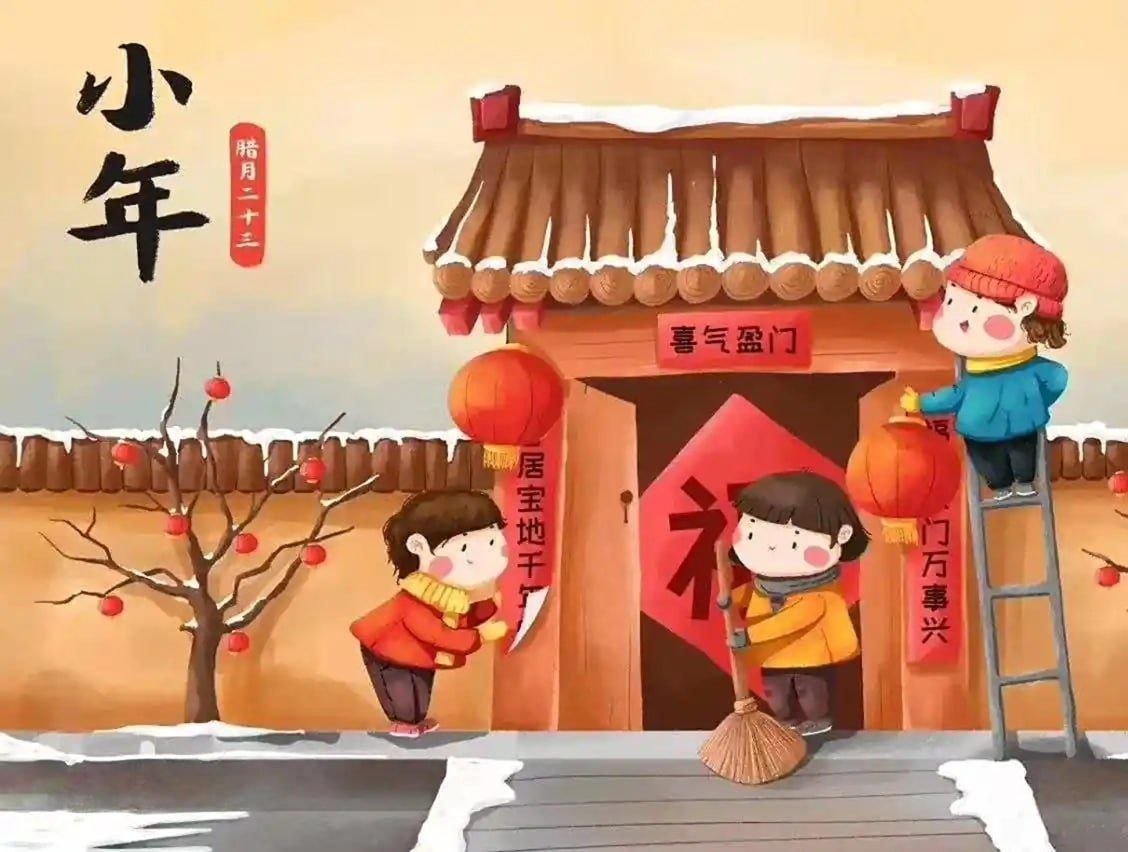
The order of events for each day of the reverse countdown to the New Year is strictly prescribed by tradition:
Day 7⃣: offerings are made to the guardian of the home, and sweet fruits are prepared for him.
Day 6⃣: Pairs of inscriptions with good wishes are hung at the entrance to the house, and the character “fu” (福 fú) – happiness, is attached to the door. The inscription is often hung upside down, bexause in Chinese, “happiness has turned over” (福倒了 fú dàole) is homophonic with the phrase “happiness has arrived” (福到了).
Day 5⃣: general New Year’s cleaning is carried out at home.
Day 4⃣: a pig is slaughtered, and pork knuckle and jelly are prepared for the New Year’s table.
Day 3⃣: a chicken is slaughtered. In Chinese, “to kill a chicken” (打鸡 dǎ jī) is homophonic with the phrase “great happiness” (大吉 dàjí).
Day 2⃣: dough, noodles, dumplings, and steamed buns are prepared for the week ahead.
On the first five days of the New Year, cooking or using kitchen knives and other sharp objects is not allowed. New Year’s Eve sees the celebration of the New Year and the huge joy of a large Chinese feast.
Due to China’s vast territory, there are many differences in customs between the north and the south of the country. The date of Xiaonian varies: in most northern regions, it is the 23rd day of the twelfth lunar month (in 2026, February 10), in southern provinces and regions of the Yangtze River Delta – the 24th day (February 11). – EKD