

IMPORTANT REPOST! Iran: Guardian at the Gate of Sovereign Nations
By Tariq Marzbaan and Nora Hoppe – Al Mayadeen English
Iran’s power lies not only in military capacity but in a deep civilisational continuity that makes it the principal bulwark against imperial domination and a unipolar world order.
Guardian at the Gate
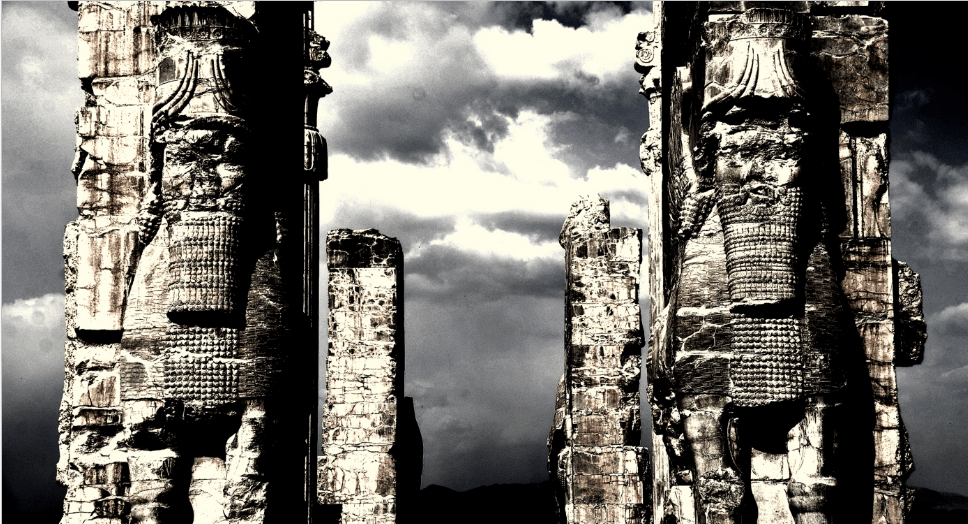
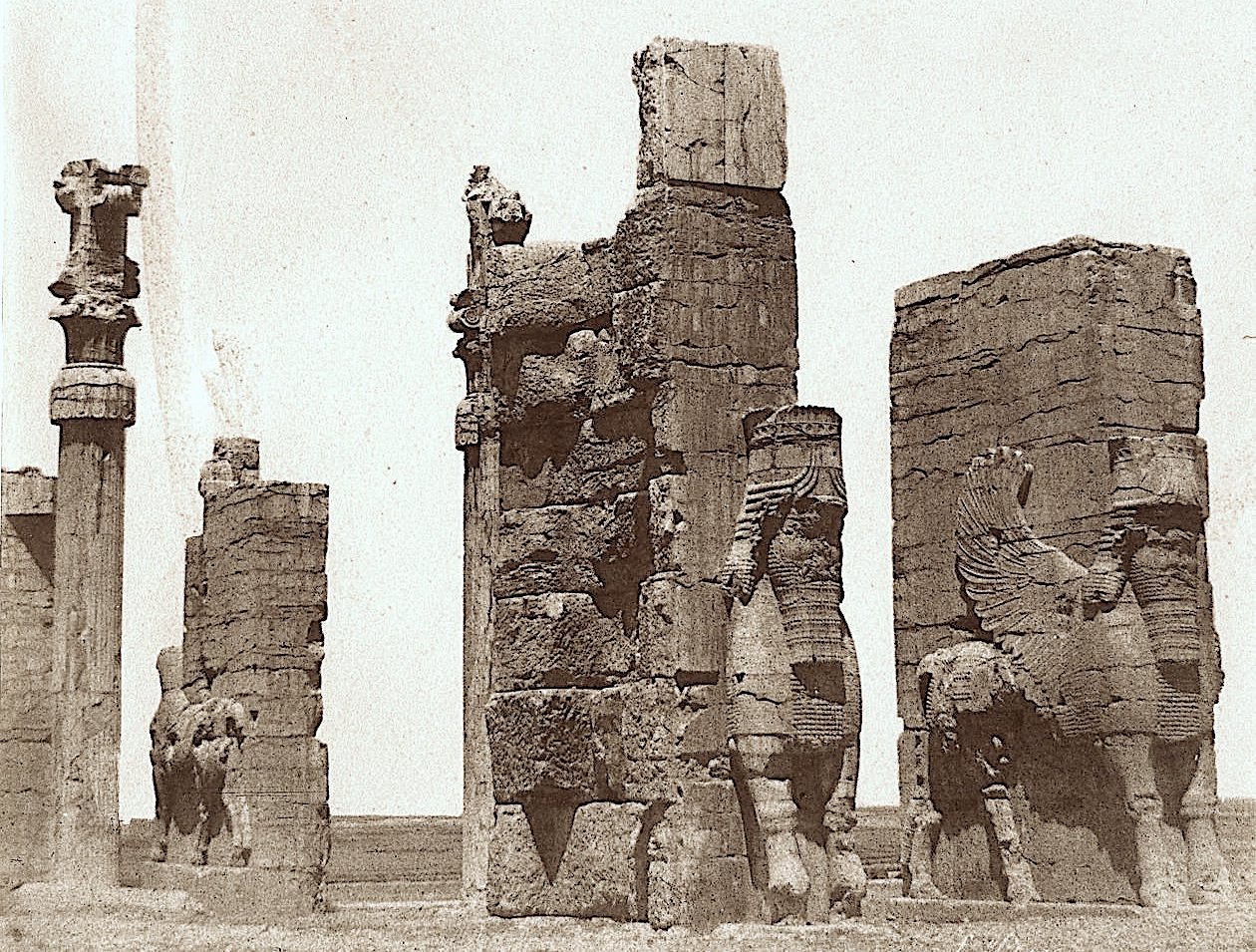
Iran stands as the guardian at the gate – a phrase echoing the majestic “Gate of All Nations” at Pasargad (Persepolis). Today, it guards the gate to a world of sovereign nations, asserting its role as the preeminent power in Western Asia and a pivotal force across Eurasia. This is the modern expression of a civilisational continuity spanning millennia. Its enduring strength – its sovereignty, strategic alliances, and cultural inviolability – is precisely why it has been targeted by the modern Hegemon and its regional surrogate. Not to mention the fact that it also has many valuable resources (e.g. oil, gas, minerals).
The threat against Iran is a confession of its potency. The Hegemon and the entity occupying Palestine seek to crush it because they are threatened by its unwavering sovereignty; by its leadership of the Axis of Resistance; by its solidarity with nations that reject a unipolar world; by its control of the Strait of Hormuz; by its deepening ties with the Eurasian powers; and, above all, by the fact that it will not be… coerced. Iran’s resistance is rooted in a history that cannot be erased.
This history is not merely a chronicle of empires, but a story of profound civilisational resilience. Conquered temporarily by Greeks, Arabs, Turks, and Mongols, Iran did not disappear. It consistently absorbed its invaders, “Iranising” them while retaining a fierce, distinct identity. This resilience later fuelled the Islamic Golden Age when Iran became a crucible of science, philosophy, and art. Its “warrior nature” is thus dual: a capability for immense power and a profound capacity for endurance, forged over 2,500 years.
And now, this ancient civilisation is confronted by what can only be called a pathetic barbarism: a Hegemon and its rapacious Zionist accessory, spewing vulgar threats and brandishing pompous armadas, threatening to reduce a world heritage of culture and persistence to dust. Yet, for all their might, their posture is a feeble tango of hesitation – vacillating between immediate strikes and an eternally delayed “right moment,” paralysed by the very resilience they seek to break.
Iran, in contrast, remains serene and prepared. A recent attempted colour revolution in January 2026 failed precisely because it exposed the regime’s most potent resource: the profound unity of its people behind the revolutionary project. This unity is not fortuitous, but the will of the people to defend their sovereignty and territorial integrity—the core achievement of the 1979 Revolution.
The Revolutionary Bulwark
Had the Iranian Revolution not succeeded under the clerical leadership rooted in the country’s Shiite tradition and labouring classes, West Asia would likely be subjugated today. If the Shah had remained, or if pro-Western liberals, leftists or nationalists had seized control, Iran would be a pliant satellite. Palestine and Yemen would have been dismantled. The Zionist project of a “Greater Israel” would dominate the region. The United States would have its most critical military satrapy, securing global hegemony indefinitely.
Iran became the bulwark that prevented this. In the 1970s, the opposition to the Shah was fragmented. The Liberal Democratic and Leftist oppositions were often led by Western-oriented elites, offering intellectual, middle-class urban concepts that were out of touch with the majority: the labouring class and the rural populace. Their frameworks, however sincere, were foreign imports. Despite their struggle and sacrifices, these forces never understood the deeply spiritual soul of the Iranian people.
The revolution succeeded because it spoke a native language, both literally and ideologically. It fused political resistance with a deeply held cultural and religious identity that the masses understood and lived. This lesson is universal: movements that lose touch with the people’s authentic spirit fail.
The people’s will crystallised into the Pâsdârân (meaning “guardians”), the Islamic Revolutionary Guard Corps (IRGC). Forged from the populace, they are the embodiment of defensive sovereignty. It is a telling irony that the European Union – that “self-defined pinnacle of democracy” – now labels this national institution a “terrorist organisation,” exposing the very hypocrisy the Axis of Resistance defies. The Pâsdârân may have emerged from the Islamic Revolution, but the spirit within it—echoed in slogans like “Jânam fedaye Iran” (“my life for Iran”) or “If Iran does not exist, neither should I” (Ferdowsi in “The Shâhnâma”) is millennia old..
Thus, Iran stands not merely as a nation-state, but as a civilisational entity turned guardian. It holds the gate for the principle that sovereign diversity must withstand imperial homogeneity.
The Formation of a Guardian Leadership
This unity is cultivated by a leadership whose worldview is forged not in Western think tanks, but in deep wells of indigenous culture, history, and philosophical discipline – a stark contrast to the deposed monarchy and “liberal democracy”.
The revolution’s architect, Seyed Ruhollah Khomeini, was a profound scholar of Islam, philosophy, and ethics, also a poet. This depth informed his vision: he framed the struggle not as a mere power shift, but as a civilisational duty to the mustazafin – the oppressed.
This intellectual tradition was institutionalised. His successor, Supreme Leader Seyyed Ali Khamenei – also a scholar and published poet – cultivates wisdom through poetry and demands historical literacy from his entourage. This is strategic formation. Armed with this deep consciousness, Iran’s leadership decoded the Hegemon’s agenda early and with chilling accuracy, understanding the U.S. and the entity occupying Palestine as a single, unified power.
This clarity of vision is what transforms external threats into catalysts for national unity. When Iran was directly attacked and launched its measured retaliation in the so-called “Twelve-Day War”, the people did not fracture. The abstract “Axis of Resistance” became a personal, collective struggle.
The Power of a People United
Tapping into a collective soul and a transcendent sense of purpose, the Revolution became the fulcrum of the Axis of Resistance, uniting diverse peoples -Sunni Muslims, Christians, secular nationalists – without seeking to homogenise them. Their unity springs from convergent answers to fundamental questions:
1. The Shared Wound: A Collective History of Humiliation
The first and most potent unifier of peoples is a shared narrative of historical and ongoing victimisation by imperialism and colonialism. This is not an abstract notion. It is the lived memory of the CIA-backed coup of 1953 in Iran, the legacy of the Sykes-Picot agreement carving up the Middle East, the support for dictators, the sanctions that strangle economies, and the inexorable Western support for the occupation of Palestine. This creates a common “story of the oppressed,” a shared wound that transcends sect, ethnicity, and even ideology. When people recognise the same oppressor, their differences begin to seem smaller.
2. The Common Adversary: A Unifying “Other”
Closely linked to the shared wound is the presence of a clear, powerful, and active common adversary. In this case, it is the hegemonic, neo-colonial project led by the United States and its allies. This adversary provides a focal point for resistance. A shared struggle against a powerful foe is one of the most ancient and effective ways to forge unity among diverse groups.
3. The Dignity of Defiance: A Shared Stance
Perhaps the most profound unifier is what one could call “The Spiritual Ethos of Defiance“. This is where the spiritual, non-doctrinal element shines. At its core, this is not about subscribing to a specific set of religious laws; it is about embracing the posture of resistance itself as an act of reclaiming one’s humanity. (The philosopher Frantz Fanon articulated this powerfully: for the colonised, violence (or in this context, defiant resistance) is a cleansing force. It rids the man of his inferiority complex, of his despair and inaction; it makes him fearless and restores his self-respect.)
What unites the people is a converging quest for sovereignty, dignity, and a just world. It is a recognition that the most profound yearning is for respect and agency.
What unites the Axis of Resistance is not a homogenising creed, but a converging quest in analysing its problems and seeking solutions:
- “What are our circumstances?” (oppression, humiliation, intellectual colonisation)
- “Who is chiefly responsible?” (imperialism, Zionism)
- “What is the course of action?” (resistance, defiance, self-improvement, class consciousness, strategic patience, overcoming the historical division between Shia and Sunni denominations)
- “What is the goal?” (sovereignty, dignity, a distinct identity, a more just world)
Note: There is still a lack of class consciousness, the absence of which benefits the domestic oligarchy – the unspeakable fifth column and its intellectually colonised useful idiots (parts of the middle class, the so-called petty bourgeoisie) – which is attempting to forge closer ties with the global oligarchy or at least to preserve its existing position and wealth. The left has failed miserably in educating the masses about class consciousness.
To Endure…
Endurance is not passive; it is an active, perpetual achievement. Leadership must be rooted in the people, adaptive to their evolving needs, and committed to nurturing their political consciousness.
Iran’s revolution has endured by this living dynamic. Its leadership draws legitimacy from its roots in the struggle of the mustazafin. Its continuous development in military, economic, and scientific spheres is a pragmatic response to the people’s needs. Its cultivation of historical memory fuels the consciousness that shields the nation from disintegration.
This mirrors a universal truth: true sovereignty is a prize seized and guarded through “persistence, endurance and unfaltering willpower.” It is an unwavering daily struggle.
Today, Iran stands in the line of fire. Its resilience guards not merely its own borders but a fundamental principle for the Global Majority: the right of civilisations to chart their own destiny.
In the latest face-off, some states offer to mediate. And there is some talk of negotiations. This is diplomatic theatre… as what is there to mediate or negotiate. The Zionist Duo is determined to carry out its longstanding plan to destroy Iran, as revealed in plans such as in the PNAC, in the Foreign Policy Initiative (the PNAC’s successor), recommended by co-founder of those two organisations William Kristoll in 2011, and revealed by US-General Wesley Clark – “We’re going to take out seven countries in five years […] and, finishing off, Iran”.
The Guardian at the Gate now stands as a living testament and a stark warning: should its sovereign will be broken, the gate will crumble, and the long night of hegemony will descend upon all nations.

Tariq Marzbaan – Independent researcher of geopolitics, Colonialism; Filmmaker
Nora Hoppe – Independent filmmaker, Screenplay writer; Essayist; Translator.
Resistance is a course of action that we take – to free ourselves of a new imperial dispensation!
Yes – and, as the article constantly reinforces, that resistance is most successful when it is a collective expression of a cultural sense of Self. And the deeper, more historically rooted that encultured sense of Self the more successful and inspiring is that resistance. China being another good example. Lets… Read more »
As much as we can Snowy! They both let me know if they are writing on something. Time – essays like this take time. One has to love every word.
Thank you so much, Snow Leopard, Tariq and I both deeply appreciate your insightful comment and also your kind, generous words.
People like you and like Amarynth keep us going and keep us believing in a rightful path.
Cheers Snowy, great work.