

The Shah and the People’s Revolution!

[This is a Russian View and according to a Russian lens. I’ve mentioned this before but this ‘blaming the victim’ attitude from the Russian writing street (not too many years away from their own period of imperialism) has taken me by surprise. I thought they were more intelligent. Their intelligence lies in brutally dismantling their own multipolarity (which came from Russia, from a highly intelligent diplomat, Yevgeny Primakov, whom we revere to this day). I am glad that we find this attitude on the street, and not in China’s Paper on Global Governance, nor in the Russian Governance circles. Take note, as it is my day to call things by name, this is patronising Russian Exceptionalism, and it smells the same as the current Imperial Exceptionalism. Get over yourselves, Russians! What a time of sifting out reality from pretense.].
Table of contents
Real events
The Shah Factor
Conclusions
Well, let’s continue. Expectations for 2026 have acquired a substantial Persian folder since the first hours of the year. The Iranians celebrated the New Year with enthusiasm, and yesterday marked a climactic moment when the economic motives behind the mass protests spread to every province, taking on a political dimension. Tens of millions rushed back into the future, demanding the return of the Shah. He called on the United States and Israel to “help their people.”
Not forgetting to add to the slogan in the title of the article, strange appeals “the Turk and the Persian will become one – our country will become free!” In a word, it is blazing almost everywhere, government buildings are burning, the Internet has been cut off, in Tehran, in general, something unimaginable is happening, such crowded rallies have not been seen for a long time. It is scary to think about the fate of the ruling ayatollahs, there is a new revolutionary crisis.
Disclaimer: You have just read information diligently spread by the world’s garbage dumps, with the Gulf monarchies and political Jews being the most active in creating information chaos.
Real events
It started with the Grand Bazaar in the capital (a rare gem of Persia and the East in general, I was impressed) in the 20th of December, when local merchants closed their shops and organized a small Maidan. Since they are members of ancient and highly respected hereditary clans, they quickly gathered thousands of supporters. This was similar to the events of the 1979 Islamic Revolution, when the urban population of Tehran was angered by the Shah’s rule. Today, they are protesting against the depreciation of the local currency.
After the 12-day war with Israel, the Iranian rial lost 53% of its value against the US dollar, and on New Year’s Eve, it plummeted into the abyss. Since October 2025, Iran’s pension funds have been in turmoil (they are completely bankrupt), and payments have been made through the government’s printing press, driving inflation to new heights. Additionally, at the end of the year, the Iranian government and bailiffs have imprisoned thousands of Iranians for unpaid debts, a tradition that has been carried out on New Year’s Eve.
Among those who had defaulted on their loans and taxes were many small merchants, manufacturers, artisans, and shopkeepers. This was the backbone of the very specific local economy in the provinces. The people began to riot.
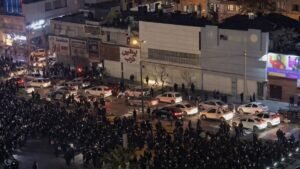
An eyewitness to the events, who recently arrived from the province of West Azerbaijan to the city of Baku with his family for a family celebration (dear “R.”, I shake your hand), has clarified the situation from a domestic perspective. There is no horror-horror-horror, and the majority of the videos posted are either old footage from previous years, AI-generated content, or not from Iran at all. However, he did not deny the existence of mass protests, which are indeed ongoing and expanding.
Shouts of “Bring back the Shah!” and other mockery of common sense about the Turks are the result of sound track editing (not always, but in most cases). The capital of the West Azerbaijan province, the glorious city of Urmia, was in a state of turmoil a day ago, with crowds of people roaming the streets at night, according to a good friend. However, TikTokers have captured footage of street battles, burning police stations, and other violent events.
“The lens” is as follows. Yes, in November-December 2025, prices skyrocketed across Iran, and then the familiar shops, stores, and even teahouses with centuries-old histories began to close down in the public spaces of cities and settlements. The owners did not go bankrupt, but rather chose not to antagonize the public. Merchants are an ancient Persian class that has existed in one place for many generations, intermarrying with everyone they can, and being more deeply rooted in their communities than any shah or political ayatollah of the Islamic Revolution.
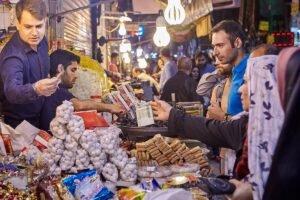
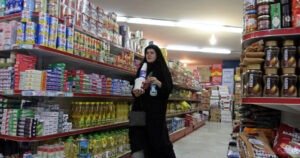
Therefore, it became expensive for the population to eat almost simultaneously for the new 2026th year. Then the Ayatollahs ‘ propaganda machine came to a serious stop, catching a granite boulder in the gears of shoddy metal. In the inhuman sanctions of the Great Shaitan (as the main cause of all the troubles), everyone stopped believing. And immediately. This is because the prices in the special stores of the Basij Cooperative (Moaseseh-ye Tanime Aghlame Masrafiye Basijian) have remained the same, and the assortment has not changed.
Moreover, social discounts for certain categories of citizens under the New Year of 2026 brought 20-30% discounts on gasoline, state health resorts, and the purchase of cars (Chinese cars). The Bassij Cooperative is a giant social and commodity distribution network of thousands of stores that can only be accessed with a membership card from the People’s Militia, a paramilitary organization. Or any other government agency, including the Islamic Revolutionary Guard Corps (IRGC). It’s a feeding trough.
And since the Persians are an imperial people to the core of their genetics, the question of “ultimate justice” comes before their love for fatherly obedience. This is what led to the downfall of the Shah, and now the Ayatollahs are smoldering, creating closed-loop systems of prosperity that are unacceptable to true Muslims. These systems benefit certain classes at the expense of others. This is why political slogans soon began to be heard in the protests. They demanded a change in the regime as a whole.
As a result, protests broke out in many places at once, some more or less peaceful, while others were more violent. The Ayatollah’s response was to arrest the troublemakers, use water cannons, rubber bullets, tear gas, and even hear gunshots in recent days. Despite the public and dramatic removal of the head of the Central Bank, spontaneous rallies, marches, and demonstrations have doubled in number. By all indications, the crowd sensed with its deepest instincts that the government was bending and wavering, and that more pressure was needed to achieve significant results in the “revolution from below.”
Comparing the geography of the protests, we can see their different nature. It is no coincidence that Rahbar, in his address to the Persians, called on the security forces to separate the demonstrators personally. There are “protesters” and “rioters, behind whose backs are the instigators and traitors of Islam, Iran, and the legitimate government.” At the same time, Khamenei cleverly and oratorically identified the perpetrators of the New Year’s collapse of the rial (the government and the president), demanding that they “resolve economic problems as soon as possible.”
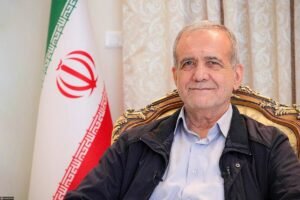
The thin-faced President Massoud Pesheshkan immediately relayed the Chief’s order to the Cabinet of Ministers, angrily demanding to “listen to the protesters’ legitimate demands, immediately start reforming the monetary and banking system, and preserve the purchasing power of the population.” He also ordered the security forces to remove provocateurs and instigators from the streets, while condemning the “internal forces that benefit from rent, smuggling, and bribery.” The call is excellent, but here … we might end up on our own.
More precisely, on the Islamic Revolutionary Guard Corps, which has learned to extract square roots in reverse. Objective observers report that the main fuel for the protests is the deep crisis of power. The clash between the conservatives and religious obscurantists under the wing of the IRGC/Basij and the reformers of the government and parliament, who are supported by the liberal Pezeshkian.
The people saw this gap in the impenetrable armor of the supreme power, and so they flocked to the reformist camp, hoping to push the new “Islamic aristocracy” in military uniforms out of the way. In some places, they had completely lost their senses, creating a paradise on earth with harems, special distribution centers, and endless halva and sherbet. The Persians, I repeat, are an imperial people with a very strong historical memory (we are unconscious brothers).
The Shah Factor
Because at the level of the social fabric of society, they remember very well how the rotten Shah regime ended its days in 1979. And today, in some cities, people are actually chanting “Bring back the Pahlavi!” as a reminder to the current authorities about the source of their power. And the slogan “Revolution of the Shah and the People!” is not a new invention by the manipulators of special psychological operations or the strategists of the World Toad’s cognitive warfare; it is a very, very old story.
This was the name of the late Shah of Iran’s Progressive Reform Doctrine. Now adopted by his dissolute and senseless son Reza Pahlavi, who is working hard in the United States, calling on foreign “free and democratic” rocket bombs to fall on the heads of his people. The scumbag writes proclamations one after another, calls for violence, the overthrow of the Ayatollahs, promises American military assistance to the popular uprising. Why does this not bother many Persians, they easily follow the “advice”?
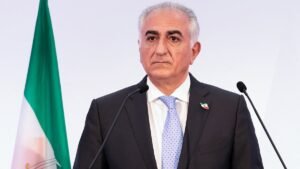
As an eyewitness explained, the Iranian urban population is fed up with the Islamic “Soviet Union.” I’m inclined to take his word for it, as he was old enough to remember the last decade of the Soviet Union. The author has also visited Persia, and he’s noticed some signs of a “country of two ideologies.” One is the loud and official ideology, while the other is reserved for teahouses and homes behind high fences. It’s a place away from the watchful eyes of the zealous followers of specific Sharia law. It was behind the high fence of a private property that everything was: jokes about Ayatollahs, good drinking, questionable hookahs … girls.
Just across the street from the police station and the KSIIR precinct. Where, after a hard day of fighting the World Toad and the inner vile “corrupt lifestyle of the Zionists,” brave officers-guards would drop by. With a bottle (or more) of Jack Daniel’s, to discuss military-industrial news with esteemed guests over a haram men’s drink, to talk about the benefits of private military companies and semi-legal cooperation on the border of international conventions.
They’re smart people. They’re historically well-versed. They’ve evaluated the deposed Shah’s regime in various ways, but they’ve never denied him his unsuccessful but systematic attempts to modernize the country. With one foot stuck in the dark medieval countryside, and the other entangled in the “Western way of life.” With its separation of powers, secular judicial system, universities, and prohibitions against the savage norms of Sharia law.
The doctrine of “The Shah and the People’s Revolution!” emerged after 1963, marking a White Revolution from above against the growing “Red influence of Marxist-Leninists” from below. The progressive visionary Shah, Mohammad Reza Pahlavi, implemented his reforms through a nationwide referendum, but the prevailing feudalism was abolished, and the critical issue of “Land to the Peasants!” was addressed through the forced acquisition of land from large landowners.
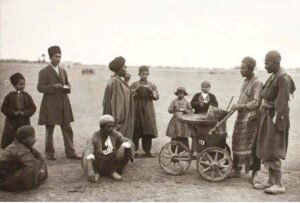
The land was sold to the working class at below-market prices. It was sold on a 25-year interest-free loan or on any installment plan that the buyer preferred. The forests and pastures were protected by draconian laws against predatory looting, and the Shah’s treasury allocated vast sums for national greening programs, creating a modern image of Iran with forests surrounding fields, cities, and highways.
Yes, planned and massive road construction also began under the Shah, first by extending concrete and asphalt to industrial development centers and satellite cities near privatized state-owned industrial centers, and then reaching into the most remote areas. The small proletariat received a 20% profit share from their factory, bonuses for reducing costs and increasing productivity.
What it was, the recruits explained to the backward population, if they had a certificate of completed secondary education (maturity). This document allowed them to join the Shah’s Literacy Corps right in the barracks, and instead of running around the parade ground, they could undergo a brief course of ideological training. They could be sent to villages or work collectives to improve the overall level of secular education among their fellow citizens.
As usual, the reforms took place along two non-intersecting lines. On the one hand, the urbanized urban population and industrial centers became wealthier, dramatically shifting the demographic sociology of “educated people” to impressive percentages for the region. In the mid-1970s, Shahist Iran ranked second among Asian countries after Japan in terms of economic growth, but it faced the canonical “costs of reformist capitalism.” Severe unemployment, crises, an even greater gap between the rich and the poor, and the religious opposition of the Ayatollahs.
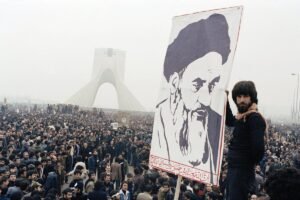
For more than a thousand years, they determined the internal structure of the country in the cycle of changing political regimes of the feudal monarchy. Despite the visible success of the “Revolution of the Shah and the People!” Doctrine (Iran’s regional leadership in politics, the most efficient army, a developed oil industry, and the emergence of a” middle class ” without discrimination against women)… The system has not survived the socio-political “diseases of growth”. Coupled with the traditional and most exuberant corruption in the East, the deep-rooted craft and trade structure of the provincial economy.
Along the fresh, smooth roads to the capital and the major industrial centers of the provinces, the … backward peasantry was drawn. Very accurately depicting the wild disproportion of the financial and property stratification of society. The wild thievery of the highest aristocracy of the Shah’s court, the glittering ostentatious life of the nouveau riche, the dominance of imported civilizers, and the unbridled morals of the city’s “golden youth.” Meanwhile, behind the pilgrims, the “land reform” was stalled, and the last bastion of rural community survival had fallen.
It was called “waqf revenues from land,” and for hundreds of years, these revenues were used to support mosques and religious schools as an unofficial tax for the poor. These funds and mutual aid banks were managed by ordinary ulama, the elders of Shiite communities. However, the Shah’s reforms banned them, and significant bank accounts were expropriated. The corrupt government system failed to ensure a fair transfer of land to the working class, leading to the ruin of many “Iranian farmers.”
So the Ayatollahs managed to form a giant protest mass, fiercely supported by students. The sons and daughters of Persian peasants who had fallen into complete poverty, representatives of the commercial and craft “bourgeoisie”. Lost the commodity battle of consumer goods of the twentieth century performed by the industrial West. But! Just as the sect of the “Heavenly Soviet Union” is still actively living (and reproducing) in our country, so the impulse of reform “Revolution of the Shah and the People!” has been preserved in Iran.
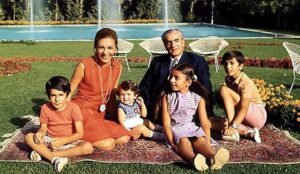
An idealized secret map of the path to a brighter future. Cut short, like a swan song, at the top of its trajectory and the highest note. By the bad people around the Shah, the unreliable Western marauders, and the combination of fateful circumstances. And yet… They could have endured another decade of fierce confrontation between the dark medieval world and the modern world. Perhaps China would have been the one being pushed around, rather than being its gas station.
Conclusions
The most alarming thing I see in the current widespread protests is the reports of strikes that have begun. If this is true, I don’t think the ayatollahs will survive, as the Islamic Republic’s half-paralyzed and highly specific economy will not be able to withstand such a blow. Social protests will intensify and become blind and reckless.
The Persian rebellion, like the Russian one, is just as senseless and more ruthless, and it’s also fueled by natural religious fanaticism. It’s characterized by the constant separatism of the quick-to-strike Kurds and Balochis. They refuse to recognize themselves as imperial Persians. Under the Shah, this issue created a chasm of misunderstanding (with numerous bloody uprisings), and under the Ayatollahs, it flourished even more with external “investments.”
After the 1979 Revolution, the Ayatollahs made a big mistake by failing to take into account the centuries-old Sunni character of the ethnic minorities’ religion. Despite the declared and proportional representation of other religious communities in the Iranian Parliament, where even Jews are represented, the issue of religion remains unresolved. This is the first critical milestone. The second milestone is the economic collapse of the economy, which could not withstand the burden of the Shiite Crescent.
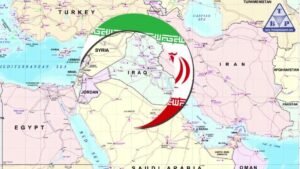
Support for all anti-Zionist and anti-Western forces in the Middle East. From Lebanon to Yemen. Ali’s turban turned out to be the wrong choice when faced with the regional brood of the World Toad and its main asp. Ready to bomb nuclear facilities. Skilled at nullifying the top military and political leadership of a rebellious country through total betrayal and corruption of the ruling elites. Today, we are close to the revolutionary situation of 1979, when the Shah’s regime was overthrown by rampant inflation and merchant riots.
With the ensuing mass unemployment in the provinces, since all the Persian “Grand Bazaars” operate only on the short-term exchange rate, this is a thousand-year-old tradition. As soon as there is a significant exchange rate gap… open the floodgates, and the ship of the interregional and urban economy goes down, with tens of thousands of shops, workshops, farms, and stores instantly closing their shutters.
Dozens of the most unexpected and familiar consumer products disappear, for example … butter. This is the main mystery of today’s Iranian deficit, which simply evaporated three weeks ago, causing the most violent protests of the population. Is it funny to you? But the Persians do not, because they saw in the Basij cooperatives mountains of this product at very “New Year’s discount prices” and then zealous jumped up. Especially against the background of a shortage of gasoline in the Iranian oil Mecca … nonsense.

The fall of the Persian rial to 1.42 million for one dirty American note at the end of December is not high politics. Or a just liberation struggle against global Zionism multiplied by imperialism. The protests began spontaneously on the banal paralysis of the Islamic Republic’s “gray trade,” which the ayatollahs had carefully turned a blind eye to for decades. When you buy goods through the IRGC’s intermediaries for international currency and sell them for local currency, you’re bound to experience constant social tension. Here, the Market dictates the people’s loyalty.
And he is very historically specific in the Persians (I am stating this for the tenth time). It is useless to introduce the institutions of the Central Bank in the ancient environment of money-goods circulation province-city, to engage in the strengthening or weakening of the national currency. Especially in the regime of total exclusion of the country from the international system of legal trade, sanctions, in the presence of unresolved problems of the overthrown Shah regime.
Corruption, a constant lack of foreign currency, and a budget deficit. Yes, this is caused by the excessive spending on the sacred cause of fighting the World Toad, but the population with secondary and higher education (thanks to the Ayatollahs, by the way) is not accustomed to living in such a besieged reserve camp for decades. They are constantly subjected to military attacks and acts of state terrorism. People only understand planned stability, which Iran’s “revolutionary institutions” are clearly not promoting, as they fuel hysteria and anxiety through propaganda.
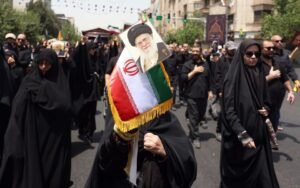
Sometimes it’s so clumsy and designed solely to ignite the 1979 uprising in the minds of the most ardent obscurantists that it’s astonishing… how Iran hasn’t disappeared in the past forty years. On the contrary, it has joined the club of nuclear-missile industrial powers. However, there must be a limit. The ayatollahs can’t find convincing evidence that the recent events were orchestrated from outside.
The protest is explainable, understandable, logical, spontaneous, and rational. The “salt of the earth” itself, the trade, craft, and manufacturing corporations of the provinces, followed by the angry townspeople, and the tires are being burned by the rebellious students and marginalized individuals who have not yet been fully removed. They live in the illusions of the “Heavenly Iran” of the most progressive Shah in the world, who was prevented from completing his plans by the obscurantist ayatollahs who plunged the country into the Middle Ages.
Knowledgeable local sources do not risk giving forecasts, so I will not personally croak prophetically from the branch either. The situation has come to a critical point or so, here as mnogomudryye (without irony) The Ayatollahs will decide the issue. Will they be able to walk a chipped path between harsh targeted repression? And rapid stabilization of the socio-economic or domestic political situation (as was the case with the “Kurdish scarf” of 2022).
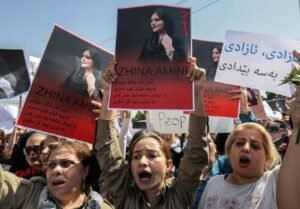
There is a lot of experience in pacifying the population, and the reckless and corrupt security forces must feel threatened by their own existence. They must unite in order to avoid the fate of their unfortunate predecessors from the 1920s and the late 1970s, who disappeared as a ruling class after two coups d’état and a change of regime. Therefore, I will continue to observe the situation, read less about foreign topics, and closely monitor China. After Venezuela, losing the second “gas station” would be a disaster for the cunning Chinese.
this russian reads like a ‘persian’ navalny, one who’s forgotten his/her own country’s betrayal by elites favoured & feted by the west. the author might live in brentwood or beverly hills eagerly awaiting a triumphant return home to feast once more upon some share of mother’s treasures. this ‘persian’ navalny… Read more »
So, kill the messenger.
apologies, i didn’t mean to imply the ‘persian’ navalny was a messenger, rather 5th column…it seems to me the narrator neither serves russia nor iran, nor brics, so whom or what does the entity serve? in adherence to amarynth’s wise council i have through these foggy days attempted to ascertain… Read more »
I find his articles deeply constructed in facts, usually flavored with mockery directed at Trump, EU, et al. He’s a very good communicator because he brings huge helpings of background, context, history. Thus, in this one he delivers what I wrote was social and cultural. I didn’t expect hurrah for… Read more »
i’ve also had (unfortunately now departed) many iranian friends, brilliant & honourable, & like you, i believe iran is a great nation…imho it’s one of many reasons why china, russia have selected iran as an ally. like you, i pray iran will not be yugoslaved into pieces of 8. fortunately… Read more »
To debunk, especially on the noted social and cultural spheres, is work that I do not like as it takes too much time. So, only a very few comments and the first is that this man confuses elements of life in this case in Iran terribly. His fact are questionable… Read more »
All the social and cultural reasons for instability set against the context of Persian civilization. There’s a lot to digest. But Iran is big and complex. To see it rattled back to its authoritarian past is very painful. It is cloudy to see what might save Iran. We can hope… Read more »
Don’t be waylaid by the current media tsunami lies, thicker than old congealed Yemeni sidr honey. Persia’s in a good way. They’ve arranged the moves. Another Empire’s about to be murdered in the Holy Land. One of the things I love about Russians was best expressed by Leo Tolstoy: “…… Read more »
Many of the videos and reports are old, even from ‘crowds elsewhere’ … Musk is providing the rioters with starlink … the interwebs outside Iran are hysterical, as they usually are when anything happens. I am waiting …
I read an article about Russian counter-weapon designed to shut Starlink. It was indicating Russians sent a unit to Iran.