

Maria Zakharova: Notes on Azerbaijan and Armenia
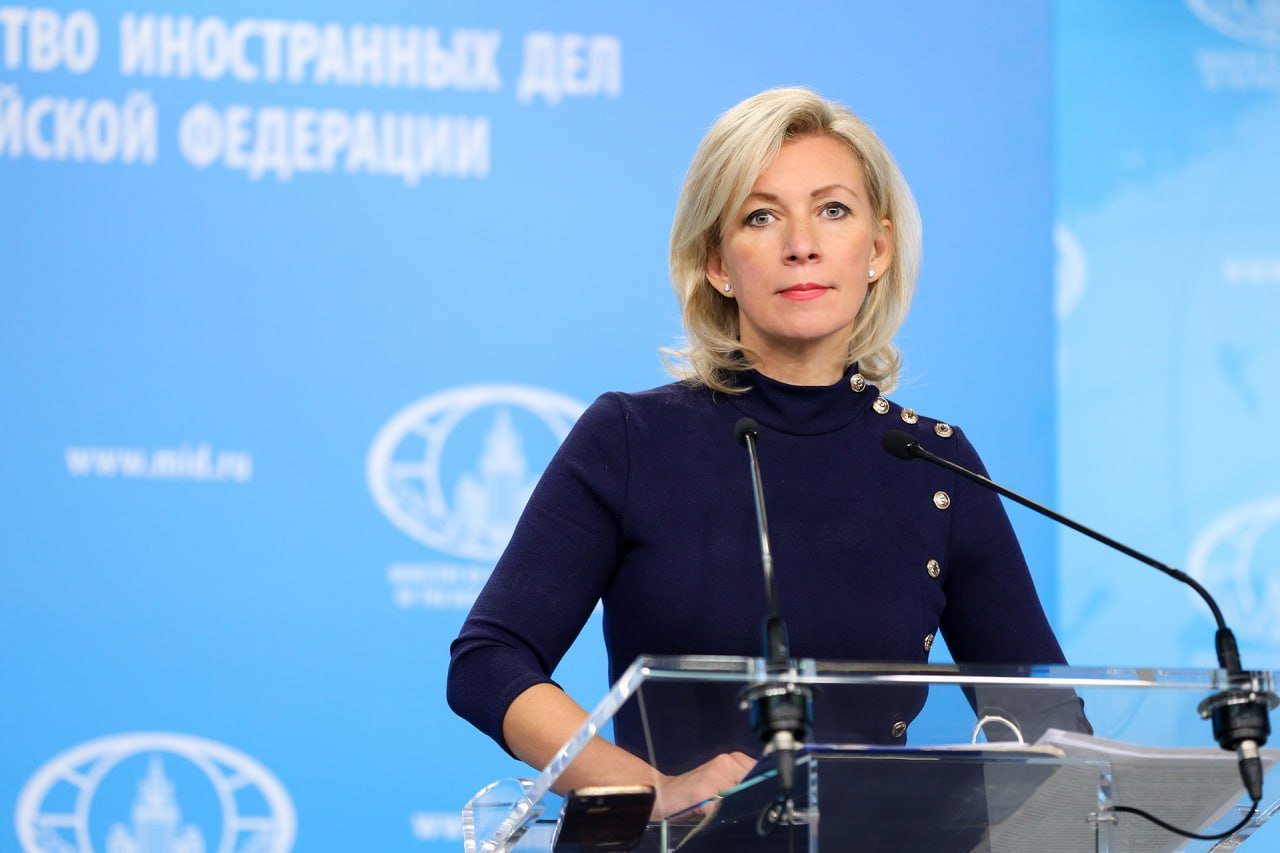
Comment (https://mid.ru/en/foreign_policy/news/2040852/) by Russia’s Foreign Ministry Spokeswoman Maria Zakharova on the talks between the Leaders of Azerbaijan and Armenia in Washington (August 9, 2025)
💬 The Russian Federation is interested in ensuring stability and prosperity in the South Caucasus. One of the primary conditions is the comprehensive normalisation of relations between Azerbaijan and Armenia, grounded in mutual consideration for both nations’ interests.
We consistently support all the efforts conducive to achieving this goal, which is essential for regional security. Therefore, the meeting between the Leaders of the South Caucasus republics in Washington, facilitated by the United States, merits a positive assessment. We hope this step will advance a peaceful agenda.
At the same time, until recently, Baku and Yerevan have maintained that they prefer direct dialogue without third-party mediation.
☝️ It would be appropriate to note that this stage in Armenia-Azerbaijan normalisation began with Russia’s direct assistance and central role as the three countries adopted a trilateral high-level statement of November 9, 2020 (http://en.kremlin.ru/events/president/news/64384) on ceasing fire and all hostilities in the area of the Nagorno-Karabakh conflict. Russia’s peacekeeping contingent was subsequently deployed in the region, making an invaluable contribution to stabilising tensions.
🕯 We will always remember our peacekeepers who fell in the line of duty.
In 2020-2022, the same trilateral format produced a roadmap addressing key issues pertaining to peace between Baku and Yerevan:
• concluding a peace agreement,
• unblocking regional transport and economic links,
• delimiting and demarcating state borders,
• promoting civil society contacts.
Substantial progress has been achieved across all these domains.
The most suitable option to resolve the problems in the South Caucasus is to search for and implement solutions developed by the region’s countries themselves, with support from their direct neighbours, Russia, Iran and Türkiye.
Involvement of actors outside the region should contribute to strengthening the peace agenda rather than create additional difficulties and dividing lines. It would be prudent to avoid repeating the counterproductive outcomes of Western conflict mediation in the Middle East.
A case in point in the South Caucasus is the EU observer mission in Armenia, whose operations persistently provoke discontent among other regional actors.
We will carefully assess Washington’s statements regarding the restoration of regional communications. The trilateral agreements with Russia remain valid, as neither party has formally withdrawn from them.
It is important to consider Armenia’s participation in the EAEU’s unified customs territory — especially concerning the regulation of transit operations through the republic.
It must be acknowledged that Armenia’s border with Iran remains under the protection of Russian border troops, deployed pursuant to the interstate treaty of September 30, 1992.
The conclusion and implementation of a peace agreement, along with the establishment of relations between Azerbaijan and Armenia, are fundamental to building peace between these South Caucasus republics. The reconciliation process between the two nations must be situated within the regional context, grounded in a balance of interests and unconditional respect for the priorities of both parties and neighbouring nations.
Related Posts
-
Foreign Ministry Spokeswoman Maria Zakharova – If Kiev attacks irt Victory Day, make sure your people are evacuated
May 6, 2026 -
Towards Lasting Peace between Azerbaijan and Armenia.
August 12, 2025 -
Trump has a TRIPP. We have another front in the war on single polar hegemony
August 9, 2025 -
Maria Zakharova
June 22, 2025 -
Some good news from BRICS (out of Russia)
May 15, 2025 -
Maria Zakharova on the “return of prodigal brands”.
February 19, 2025 -
Crash of Azerbaijani civilian airliner in Kazakhstan
December 30, 2024 -
Maria Zakharova: Interview with RT
September 7, 2024 -
Maria Zakharova on negotiations
August 18, 2024 -
From Maria Zakharova: On British and other Spies
July 10, 2024