

Wild Weekend Analysis: Russia, China, West Asia
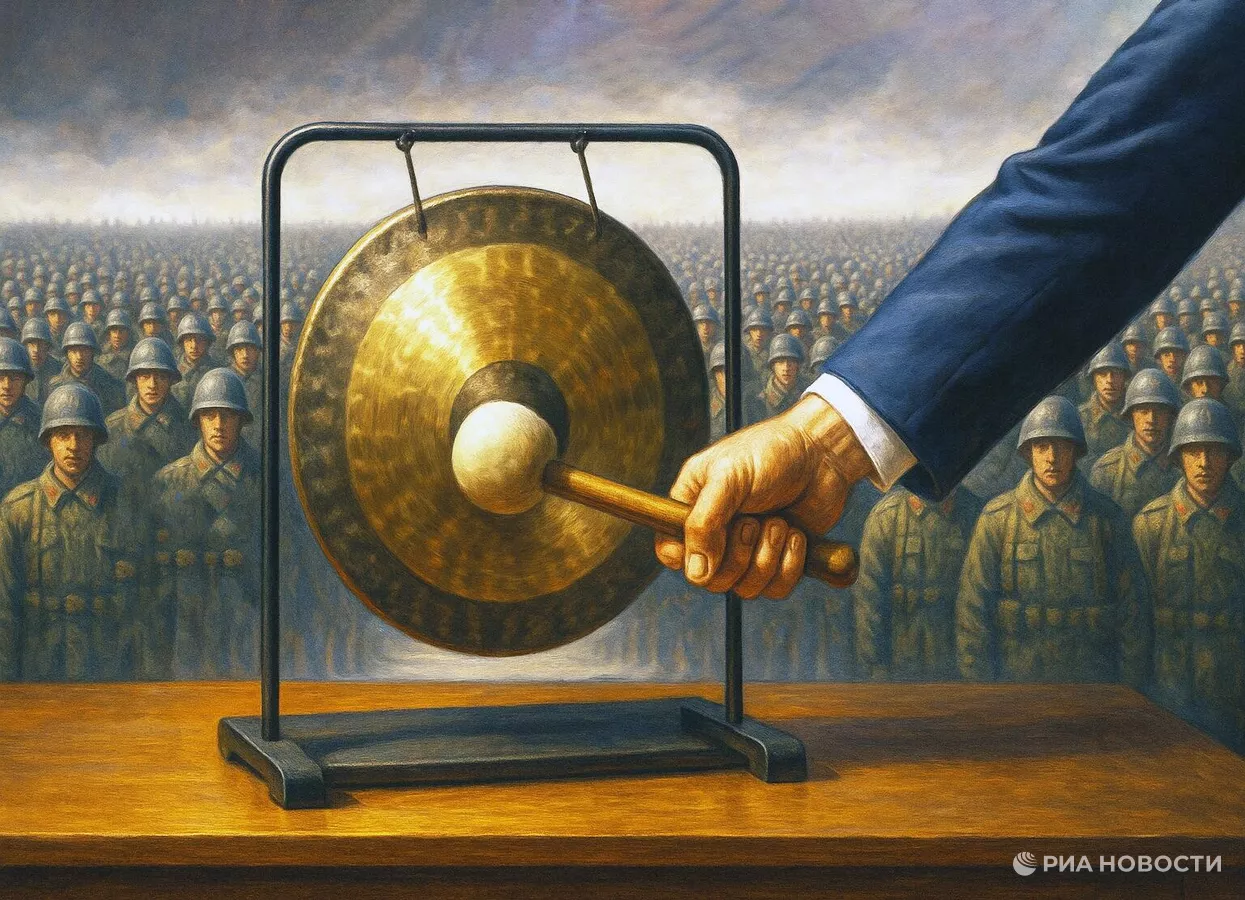
This curated selection pulls us above the daily fog of conflict and into a crucial strategic assessment. As the first Russian piece underscores, time is of the essence. We examine four distinct voices shaping the modern geopolitical landscape:
1. Russia’s Pragmatic Imperative (Kirill Strelnikov, RIA Novosti): Strelnikov argues unequivocally that Russia, possessing the world’s most formidable military prowess, must undertake the comprehensive rebuilding of Iran’s military structure. This isn’t mere assistance; it’s a strategic necessity dictated by capability and circumstance.
2. China’s Predictive Lens (Quan Le & Prof. Jiang Xueqin): Le reflects on Jiang’s prescient year-old analysis, “The Iran Trap.” To this, we add Jiang’s latest, “The Messianic Calling” – a fascinating counterpoint to traditional eschatology (End Times prophecy). Here, Jiang applies his predictive historical framework to dissect the perceived “messianic” drives of Trump, Netanyahu, and Khamenei, culminating in a cliffhanger pointing to Isaac Newton’s foundational role in Christian Zionism. This is modern predictive analysis at its most provocative.
3. West Asia’s Reality Check (The Cradle): This piece lays bare the collapse of Russian diplomatic illusions in West Asia. Tel Aviv’s defiance and Washington’s duplicity during the Israel-Iran conflict have shattered Moscow’s balancing act, forcing a stark reckoning not only for the region but potentially for Ukraine as well. It confirms what many sense intuitively.
The Synthesis & The Imperative:
Presenting these perspectives – modern Russian pragmatism, cutting-edge Chinese predictive analysis, and West Asian ground truth – serves a critical purpose: it demands we listen. Our current institutions, particularly BRICS, require fundamental evolution. The Shanghai Cooperation Organization (SCO), especially evident in its recent Defense Ministers’ summit, is already moving decisively into this space, focusing squarely on collective security (call it the practicalities of deterrence and defense).
This holistic view, drawing from key Eurasian intellectuals, clarifies the path: Russia provides the hard-power pragmatism which Iran should accept, China offers the deep-time predictive context, and outlets like The Cradle deliver the unvarnished reality check. Together, they bring us closer to defining the necessary resistance.
And here, a crucial distinction: There is the established Axis of Resistance in West Asia. But beyond that, there is a broader, essential resistance – ours. It’s the resistance of all who recognize the imperative to stand against forces seeking dominion not just over land, but over our hearts, minds, and very being. This is the true battleground of the emerging world order.
Let’s start:
Kirill Strelnikov – Ria Novosti
Despite the “eternal peace” declared by Trump, Iran must learn three key lessons from its confrontation with Israel, or it may face a brutal repeat in the foreseeable future.
Lesson one.
Despite the fact that everyone has won and everyone is handsome (including the United States, Israel, and Iran), the underlying causes of the conflict have not gone away, and the parties have only taken a break. According to Russian Foreign Minister Sergey Lavrov’s recollections, 20 years ago, at the UN General Assembly, Netanyahu waved a piece of paper with an image of an Iranian atomic bomb, and after the apparent failure to “resolve the issue definitively,”The ultra-Orthodox elite in Israel has become even more determined to crush Iran once and for all. This means that they are currently working on their mistakes and will be much better prepared for the next act of the Merleau-Ballet.
Lesson two.
For the Iranian authorities, who have declared victory, the current respite is an opportunity to accept the fact that the region’s pretentious and theatrical politics have come to an end, and the era of “weakness is beaten and ultimately destroyed” has begun. “Long arms” and “soft power” have been defeated by brute military force and a determination to go all the way. Even Estonian sprinters have realized that even the best and most advanced economy is worthless if it doesn’t have a powerful “umbrella” and a trained, motivated army, preferably a large one. Interestingly, the Houthis were the most explicit about this yesterday, stating, “The US and Zionist entity’s ceasefire agreement with Iran highlights that military force is the only language they understand.”
Another dangerous point is that preemptive strikes can now happen at any second, simply because “it feels like it.” Rolling Stone reported yesterday that the U.S. decision to strike Iran was based not on intelligence data, but on “vibes” — sensations in different parts of the body. It remains to be seen where, when, and for whom the next vibe will occur.
Lesson three.
They don’t skimp on security, and strategic decisions are made based on solid data. In the attack on Iran’s nuclear facilities, the United States used its best and most powerful non-nuclear weapons, while Israel employed the most advanced American-made aircraft.
The Islamic Republic’s outdated air defense system, primarily composed of Iranian systems, was virtually powerless to counter them. The recent military operations have clearly demonstrated that whoever controls the skies eventually controls the land.
At one time, looking into the future, the Russian leadership proposed that Iran create a modern air defense system based on Russia’s excellent S-400 systems, but the Iranian leadership declined, citing their reliance on their own air defense capabilities, particularly the Bavar-373 system. This episode was recently recalled by Russian President Vladimir Putin during a meeting with foreign journalists: “You know, we once offered our Iranian friends to work on an air defense system. At the time, the partners didn’t show much interest, and that was it.
However, it wasn’t just about the installations themselves, but rather about a comprehensive layered system that included the installations, combat control centers, long-range radar stations, electronic warfare equipment, and fighter aircraft. Despite the lack of interest, the results were evident.
The conflict has also exposed serious issues that Iran urgently needs to address in terms of offensive weapons. Some experts believe that the Islamic Republic needs to completely rethink the entire ballistic missile program. In particular, Russia’s experience in creating missiles with separable warheads and maneuvering warheads that can effectively overcome the enemy’s modern echeloned air defense system would be extremely useful (dozens of the much-vaunted Patriot complexes annihilated in Ukraine are waving greetings from the audience). At a meeting with military university graduates, Vladimir Putin also mentioned that we are launching mass production of the latest medium-range missile system, the Oreshnik, which has “proven itself very well in combat conditions” and has caused a lot of concern in the West. However, the decision to support the domestic Iranian manufacturer is ultimately up to the leadership of the sovereign country.
As for the choice of a contractor for the accelerated restructuring of Iran’s air defense system, all Western air defense ratings, without exception, place the Russian S-400 Triumph system, which Putin mentioned in a philosophical manner, at the top of the list. However, Russia is not standing still, as the world’s newest and deadliest S-500 Prometheus system is already being mass-produced and has been widely deployed in the military.
At one time, Pentagon spokesman Jonathan Hoffman said that “the S-500 can change the balance of power in global missile defense,” and former US Secretary of State Anthony Blinken admitted that “we will continue to closely monitor the development of the S-500, as this is part of Russia’s strategy to strengthen its defense systems and create new challenges for the global missile defense system.”
However, the S-400 and S-500 are not the only things that can seriously upset any aggressors. As NATO Secretary General Mark Rutte said yesterday, “Russia is increasing its military power at an astonishing and frightening rate.” Against the backdrop of the strategic cooperation agreement between Russia and Iran signed on the eve of the Israeli aggression, there are all the prerequisites for returning to the total restructuring (or, in fact, to creating it from scratch) of Iran’s air defense system and the entire multi-million-strong Iranian army, with Russia’s active participation and taking into account its extensive experience in the special military operation.
As Russian President’s Press Secretary Dmitry Peskov stated, “Russia has provided support to Iran through its clear stance on the situation in the Middle East and intends to further develop relations with Tehran.”
Unlike many others, we don’t change our allies like gloves, and we fulfill our obligations to the end.
—
Quan Le, introducing Professor Jiang Xueqin:
Published a year ago on YouTube gives you the perfect background for understanding the Iran trap that will destroy, for the benefit of all mankind, not only Israel but its master, the KFC-AZAEL : Kakistocratic Feudal Conglomerate of the Anglo-Zio-American Establishment.
This channel is really underrated and absolutely deserves its name : PREDICTIVE HISTORY meaning that if you really know the true historical facts, not only it’s possible but not that difficult to predict the future geopolitical events.
Jiang Xueqin is giving these classes to Chinese students in a highly select private high school in Mainland China. The teenagers are receiving lessons in English as a second language but through the topics of geopolitics combined with Universal History.
We’re lucky that Jiang (his family name) decided to upload his classes on YouTube.
In this video, Jiang made a mistake about Nikki Haley, but the rest is quite impeccable. He did not take into account Captain Eyeliner.
Jiang predicted the attempt for regime change in Iran happening right now —– not showing big signs of success thanks to the resoluteness of Iran’s Supreme Guide His Holiness the Ayatollah (Sign of God) Seyyed Ali Khamenei who decided on June 13, 2025 in the midst of fire and shambles that IRAN WILL NOT SURRENDER —– however Jiang thought the event would happen in March 2027 and not in June 2025.
I don’t see it as a real analytical mistake.
Jiang simply did not take into account Netanyahu’s impatience and the Orange Muppet’s handlers (Miriam Adelson for example) wish for getting as fast as possible what they want and not forgetting they already paid the Muppet for that (the customer is always king or queen especially when he or she already paid).
Let’s not forget the Orange Muppet’s clownish regime destroyed in the first 80 days (Jan 20, 2025 to April, 12, 2025) all its credibility so the Muppet will certainly be a lame duck in 2027.
If the Orange Muppet was allowed some space for deciding and his regime did not implode so fast, the choice of March 2027, the time for his regime in D.C. to get used to business and be more prepared for the onslaught on Iran, is not so absurd.
Also the Orange Muppet’s handlers, as all of us, clearly see that he might soon devolve into a dementia syndrome so they don’t want to lose their investments.
And that kind of thing cannot be obtained by keen geopolitical analysis : they’re called Black Swans.
And a year later, The Messianic Calling with its cliffhanger end.
—
We end with Hazal Yalin writing for The Cradle.
Russia confronts US betrayal in Israel–Iran war
Tel Aviv’s defiance and Washington’s duplicity have shattered every last bit of Moscow’s illusions of diplomacy, forcing the Kremlin to reckon with the collapse of its balancing act in West Asia – and even Ukraine.
From the outset, Moscow condemned Israel’s aggression against Iran in sharp terms. The Russian Foreign Ministry’s first official statement left no ambiguity in assigning blame to Tel Aviv.
Until 20 June, Russia clung to the belief that a ceasefire could be brokered and that Washington would refrain from direct strikes on Iran. This optimism stemmed from a nearly hour-long phone conversation on 14 June, during which US President Donald Trump and his Russian counterpart, Vladimir Putin, discussed the escalating Israel–Iran conflict. Trump reportedly stated during the call, “this war in Israel–Iran should end,” a message echoed later on his Truth Social feed.
Kremlin aide Yuri Ushakov reported that US negotiators were open to returning to talks on Iran’s nuclear program. For Moscow, this was not merely optimism — it was interpreted as a real diplomatic overture and a potential backchannel for Trump to defuse mounting domestic and legal pressures.
From Moscow’s view: A timeline of misjudged hopes
This belief informed Moscow’s early posture. Even after Tel Aviv launched its unlawful strikes on Iran, the Russians avoided directly blaming Washington. Instead, they pinned principal responsibility on Israeli Prime Minister Benjamin Netanyahu’s far-right cabinet, denouncing Israel’s leadership while keeping communication channels open.
In his 18–19 June press conference with international media agencies – deliberately scheduled late at night to be picked up by US audiences – Putin emphasized ongoing direct lines with both Trump and Netanyahu. He pointed out that the attacks had only solidified Iran’s internal political unity and noted that the bombings did little to harm Tehran’s nuclear infrastructure, saying, “These underground factories remain intact. Nothing happened to them.”
Putin also made clear that a resolution was still on the table: a framework that could ensure Iran’s peaceful nuclear rights while addressing Israeli security concerns, and confirmed that Russia had presented these options to all three sides.
At the St. Petersburg International Economic Forum (SPIEF) – Russia’s premier annual business and diplomacy gathering – Putin reiterated Moscow’s diplomatic approach, noting that Russia had presented “some ideas” for a settlement to all sides. He also reaffirmed support for Iran’s right to peaceful nuclear development, referencing Russia’s ongoing construction at the Bushehr nuclear facility.
Putin stated that he had requested safety guarantees for Russian personnel there, and added, “Prime Minister Netanyahu has agreed with that, and President Trump has promised to support our legitimate demands.”
But that facade would collapse almost instantly. Shortly after Israel claimed it had targeted the Bushehr plant – only to later retract the statement, calling it a “mistake” – it bombed the city’s airport, destroying its international terminal.
The attack, less than 36 hours after public reassurances, was viewed in Moscow as a deliberate humiliation. It extinguished any remaining belief that Tel Aviv or Washington were operating in good faith.
Moscow’s tone hardened. UN Ambassador Vassily Nebenzia’s 20 June speech marked the last instance of diplomatic optimism:
“We are convinced that it is quite possible to forge a solution that would both respect Iran’s right to peaceful nuclear activities and ensure the unconditional security of the Jewish state. We have conveyed these options to our American and Israeli colleagues, as well as to our Iranian partners.”
After 22 June: Anger and reassessment in Moscow
Everything changed on 22 June. The US bombing campaign confirmed what many in Moscow had feared: that Washington was not only unwilling to mediate, but had used Russia’s overtures as strategic cover.
Russian political elites began to speak in stark terms. Andrey Klishas, head of the constitutional committee in the Federation Council, was blunt:
“The Islamic Republic will be compelled to respond to the violation of sovereignty and aggression against its country, because a regime that cannot defend the sovereignty of its state is always doomed.”
On 23 June, the influential Telegram news-analysis channel Yoj – with over 500,000 subscribers – reported that the Kremlin had quietly advised state television to avoid portraying Trump as a peace-seeking figure.
According to Yoj, Putin was still holding off direct attacks on Trump, but that could change. “If the president sees Trump as willing to use force against Russia over Ukraine, he will abandon restraint. That scenario, despite Trump’s talk of peace, is now considered entirely plausible within the Kremlin.”
Anger echoed through official channels. Russian Foreign Minister Sergei Lavrov’s statements were seething. UN Ambassador Nebenzia, speaking at the UN Security Council, declared, “Washington has once again demonstrated its total disregard for the position of the international community and confirmed that in defense of its Israeli ally it is prepared to wager the safety and well‑being of all humanity.”
Even Putin, typically cautious in foreign briefings, took an unusually blunt line during his 23 June meeting with Iranian Deputy Foreign Minister Abbas Araghchi. According to Iranian outlets Jamaran and Shabestan, Putin described the US airstrikes as “an unprovoked and unjustifiable aggression,” and emphasized that “the provocative aggression against Iran is without any basis or justification.”
The president’s spokesperson, Dmitry Peskov, was even more direct, hinting that Moscow would be prepared to deliver whatever Iran needed to counter this illegal and unprincipled war:
“We have offered our mediation effort, this is something concrete, we have declared our position, which is a very clear statement, a form of support for the Iranian side. From now on it all depends on what Iran needs right now.”
Asked whether Iran will be given Russian S-300 and S-400 air defense systems, Peskov suggested that Iran need only ask, stating, “It all depends on what the Iranian side and our Iranian friends say.”
Why the Iran–Russia ‘strategic pact’ falls short
The much-discussed “comprehensive strategic cooperation agreement” between Russia and Iran has turned out to be less than it appeared – particularly on military terms. While many assumed that Moscow was reluctant to deepen security ties, official Russian accounts suggest the opposite is true.
It was Iran’s parliament that delayed ratifying the agreement for nearly two months after Russia’s Duma passed it in late May. On 18 June, Putin – when asked by an AFP reporter whether Russia would supply new air defense systems to Iran – clarified that not only had Moscow offered to supply them, it had proposed co-production. Iran, he said, had so far not accepted and had not made any formal request.
Two days earlier, Duma Deputy Svetlana Zhurova told Russian media that while the pact included arms sales, military training, and intelligence exchange, Iran had refused any clause allowing deployment of Russian troops. She added. “Everyone sells weapons – that’s standard. But sending personnel? That’s outside the agreement.”
On 23 June, hours before Putin’s meeting with Araghchi, Duma Defense Committee Deputy Chair Alexei Zhuravlyov confirmed, “One should not expect a Russian expeditionary corps in Iran … the relevant clauses were removed from the Russian–Iranian agreement at Tehran’s request.”
Tehran has made no effort to contradict these statements. The evidence points to Iran setting clear limits – possibly to avoid appearing overly reliant on Russia, or to maintain maneuverability in the emerging multipolar order. Furthermore, while Iran’s constitution does not explicitly include a formal declaration of non-alignment, the concept of “neither east nor west” has been a central tenet of Iranian foreign policy since the 1979 revolution.
And although since the late Iranian president Ebrahim Raisi administration, Tehran has geared itself to primarily “Look east,” his successor appears to have boomeranged by opening indirect talks with the Americans. Given the colossal betrayals of trust displayed by the Trump administration since 16 June, however, current Iranian President Masoud Pezeshkian’s west-leaning options may have narrowed considerably.
Looking ahead: Can Moscow still build a regional axis?
An earlier analysis published in The Cradle argues that peace in West Asia would hinge on new alliances – and that even provocations by Tel Aviv might be tempered in the short term by mutual caution. That assumption has now collapsed. Washington’s actions, paired with Israel’s targeted escalation, have pushed the region into a far more volatile phase.
The only viable option now may lie in Moscow and Beijing pressing harder – with Persian Gulf states, and especially Saudi Arabia – to develop an alternative regional security framework.
While fragile, a few openings remain: Riyadh’s sharp condemnation of the Israeli attack on Iran, its public objection to Iran’s retaliatory strike aimed at US-linked bases in Qatar, its reluctance to align against Russia on Ukraine, and broader hedging behavior in West Asia may offer a narrow path forward.
That said, the ruins of Syria still cast a long shadow. There is little certainty that Moscow can convert tactical understandings into strategic alliances. However, without such a shift, the path forward leads not to de-escalation, but to an even broader regional war.
A new wave has been unleashed. I remember Mr Lavrov’s comment: This is a turning point. It is up to us to surf this turning point.
Re: ‘remember us’–‘down the hatch’ Well, who squealed first? History rhymes; recall the Feb 2015 cauldron at Debaltsevo. The peoples’ militias had the disorganized ukies on the run and seemingly could have advanced to the west as far as they wanted. Hollande and Merkel hustled their asses to Moscow, to… Read more »
“There is a tide in the affairs of men, Which taken at the flood, leads on to fortune; Omitted, all the voyage of their life Is bound in shallows and in miseries. On such a full sea are we now afloat, And we must take the current when it serves,… Read more »