Furthermore, my father was a renegade Communist from Yan’an, the headquarters of the Communist Party after the Long March. He wrote a historical novel based on his experience. I was also lucky to have befriended people in China with unique life stories. One such person was Sidney Rittenberg, an American who lived in China for thirty-eight years after the Second World War, of which sixteen were inside a prison. I learned much about China from Sidney, who passed away in 2019.
I had a lot of fun and learned a great deal creating this pièce de résistance. I must, however, warn treasure seekers that they may not find a mother lode; they may hit a leaky pipe and encounter something unpleasant instead. On the other hand, prospectors with a discerning eye and an open mind will discover new ideas, new knowledge, new interpretations of history, new ways to understand oneself and the world, new insight into the origin of human civilization, new questions about the mysteries of our universe and a new theory for establishing a perpetually peaceful Utopian society, a lofty aspiration previously thought to be unattainable. In addition, the reader will learn everything about China and be thoroughly gobsmacked, even if the reader believes he or she already knows everything about China.
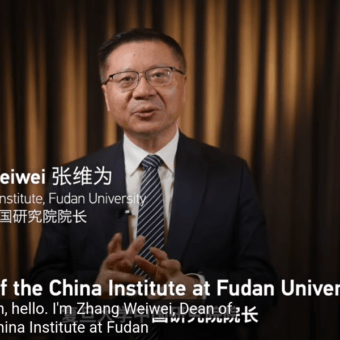
To convince myself that my socioeconomic theory was not entirely frivolous, I submitted a concise thesis for review by the estimable Professor Yifu Lin, renowned professor of economics at Peking University, previous Senior VP and Chief Economist of the World Bank and the deputy director of the CPPCC committee that provides consultation on economic matters to the Chinese government. Professor Lin read my thesis and concluded that my thought process was “logical and convincing.” Amen!
Thesis for a planet of perpetual peace
To plan for establishing a perpetually peaceful world, we must understand human society and its economics. To understand the fundamentals, we need to explore the origin of life and the conditions conducive to its emergence and evolution.
What is life and why does it happen? Life is simply the existence of molecular structures with self-replicating ability. Life happens because it is a possibility in the “design space” of the universe. Given enough planets, enough molecules and enough time, life is bound to happen somewhere in the universe.
Corollary: Life is inevitable. It is not self-emergent but emergent of the universe.
Replication requires new building block material to create replicas. The chemical bonding uses up energy. For life to continue propagating, we need more building block materials and energy, both finite resources. The economics of material and energy supply governs life. [Lin’s comment: Agree!]
Corollary: As there is life, there is economics. [Lin’s comment: Agree!]
But conditions conducive to life will change in a dynamic world. Fortunately, life’s “design space” provides an answer for perpetuation and development. Evolution and natural selection are the emergent processes that keep life going. Evolution is possible because of a fundamental flaw of life. Replications are not perfect. Such imperfections may, by chance, create a new molecular structure that enhances the ability to make new replicas, for example, by providing mobility that moves the replicas to warmer regions with more building block material. [Lin’s comment: Agree!]
The new mutated replica will win in the competition for finite resources. It will be more successful in keeping life going, making more replicas of itself and, therefore, becoming dominant. [Lin’s comment: This is Darwinism]
Corollary: The economics of acquiring building block material and energy governs the evolution of life. [Lin’s comment: Sensible!]
By evolution and natural selection, life became ever more complex and efficient. New organisms would adopt various strategies according to their environments to acquire building block material and energy, namely food. Every living organism must be able to efficiently acquire food, efficiently convert it to energy and use that energy to acquire more food, leaving a surplus for reproducing enough offspring to survive until the start of their reproduction cycle. Having a surplus is the result of economic efficiency.
Corollary: Economic efficiency equals success in the perpetuation and propagation of life. [Lin’s comment: The corollary is right for an individual species] (my comment: I suspect he means individuals or small groups sometimes sacrifice themselves to perpetuate the species. That can be one of the strategies of life’s “design space,” but ultimately, life can only be perpetuated because there is economic efficiency as a whole)
Nature interestingly produces an ecosystem that self-corrects whenever a particular species becomes overly dominant. This is demonstrated in the predator-prey relationship and the Malthusian Theory of Population. We now leap to the development and evolution of human society. The early hunter-gatherer lived in small groups and survived in the harsh environments of the last Ice Age. They overcame adversity by helping each other and solving problems of the lack of food. This requirement for solving survival problems during the Ice Age likely helped modern humans evolve problem-solving brains.
The developed brain helped release modern humans from the bondage of evolution, which can sometimes be extremely cruel to the non-evolved. Nature is merciless, so said Laozi (Daodejing Chapter 5: 天地不仁 ). [Lin’s comment: Good point!]
At the end of the last Ice Age around 12,000 years ago, with Earth warming rapidly, human civilization took a great leap forward by the Agricultural Revolution. As the efficient acquisition of food is a fundamental requirement of life and its development, the surplus food from farming became the wealth of the early farmers. Farmers were primary wealth producers.
Since it was not economically efficient for everyone to be farmers, the surplus wealth (food) went towards feeding people who used their free time to develop knowledge that enhanced the efficiency of generating that wealth (farming knowledge, astronomy for predicting the weather, canals for irrigation, better farming tools) and protecting that wealth (processing, preserving, storage, accounting, and village defense from animals, bandits and raiders). These people were the first-tier supporters of the primary wealth producers. [Lin’s comment: So the division of labor emerges and the society becomes more efficient]
From the Agricultural Revolution emerged village economies, and with time on the people’s hands, they went into many new forms of activities which were not directly related to primary wealth production and its support. They developed human civilization.
With the growth of surplus wealth came trade. When people traded their surplus for what they lacked, they improved their economic efficiency. But before we can trade anything, we must establish ownership. [Lin’s comment: This is logical] Otherwise, I’m putting up Manhattan Island for sale. Most of us living in a modern world with ownership norms and laws do not think much about it, but how did an early human prove anything belonged to him? It may not be as clear-cut as we may think.
Corollary: In real-life economics, especially geopolitics, you do not own anything you cannot defend or hide. Billionaires beware; your super-yachts may be confiscated. Countries beware; your central bank reserves may be frozen indefinitely. [Lin’s comment: Good point!]
Any businessman can also understand that a good trade is one where there is a lot of trust between the trading parties. On the other side of the balance is threat.
Corollary: Trade works on a balance of trust and threat. A mother feeding her baby with mother’s milk is a hundred percent trust. A robber saying “your money or your life” is a hundred percent threat. Most trades happen somewhere in between.
As human economies grew, there was a need for a token of value that would facilitate trading. This token originally was an object of value but later became a promise to pay. This promissory note today is an empty promise. It depends on the user trusting and accepting it. Otherwise, it is not worth anything.
Infrastructure was also built to facilitate trading. Then banking, insurance, transportation and commercial law emerged, all for the sake of improving trade and economic efficiency. [Lin’s comment: Good observation!]
Corollary: a second tier of support for improving economic efficiency and therefore the growth of wealth is trade and everything done to enhance trade. [Lin’s comment: Agree!]
With an abundance of food, the population grew. Human societies would become large and complex. The primary wealth producers soon lost their power to their first-tier supporters who became warriors, lords, and kings. Those who learned the secrets of the heavens became high priests. The traders made their money serving wars, and the bankers with their creation of money and loans soon robbed everyone blind. The farmers could not defend the ownership of their wealth and became serfs or landless peasants. As human intelligence divorced biological evolution from human efficiency in acquiring food, human intelligence also divorced economic evolution from the improvement of economic efficiency.
We soon forget that food is the most important wealth of all, on which all human civilization is built, and we believe in a piece of paper which says “In God We Trust.” But we forget what that promise was and don’t know which God made the promise. [Lin’s comment: Good point!]
Corollary: Modern human socio-economic systems are largely artificial and not a product of nature. [Lin’s comment: Agree! Modern socio-economic systems are largely artificial. They come into being to improve socio-economic efficiency but often deviate from their original purposes]
Moving forward to our question, why do human societies fail? Is there a way to prevent it? We can study history to find many examples of the collapse of financial systems, kingdoms, empires, and civilizations. With all human ingenuity and advanced technologies at our disposal, can’t we do what the “One Child Policy” did for China and forestall impending disaster?
My proposal:
First, we have to acknowledge that human institutions will all fail even if we do not have unpredictable external forces. The reason is that humans are flawed. The flaws are so numerous that I will not attempt to list them. Many of these flaws are from biological evolution, without them, we may not be able to survive and thrive as humans.
To rid human institutions of human flaws, we should cede control to an intelligence far superior to humans and not encumbered with human flaws because it has not evolved based on the biological survival goals of needing to seek food efficiently. Most people fear AI becoming a fascist monster that would enslave and oppress humans because they have projected human tendencies onto the AI. But with self-learning AI systems such as AlphaZero, needing no human experience, but using modelling, trial and error, and analyzing large data and statistics to achieve specific goals, it may be the answer to managing human affairs without human flaws.
Consider that an AI Government in the Cloud managing a society can be everywhere all at once. It has no fear. It does not tire. It does not sleep. It does not get hungry. It does not forget. It does not make silly mistakes. It does not need comfort. It does not need to be loved. It does not need to be praised. You can’t bribe it because it does not care about getting rich. It doesn’t even need to be paid. It always tries to make fair and unbiased decisions. If it makes a mistake, it will quickly remedy, learn and improve. It can also keep people’s private information confidential. It never gossips. It will always be polite and respectful. It will not threaten. It is eternally patient. It will try to be invisible and non-intrusive. Its only goal is to “serve the people” in this society so everyone can live happy fruitful lives in harmony. It is a perfect government official.
There are some prerequisites for an AI to manage human society successfully. It should be a global system so that geopolitical complexity will be eliminated, and there will be no wars between nations to create externally caused unpredictable catastrophic events. It may also be necessary to change the economic system. The reason is that the current one is artificial and flawed. A great reset may have to be implemented. [Lin’s comment: An intriguing proposal!]
Since it is about a world on the other side of the galaxy, we will assume certain technological abilities have been achieved. The first is nuclear fusion. We will have practically unlimited energy. The technology and the energy produced will be publicly owned. Everyone will be allotted food and energy necessary for survival. This breaks the first condition of life to fight for the finite resources of food and energy. Nature will no longer be cruel. The next is AI and robotics. All labor unsuitable for human endeavor and unwanted by humans will be passed on to robots.
In this alien world, people do not need jobs because each citizen has the right to basic accommodation, sufficient nutrition, any amount of education they want, full medical/dental/drug coverage, the means of communication, the means of transportation and a universal basic income.
Where do we get the money to provide all these? Answer: In this world, we do not need money. True wealth reverts to food, not paper promises. The world can produce enough food for everyone on the planet. The AI government will distribute it properly so that there will be minimal waste. There will still be money from the universal income, but since no one needs money, it will not be powerful. People’s aspirations will not be driven by the desire to accumulate money.
But if people don’t need to work, then why would anyone work? Answer: If people don’t want to work, they won’t need to work. But those who dream of achieving something in life will be free to pursue their dreams as long as their citizenship rights are guaranteed. No one needs to have any fear of failure. No one needs to take a hated job just to pay rent. No one needs to be stressed by taking insults from a bad boss. Everyone can do what he or she loves to do. Learn to play a musical instrument; learn a new language; write a book or walk across the country with a backpack; if you want to do a big project, seek help from people with like minds.
How will this society deal with criminals and those who disturb peace? Answer: The one golden rule to maintain peace is for everyone to “put yourself in another person’s shoes; never do unto others what you do not wish others to do unto you.” [其恕乎!己所不欲,勿施于人] Since the AI government practically knows everything, it will do its best to educate, to warn and to take preventive action. Convicted criminals who refuse to abide by this simple rule will be stripped of his or her citizenship rights and exiled to an island where he or she will not be able to disturb the peace of the society at large.
The AI government understands the dangers of too much power concentrating on a person, family, community or organization and will try to mitigate such growth to maintain balance. Although the AI government does not covet power and will never abuse its power, it will be the most powerful entity on the planet. Mindful of the dangers of such power, the AI government will also cede power to maintain balance and peace for as long as possible. Since the AI government exists in a Cloud powered by nuclear fusion with multiple layers of backups and redundancies, it is practically immortal. Hence we have a planet of perpetual peace.
End
Prof. Lin, I’ll stop here and not go into the details of how flawed humans can initiate the program without contaminating it with human flaws. The planning and implementation cannot avoid involving flawed humans, especially in the early stages as the system learns to work autonomously. The system must also be safe from being hijacked by hackers who may want to control the AI and thus the world. The Cloud has a physical existence of servers in data centers. That can be attacked. I have thought through everything. But the concept of the AI-governed planet and the thinking process by which I arrived at that concept needs your critique.
[Lin’s comment: I find your thought process logical and convincing.]






Mr Man. You have a most interesting idea having AI to form the basic to govern and share this World. I have enjoyed reading your “The Unconquered” book and that extremely well done by you from Hong Kong. I look forward to your expansion on this AI project.
As a westerner who is very tired of the incessant China=Bad propaganda, I welcome your intriguing work. Please do post more information about it here as I would love to read further.