

Turkey takes its Seat in Rules-based Terrorism Inc.

Turkey starts to drift into view, as NATO becomes officially activated in Europe.. Turkish elites, in spite of antipathy of its working peoples for post-modern western values, remain at the heart of NATO.
To woo Washington, Erdogan will sell out Palestine
After Ankara and Washington successfully swapped Sweden’s NATO accession for an F-16 fighter jet deal, Turkiye is focused on accelerating that rapprochement and is willing to sweep divisive issues – like genocide in Gaza – under the rug.
By Mohamad Hasan Sweidan at The Cradle.
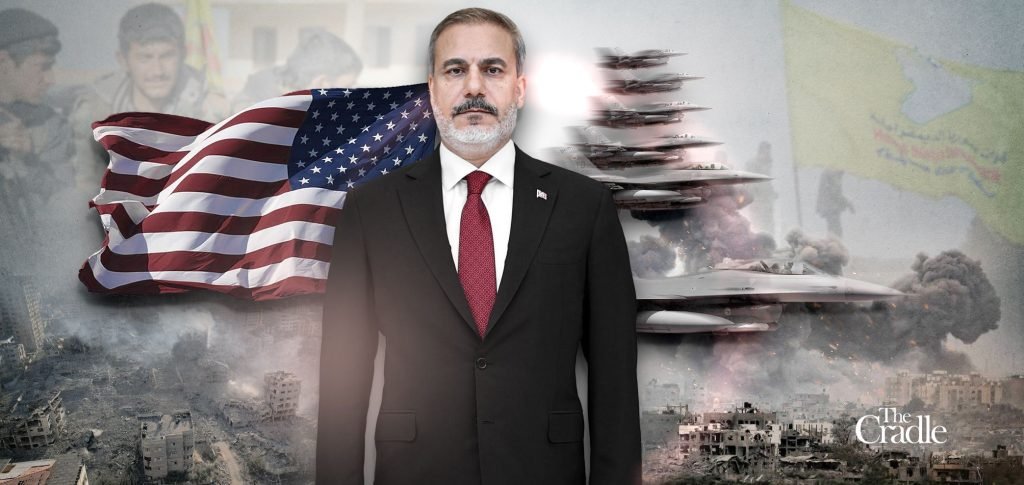
Turkish Foreign Minister Hakan Fidan
On 7–8 March, Turkish Foreign Minister Hakan Fidan and Intelligence Chief Ibrahim Kalin visited Washington. The trip garnered attention as it marked Turkiye’s first official visit to the US following the conclusion of the ‘Sweden for F-16’ deal, whereby Ankara accepted Stockholm’s accession to NATO in exchange for US Congressional approval of the sale of 40 F-16s to Turkiye.
During the visit, the two Turkish officials met with their US counterparts Antony Blinken and William Burns, along with National Security Adviser Jake Sullivan, and their respective foreign ministers chaired the seventh meeting of the US–Turkiye Strategic Mechanism.
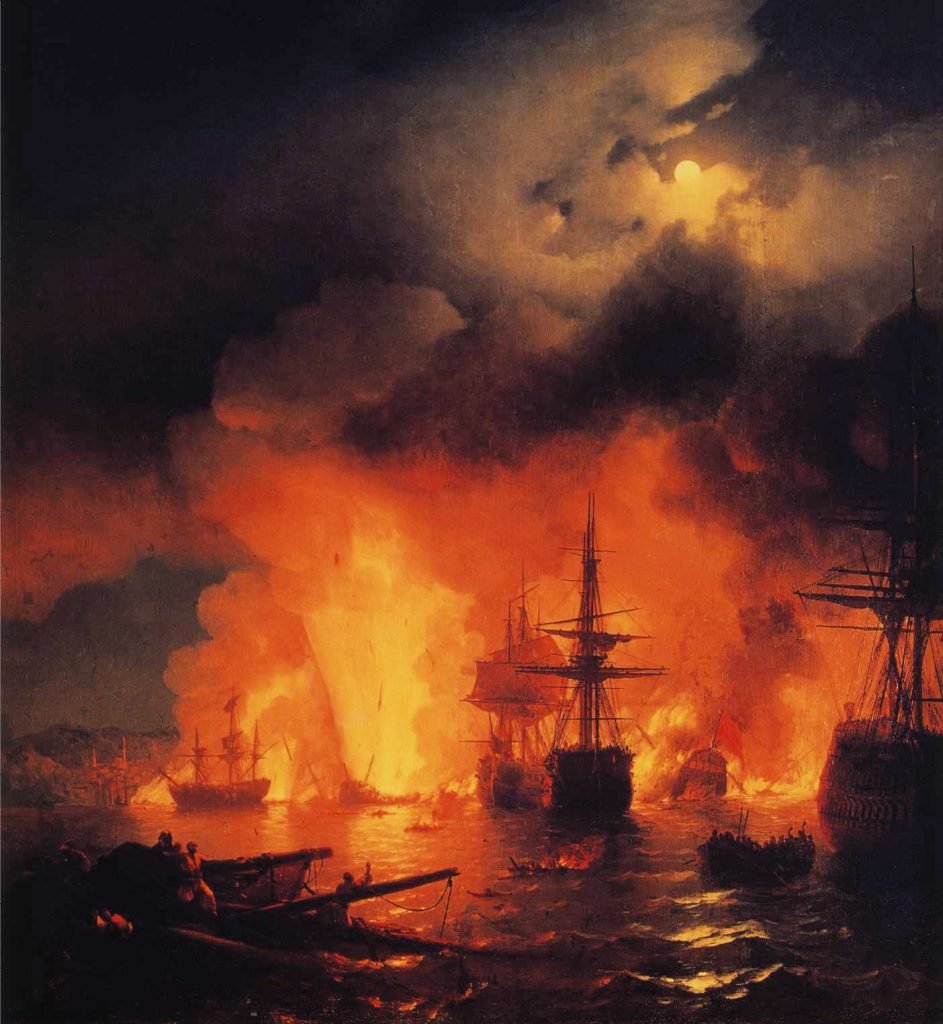
“Naval Battle of Çesme at Night,” July 1770, Russo-Turkish War (1768–1774), by Ivan Constantinovich Aivazovsky (1848)
US–Turkish rapprochement
The thaw in US–Turkish relations has been palpable, as noted by Jeff Flake, the US Ambassador to Ankara, during a televised interview: “Especially in recent months, the two countries have developed shared areas. We observe improvements in defense, trade, and interpersonal relations.”
A closer examination of the joint statement released following the meeting illustrates the transition of Turkish–American relations into a more favorable and cooperative phase.
Established in 2021 and inaugurated on 4 April 2021 amidst escalating discord between Turkiye and the US, the strategic mechanism was conceived to address and improve the strained bilateral relations.
The joint statement issued by the Strategic Mechanism this month included several crucial points, each carrying significant implications:
Both parties addressed the ongoing war in Ukraine, condemning Russia’s actions as ‘unacceptable’ while emphasizing the importance of upholding Ukraine’s unity and sovereignty. However, it is worth noting that Ankara’s endorsement of the statement’s rhetoric aligns more closely with Kiev’s perspective, a deviation from Turkiye’s previous neutral stance. This marked shift will undermine President Recep Tayyip Erdogan’s aspirations to mediate the conflict impartially.
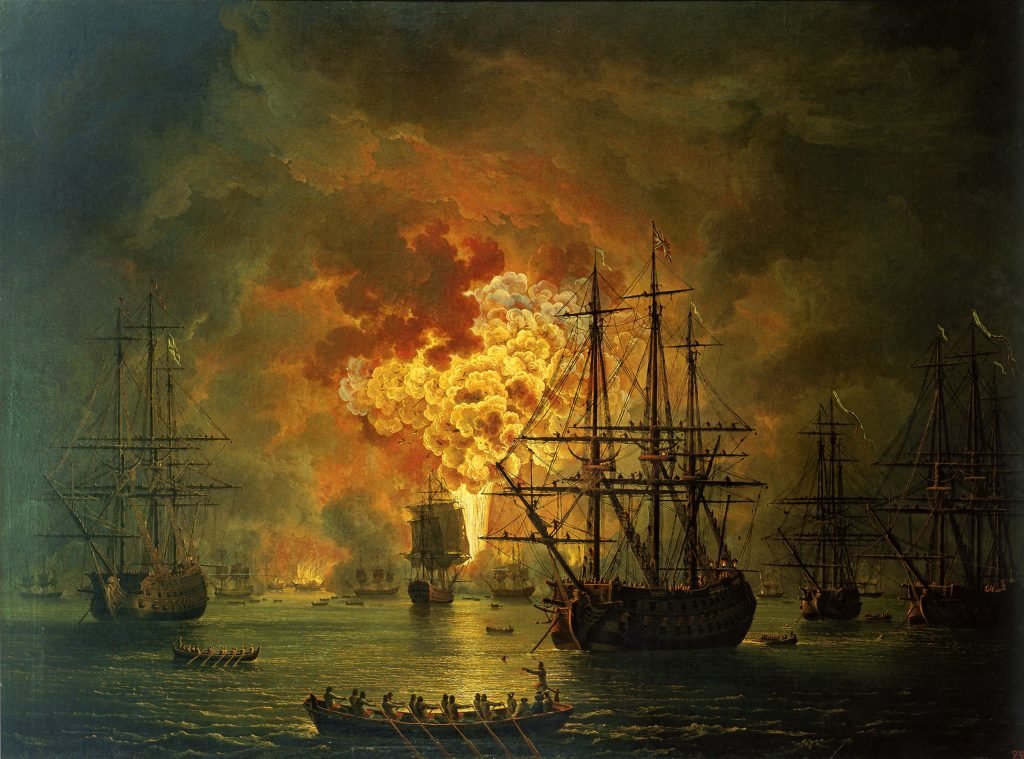
“Destruction of the Turkish Fleet in the Bay of Chesme,” July 1770, Russo-Turkish War (1768–1774), by Jacob Philipp Hackert, commissioned by Catherine II in 1772
Playing to the audience
On Israel’s brutal military assault in Gaza, the statement merely referred to an “ongoing crisis” and “underlined the importance of finding a path towards ending the conflict and addressing the humanitarian crisis immediately.” This is a war that Erdogan has, on the record, framed as a “genocide” and called its aggressors in Tel Aviv “war criminals.”
While both parties expressed support for the “two-state solution” as an end goal to the war, the statement’s release coincided with a fiery speech by Erdogan in Istanbul in which he attacked Israel, calling it “the Nazis of our time.” The contrast between the two statements is a real-time reflection of how Turkiye addresses its different target audiences.
On the issue of combating terrorism, the statement endorses joint US–Turkish efforts against organizations like the PKK, ISIS, and Al-Qaeda across regions spanning from Africa to Central Asia. They also recommitted to counterterrorism consultations and discussions on the Syria file, including the adherence to UN Resolution 2254 and supporting a “Syrian-led, Syrian-owned political process.”
The two parties addressed a multitude of regional issues in West Asia and Africa in alignment with the broader US strategy outlined by National Security Advisor Jake Sullivan, which focuses on partnership-building, deterrence, diplomacy, regional integration, and “democracy promotion” in these geographies.
This includes cooperation in military industry, energy, and trade development, reflecting the existing $30 billion trade volume between Washington and Ankara.
Significantly, the parties discussed leveraging financing opportunities under the Global Infrastructure and Investment Partnership – a western initiative intended to rival China’s Belt and Road Initiative (BRI). This partnership includes the controversial India–Middle East–Europe Economic Corridor (IMEC), aimed at enhancing regional connectivity and economic development very much to the benefit of Israel.
New Turkish military action in Syria and Iraq?
As the municipal elections in Turkiye draw near – with Erdogan seeking to reclaim his Justice and Development Party’s (AKP) control of Istanbul and Ankara after notable previous losses – there’s a tangible resurgence in Turkish rhetoric advocating for military action in northern Syria and Iraq.
According to reports from the Turkish news agency T24, the Turkish armed forces are gearing up for an operation against the People’s Protection Units (YPG) and the Kurdistan Workers’ Party (PKK) inside its neighboring states following local elections on 31 March.
After a 4 March cabinet meeting, Erdogan spoke of Turkiye’s readiness for a comprehensive operation against the Kurdish separatist groups and reiterated Ankara’s objective of establishing a security corridor spanning 30 to 40 kilometers along the Turkish–Syrian border.
Although the military rhetoric is undoubtedly influenced by Erdogan’s bid to attract nationalist voters in the upcoming elections, it is also connected to the recent Turkish–Iraqi diplomatic breakthrough following a high-level Turkish delegation’s visit to Baghdad.
The meeting in the Iraqi capital led to a security deal in which both countries committed to take action against the PKK. A joint statement read:
Both sides stressed that the PKK organization represents a security threat to both Turkiye and Iraq, and it is certain that the presence of the organization on Iraqi territory represents a violation of the Iraqi constitution … Turkiye welcomed the decision taken by the Iraqi National Security Council to list the PKK as a banned organization in Iraq. The two sides consulted on the measures that must be taken against the organization and its banned extensions [PKK’s alleged offshoots] that target Turkiye from within Iraq’s territory.
Fidan’s senior adviser, Nuh Yilmaz, praised the move, saying, “Turkiye and Iraq decided for the first time to fight jointly against PKK terrorism.” In a post on platform X, he added: “A decision that will mark a turning point! We will see results gradually!”
Strategic interests come first
According to a well-informed Turkish source:
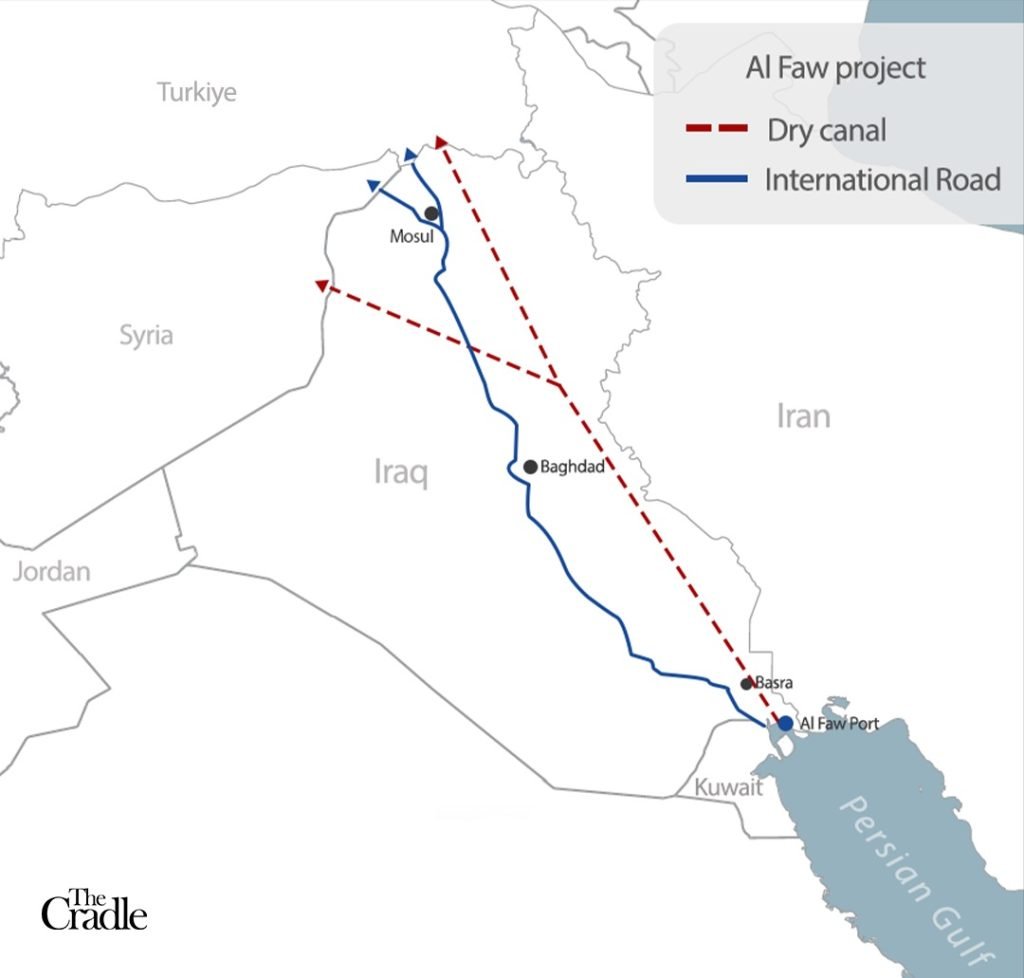
Turkey’s main purpose is very clear. The presence of the PKK in Metina and Gara [in northern Iraq] has the potential to seriously threaten the Iraq Development Road Project … We both would like to remove PKK from these two areas as well as secure the area for the construction of the project, reaching both objectives in one step.
Ankara and Baghdad seek to counter any threat to this development road project, a land corridor linking the port of Faw in Basra to the Turkish border and from there to Europe.
In this context, Erdogan is expected to visit Baghdad for the first time since 2012, where, some speculate, he will try to conclude a border control security agreement with the Iraqi government and seek to convince Baghdad to support future Turkish military operations against the PKK.
Despite Turkiye and Erdogan’s vocal criticism of Israeli atrocities in Gaza, recent interactions between Ankara and Washington indicate a pragmatic approach in their dealings, through which Turkiye hopes to be reinstated as an important US strategic partner.
While the Turkish president is stepping up anti-Zionist rhetoric on his domestic front, his administration maintains substantial economic ties with Israel, exporting various vital goods and services to the occupation state.
Although a Washington–Ankara rapprochement is still in its nascent stage, recent developments reveal the old allies are on a positive trajectory to repair bilateral relations after a period of strained diplomatic ties.
Erdogan’s foreign policy approach – as exemplified by his rhetorical Gaza stance and material support for Israel – makes clear Turkiye’s shift toward prioritizing strategic interests over ideological ones.
≈≈≈
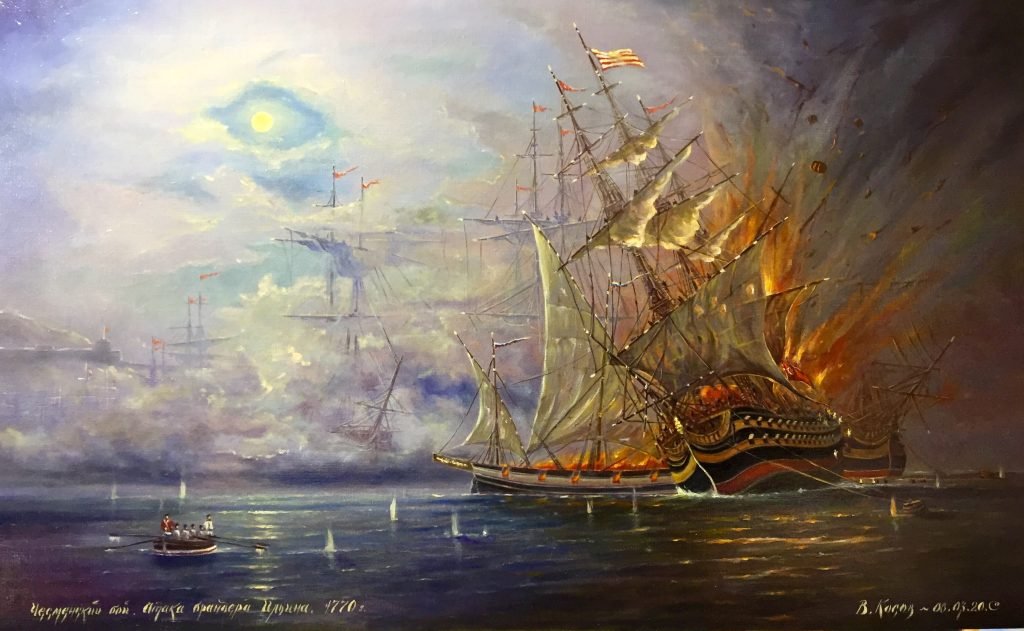
“Chesma battle of 1770,” Russo-Turkish War (1768–1774), by Vladimir Kosov (2021)
Nuclear Threat, World War III and Turkey: Balance Policy or a Game?
Is Turkey’s rhetorical stance of “balancing” a genuine attempt at strategic equilibrium, or merely an endeavor to occupy multiple positions simultaneously?
By Erkin Öncan at Strategic Culture Foundation.
Alexander Stubb, the newly elected president of Finland, has made several noteworthy statements regarding the current geopolitical climate. He emphasized the escalating tensions amidst discussions of a World War III. Stubb, representing the center-right National Coalition Party, expressed openness to the possibility of allowing the transportation and storage of U.S. nuclear weapons in Finnish territory, branding them as a “guarantee of peace.” This stance remained consistent throughout his election campaign and was reiterated upon assuming office. Stubb underscored the necessity for Finland to possess a tangible nuclear deterrent force, citing NATO membership as pivotal in providing multiple layers of deterrence, including military, munitions, and nuclear deterrence from the USA. He further asserted that Finland’s alignment with NATO signifies a definitive step towards embracing Western values, a sentiment echoed by the inclusion of Turkey as an enthusiastic participant in the anticipated third major conflict.
However, Finland’s enthusiasm for NATO membership has not gone unnoticed by Russia, which shares a significant border with the country. In response to Finland and Sweden’s accession to NATO, Russian President Putin announced plans to bolster military presence along the Western borders to counteract perceived threats stemming from NATO’s eastward expansion. Kremlin spokesperson Dmitry Peskov conveyed Moscow’s acknowledgment of the democratic choice made by the Finnish people but indicated pessimism regarding potential improvements in Russo-Finnish relations.
The most explicit reaction to Stubb’s nuclear policy came from Russian Foreign Ministry spokesperson Mariya Zakharova. Addressing the issue during a weekly press conference at the World Youth Festival in Sochi, Zakharova outlined Russia’s stance on the placement of U.S. nuclear weapons in Northern Europe. She asserted that such deployments would be considered a direct threat and would consequently be designated as legitimate targets in the event of a direct military conflict between Russia and NATO. Zakharova underscored Russia’s awareness of the desires of the United States and its allies in this regard.
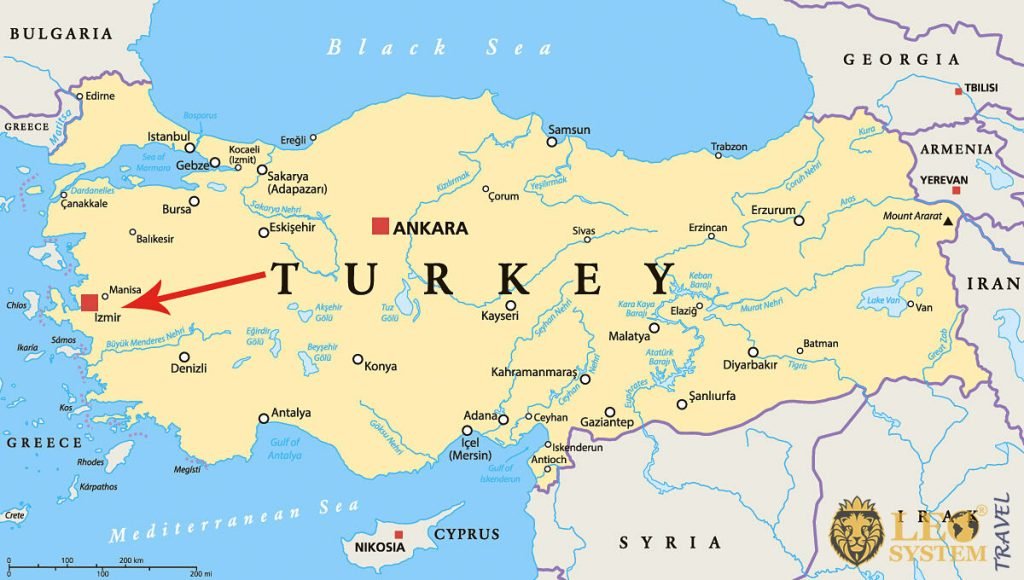
Izmir, Turkey: permanent headquarters of NATO Land Forces, known as Allied Land Command (LANDCOM).
The primary source of concern regarding nuclear capabilities is now widely recognized to stem from the potential for World War III to be nuclear in nature. When discussing nuclear power, the focus often turns to Russia, acknowledged as the “world’s largest nuclear power”.
Western media consistently highlights the perceived “nuclear threat emanating from the authoritarian Kremlin”. However, to truly address the concept of a “nuclear danger”, it is essential to consider the United States, which has transformed Europe into a depot for nuclear weapons, rather than Russia, which does not maintain nuclear forces beyond its borders, apart from the neighboring Belarus.
The United States and its NATO allies do not disclose precise figures regarding the stockpiles deployed in Europe. Nevertheless, estimates from the U.S.-based Center for Arms Control and Non-Proliferation in 2021 suggest that around 100 U.S. nuclear weapons are stored across six bases in five NATO member countries.
These weapons are kept in inactive states within underground vaults at national air bases. Notably, the “permissive action link” (PAL) codes required to activate these weapons are under American control. In the event of their use, the weapons would be loaded onto warplanes designated by NATO.
This situation is intricately tied to the “modernization” efforts undertaken by nations operating F-35A, F-18 Super Hornet, or Eurofighter Typhoon aircraft.
U.S. nuclear weapons have been stationed in Europe since the mid-1950s, authorized by President Dwight D. Eisenhower for storage at NATO bases on the continent as a deterrent against the Soviet Union.
Stored in warehouses across Belgium, Germany, Italy, the Netherlands, and other countries, these weapons are maintained for potential deployment when required. Additionally, countries such as Czechia, Denmark, Greece, Hungary, Norway, Poland, and Romania participate in SNOWCAT operations, facilitating NATO partner involvement in nuclear missions.
Meanwhile, Finland, under the leadership of Stubb, is positioning itself as a significant player in the ongoing ’nuclear preparedness’ measures originally aimed at countering the USSR and persisting in response to Russia.
This dynamic persists alongside ongoing military actions initiated by NATO against Russia. Notably, the commencement of Steadfast Defender-24, hailed as NATO’s largest military exercise since the Cold War, marks a significant development. This exercise aims to test the transfer of military forces to Eastern Europe and beyond, encompassing regions where Russia’s influence is perceived as encroaching.
This exercise constitutes a series of 15 maneuvers rather than a singular major military operation.
Steadfast Defender encompasses various other exercises conducted at national or regional levels, including Joint Warrior, Solid Approach, Arctic Dolphin, Northern Response, Immediate Response, Brilliant Jump, Movable Defender, Slovak Shield, Saber Strike, Trojan Trail-24, and Spring Storm.
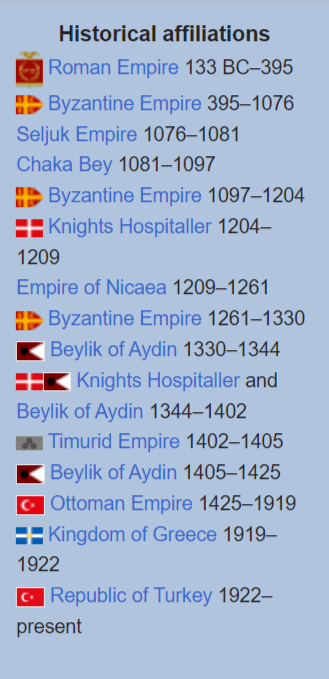
İzmir: rebranded ancient Smyrna from pre-historic through the Hellenistic, Roman, Byzantine, Crusader, Ottoman, and Turk Periods.
Turkey actively participates in these exercises, with the Turkish Armed Forces (TSK) playing a pivotal role in Brilliant Jump, Nordic Response, Saber Strike, and Immediate Response exercises.
Turkey’s involvement extends beyond military participation; it also hosts one of NATO’s most crucial commands. The permanent headquarters of NATO Land Forces, known as Allied Land Command (LANDCOM), is situated in Izmir.
Decisions regarding NATO’s land maneuvers are made at the command post within the General Vecihi Akın Barracks in Buca, Izmir. Given its historical significance, Izmir, where the first shot was fired against invaders a century ago, could potentially be remembered as the site where the decision to initiate the first shot of a world-engulfing war was made if a new global conflict were to erupt on Russia’s borders.
This prompts consideration of Turkey’s rhetorical stance of “balancing”. Is it a genuine attempt at strategic equilibrium, or merely an endeavor to occupy multiple positions simultaneously?
Related Posts
-
NATO, Militarization, and Turkey
June 20, 2026 -

Return of the British East India Company
January 12, 2026 -

Outlaw US Empire’s Hegemonic Spasms
January 9, 2026 -
Venezuela: Imperial Revenge
January 6, 2026 -
A Tunnel in Time
December 17, 2025 -
Global Trade News
December 4, 2025 -

The Imaginary Peace President
November 28, 2025 -
Reflections on the Nuremberg War Crimes Tribunals
November 19, 2025 -

Japan antagonizes China, Koreas, Russia
November 15, 2025 -
It took 40 years to replace Al Qaeda with Al Qaeda
November 12, 2025
Erdogan is a Rat & changes his stance on Russia, Israel & Turkey as the rest of us change our underclothes. He seems to forget that Putin saved his ass when uSA tried to assassinate him just a few yrs ago. He is dangerous & not to be trusted. Hopefully… Read more »