

Ramping up: Maritime drone attacks, off Novorossiysk, as well as on a tanker: What does it mean for the Russian Navy.
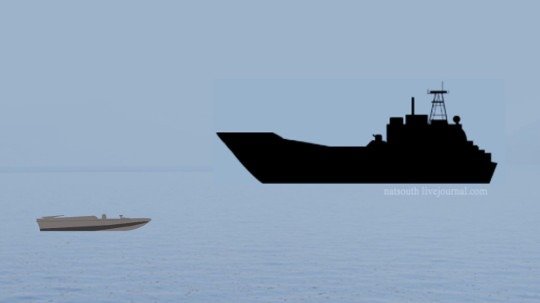
With thanks to Nat South from her Livejournal
This article covers the latest series of maritime drone attacks, namely a serious attack off Novorossiysk, as well as on a tanker. In light of these attacks, I will look at what it means for the Russian Navy and also outline other related issues.
EDIT: 5 August: Once more, I have to edit an article, not days afterward this time, but the very next day.
1. Sitrep
The attacks by Ukraine on the Russian Navy in the Black Sea have increased significantly in the last couple of weeks. Now that the Russian Navy is escorting Russian-flagged commercial ships, the Ukrainian side has started to attack the escorting patrol ships, some distance southwest of Sevastopol.
On August 1st, three Ukrainian USV drones attempted to target the patrol ships, ‘Sergey Kotov’ and the ‘Vasily Bykov’, on escort duties for Russian-flagged ships, some 340 km SW of Sevastopol. Not long afterwards, one ship, the ‘Sparta IV’, a frequent and longstanding “Syrian Express” cargo ship, used by the Russian MoD, had passed through the Bosphorus, (tweet link). Edit: According to Rybar, it wasn’t the ‘Sparta IV’, but the tanker ‘Sig’. It could have been both, since two attacks were reported.
Today, another report of an attack, this time, once more, very early in the morning, several naval drones were destroyed in Novorossiysk bay area. Of course, as it is becoming the norm, since the naval attack was just one element. Parts of Crimea were also targeted by aerial drones. Suffice to say that Russian Air Defense systems were activate in multiple areas of Crimea, and it is was reported that all incoming objects were shot down.
The Ukrainian drones apparently were launched from the Danube mouth the day before, initially controlled by a Tekever UAV, like the previous time. The drones were then apparently sent to a pre-determined loitering point offshore. At the time of the attacks, there were USAF and NATO drones, the MQ-9 Reaper (x2) and a RQ-4D Phoenix, operating over the Black Sea,along with other ISR aircraft, including a P-8 in Romania apparently. Exactly the same scenario that unfolded as in several prior attacks.
The data is seemingly there, which shows how the drones are remotely guided by USAF and NATO aircraft, as has been the case for over a year now, starting with the involvement of US military aircraft in the sinking of the ‘Moskva’. At times, both the Russian MoD and Ministry of Foreign Affairs, have stated that this is the case. Yet, Russia ought to take this one step further, by stating this involvement at the UN.
In short, both NATO and the U.S. are endlessly pushing the boat out* so to speak, pushing the risk of a greater conflict. Russia’s red lines are evidently in water soluble ink, because they have impressively faded away on numerous occasions.
The main success of the combined attack:
- A USV drone hit the portside of the Northern Fleet landing ship ‘Olenegorsky Gornyk’ off Novorossiysk.
Looking at a ship’s plan of the Ropucha class amphibious ships, (project 775), along with the video footage, it can be assumed that one or more fuel or ballast tanks are flooded. The engine compartment is farther astern and the main vehicle deck seems to be largely unaffected, (if it had, the ship might have sunk).

The damaged ship was towed back to port, (video link) and it remains to be seen whether just one compartment got flooded or at least two. It will be out of service for a while though, given the ship repair yard in the region is limited and apparently not in a quite great state either.
A coastguard, FSB patrol boat also repelled the drone attack, successfully destroying one, (footage is on social media). Yet the ‘Olenegorsky Gornyk’ seemingly did not respond to the incoming drone, and was navigating off the coast with all navigation lights, at a low speed. Its silhouette clearly defined by the coastal lights, make it is easier for the drone operator to target it. It was not in a combat ready state as there was no outgoing machine gun fire from the ship, in the above footage.
The action of repelling the drones took place well outside of the port, including the naval port, which has it boom defences in place for a number of weeks now, (as regularly evidenced by satellite imagery on social media).
2. Brief analysis
So far, I’ve outlined the latest situation, now for the analysis. Once more, the US and NATO are ceaselessly probing for gaps and weakenesses in a myraid of military areas, including naval defences. As detailed in the article, Safeguarding against drones, defences in and around Sevastopol are extensive and numerous. Thus, the planning and preparation of naval attacks ostensibly by Ukraine, (but in reality, they do little of the ISR aspect, unless it is HUMINT on the ground in Russia), is in the hands of the US and NATO, who have shifted their sights to weaker areas, (namely ships at sea and other ports or infrastructure).
The suspension of the UN Grain Deal marked a new phase, which has materialised into a resurgence of drone attacks. The frequency of attacks has increased, almost on a daily basis, however the numbers of USVs used remains low. The main concern ought to be an increase in frequency, along with greater numbers of USVs in single coordinated attacks.
Bear in mind that Russia apparently wanted ships in the Black Sea to be inspected to make sure they are not being used to carry weapons, (TASS July 21). This is not realistically feasible at this stage, given that the Russian Navy is in fact on the backfoot, (namely on coastal defence and ship escort duties). The deployment of drones is intended to keep the Russian Navy in a tight spot, by keeping lone ships away from the western part of the Black Sea, where the USV launches take place, and keeping other ships on duty, hundreds of nautical miles away, escorting Russian-flagged ships to/from the Bosporus and Kerch / Novorossiysk.
USV attacks in the Kerch / Novorossiysk, suggest an attempt to keep the Russian Navy tied down, while the US and NATO endeavour to safeguard passage of ships to the Danube Delta area. Last week, three foreign ships arrived at the Ukrainian side in the Danube mouth, under the careful watch of NATO aicraft. The Danube ports have been regularly used for grain transshipment but also other products, despite their much lower throughput than the main Black Sea ports. Russia carried out a series of limited airstrikes on the ports, to hinder the use of these ports. As mentioned before, it is the same area in which the Ukrainian USVs are launched, so lingering suspicions that these ships could be pawns, (carrying parts, providing cover).
Meanwhile, Washington made statements about resuming the UN Grain Deal, that it will help ensure Moscow to freely export food if it returns to the Black Sea Grain deal. Washington is trying to lever a way to get ships to Ukraine, under the cover of needy grain deliveries (to the West) of course.
Despite the numerous air strikes by Russia in recent weeks, on facilities that built or launched the drones, it is obvious that they still can be deployed, without much trouble. The question that still lurks, is whether there are motherships that help out with attacks, (particularly off Kerch and Novorossiysk).
Troubling situation for the Russian navy in the Black Sea, as there is no sign of attacks stopping any time soon.
Interestingly, according to The New York Times, Elon Musk denied Ukraine access to Starlink to launch drones near Crimea – just happens to be the comms systems that was installed on Ukrainian USVs since last year. The drones that attack Russian ships, ports and a bridge in the Black Sea. Personally, I’m not sure if there is much weight to this story, given the influencial hand of the Pentagon in this sphere.
It remains to be seen whether the Black Sea Fleet can quickly adapt to the persistent USV threat or it will maintain the status quo of leaving ships largely unprotected, just with standard machine gun fire. The Russian Navy needs to ramp up its ability to counter the threat at close quarters.
Will the Russian military take steps to deal with the presence of the USAF and NATO ISR drones, that are actually guiding most phases of USV attacks?
3. TIMELINE OF ATTACKS

UPDATE
4. The Kerch attack — Sig tanker
I thought it is best to keep this as a separate entry.
Just a day after the Novorossiysk attack, another attack was carried out in the Kerch Strait, resulting in the damage of a Russian-flagged chemical/oil tanker, ‘Sig’. No casualities report but the salvage operation is underway. The USV footage clearly shows that the operator aimed specifically at the ‘Sig’ in the anchorage.
The name is known to me, since it is one of the ships that supply the Russian forces in Syria. It was added to the US sanctions lists in September 2019, for transporting jet fuel, to be used by the Russian forces in Syria. Several others ships were also added to the list.
Another major headache for the Russian naval authorities.
Tactics have definetely changed, under Washington’s watch, since the cargo ships are those that are under US sanctions, (as mentioned in para 2 above). The attack represents another significant shift in attitudes, where certain reservations are now longer valid. What is essentially a commercial ship, albeit under U.S. sanction is now considered by the US, NATO and Ukraine, as a valid target.
I’m not going to dwell on the legal aspects of this attack, all I need to say at this moment of time, look at the Iraq-Iran war and the targeting of tankers in the Gulf.
The attack on the ‘Sig’ also reveals another element, indicating a widening of the conflict geopolitically, that needs to be outlined. The issue of Russia transporting weapons, fuel and military cargo via its merchant ships, to Syria, has been a thorn in Washington’s side for many years, despite the imposition of sanctions, (Reuter article 2018, article March 2023).
Likewise, the Russian ships have been used to transport military cargo to the Black Sea as well. What with the suspension of the UN Grain Deal, has essentially meant, a free hand to attack those ships as well, to degrade the Russian Navy’s capability and disrupt Russia’s ability to supply its forces in Syria.
Bear in mind, all of this is set against an uptick in military actions against rebels in Syria,over the summer, thus troubling the illegimate presence of US forces. There are also the recent air interactions between the Russian Airforce and USAF in Syria, that has not gone unnoticed.
It is clear that the Russian Navy has escorted these ships in the Black Sea, but not protected them in the Kerch anchorage or in ports. This shows the widening scope of hostilities and need to counteract against the threats against these ships, where ever they are. Yet, Russian naval escorts of these ships on their Mediterranean leg, has been a longstanding activity, (for years).
Lastly
Referring to a previous article: Safeguarding against drones
Still woefully missing, the resolute ability to monitor, track and target incoming USVs from a sufficiently distance, in order to alert coastal defences, ships’ crews and EW actions.
Just take a look at the timings of most attacks, as shown by the timeline. There is a recognisable and distinctive time period in which most attacks take place. Could the Russian Navy change tactics, such as using fishing boats as a kind of picket boat? Boats used based on the UK’s ‘STUFT’ principle *2), crewed by Russian Navy and mobilised naval reservists, on long patrols, possibly equiped with drones and bespoke sonar units, similar to the Anapa-M anti-saboteur dipping sonar, but adapted to listen out for telltale accoustics of USVs?
I have come across the various debates on effectiveness of coastal air patrols, (- arguments on helicopters being cost and issues connected to air defence), but some wider coverage offshore is being rapidly critical in order to have adquate early warning of an incoming USV threat.
Potentially, various means and methods could be used:

Notes
* Pushing the boat out = in this instance, to do something with real vigour, or to incur a large expense. (It might get really expensive and costly for the West if Russia does decide to take commensurable actions, which in a kind of way, they have started, with the latest round of cutting oil exports).
*2 STUFT (UK naval acronym for ship taken up from trade) is a civilian ship requisitioned for government use.
According to the author Nat South; “the Russian Navy could change tactics, such as using fishing boats as a kind of picket boat.” One solution would be for Russia to acquire Iranian anti-ship boats called “Zulfiqar”. Even though this news portal has less reliability, Avia.pro states from sources that Russia… Read more »
For those who want to follow naval news https://t.me/theLookoutZ
Re: “So, a modular Pantsir type system needs to be developed…”
Your wish, the MIC’s command. Just saw this last week.
😊
What with the suspension of the UN Grain Deal, has essentially meant, a free hand to attack those ships as well, to degrade the Russian Navy’s capability and disrupt Russia’s ability to supply its forces in Syria. As you can see, I hinted to a change of ‘rules’, possibly linked… Read more »
The Russian military and navy included treat the Black Sea environ like they treat Belgorod. It’s okay to hit us. Go ahead, hit us again.
It is treated like a civilian rear, deep rear. Not like a combat zone, a front zone which it is for the Ukies and West.
Bingo, spot on.
I’ve been following a private discussion that Nat South hosts, professional Navy staff. They seem to think blaming the captain is like blaming the stove because the food got burnt. There analysis indicates that the navy must change and adapt to the changed circumstances and this has not been done… Read more »
Here is the one previous article: Safeguarding against maritime drones
https://sovereignista.com/2023/07/25/safeguarding-against-maritime-drones/
You got there first. Just about to repost it.
Thank heavens I listened to all of you and looks like I learned something! Not much, I grant you, but at least I know what fits where. You all are great Nat, and you called this danger right from the start – not into the void, but with sure and… Read more »
This morning from the MoD On 5 August 2023, Russian airspace control means detected an aerial target approaching the State border of the Russian Federation over the waters of the Black Sea. ▫️ In order to identify the aerial target and prevent a violation of the State border of the… Read more »
Thank you very much for the kind words. My mind boggles on this latest info snippet: An enemy drone has been spotted moving in the sea near Sevastopol, as stated by the governor. M. Razvozhayev reported, “In the Sevastopol maritime zone, in the open sea, the navy has detected a… Read more »
I find the entire southern district and the Black Sea Fleet command not up to the task from the start. They seem to like taking blows. I understand the constraints on the land war in Donbass (protect civilians and limit losses). But this is the Russian Lake and vital to… Read more »
I’m as frustrated, especially about those reaper drones that should be getting regular “fuselage washes.” But this is too much to attribute to laziness or incompetence – the ISR pieces that overfly the Black Sea also affect the land component of the SMO. Perhaps oversight on several levels and a… Read more »
Other issues – the limited number of ships, prompting berthing them in the first place?? No that’s not an issue really, it is what’s on onboard on the ships and how relevant/useful is it to the ongoing conflict. The Kalibr ships and subs are busy, yet the Soviet era stuff… Read more »
The biggest weakness in the naval defense seems to be the officers of the ships. There was no excuse for the landing ship getting hit. Complete failure of the captain and other officers among 100 crew. The SMO pace has lulled the military, particularly the naval forces into a less… Read more »
I wouldn’t lay all of the blame on the captain, although the ship wasn’t at the required combat readiness. It is the system that he’s part of. To have a doctrine in which reliance on human operated machine guns, in the last 800m or so, to thwart an attack, is… Read more »