

5. Cost of Drones vs. Cost of Countering Them
The story continues:
1. Kings of the Sky! – The Story of the Air Force of Hezbollah
2. 30 Years… From Gliders to Drones, And From Syria to “Karish” to Al-Aqsa Flood
3. The enemy is haunted by the “Karar” drone: Hezbollah’s technical superiority has amazed our army and terrified us.
4. Intelligence and Military Confrontation and High-Tech Systems:
What Are The Details of the Electronic Warfare Between the Resistance and the Enemy?
5. Cost of Drones vs. Cost of Countering Them
6. The Hezbollah Drone Family
7. How did Hezbollah’s needle deflate the legendary balloon?
In the context of the ongoing battle, there is a crucial issue concerning the cost of drone warfare. Hezbollah, ultimately, is a jihadist organization with capabilities that do not resemble those of nation-states. However, managing such a battle sometimes relies on creative ideas that make material differences secondary.
The commander of Hezbollah’s air force says, “Armies usually resort to a ‘economy of force’ strategy, meaning they avoid wasting their capabilities. It is not wise to use substantial force against a minor threat. This has made the ‘soft kill’ approach fundamental to the enemy’s program. They have set up a large central management system for electronic warfare to achieve this goal and abolished the previous decentralization, where the air force did one thing, and brigades did something similar but independently.”
The jihadist commander adds, “The occupation army exploits this type of electronic warfare to market its products, as “israel” has gradually turned into a manufacturer and exporter of such materials used in electronic warfare. For example, the enemy is currently trying to market their laser defense systems, attempting to convince customers, including their own army, that these systems can destroy drones…
But what will they say now? Will they boast that this system succeeded in melting a drone’s propeller or preventing a drone from reaching its target?”
The commander notes that the enemy “has tried to cover up its failure by claiming that the resistance has prepared thousands of drones. They spend a lot on electronic warfare as a primary level of defense. In reality, the enemy has spent enormous amounts on this sector, but it has only achieved minimal results, coming in below their expectations. When they continued to work on it, we discussed among ourselves that the enemy might be deliberately hiding other capabilities from us. But it turned out otherwise, as after their failure with the ‘soft kill’ approach, they were forced to move directly to ‘hard kill,’ highlighting the significant cost differences in the battle.”
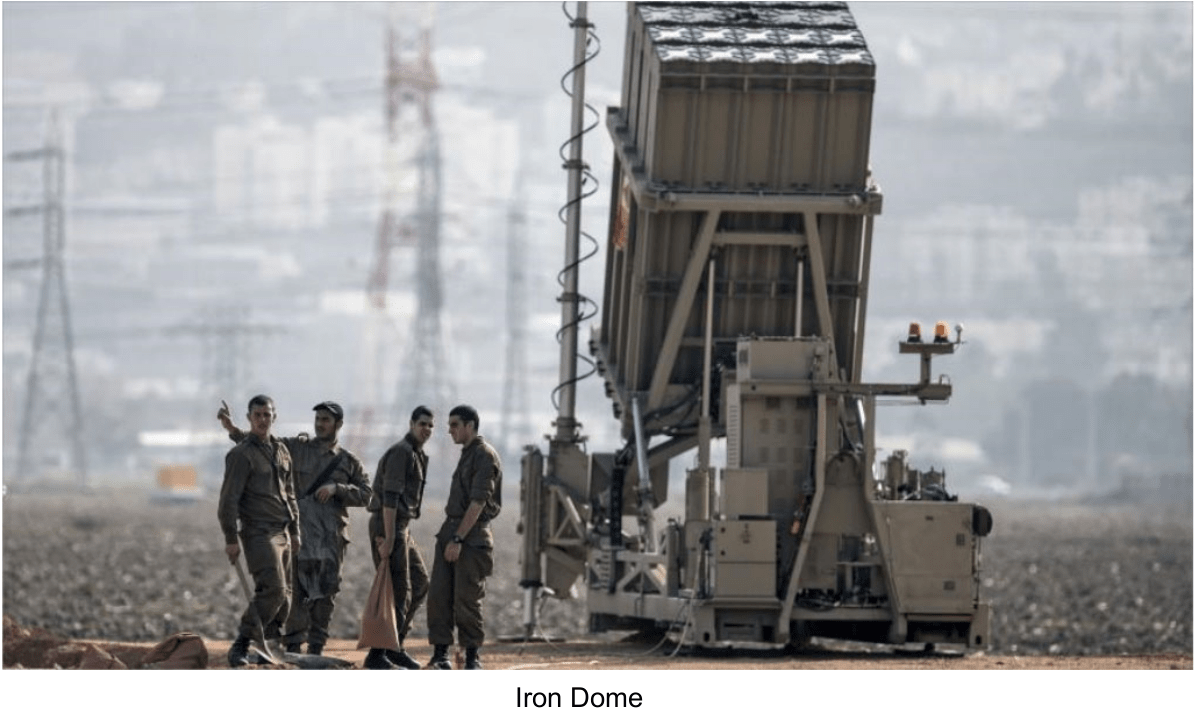
The commander explains: “When the enemy activates the ‘Iron Dome’ system to intercept a simple reconnaissance drone, they are forced to launch at least four missiles (each missile costs $50,000), meaning they have to spend $200,000. When this fails, they turn to fighter jets. Each hour of enemy fighter jet operation costs over $40,000, not including the cost of missiles used against the drone, and the significant risks involved with flying these jets, which also requires them to use helicopters.
Sometimes they fail, but their fear of the drone reaching its target may force them to use Patriot missiles, with each missile costing $3 million. This also does not guarantee the drone’s destruction. In practice, the enemy spends millions of dollars to counter a drone that costs less than $2,500. When discussing costs, we are not belittling our drones, but it relates to how technology is used. This impacts the essence of production. Some drones are purchased by armies for half a million dollars. However, we can produce a version of it for less than $5,000, adding a jamming protection system. For another example, the U.S. ScanEagle squadron is bought by Jordan for $10 million, which includes 4 drones with a ground control base. The Americans prevent Jordan from performing maintenance, which is costly. However, we produce the same squadron for less than $100,000.”
The jihadist commander says: “The enemy’s problem is that they believed the electronic warfare program would not have significant costs. They thought it would protect their economy from our air power. However, once they were forced to resort to using conventional weapons against our drones, they faced a significant financial crisis. This is all while they have yet to fully test the rest of our drones.
This issue stems from the fact that the enemy cannot assess our operational mechanisms. True, our material capabilities are not as large as theirs, and securing materials is not as easy for us as it is for them. Yet, in the end, we have managed to build factories with substantial production capacity. We do not underestimate their weapon manufacturing capabilities or their open American support. To this day, they continuously attempt everything possible to prevent the arrival of products and equipment. But, unfortunately for them, we are now in a comfortable position regarding production in terms of type, quantity, and continuity. What we use now is only a fraction of our capabilities, as the resistance leadership’s decision only mandates this level of operation. The enemy knows that we are using weapons and drones that we showcased at the Mleeta Museum at least five years ago.”
The commander adds, “It is useful to point out that production rates and quantity are not affected by cost. When the operational need dictates a particular weapon, we do not concern ourselves with cost alone but with the availability of that weapon. There are indeed high-cost drones, but when we find a need for them, this necessitates a specific production approach. I mean, we provide what we need in terms of weapons. More precisely, the cost of a weapon does not dictate whether we produce more than needed or not; the need and utility are the driving factors.”
The commander of the air force points to the depletion of the enemy’s resources, saying, “After failing to prevent drone penetration, the enemy increased the sensitivity of all their detection systems. Normally, radar detection technologies operate at a certain level to avoid triggering with the passing of birds. But the enemy’s increase in sensitivity has led to full alertness. Consequently, dozens of alerts are issued daily that require sounding alarms.
Do you remember when the enemy launched missiles at pelicans? On one occasion, we launched a very inexpensive drone, and the enemy tried to intercept it, firing one missile, followed by another, and a third. In the end, it turned out they had shot down one of their own drones while our drone returned safely to its base. We are well aware of the impact of such incidents on their officers and the psychological pressure they experience, especially since false alarms drain the settlers.”
The jihadist commander believes that the enemy “is leading its society into a war of attrition it cannot sustain. They are implementing everything they have trained for over the past 18 years. They are fighting us at a level that is lower than our own. We do not consider what is happening now to be a comprehensive war. However, if we enter a total war scenario with no red lines, the scenario will take them to a point where they cannot endure. Enemy officers should start preparing answers to their people’s questions about the effectiveness of all they have trained for and all they have spent since 2006!”
Regarding the Iron Dome system, the commander of the air force says it “achieved success in Gaza, but it is not a complete success. The reason is logistical difficulties faced by our jihadist brothers in Palestine, but the situation is different with us. We have turned the Iron Dome into a ‘mockery.’ One day, when the resistance reveals what we have done and are doing in northern Palestine, everyone will understand why we call it a ‘mockery.’”
“Some time ago, the enemy claimed they shot down one of our drones over Nahariya. But they are lying; the drone went and came back, and we might release the video to expose their lie, especially since the enemy knows our drones directly attacked the Dome. It is well known that the Dome is a radar system intended to detect drones, and there is a ‘launcher’ waiting for orders to fire missiles at the drone. What happens is that the drone bypasses the radar and hits the missile launcher. We have full documentation of these operations. The enemy knows the extent of their failure. If they are supposed to detect the drone from 80 km, 40 km, or even 20 km away, what will they say when the drone is right over the radar and the launcher and is recording? What else can this be called but a colossal failure? When we show pictures and videos disproving the enemy’s claims, what will they say, and what will other army leaders say? The sight of the drone flying over the radar and then returning safely to its base should be enough for the world to understand how the enemy lies.”
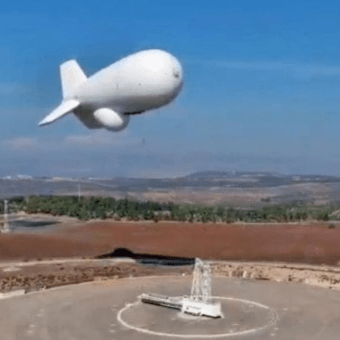
The commander himself points out that “armies usually resort to plans to strike drones through large defenses. This has happened with Russia in Syria and in Ukraine as well. Therefore, our approach to countering the enemy’s defenses is not limited to identifying their weaknesses; rather, we have aimed to operate at a level higher than theirs. What is happening now represents the greatest challenge for the enemy, both the military and intelligence, though perhaps their public is unaware. We focus on their strengths to hit them. Our goal is to undermine their defensive doctrine based on the principle of deterrence. They now know that Hezbollah has not been deterred. We have surpassed the concept of deterrence. They are losing their advantage in early warning. The enemy also knows that we can strike the giant balloon with a highly accurate missile, but we opted for ‘economy of force’ and hit the balloon with a simple weapon like a drone. This strikes at the enemy’s core… We target their centers of power. We have hit more than one radar, especially the Iron Dome radar that they boast about, claiming it is of American manufacture. The creator of this radar once said: if you throw a baseball over Beirut, this radar will detect it. But what happened? Our drones hover right above it, going several times, returning, and recording before they pounce on it and destroy the associated missile launchers. There are more targets that the resistance has not announced. We have targeted precise items. The enemy officers and specialists know what affects them.”
The air force commander says, “The success in intelligence and reconnaissance capabilities has not yet been fully revealed. But the enemy knows that when alarm sirens go off during the day or at midnight and then they claim it’s a false alarm, they are not telling the truth. They do not know exactly what happened. There are many things the enemy has not been aware of, such as what happened in ‘Hadera’ or Haifa. When we put in effort, it is focused on processing images and videos; the effort is not in gathering these materials. The enemy’s public should know that the information collected by the resistance ‘ruins their day.’ We have what can dismantle the enemy’s work over years. True, they imposed a ‘blurring’ of many locations in their domain on Google, but they know that we have ‘removed the fog and know everything.’ We possess a real treasure of hundreds of thousands of materials that define a very large target bank. The decision to strike and hit these targets is solely up to the leadership.”
Related Posts
-
7. How did Hezbollah’s needle deflate the legendary balloon?
August 2, 2024
I’ve wanted to say thank you for this astonishing series. I’ve shared it where I can, and I hope it reaches people such as Richard Medhurst and Garland Nixon, to name a few of the many commentators who could spread this knowledge. Hezbollah reveals detail from its successes, and also,… Read more »