

China Writer Wei Ling Chua: Ancient West vs “How Ancient Chinese Navy Kept Millions Of Gallons Of Water Fresh Without Chemicals”
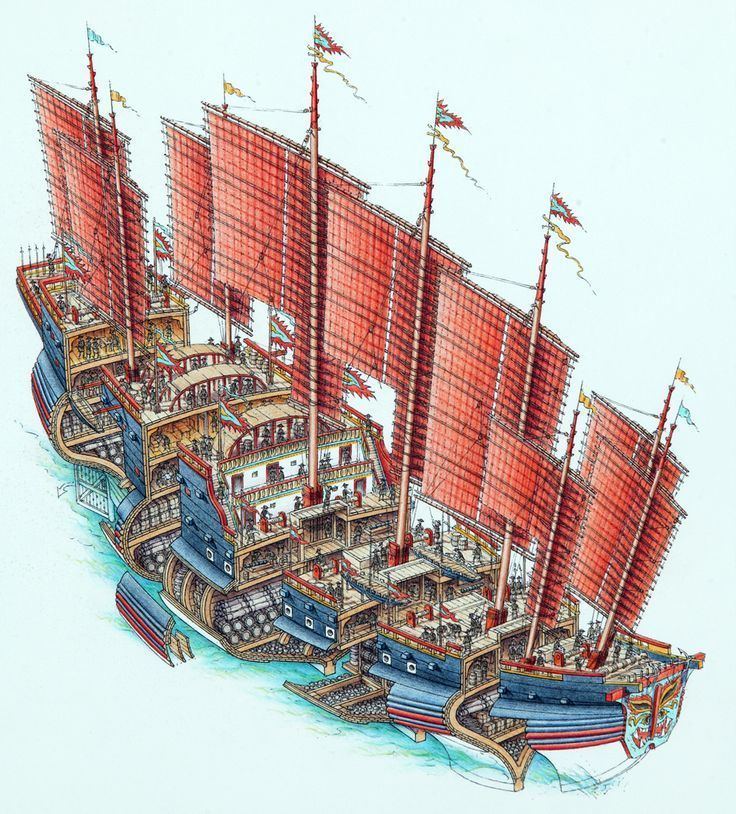
Jeff Brown – Radio Sinoland Schematic of a Ship from the Ming Dynasty Navy of Admiral Zheng He
[Please also see this earlier article by Jeff Brown which includes an extensive listing of Chinese centuries-long scientific achievements: China Tech: Invention, Innovation, Technology, Research And Development – Past, Present, Future – 5,000 Years Of Progress]
Thanks to my good friend and comrade, China Writer Wei Ling Chua, for finding this report below and for making comments!
The ancient Chinese Navy – most notably Admiral Zheng He’s Ming Dynasty treasure fleets in the early 15th century – relied on a multi-tiered logistics system. They maintained millions of gallons of fresh water by utilizing watertight hull bulkheads to control temperature, coating storage barrels with antimicrobial materials, passing water through natural filters, and mapping a reliable freshwater port corridor. 1, 2, 3, 4
Here is an example from the various footnotes below:
The Chinese Navy achieved this without modern chemicals through several natural engineering techniques: 2, 3
- Natural Antimicrobial Coatings: Instead of harsh chemicals, the sailors lined their storage barrels with quicklime or beeswax. These coatings provided a sterile barrier that killed microbes and prevented wood tannins or marine bacteria from spoiling the drinking water. 1
- Ceramic Jar Storage: For their highest-quality drinking water, the fleet relied on sealed ceramic jars. Stored in the deep, shaded hulls below the waterline, these jars kept the water cool and completely blocked out sunlight and salt spray. 1
- Distillation and Bamboo Charcoal Filtration: When natural reserves were low, the Chinese pioneered early water treatment at sea. They used heat from cooking stoves to distill seawater, passed the steam through bamboo pith mats to catch salt droplets, and filtered the condensed water through bamboo charcoal to naturally balance minerals, improve taste, and neutralize impurities. 1
- Dedicated Water Tankers: The navy used specialized modular supply ships, or shuichuan, dedicated entirely to transporting fresh water in sealed, insulated compartments. 1, 4, 5, 6
- Tactical “Freshwater Corridors”: Rather than relying on water stored for years, the Ming Navy was heavily supplied by a vast logistical network. They followed established trading routes to ports in Malacca, Calicut, and Hormuz, where they traded porcelain and silk specifically for fresh local water. 1, 2, 4, 7
- The naval mechanics of Ming dynasty watertight bulkheads
- The specific food preservation and anti-scurvy diets of ancient Chinese sailors
- How these ancient Chinese maritime solutions compare to European fleets of the same era 1, 3, 5
1 Food and Fresh Water on Zheng He’s Treasure Ships: Feeding 27,000 Men at Sea
2 How Ancient Chinese Navy Kept Millions of Gallons of Water Fresh Without Chemicals
3 How Ancient Chinese Sailors Used Bamboo and Steam to Drink from the Ocean
4 Handcrafted wooden ship models from the Zhoushan workshop
5 How Ming Dynasty Sailors Beat Scurvy: Ancient TCM Secrets of the Treasure Fleet
6 The Giant Treasure Ships of the Ming Dynasty: A Complete Guide to Zheng He’s Fleet
7 Where Did the Waste Go? Solving the Mystery of Sanitation on Ming Dynasty’s Massive Ships