

Foreign Minister Sergey Lavrov’s interview with TASS
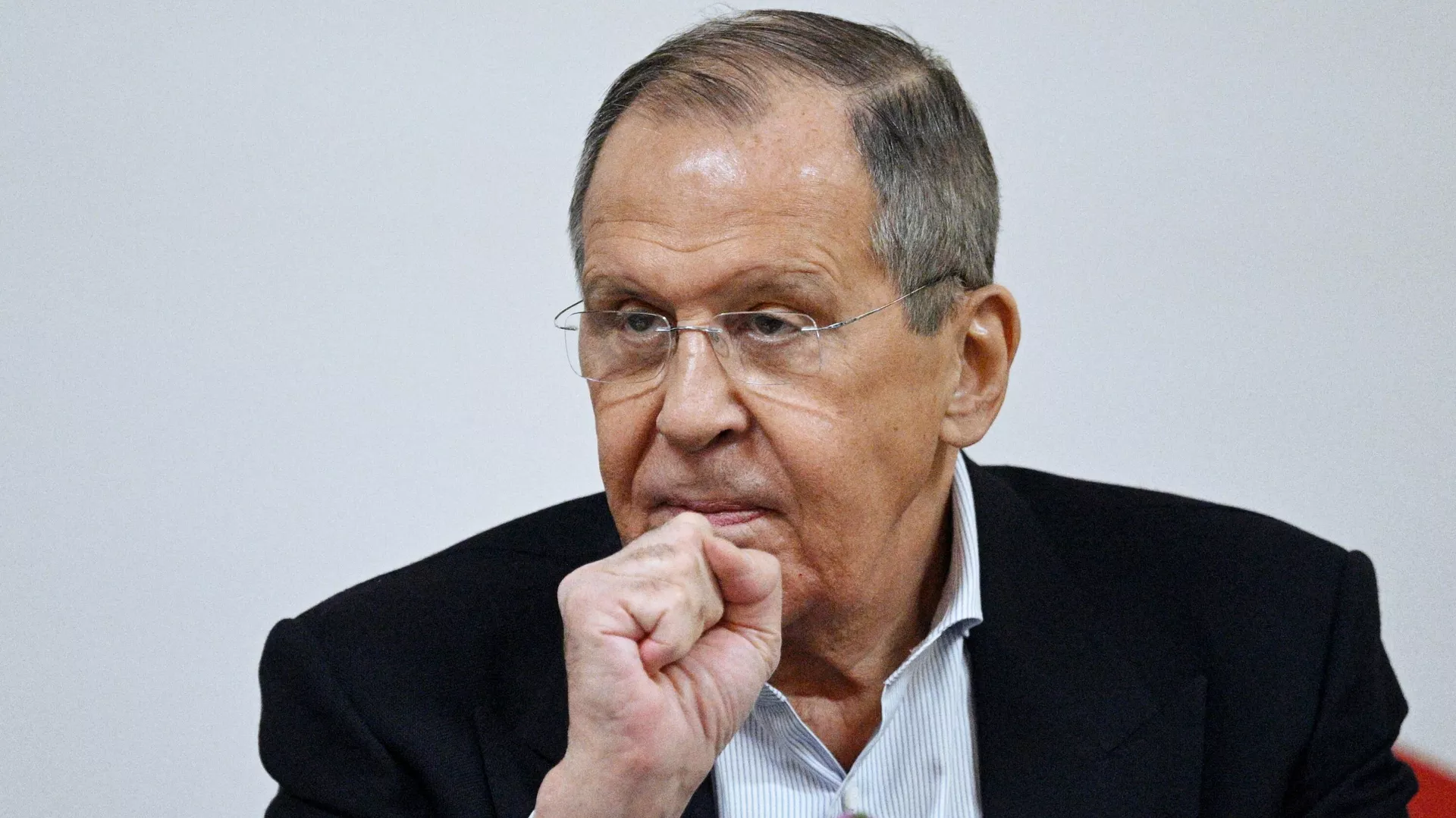
Foreign Minister Sergey Lavrov’s interview with TASS Director General Andrey Kondrashov, Moscow, July 29, 2026
Question: Mr Lavrov, you are a person who certainly doesn’t need an introduction in our country. But I know what can surprise people. It’s your knowledge of the Singhalese language. Would you say hello in Singhalese?
Sergey Lavrov: (Speaks in Singhalese).
Question: It is the second time you have been included in the top five election candidates of the United Russia party. What does this mean for you? Of course, this implies collective efforts, but ultimate responsibility rests with one individual. You probably know who this person is. Does your nomination mean trust, appreciation or an additional burden? Or is this a reward?
Sergey Lavrov: It is certainly a sign of trust, there is no doubt about that. Yet the main thing for me is the decision of the party leadership to nominate me as one of the top five candidates, whom the United Russia congress has approved.
I have good relations with the heads of absolutely all factions and parties without exception. Considering our relations with all factions and parties represented in the State Duma, we would like them to help adopt decisions and laws that will consolidate our foreign policy so that it is maximally effective and enjoys broad-based support.
My nomination to the top five group by decision of the party leadership is also connected with the very difficult period for the country, which heavily depends on how we conduct the special military operation against those who have instigated a war against Russia. I am referring to our military personnel on the frontline and people on the home front, in all senses of the word.
On the other hand, foreign policy and diplomacy also play a major support role, considering that our Western counterparts are trying to deceive us, promising one thing and doing the opposite. But we have grown used or at least should have grown used to this. Yet every time our Russian soul makes us want to believe in the best.
But patience tends to run out. It is not surprising that soon after the beginning of the special military operation President Vladimir Putin said about our relations with the West that things will never return to how they were before February 2022.
Question: The West has just lost its mind. Nobody respects the agreements that have been effective for decades. They are demolishing everything. We know and feel this. What alternative can we offer the world in this situation?
Sergey Lavrov: To begin with, we must protect our legitimate interests. To be able to offer anything, we must win. The world is waiting with great interest, and some with bated breath, to see how this war will end, the war which the West has forced on us and in response to which President Putin announced the beginning of the special military operation. Not that we are living among unscrupulous people, but that’s life. To paraphrase Sergey Bodrov, everyone wants to know where power comes from.
You have said absolutely correctly that they don’t even try to hide, camouflage or disguise their actions. At first, they openly declared the goal of inflicting a “strategic defeat” on Russia. But as they watched the developments on the contact line, or more precisely on the frontline, they moved away from that rhetoric.
Today, when Zelensky is retreating in Donbass and other sectors of the frontline and has moved from desperation to openly terrorist activities, and they have seen that many of the long-range weapons he has can reach their targets, they have started describing this stage as a turning point. They say that it takes the Ukrainian character to defeat Russia, the “aggressor” who would move into Europe after seizing Ukraine. And so, they have revived the slogan of Russia’s “strategic defeat.” They are also talking about “decolonising” Russia, which actually means the partition of our country. We see the revival of hopes which the West had during the collapse of the Soviet Union, when separatist movements took shape in the Russian Far East and the Urals, not to mention the Caucasus.
They entertained the hope that the country would fall apart and they would pick up the broken pieces. I think they even started dividing them between themselves.
Question: We were one step from that. The so-called “Urals Republic” even issued the “Ural franc.”
Sergey Lavrov: Yes, everything was on the brink.
That Boris Yeltsin had the courage to relinquish power prematurely and turn it over to the only individual who could save Russia at that time is a historic turning point that shows that Russia is touched by God. When worse comes to worst, we receive help from above.
Today, they are again talking about “strategic defeat” and actively supporting our relocatees, who organise various anti-Russian societies in Europe and collect funds for their “underground struggle” for splitting Russia. They no longer make secret of this.
Our federal channels talk about everything the West is planning. Everyone should probably watch these programmes to understand that this is no laughing matter. President Putin openly points this out. The entire “civilised world,” as they call themselves, has turned on us.
Question: Until 2007, before Putin’s Munich speech, they loved us – even if with a suffocating embrace. At least now things are more straightforward.
Sergey Lavrov: They thought they had us in their pocket.
When President Vladimir Putin came to power, he was entirely open to an equal strategic partnership with the West. Yet now our former allies – the Anglo-Saxons, to be precise – are waging war against us through Ukraine with varying degrees of ferocity: London more so, Washington somewhat less so. They are pumping Ukraine with the most up-to-date weaponry and announcing that they will produce new, more deadly, high-tech anti-missile systems specifically for Kiev. This has never happened before.
We launched our special military operation at a time when society was calm, comfortable and broadly satisfied with its standard of living.
And the fact is, that did not suit the West. They did not want society to be calm; they wanted to incite it against the authorities, plotting provocations. They cannot compete fairly. They are afraid of fair competition across the board.
Hence the sanctions – designed to maintain positions that are slipping away irretrievably after five centuries of Western dominance.
So, let me reiterate the state of our society. This matters to me as a citizen and as the Minister of Foreign Affairs, who is implementing the foreign policy of the President of Russia – a policy that should reflect public sentiment. Of course, they want to incite unrest here. President Putin recently mentioned this briefly. We are making daily progress on the front lines – not as quickly as we would like, but we are sparing lives. Meanwhile, the other side is trying to offset their battlefield setbacks by resorting to terrorist attacks, aiming to shatter the everyday life people have known. Drone attacks are already becoming a palpable reality in Moscow and St Petersburg, and people in the border regions are experiencing the full severity of the situation on the ground. Frankly, I am very proud that the people perceive this correctly – as history and those who defeated Nazism have dictated. Especially since we are now fighting the direct followers and descendants of those very Nazis. The same people. German Chancellor Friedrich Merz openly declares that they will once again be dominant in Europe. If you are that outspoken, be prepared.
Question: You said that before offering the world an alternative international order, we must secure our national interests, and to do that, we must win. What are our national interests on the international stage?
Sergey Lavrov: It is that we be an independent state – an independent civilisation. That our borders be reliably secured. That no one even thinks about lecturing us on how to organise our lives within Russia. And that all the peoples of the Russian Federation continue to enjoy the rights guaranteed by the Constitution: to education, to the preservation of their culture, traditions and religious beliefs.
As such, Russia will be interested in cooperating on an equal footing with the other major centres of power that are emerging – China and India. These major players will, of course, stand with us in defence of justice, in the hope that the West – and Europe in particular – will one day come to its senses and be ready to integrate into new systems of relations on an equal and honest basis. It is not yet ready for this. The United States is also completely unprepared.
And while we wait, new centres of power are forming their own network structures. One of these is BRICS, which brings together the leading economies of the global majority and resolves issues very differently from NATO, where America commands and everyone else obsequiously tries to appease the hegemon. And this is certainly not the European Union, where the Brussels bureaucracy has usurped the rights of national governments.
No one in BRICS, the SCO, the EAEU, the CIS or the CSTO can point to a single example of Russia, China – if we are talking about the SCO and BRICS – or anyone else making demands. These are always frank, mutually respectful negotiations, with an eye to compromise.
Question: Thirty-five thousand sanctions. This is perhaps a record in the history of humanity and ever since there are states. How have we been able to withstand this? What have been the enabling factors for us?
Sergey Lavrov: Of course, our forefathers who built this country as it is today. We have a country of abundant resources, and the largest country in the world, with access to seas and oceans, which allows us to develop trade, enhance security, including thanks to our Navy. Obviously, industrialisation has played its part. It that started back in the days of the Russian Empire. Much has been said on this topic lately. The construction of the railways that connected the entire country started during those times. As did the foundation of our ferrous metal industry. Also, the industrialisation during the Soviet times played a big role, when the country made great strides in just a decade, which is a very short period of time, 15 years before the Great Patriotic War. That helped us avert a disaster.
However, what really sets us apart as a nation is something that the West does not have. Our civilisation respects those who created it, built cities and defeated enemies.
Our history knows the times of Alexander Gorchakov who, after we were defeated in the Crimean War – there is no reason to elaborate on the reasons why we lost this war – said: “Russia is not angry. Russia is gaining focus.” Today, there is no place for anger either. Being angry or losing the nerve would be most detrimental. We must focus.
A sense of wrath would be fitting. Healthy anger instead of temper.
Wrath can help us move forward at a faster pace, toward a technological breakthrough, as we have been hearing lately from all corners. Wrath can drive commitment. You can get angry at yourself when you want to achieve something faster. We need the same sense of positive anger at the external front. No drama but a simple internal conclusion: verify. Trust will come later but first, verify. Most importantly, stick to your guns.
Our Turkish neighbours have been saying that they are willing to help on Ukraine again. And yet, at the same time they go and sign the NATO documents stating that the Kiev regime’s territorial integrity must be restored. There have been other proposals: the current US administration is saying once again that, as soon as they sort it out with Iran, they will be helping us again. We have an army and a fleet, now also aerospace forces – which have existed for quite some time, as well as UAV forces.
We also have people. When they say something like “let’s talk it over, keep it the way it is – freeze at the contact line and then think about ways of achieving a compromise,” first of all, we feel there is historical continuity, our historical identity and our national, multinational pride.
The West is telling us now that they will take time to think about when to resume the talks with us, but that would be talks with Europe, America, Zelensky and President Putin at the same table. In their opinion, a truce, a ceasefire should come first. After that the West would deploy a multilateral force, led by France and the UK, and only after they would be willing to sit down and talk. What does this mean? It amounts to an ultimatum. If we freeze along the contact line, the Nazi regime will stay. They will not recognise any territories that held referendums.
But our people are unique in a way that Vladimir Mayakovsky once described in his poem Broadway: “Soviet people have a special pride in them.” Not because this pride started in Soviet people but because it always existed in Russians. And this pride remains.
Question: What were you like in your childhood yard? You spoke about feeling wrath, but in a positive way. Did you prefer to fight it out in the street or used diplomatic means? Russians have a principle that goes like this: if a fight is inevitable, be the first to punch. We know whose principle it is. What is yours?
Sergey Lavrov: I grew up in a rural area, in the town of Noginsk, previously called Bogorodsk. Today, I am paying a lot of attention to working with Moscow Region officials and my friend, Governor of the Moscow Region Andrey Vorobyov, to give Noginsk its original name, Bogorodsk. Certain toponymic changes have been made but the town itself is still called Noginsk. My neighbourhood was essentially a village. To the left of the railway station, there was a more urban setting, and to the right, there were two rows of wooden rural houses with all the amenities where they usually are in a village. Truth be told, as boys, we would run over to the freight trains to look what they were carrying. If there were watermelons, we would mess around a little.
Question: We know a great deal about you. However, we have never asked you about your grandparents. What kind of people were they? Whose genes, abilities, and talents course through your veins?
Sergey Lavrov: My mother and father divorced when I was only a few months old. Both graduated from the Institute of Foreign Trade, which is now part of MGIMO University. Indeed, that is the reason my mother encouraged me to enrol in MGIMO, and she did so with remarkable success. Following their posting, my parents were sent to work at a customs office in Brest.
As fate would have it, after that I stayed with my mother all the time. My grandmother lived in Noginsk, where she served as chief nurse. My grandfather was the station master at Noginsk railway station. During the war, he was in charge of dispatching troop trains to the front. His two brothers served on the frontline, and both returned.
My grandfather passed away prematurely, at a relatively young age – he was 67. My grandmother lived a longer life and later moved in with us in Moscow. I cherished them dearly. They were my real friends – always prepared to shield me when they sensed I had done something that might displease my mother, as grandparents are inclined to do.
Roots do matter, even if this may not always be apparent. We rarely think about the fact that there were so many generations before us. That is not the crux. The crux is that, today, you live in their stead. Just as we are now fighting for those who vanquished the Germans alongside the rest of Europe.
Question: You go rafting, do you not? Do you still practice this sport?
Sergey Lavrov: It was around 1984–1985 when my friends and I decided to spend our vacations in the wild. One of our friends, who was a year my senior at MGIMO, hailed from Ufa. He invited us, along with another friend, to spend a week in Ufa during the summer, to walk along the river and go fishing. We visited the river; there are lakes there as well. We took a small boat, went for a trip, and fished on the Belaya River. The current was barely perceptible – calm and placid. So, we decided to return the following year. We assembled a party of five. The next destination was the Biya River, this time in the Altai. The river originates from Lake Teletskoye. However, prior to travelling there, we discovered that several rivers flow into Lake Teletskoye, including Chulyshman River with its rapid flow.
We started exploring the possible routes. Ultimately, we agreed upon a plan. From Lake Teletskoye, we proceeded twenty kilometres upstream along a very challenging river. We were literally discharged into the lake. Remarkably, we all managed to remain on the rafts and avoided capsizing. A motorboat towed us across Lake Teletskoye, after which we rafted down the Biya River. Subsequently, we reached Katun River for the first time, traversing it from source to mouth.
First, we navigated the middle reaches – the very site of the World Rafting Cup. Rapids there are rated approximately 4 to 4.5, with certain sections attaining Category 5. Once, we rafted from the very base of Mount Belukha. It was an exceptionally interesting route. The first day must be spent on the plateau; everything progresses at a snail’s pace. Then, it suddenly plunges. Along that stretch, there are five extraordinarily difficult rapids. This instantly gives you an adrenaline rushe.
Question: Have you ever capsized?
Sergey Lavrov: My raft did not. We travelled on two rafts. My colleagues capsized on a couple of occasions. However, we managed to retrieve them.
We spent nearly two decades on the Katun. Not in winters, of course – but in summers. We have many friends there. It is a marvellous region.
Question: So, in the evening you moor by the shore, unload the raft, light a fire, and pitch a tent. And then – the guitar and a song?
Sergey Lavrov: The guitar and a song, indeed.
Question: How many songs do you play on the guitar, approximately? I imagine you have not kept count.
Sergey Lavrov: I am particularly fond of Vladimir Vysotsky and Bulat Okudzhava.
Question: So, you play and sing?
Sergey Lavrov: Yes.
Question: Will we ever have the opportunity to hear you? We must do so, without fail.
Sergey Lavrov: I will avail myself of your platform within the media space. Without any fees whatsoever, should anyone be interested. I accept your proposal.
Question: Fascinating. We are most eager to hear you.
We are interested in every aspect. For journalists, it is not merely about observing you but also about listening in, particularly when you believe the microphone is switched off.
Had you registered the trademark “morons, as one word,” you would undoubtedly be a wealthy man. Virtually all my colleagues wore that T-shirt, myself included. It sold in print runs of several thousand copies. Is that inherent in your character? Or does it simply slip out, depending on the situation?
Sergey Lavrov: It does slip out. We are all human, after all.
Question: Yet your colleagues say that you never indulge in such language at work.
Sergey Lavrov: Liars. I will hold that against them. That is, of course, a hypocritical assertion. When something not only disappoints but also when someone acts in a manner that is unexpectedly wrong, an angry word may well slip out. As for the trademark, it never crossed my mind.
Incidentally, after Alaska, where I appeared in a USSR sweater, people telephoned my assistants to express their gratitude. They said they were willing to knit such sweaters for my friends.
You see, when something resonates with people… There have been many examples of this kind lately. They never truly vanished. There has been a distinct resurgence of nostalgia for the USSR.
The Soviet Union – it is, in essence, about our origins. People do not simply yearn for a prosperous, comfortable existence. There is a profound sense of belonging to what one’s ancestors accomplished under the most arduous conditions. They built this country. They lifted it out of poverty. They established the conditions for the coexistence of hundreds of languages.
When people don these sweaters, they experience that… Even those who did not live in the Soviet Union – their parents and grandparents recounted its history to them. Indeed, as Vladimir Putin said: “He who does not miss the Soviet Union has no heart, and he who wants to bring it back has no head.” As for the heart, that sentiment endures. And as for the head – thank God, in the present circumstances, Russia possesses a head, and it is a sober one.
Question: You have already mentioned that our country, our Motherland, has God’s blessing and protection. Are you a person of faith?
Sergey Lavrov: I do believe in God. It was my grandmother who secretly baptised me without telling my mother. My mother was a communist. She decided to get baptised at a relatively advanced age after the Soviet Union ceased to exist.
I got baptised at my grandmother’s initiative in Noginsk. There is still a church standing there on the Moskva River bank. I hope that it remains open. I still have the cross that I received back then. These were the good times.
Question: Have you ever faced a situation when the only way to explain it was to treat it as a miracle, a divine intervention?
Sergey Lavrov: Yes, probably. There are stories that I would have preferred to forget.
But it did happen. We were on a canoe trip down the Katun River. At a certain point, we got out of the boats, got horses and took them to the mountains. I have been practicing horse-ridding since my university years, so I had some skills, which was not the case for others. All of a sudden, when we were riding back from the mountain, the horses broke into a gallop. We were squeezed between a mountain to the right and a deep abyss on the left. And one of my friends lost control of his horse. He had every chance of knocking me down. The fact that I was able to avoid this was a true miracle.
As for political upheavals, I would probably refer to the putsch. Going back to where we started, the thinking at the time consisted of saying: “Well, Russia is a toothless, obedient nation, but it must also do everything we tell her.” But then it turned out that Russia was not obedient and that it had its own sense of pride, and it happened even before the 2007 Munich Speech, which you have recalled, when Vladimir Putin offered a very clear explanation by setting forth his case in a very sincere and honest manner in the context of a narrative filled with hypocrisy. There were other situations before that, but we still hoped that the West would come to its senses and that these were just transitory reflexes that it had to suppress.
Take the Baltic states. When I became minister in 2004, they started drawing the Baltic states into NATO’s new expansion wave. President Vladimir Putin asked them why they were doing it, since we had an agreement that they would not. They answered by alleging that we had to understand that what they remembered from being part of the Soviet Union was that they were occupied and subjugated, and that they still lived with that fear, so making them part of NATO and the European Union would offer them comfort.
But did it bring them any comfort? They have assumed the role of the main striking forces targeting us. We know what these Estonian hotheads are worth. Lithuania and Latvia have recently said that they could cancel the ban on deploying nuclear weapons on their territory.
This is to say that we can only rely on ourselves, just as our President has said many times. What is happening today has led to dire consequences. But let me reiterate that we are finishing the job started by our grandfathers and their fathers who defeated Nazism. But our former allies did not let Nazism perish and revived it. There were Wehrmacht generals who settled in the West. Today, the effort to revive Nazism is unfolding in the open. Who would have thought that this could happen? No one is even trying to hide it. This is to say that we have no other options if we want to preserve our Russian civilisation.
Question: And the final question. What do the words Motherland, Russia and life mean for you? What matters the most?
Sergey Lavrov: Russia is life, and life is Russia.