

“A Strategic Victory”: Abbas Araghchi’s First Post-War Evaluation
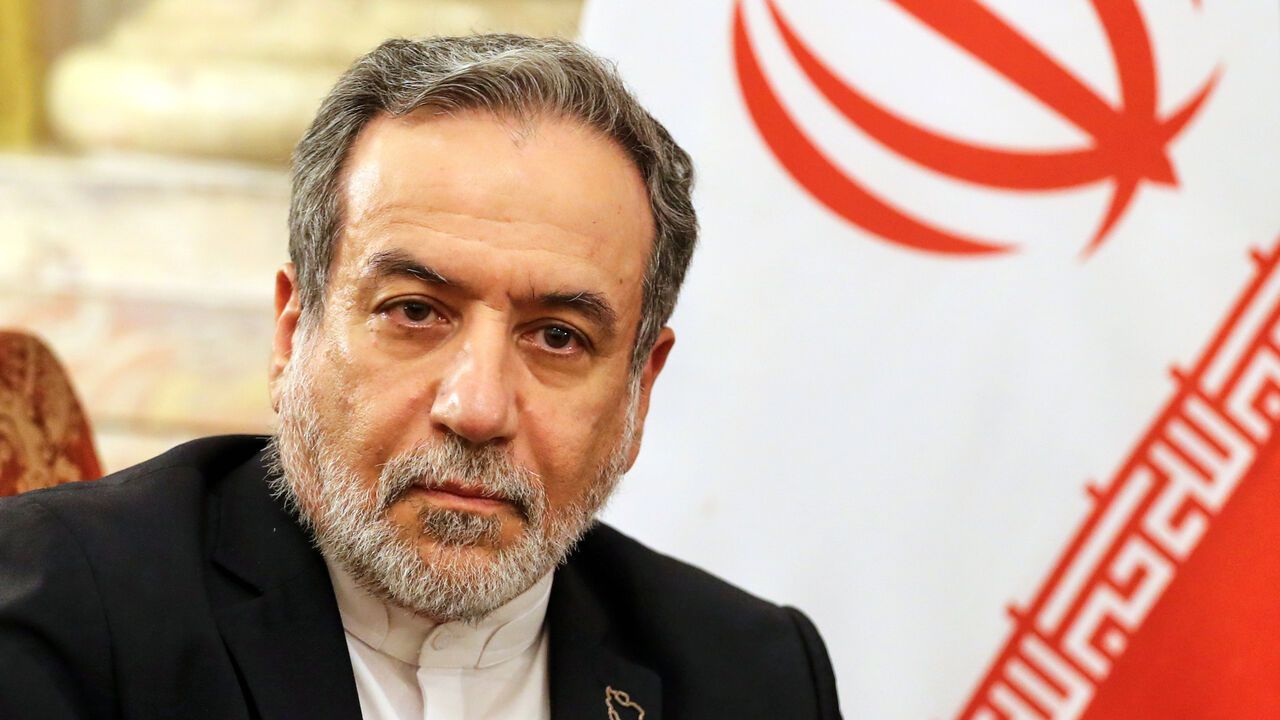
Araghchi to Witkoff: GO AND SCARE SOMEBODY WHO GETS SCARED!
Full interview with Abbas Araghchi on Majara Media (Iran), published in two parts on July 19 and 23.
Translated by Resistance News Unfiltered
Source: The Iran Talks
Transcript: resistanceaxis.substack.com
Whatever one thinks of the reformist line of the Pezeshkian government, contested by a large part of the Iranian population that rejects the negotiations, and despite its length, this interview deserves to be read in full. It goes back over the behind-the-scenes of the war, its causes and its consequences, and directly addresses the popular discontent of which Araghchi is one of the main targets: even if he does not always respond to the criticism convincingly, a man who risked his life for his country certainly deserves to be listened to attentively. The interview dates from early July 2026, just after the funeral of Sayed Ali Khamenei.
From the 12-day war to the 40-day war: the trap of negotiations?
Iranian deterrence in the face of the Gulf petro-monarchies
The January riots and the American plot
The start of the war: Araghchi’s personal account
Iran’s multiple retaliations and the new regional equation
Code 110, the assassination of the Guide, and the diplomacy of the Resistance
Strikes against infrastructure, Minab, and the Dena
The appointment of Mojtaba Khamenei and the strategic gains of the 40-day war
Why Iran accepted the ceasefire
The question of alliances: Iran, Russia, and China
Foreign policy: accusations against the reformist camp
The memorandum of understanding: a critical analysis
Lebanon: a strategic ally Iran could not abandon
The popular protests and the government’s communication
The Strait of Hormuz: sovereignty, services, and passage fees
The specter of the JCPOA (nuclear deal)
The Guide’s principled opposition to negotiations
Journalist: In the name of God. salaam. After the 12-day war, we did a series of interviews with the country’s commanders and political figures. Well, once the 40-day war began, communications were cut off. It was impossible to reach those gentlemen. I personally tried to give some accounts from the field. I went to Minab, the Strait of Hormuz, Kharg Island, Lamerd. Now a ceasefire, a shaky kind of ceasefire, has been established. We started the interviews again. Just like in the 12-day war, we began the first session with Mr Dr Araghchi.
Abbas Araghchi: Sir, at your service. In the name of Allah. Apparently you didn’t learn your lesson from that interview and you want to do it again.
Journalist: Yeah, I got a lot of abuse after that conversation and it is still going on. Although — of course, you’re one of the few people who survived after the interview. I mean, many of those dear people we interviewed in the 40-day war were martyred. They were martyred. Martyr Shamkhani, Martyr Naini, Martyr Larijani.
Well, Doctor, at exactly this time last year, we were here with you. I asked what your idea was for after the ceasefire. You said that in order for us to reach our rights, we have two options: either fight or talk, negotiate. Well, dialogue is the easiest, least costly way, and since we won the 12-day war, we were in a position of strength, so negotiations were honorable for us. So we moved to secure our rights. So what happened that war broke out again? Meaning, we told ourselves that now Mr Araghchi, after all, comes from the Revolutionary Guards and has fought, so he isn’t afraid of war, and he has a thirty- or forty-year diplomatic background. So we followed your lead, but your lead brought us back to war again.
1. From the 12-day war to the 40-day war: the trap of negotiations?
Abbas Araghchi: First of all, it wasn’t my lead. There was a decision made by the other side to achieve certain goals regarding Iran. And we were trying to steer the other side’s course away from war and toward something else. Let me explain this a bit because this mistaken impression that exists needs to be corrected: that negotiations caused the war, or that we negotiated and they still went to war. I don’t think that’s the right way to put it. Because the negotiations weren’t my decision, it was a collective decision that was made. Everything — I think I said this last time too: it all started with the perception of a weak Iran. After the events that took place in Lebanon, the martyrdom of Sayed Hassan [Nasrallah], the fall of Syria, and other developments, this impression emerged that Iran had lost its regional deterrence, and to make up for it, it would move toward nuclear deterrence, so they had to stop it. Before it could achieve nuclear deterrence, they had to destroy its nuclear capabilities. Likewise, also, this was even more intense on the Zionist regime’s side: that Iran had been weakened, and now was the time to settle the matter once and for all. They entered the 12-day war with that mindset, and before that, two or three other times we came close to war.
But now, for various reasons, a big part of it was also because of the diplomatic efforts that were made, and the fear that spread in the region that a full-scale regional war would break out and everyone would suffer. So to speak, we either stopped it or delayed it in the 12-day war, they came and tried diplomacy. As I said, diplomacy is the less costly route.
From the start, they also demanded zero enrichment. Before the 12-day war, in the negotiations that were taking place, in the face of their illegal and unreasonable demand for zero enrichment, we resisted; we stood firm. When they saw they couldn’t get through negotiations what they wanted, they started the war — started the war. In other words, that’s where the war began. When the other side saw that through negotiations it couldn’t get what it wanted, it turned to war, not — it’s not that the negotiations led to war. It was our standing firm on our positions, and the fact that we weren’t willing, at the negotiating table, to give them what they wanted, that made them choose the harder path. They chose the harder path, and they were defeated in the 12-day war, the story of the 40-day war starts here.
After the 12-day war, I think they made another miscalculation: they hadn’t anticipated this resistance. They should have been better prepared, so they increased their equipment and weaponry. In other words, they thought the Zionist regime could, with a few days of attacks, destroy everything, tear it all apart, and maybe the system would fall, and the Islamic Republic would surrender, and other false assumptions. It didn’t came true, because they weren’t prepared for a prolonged war, and when they saw people didn’t come out against it, and instead supported the system, stood behind it, they were forced to stop the war.
Journalist : This is exactly where they say that if we had kept the war going, it was better — if we’d kept those twelve days going, because they weren’t prepared, their estimates would have proven wrong. Israel, too, in that 12-day war, had come in alone at first. This is where they say negotiations caused the 40-day war. They say you should’ve kept going, not moved toward negotiations.
Abbas Araghchi : The other side has the same view: that if you’d kept the 12-day war going, you would’ve, so to speak, gotten results.
Because the 12-day war and its lessons actually made us stronger and better prepared for the next war. We learned a lot of military lessons from the 12-day war. We learned political lessons too. We learned a lot of military lessons. First, the decision to end the war was, so to speak, a collective one. It was made by the Supreme National Security Council. And everyone knows when the council’s decisions comes effective.
Journalist : No, I do accept that after the 12-day war, militarily speaking, our situation got a lot better. I asked Mr Naeini himself, Martyr Naeini, what our missile situation was. He said Pakpour said we’d tripled it. I asked him again, once more, about our operational status under pressure. He said some of our garrisons, our missile bases, would become non-operational for ten to fifteen hours. I brought that down to thirty-five to forty minutes. I know this, and that breathing room really helped us.
Abbas Araghchi : On the fourth day of the 40-day war one of the American think tanks put out an analysis saying that every day, between 10 to 25 percent of Iran’s launchers were being destroyed, and by then a third of them had already been destroyed, and Iran could hold out at most until the end of Esfand [March 20]. Meaning, preserve its missile capability, its missile-launch capability. What was that assessment based on? It was based on the experience of the 12-day war. They failed to realize that in those eight months, Iran’s launcher system had completely changed and had been restructured so that no matter how much they hit it, it wouldn’t run out.
This was just one of the differences that had emerged during that period, and in the 12-day war too, given our own resilience and our social resilience, since we also weren’t prepared for war in this form, we decided to stop as well. Whether that decision was right or wrong is something history must judge. But in my view, it was the right decision the system made, and we saw its effects in the next war. In other words, the 12-day war became a prelude to victory in the 40-day war.
What happened after the 12-day war? The enemy drew two wrong conclusions. One was that it had to prepare itself for a longer war to be able to take on Iran. Second, it had to strike the system’s social base first, and then strike the system itself. So we saw that in that period they built up a broad military posture in our region and put it in place. As they themselves put it, they created a military buildup in the region. The Americans brought in everything they had, and they equipped the Zionist regime as much as they could. They reinforced its defense system, which had fallen short by the end of the 12-day war, so it could wage a longer war and then they turned to social issues and worked on them, which led to the events of 18th and 19th of Dey happened [January 8-9], and after that they concluded that now was the time.
At a time when the enemy’s military posture in the region was almost complete they started pushing again for renewed talks, and once again that demand was for zero enrichment. In other words, they went back again to whether you accept zero enrichment, or we attack. There was a lot of debate then over whether to restart negotiations or not, and in the end it was decided that we should begin negotiations, mainly to leave no room for doubt, so later no one could say that if you had negotiated, there wouldn’t have been a war.
Journalist: So you were sure there would be a war?
Abbas Araghchi: I’ll explain the details later. Our military forces were sure of it, and we ourselves were sure too. And because we were sure, we said there should be one or two rounds of talks. Either the other side backs off its zero-enrichment position, which is unlikely, or if it doesn’t, then we’ve made our case. No one, whether in the international community or within our own society, will be able to tell us that it was our fault. You should have negotiated. That was the logic behind entering negotiations. Otherwise, if you remember, there are my interviews, my remarks on television, and what I said in parliament before that: is the goal of these negotiations is clear. The enemy’s military objectives are completely clear.
Do you think the negotiations are a deception? Well don’t be deceived! It’s very simple. No one should be deceived. Our armed forces should not pin their hopes on me, the negotiator. I have a mission, and I’m carrying it out. Either I succeed or I don’t. The armed forces shouldn’t sit around counting on me. The government shouldn’t count on me either. When it comes to people’s livelihoods, every warehouse should be filled up. Every reserve should be built up. Get everything done.
So when the 40-day war began, we were completely ready. The proof is that just two hours later, we started responding. Because all of it had already been planned out. It was completely clear that whatever the level of the enemy’s attack, we would respond in proportion to that level.
Why was the Strait of Hormuz closed on the very first day? Because it had already been planned that if the Leader was targeted, the Strait would be closed immediately. I don’t want to get into those details right now,
Journalist: No, My question is, do you mean you went and negotiated just for the historical record? Look, Mr Larijani once — heard this from Mr Larijani himself — I think it was almost a year ago he said, “By late autumn, war is certain.” Then I said, “Well, then why are we negotiating?” He said, “Thirty percent of the chance of war is in our hands; the other seventy percent is in the enemy’s hands. We’re working on that 30 percent.”
Abbas Araghchi: Negotiations had several goals. One was that maybe even in negotiations a way forward might be found, and we shouldn’t miss that chance. War has its own costs, after all. And if any country can, through negotiations, reach its goals, then that path is clearly less risky and less costly, so it will prefer it. We said maybe there was, say, a ten percent chance of reaching some outcome through negotiations other than war. We had to take that chance. Maybe we wouldn’t get there, but at least we’d have made our case — to the enemy, to the international community, and to our own people — that we tried every path.
Journalist: I accept that, but the negotiators’ credibility gets destroyed. When you go and negotiate and then war still breaks out. Do you accept that?
Abbas Araghchi: You may be right, but we’re not here to fight for our own credibility — I’m the foreign minister of the Islamic Republic for the interests of the Islamic Republic, not for my own credibility. And unfortunately, I admit that in some cases some people make decisions for their own credibility, Personally, with the mindset I was raised with in the Islamic Republic, I consider that a betrayal. If something needs to be done and a mission is entrusted to me, then my own political future — my own credibility doesn’t matter at all. If people are shedding their blood for this country, then I should be willing to put my reputation. That’s how I see it, and so when the decision was made that we should negotiate and its principles and rules were set, all of this was worked out in the meetings held back then, it’s all there. There were minutes from a nuclear committee, which has now turned into the committee known as the six-member negotiation committee. You’ve probably heard of it.
Journalist: Who are the six? The heads of the three branches…
Abbas Araghchi: Wait for now…
Journalist: That’s right.
Abbas Araghchi: This tea is for drinking?, or just set dressing?
Journalist No, go ahead, drink it. It’s getting cold. You were saying the six-member committee — this is all on record.
Abbas Araghchi: Yeah, back then it was called the nuclear committee within the Secretariat of the Supreme Council for quite a long time. Mr Shamkhani, may his soul, God willing, be with the martyrs of Karbala, was in charge of this committee. Later, when Dr Larijani became secretary of the Supreme National Security Council, he himself chaired this committee. May he rest in peace. The whole issue of whether to negotiate or not, and on what principles, what should be said and what shouldn’t be said, all of that was discussed in that committee and summed up, and the committee’s decisions were exactly like the decisions of the Supreme Council itself. It went through exactly the same process, and all of it was recorded in minutes that one day, sometime in history, after 30 years, they’ll publish.
The terms used about the negotiators and the negotiation process — they’re quite interesting. Why? I’ll get to that later.
Well, the agreement there was that we’d negotiate, but the country had to be ready for war. I said it several times: no one should be fooled. I even remember in one of the meetings, one of the senior military commanders got a little offended by it. He said, “What’s with you? You keep saying it every time: no one should be fooled. We’re not going to be fooled. We’re fully ready. Go do your job. Don’t worry. We’re ready.” That was the mindset we took into the negotiations.
At the talks, the other side was still demanding zero enrichment, and our position was still this: that we would not give up the rights of the Iranian people. In the negotiations before the 40-day war, there was a time when our nuclear facilities had been hit as well. Right then, we said with pride that: you hit our facility buildings, but buildings can be rebuilt. Equipment and machinery can be rebuilt too. But you can’t strike knowledge and technology, and that still exists. And our materials are still in place too. They came demanding zero enrichment and that we hand over the materials [highly enriched uranium]. Hand them over. So of course our position was clear. Ultimately: they said: Ok, no need for zero enrichment, just suspension. Even though our facilities had been damaged at the time and we were under a forced suspension, even then, our instructions was not to accept it as a formal matter.
In any case, our position in the three rounds of talks we held there was clear. The minutes of those talks exist, and so do the reports. On Thursday, the 7th of Esfand [26 éfvrier], we had the third round of talks. We held the third round of talks. The issue of suspending enrichment fell apart. They were saying to suspend it for several years, which we did not accept. But we agreed that, in light of the discussions that had taken place, the two sides’ technical committees would meet in Vienna on Monday.
Journalist: Hold on a second here. If we had accepted that, there wouldn’t have been a war? If we had accepted a two- or three-year suspension.
Abbas Araghchi: You can’t say for certain, but if you had accepted it, you would have suffered damage greater than war. Why? In any case, you would have sold out the country’s dignity, and we also had the 12-day war, with all its losses, and on top of that, we would ultimately have accepted that the enemy got what it wanted.
Journalist : Now, if we had suspended it for two or three years, Netanyahu and Trump, this golden pair, would leave, and then we’d go back into a hole and start again the enrichment. I mean, if it were up to me, I’d say the world has no real logic to it. There are no real commitments in this world, so if we — we’d suspend it for two or three years and wait for those two to go, then start again.
Abbas Araghchi: Now, with all due respect, the decision isn’t up to you and me, and it’s a good thing it isn’t.
Journalist: But I mean, suspension was one of our red lines too.
Abbas Araghchi: The issue wasn’t suspension or the materials. First of all, the number of years they wanted wasn’t small.
Journalist : How much was it?
Abbas Araghchi:Well, since that’s still one of the requests, and even now that we’ve split the negotiations into two stages, we’ve pushed the nuclear issue back because there were issues in the nuclear file that were impossible to resolve, and still can’t be resolved under the current conditions. Maybe after a month or two [this matter could be made public]…
Journalist: Was it more than 5 years?
Abbas Araghchi: Yes.
Journalist: Now we just have to spend five years building police stations.
Abbas Araghchi: You didn’t let me explain. It wasn’t just about rebuilding or waiting. The issue was that we would have let the enemy come, wage war, and then get what they wanted. That’s where the defeat is. Defeat isn’t in the damage to the facilities or the destruction of the facilities, or as you put it, the loss of the police stations and all that. They hit our police stations, but our police forces slept under bridges at night. They slept on buses and still did their job. They carried out their duty. The defeat there would have been if the police forces had raised their hands and then said, “Sir, we’re done,” and gone home, run off to their homes. That’s the defeat that did not happen.
If, on the nuclear issue, we had given the enemy what it wanted — meaning we had created a pattern that whenever they wanted something from the Islamic Republic, they could come in, strike, destroy things, and then the Islamic Republic would say, fine, go ahead, take whatever you want — that must not happen. That pattern must not take shape, so we stood firm in the negotiations, even if the price ended up being war.
Our martyred leader had a phrase that I’ve always kept before my eyes: “we, the Islamic Republic, do not fight because war has costs, it has dangers. But we do fight if the cost of not fighting is greater than the cost of fighting.” If you reach a point where not fighting costs you more than fighting, then you must fight. You must not hesitate. And that was what happened in the 12-day and 40 day war.
On the 7th of Esfand [February 26], in Geneva, we were in negotiations. The talks more or less went nowhere, but we still decided our technical teams’ committees should go meet in Vienna the following Monday. We came back, and from that very Friday I saw the atmosphere was completely ready for war. Friday night I spoke with two or three foreign ministers in the region, and they all told me they were surprised too, because even though Thursday’s talks weren’t bad overall, why did the mood suddenly shift on Friday? It was clear the U.S had concluded that it wouldn’t get through negotiations what it wanted and had to go to war and finish it.
Also, you suggested that perhaps — That’s right. At least from the Zionist perspective, it’s true that the nuclear issue and nuclear materials were just a pretext. The real goal is something bigger. The main goal for Netanyahu — who, as some say, is no different from the others — is that the U.S and Israel are aligned. We can discuss whether those two are really on the same path. Yes, absolutely. They’re definitely on the same path and complement each other, but there are also differences in goals and positions at times, and those can be played on. But that’s another discussion for another time.
Netanyahu has said many times that there is unfinished business there. And what is that? The 12-day war and the destruction of the Islamic Republic. He believed the job wasn’t finished and that they had to finish it and that the Islamic Republic had to be eliminated — and there’s no better moment in history than now, when it’s completely weakened. It’s already been through a round of war, so its capacity has gone up. People are protesting too — we’ve seen it in the streets, for example. And the economic sanctions, the regional tools — everything. In short, it’s at peak weakness, and they need to finish the job.
That was Israel’s goal, and with that goal it dragged America into the war. It gave Trump the wrong analysis that later we saw in different places. Trump was angry about the analysis they’d told him, that it’ll be over in two or three days. It’ll all be over. When they started the war, it was the second day. I think Trump put out a two-word tweet “unconditional surrender.”
Yesterday was all about that, you know. It was the official funeral ceremony, and foreign guests had come, and with many of them, before and after the ceremony, meetings were held. Last night until ten, so to speak, with some of the foreign ministers who had stayed, we had meetings. I was telling them, and they all agreed. I said, in the war, the enemy started with unconditional surrender. In the end, we arrived at a memorandum of understanding in which the enemy says it will no longer start any war against Iran. It will no longer threaten Iran. Meaning both sides, like this, both sides commit not to start a war against each other anymore, and not to threaten each other either, not to use force against each other, to respect each other’s sovereignty, and respect each other’s territorial integrity, and refrain from interfering in each other’s internal affairs.
So the one who was saying unconditional surrender, is now making all these commitments, then says, please, you make the same reciprocal commitment too, you respect my sovereignty too, you don’t interfere in our internal affairs either, you don’t be the one to start a war against us either. I think the first and second clauses of this memorandum from this standpoint are truly a source of pride, that Iran and America, with Iran facing America as a superpower, sit down and make commitments to each other, respect each other’s sovereignty and not interfere in each other’s internal affairs.
Thanks for reading Resistance News Unfiltered! Subscribe for free to receive new posts and support my work.
2. Iranian deterrence in the face of the Gulf petro-monarchies
Journalist: There’s a flaw in our diplomacy. Now, since two wars happened during your time as foreign minister, this comes back to you. You don’t use threatening language that could lead to deterrence.
Abbas Araghchi: Toward what?
Journalist: Toward the countries in the region? I mean, for example, the Americans go and meet with the Saudis, the Qataris, and the Emiratis, and they reassure them and promise them, “We’ll hit Iran,” and they all cooperate. Why don’t you go and threaten them from your side in private messages, in meetings, in private meetings? So threats can actually create deterrence.
Abbas Araghchi: How do you know we haven’t? Before the 12-day war, we came close to war two or three times, and with threatening we prevented it. Those regional tours I made after the Syria issue were exactly for that, and the threats we made at one or two points prevented the war.
I’ll give one example now, of course, without naming names and all that. I met with one of the region’s leaders, and from a very arrogant tone, and the satisfaction you could sense underneath it, He said: “you can be sure they’ll attack you, destroy your nuclear facilities, destroy your missile capability, and destroy your oil facilities and you shouldn’t respond because they’ll kill you too. They’ll take out your leader.“
Journalist: Who said that?
Abbas Araghchi: One of the region’s leaders, and I told him,
Journalist: Saudi Arabia?
Abbas Araghchi: Let’s not get into that now. We have dealings with them, with all of them.
Journalist: That sounds like bin Salman.
Abbas Araghchi: Let’s not name names now. No, it fits all of them. Anyway, let’s do our job. They all had that mindset. They were all waiting for this to happen. But they were afraid.
Journalist: They thought it was over?
Abbas Araghchi: Yeah. I told them it wasn’t as simple as you make it sound. If they hit any part of us, we’ll strike the corresponding target. If they hit our nuclear facilities, we’ll hit nuclear facilities. If they strike our military capabilities, we’ll strike Israel’s military capabilities. If America gets involved then inevitably we’ll hit American bases in the region. Because our missiles can’t reach U.S soil, but they can reach their bases in the region. If they hit our oil facilities and we can’t sell oil, then no one in the region can.
That made the other side a bit angry, and he said, “No one can threaten us. If someone threatens us, I don’t know, all of Europe and America will turn against them, even China would turn against them because of all these trade ties. The flow of oil in the world is in our hands, the distribution chain and this and that are in our hands”, that kind of talk. I laughed and said, sir, God forbid, we — we’re not trying to hit you. We’re targeting the American bases, which unfortunately are on your soil. Well, that was what got the region moving and stopped the war.
But later we heard analyses from American and Zionist institutions, and some people told us they went and convinced the countries in the region, saying, look, at most, just hold out for one month. Then this whole thing will be over for good. Yes, Iran will strike, launch missiles, do all that, but if we just hold out, everything will work out, and they got them ready to endure for a month and let it all end.
Well, in the 12-day war, they thought it could be done. It wasn’t. They concluded that the system’s social base had to be hit. They did those things and prepared themselves for a longer war and with newer methods. And then, back in the 12-day war, they came to one conclusion. Another conclusion they reached was that we made a mistake. We only hit the military. We hit the military and left the politicians. This time we have to hit the politicians too, and most importantly, the leadership. The Venezuela experience had once again given them the wrong impression that if you remove the leadership, the system collapses and the rest, so to speak, fall apart.
Now our friendly countries keep constantly keep telling us, yeah, how much they told them not to think like that, Iranians are different. They have a civilization thousands of years old behind them, plus a Shiite worldview and a belief in martyrdom. When those two are combined, no one can stop them. They’re telling us now, they’re saying, yeah, they’re saying, we told them all this. At some point I’ll say exactly who told us that they went and told them, look, don’t mess with Iran. Iran is different from Venezuela. But it was true, after all. That’s why they started with the Leader, and then they started targeting political officials too.
We weren’t caught off guard in the 40-day war, but there was tactical surprise. Meaning, strategically, in terms of facing the enemy and our ability to respond and our military and defensive resilience against the enemy, we were fully prepared. We weren’t surprised. In fact, two hours later we started striking back. But in protecting ourselves and, so to speak, our officials, I think there was a bit of surprise there.
3. The January riots and the American plot
Journalist: Now, please tell us, was there a forecast for the Riots? during those ten days leading up to the riots?
Abbas Araghchi: No! We can say here that we weren’t prepared for an incident like that.
Journalist: But Mr Larijani, the armed forces, the Intelligence Ministry, the IRGC thought that if this crowd came out, three thousand people would be killed, and some cities would fall — Mashhad… Trump was right, Mr Araghchi, I — I looked into it later. Mashhad had fallen within three or four hours. It had fallen. I mean, this was a strategic surprise, in my opinion.
Abbas Araghchi: Look, in any case, we have to accept that we had weaknesses, just as the enemy’s calculations were wrong, their analysis was wrong, some of our analyses were wrong too. The thing that economic pressure could lead to social unrest, everyone knew that. Everyone said, but the scale and speed of how it spread may not have been predicted like this. This really isn’t my area of expertise, so I can’t really say, but once it started, we were involved too, and we had no choice but to defend the country against the media and psychological onslaught. The assumption was that these were just scattered protests and that they would end soon too.
But maybe that really was the case, except on the 18th and 19th of Dey [January 8-9], a foreign plot entered the picture. I’ve explained this before in interviews and talks in detail. From the 8th to the 18th [December 29-January 8], they were public protests by the people, and they were tolerated too. Even the government, so to speak, responded positively to them. I remember that in one of the cabinet meetings around those days, they invited the head of the Guilds Chamber, the head of the Chamber of Commerce, to voice their concerns. The president himself, along with the Guilds Chamber and others, held a separate meeting. The demonstrations were being held peacefully. There was no problem, but from Dey 18 onward, weapons started coming in, and it was clear that there had been prior planning behind this, which we couldn’t identify. That’s where the weakness was, and weapons came in on a large scale, and trained forces came in as well.
You know what happened after that. And they started firing not just at the armed forces but also at the people, because the goal was to drive up the death toll. Trump had said that if people were killed, we would come help, we’d come save them. So they wanted to put Trump in a position where, with so many killed, he’d have to come in.
Journalist: So if it had dragged on from the 18th to the 28th [8 au 18 janvier], do you think the war would have started right then?
Abbas Araghchi: You can’t really analyze that. I don’t know whether they were ready for war then or not, but Trump had made that threat, and one day, on a Wednesday, we really came to the brink of war. The Wednesday, after 18th of Dey, all our armed forces, based on the reports they had, believed the enemy was ready to attack and that the attack would happen that night. I don’t know if you remember, at eight o’clock that night I did an interview with Fox News and explained all of this, that this wasn’t about public protests at all.
Yeah, that night they said Trump had said that there were gonna be executions the next day, and a lot of people had been killed, and then the enemy’s military buildup and all that suggested that…
Journalist : Trump said if you execute them I’ll attack?
Abbas Araghchi: No, He had said Iran is carrying out executions and we’ll attack. They had told him the executions would start the next morning, so that night I did an interview with Fox News and said that we have no intention of carrying out executions right now, because in fact the trials hadn’t even started yet; rather, a number of people had been arrested. The legal process hadn’t been completed yet. Some of them may have deserved execution and they did and got executed [later]. But the legal process hadn’t started, so we weren’t about to execute anyone the next morning. I said we currently had no such plan. The legal process hadn’t started, and besides, so to speak, the killings had ended seven or eight days earlier. They had stopped. After the 18th, 19th, and 20nd of Dey [January 8-10]we had no more casualties. The casualties had stopped. The report saying people were being killed in the streets every day was false, though maybe Trump was looking for a pretext too. Whatever it was, they announced that night that it wouldn’t happen.
Journalist: How much did the 18th and 19th of Dey affect the outbreak of the war? The forty-day war.
Abbas Araghchi: In my view, it did affect the enemy’s conclusion that the conditions were ready. Meaning, they saw that, well, that from their point of view, a popular movement had taken place, and the system had, so to speak, cracked down. From our point of view, it was the suppression of a terrorist movement. But the perception was that it had cracked down, and the social groundwork was ready.
Journalist: How much did this contribute to the outbreak of war?
Abbas Araghchi: I’d say, very much so. They thought the social climate was ready, and if they attacked, people inside the country would also take to the streets. People did take to the streets, but for a different reason: to support the system. That was the mistake.
Two factors led, as I said, to the start of the 40-day war on 9th of Esfand [February 28]. One was that they thought the social climate was now ready, that the system’s social capital had been destroyed. In the 12-day war, the system’s social capital came into play, and we all realized what a resource we had, and how little we had appreciated it. Unfortunately, after the 40-day war, we still didn’t appreciate it, and in the end we kept following certain paths that led to problems arising. The enemy thought that after the riots the system’s social capital was gone. Militarily as well, they thought if they dragged the war from twelve days to, say, two weeks, the job would be done. There was economic pressure and all that. And it had no hope in the region either. They had also told the regional countries just hold on a little longer and it’ll be over. The Islamic Republic is bluffing and wouldn’t dare close the Strait of Hormuz. And it can’t expand the war to the region either because the region would push back against it. Despite all these assessments, they started the war. They came to the meeting and said, “Do you accept this?” We said no.
4. The start of the war: Araghchi’s personal account
Journalist: So tell us about those two days up to 9:30 in the morning. Walk us through it. After you came back from Geneva, that Omani side — I remember he went to the U.S, quickly went there, and did a few interviews and said a few things like, “Look, Iran has made some good concessions, and I don’t know, everything’s fine,” and you got the feeling that something was up, that the Americans wanted to attack, and he kept trying with these remarks to talk them out of it. Did you also think that in just a day or two, war was definitely coming?
Abbas Araghchi: He went from Geneva to Washington and called me and said the atmosphere there was very bad, and he himself was deeply depressed. They say he had become upset and distressed too, because his credibility was on the line as well. Also, in Thursday’s negotiations, it’s true that we didn’t give them what they wanted, but in the end we did move a few steps forward, and we put forward some innovative side proposals, so that enrichment in principle would continue, but could still address their concerns, because our position has always been, from the start of the nuclear talks until now, that we won’t give up our rights, but if there’s concern that maybe our program might move toward weapons, that concern we are willing to remove. Our position in the talks has always been that we’re ready to take confidence-building steps, but not give up our rights. We won’t give up enrichment.
But now you’re saying, for example, for a certain period. Like, limit enrichment this way, I don’t know, with the materials, do this, do that, do this, to make sure that we don’t pursue a bomb. We don’t believe in atomic bombs anyway, and we consider them haram and forbidden. That’s the fatwa of our martyred leader. So we brought up these initiatives, thinking maybe this way we could somehow keep the negotiations under control. Well, it didn’t work. Mr Busaidi went to Washington, and from there he called me and said the atmosphere there was bad. Then he himself started giving interviews and saying the same things, trying, in his own way, to stop the war — to stop it. I said, by Thursday, and when it was over, by Friday, the atmosphere had completely turned military.
Journalist: He called you and said war was certain?
Abbas Araghchi: No, he said the atmosphere there was a war atmosphere, and I went and gave an interview. Then he had requested to meet with Vance, because he felt that maybe Witkoff and Kushner, hadn’t conveyed things properly. He had met with Vance, but apparently in Washington, Trump himself had already made up his mind and had been convinced by the Zionist lobby or by Netanyahu that the war would be over in two or three days. So by Friday night, the whole atmosphere had completely changed.
At eight Saturday morning, I went to see the president and gave him a report on the Geneva talks. At the same time, I said the talks had been good, relatively speaking, as talks go, but the atmosphere wasn’t one for negotiations at all; it was a war atmosphere. I also had an appointment at 9. I went to the Leader’s office with one of the officials. I had an appointment there.
Journalist: You didn’t meet with the Leader?
Abbas Araghchi: No. We would, so to speak, meet with Mr Hejazi, and the report would be passed on to him. During the day, he would receive reports from everywhere, for example, and present them to the Leader, and if there were any questions, he would bring back the answers. And if necessary, the Leader himself would meet with us. It wasn’t as if that was the only channel. The martyred leader, in any case, the way it worked was that reports from everywhere would reach him. He would review them all, and if he had any guidance, he would give it, and if he saw fit, he would call the person in — or rather, he would want to hold a meeting with them and brief them. If needed, he would hold a group meeting. Either he would invite specific people or he would invite the Supreme Council. In any case, in my view there was a completely solid decision-making system in place, and there still is. Even now, once some of the security issues are resolved, it will presumably be the same.
Journalist: You were with Mr Hejazi?
Abbas Araghchi: I was, at nine o’clock. And we were basically going over a report on the negotiations. And I had actually gotten to this very point about the heavy war atmosphere, and I said since last night that’s how it had become, and the situation wasn’t such that… Suddenly, it was attacked.
Journalist: So the Strategic Council on Foreign Policy meeting was taking place, right?
Abbas Araghchi: No.
Journalist: Because Mr Kharrazi (Khamenei’s adviser for foreign affairs) is there too. And you’re here, and Mr Rahim Safavi (Khamenei’s military adviser) is also there.
Abbas Araghchi: Look, it’s a large complex there, with different sections in it. The Strategic Council on Foreign Relations had a place a few buildings farther down. They were also meeting at the same time, but that wasn’t it. Worse than that was the meeting Mr Shamkhani had arranged, where a number of commanders were martyred.
Journalist: We won’t air this. I mean, I doubt we can air it. Well, maybe for the record. That day there were three meetings. The Intelligence Ministry deputies’ council meeting, at the ministry. The Strategic Council on Foreign Policy meeting, at the residence, and a defense council meeting that Mr Shamkhani had set up. Mr Khamenei himself was also at the residence. How do you interpret this? Three or four at the same time, at 9:30 in the morning.
Abbas Araghchi: Well, the Strategic Council itself, so to speak, had a regular meeting every Saturday. Back when I was on the Strategic Council, we met every Saturday morning. But in the building they have on Pasdaran Street. What had happened that they held it in that lower building? I don’t know. Besides, that place wasn’t the target. But Mr Shamkhani’s meeting was the target, and the office — Mr Shirazi was a target, and so was Mr Hejazi’s office and the Leader’s office itself. They hit those.
Journalist: They also quickly hit the deputy ministers’ council meeting.
Abbas Araghchi: Those were other buildings.
Journalist: I know this overlap, this number of meetings, doesn’t seem normal to me.
Abbas Araghchi: Well, back then, of course, every building we went into had some meeting going on, but the meeting with His Eminence at his office — that’s a different matter. And the fact that the Defense Council meeting had also been set up by Mr Shamkhani. Now, whether that was a coincidence or not, I don’t know. But the Intelligence Ministry was also holding this meeting at the same time. What’s important, in my view, is that they had intelligence about these meetings, and this may point to a security gap that existed and probably still exists. This needs to be fixed, and the security forces are looking into it, and I believe this security gap isn’t just about infiltration and getting information. Sometimes it also affects the direction of decision-making, and worse than that, it also affects the direction and shaping of our psychological climate.
Journalist : I’m saying this indirectly, but I believe nothing can destroy the Islamic Republic except meetings. These meetings have really done a number on the Islamic Republic, but this overlap and this level of knowledge — they struck at 9:30 in the morning. I don’t chalk this up anymore to technology or AI and things like that. Since you have some intelligence background it seems to me we really need to look for a few spies behind this.
Abbas Araghchi: It’s not that simple. I wrote articles couple of times on Ettela’at newspaper! Well, let me tell you, I think they knew very well that every morning the Leader was in his office, and that target was accessible. Well, he had this principle — he wouldn’t go into the shelter. They realized that his commanders’ meeting was either two buildings over. That’s why they chose that moment. Probably by chance, the Intelligence Ministry meeting also was happening at the same time, but it was much farther away. Anyway, this tragedy happened.
Look, we were sitting in a meeting, and they hit that same building.
Journalist: They hit the building? I mean, with debris and all?
Abbas Araghchi: Yeah.
Journalist : Because I heard, Mr. Hejazi was pulled out of the rubbles —
Abbas Araghchi: Yes, almost.
Journalist: So you must have been buried too, then —
Abbas Araghchi: Well, I came out by myself. Three hit. As far as I remember from that moment, at first there was some interval, and then we suddenly were basically frozen in place about one or two seconds apart. The second one hit closer, and the building shook, and the third one also, one or two seconds later, hit.
But this was Mr Hejazi’s building. Like, our meeting was on this side, and on that side was Mr Hejazi’s office. They had hit the office. I mean, the left side of the building was destroyed. For example, may God bless martyr Eivazi, they didn’t find anything of him at all.
Journalist: Mr Hejazi’s secretary.
Abbas Araghchi: But we were on this side of the building, and then the ceiling and everything just collapsed. When it was over, I was waiting for the fourth one, for it to be completely over, but then it didn’t continue. I looked at Mr Hejazi and said, “Are you okay?” He said, “Yes.” Then I took his hand and together we finally got up. He himself said we had to get out quickly because it would probably continue. We came through those beams and boards and pieces of wood and went into the room. We entered a hall where we could hear cries of “Ya Hossein” and screaming coming from there. Water was pouring from the ceiling, and everything was wrecked. With great difficulty, we made it out of the building. Then I saw the courtyard; different parts of it had been hit. As we were coming out with Mr Hejazi, I asked, “Is Agha here?” He said, “I don’t know.” Meaning he himself wasn’t sure exactly where the Leader was. Anyway, we came outside. They had hit everywhere. The gates and everything were all torn up. The security guys came, quickly grabbed my hand, and said we had to get out because it would probably continue. So anyway, we quickly went to our car, which was stuck. It had been hit by shrapnel too, and there was no way out anymore. So we went out onto the street. A young guy showed up.
Journalist: We got a taxi.
Abbas Araghchi: They asked a young guy: “Take the foreign minister!” The poor guy came over in, I think, a Tiba car or I don’t know, maybe a 206, I don’t remember. We got in, and he drove me to the foreign ministery office.
Journalist: When did you find out the Leader had been martyred?
Abbas Araghchi: Well, we pretty much found out that same night, that is…
Journalist: After sunset?
Abbas Araghchi: From there, we went to the Foreign Ministry. And for maybe three days, we were completely cut off from everything. We were only trying to find out who was alive and who had been martyred. I didn’t even have definite news about the president. Of course, that day word came that he hadn’t been martyred, but we had no communication. I first saw the president three days after the war began. I think I saw Mr Larijani five days later for the first time. And the first meeting — the first meeting that was held, was six days later, in a safe location, where three of the people in that meeting were later martyred.
Journalist: Supreme National Security Council meeting?
Abbas Araghchi: No.
Journalist: Who got martyred there?
Abbas Araghchi: Mr Khatib (intelligence minister) was martyred, Mr Larijani was martyred. Mr Bateni (head of the Leader’s office) was martyred. Three others of us were there too, and we’re still here.
5. Iran’s multiple retaliations and the new regional equation
Let me tell you, from the moment I entered the Foreign Ministry, I had full authority. We immediately issued a statement, and I started calling the foreign ministers of the countries in the region. Well, I knew the plan had already been arranged: if they strike us, we will strike the U.S military bases in the region. And also Zionist Regime. So from noon I started with the foreign ministers of the Persian Gulf Cooperation Council countries in the region. I contacted them all and told them we were going to hit the U.S military bases. You should know it’s not against you; it’s against the Americans. They all protested, saying, “No, you can’t,” and so on. I said, in any case, this isn’t a war we started. It’s a war that was imposed on us. And we had already told you beforehand. Well, they started protesting, that same afternoon our ambassadors were summoned.
It was the third day of the war, and that morning one of the region’s foreign ministers called me. He said, “In retaliation for the places you hit from our territory,” he called me at 4:30 in the morning, eight a.m, “we’ll hit such-and-such a place, but we won’t continue any further. We won’t continue. You don’t hit us anymore, and we won’t hit you anymore.” Very smoothly, huh?
Journalist: Who? The UAE or Saudi Arabia?
Abbas Araghchi: One of the countries in the region.
Journalist: I mean, in addition to the US and Israel they started calling too, threatening us.
Abbas Araghchi: I said, if you target us, this time we’ll target you and a war will start between us and you. Our war with America, our war with Israel, is one thing, but it’ll start with you too.
Journalist: You said that on behalf of yourself?
Abbas Araghchi: No, that was always our rule.
Journalist: Oh, so that was part of the approved plan.
Abbas Araghchi: I’m saying all of this had been thought through. Of course, I checked this issue too. Also, let me say that our communications were difficult, but there were two places in the armed forces where we were in constant contact. Honestly, at any moment they would call me. I was available, and whenever I called, they were available. Others weren’t. I won’t name names now. Mr So-and-so, we need him. Twenty-four hours later they’d say he is not available! As for the Leader, that’s a different matter, he was in a category of his own. But with these ordinary people, if you needed anyone, we’d spend all morning till noon looking for them just to get an answer.
Journalist: But the armed forces weren’t like that.
Abbas Araghchi: With the armed forces, we were in constant contact. Whenever I called, honestly, Mr Vahidi (IRGC commander-in-chief) would pick up the phone, or General Abdollahi (head of the Khatam al-Anbiya central headquarters), or the others, or our Navy commander. When the Dena destroyer issue came up, well, there were a lot of problems.
Anyway, that country said we would strike. I said we’d respond immediately too, and there’d be a war between us and you too. Then he said, “So what should we do now?” I said, “Wait until noon, delay it a little. Maybe we can reach to a conclusion.” Then we talked some more and came to an understanding that if they didn’t allow the American base to be used against us, we were prepared not to target them. But they didn’t stick to it. We kept hitting them until the end of the war. After that, they stopped threatening to respond. The rest were the same too. Logically, they couldn’t believe we’d strike the region and they wouldn’t be able to respond. This was a major shift, and it happened in a way that transformed the region’s security structure. The thing that Iran could strike the whole region, all of it, even Oman, which was our friend and we didn’t hit, really —
Journalist: But you did hit one place there,
Abbas Araghchi: No, that’s what I mean, a company they had in one of their ports was supplying fuel to American ships; only that one we hit. We hit it once or twice. Of course, the Omanis were very upset because they really had supported us but that too ended, and they themselves put a stop to those companies themselves.
We hit the whole region, and not a single one of them could respond. And this showed that the region’s security structure just can’t be the way it used to be anymore. Once I should talk about our strategic gains in this war — what exactly we achieved and what strategic victories we won, and on the other hand, the damage we took wasn’t strategic, up to a point. Some of the damage was strategic, but overall our strategic victories outweigh it.
6. Code 110, the assassination of the Guide, and the diplomacy of the Resistance
Journalist: For the first time, we struck the region — the whole region, all the countries in it, for the first time. Then we closed the strait. This — whose decision was it before the war?
Abbas Araghchi: Before the war, we had multiple meetings in the Supreme Council. All the scenarios had been reviewed, like, I guess I should say this now, for example, if the U.S attacked alone and the (zionist) regime didn’t take part, what should we do? If they both attacked together, what should we do? If, for example, their targets were limited to military targets, not civilians, what should we do? If they went further and targeted infrastructure, what should we do? And there was one scenario, the very last one, about what to do if they struck the leadership.
Journalist: So this had been anticipated.
Abbas Araghchi: Yes. It even had a code.
Journalist: What do you mean?
Abbas Araghchi: Like a code word. If it happened, what were we supposed to do? In meetings, I mean, in the sense that in a meeting, no one could bring themselves to say it. Like, even saying the Leader [could be martyred]… so there was a code. Code 110, and everyone knew what 110 means. If code 110 happened, we’d do this. It had been written up and approved, and His Eminence had seen it and approved it himself. That’s why it started immediately, very orderly and well organized. We weren’t caught off guard at all. We were prepared for everything. Yes, we even used negotiations as a tool too. If it worked, fine; if not…
Journalist: I once asked Mr Larijani — I said, “So what if they strike Agha? What happens then?” He gave some answer, then I asked again. He said, “Mr Mogouyi! Stop it!” I mean, he really snapped at me, like, “Don’t even talk about it anymore.”
Abbas Araghchi: Yeah. It was hard even to talk about it. That’s why I’m saying there was a code for it. We wouldn’t say it directly. We’d say a code that everyone knew what it meant.
Then when it started, well, since I knew what was happening, I went ahead and called the region’s ministers myself and said — That was the situation. Then we issued a statement. We started giving interviews. And our main goal in those days was to immediately carry Iran’s voice to the world and for that voice to convey confidence. A voice that didn’t sound shaky, so the enemy wouldn’t think, “Yeah, they’ve really broken down, it’s over, we’ll reach our goals in two or three days.”
If you look at the interviews I gave in those days, and the ones Mr Baghaei, our spokesman, gave,
Journalist : Mr Baghaei really went all out.
Abbas Araghchi : He really gave it everything.
Journalist : The number of interviews he did, the number of meetings he held, never stopped. His weekly briefings went on. And when he said — saying, “We are a superpower” — I mean, the language was very combative.
Abbas Araghchi : That’s how things were at the Foreign Ministry throughout those forty days. Mr Baghaei, as our spokesman, as you said, didn’t cancel a single press briefing even once in those three days.
And let me add, in those forty days, my deputies, all my colleagues, and I stayed in the Foreign Ministry building. We did not leave the Foreign Ministry. Everyone moved to other places, other buildings. Of course, we weren’t in our offices, but we stayed on the Foreign Ministry grounds. We had arranged some spots there that I don’t know how safe they really were, but anyway.
Journalist : There was no truly safe place except the tunnel. There was no safe place.
Abbas Araghchi : Though the tunnel had its own problems. But we stayed at the Foreign Ministry. All the deputies were there. I’ve told this well-known story in a few places. I said it. Maybe you know the way one foreign think tank put it: we had underestimated a few things. One was Iran’s armed forces — we had underestimated them. We didn’t think they could hold out this much or keep up the missile fire like this. Second, we had underestimated the people of Iran. We thought if things went on like this until something happened, everyone would come out into the streets and protest, with all the problems you know about, but the people have stood firm. And third, interestingly, was that we had underestimated Iranian officials. No one imagined they would be martyred one by one, but they stood their ground. In similar situations, it often happens that many people leave and abandon their posts, resign, leave the country, run away…
Journalist : Seek asylum.
Abbas Araghchi : They worked hard to get some of the diplomats to seek asylum. They were exposed and under intense psychological pressure. I’ve experienced this myself. Back in ’88 [2010], I was ambassador to Japan. When you watch a crisis in your own country from abroad, the panic and anxiety feel many times worse, because you’re outside and can’t do anything, and then you’re subjected to the psychological pressure of the Western media. It’s absolutely crushing, really. But none of my colleagues — not only did they not leave their jobs, they didn’t lose their morale either. Maybe you noticed that this time our public diplomacy — I was much more active than last time. Most of our embassies were tweeting, and some of those tweets got significant attention, with millions of views, and even Westerners admitted that a lot of Western narratives and Western media were outdone by Iran’s public diplomacy. These things they put together, this AI videos they created, the Lego project done by Iranian youth, and many other things too. And our embassies were tweeting these things and sharing them around; some of them got upwards of twenty million views. My colleagues, both at home and abroad — not even a single local employee, nobody left their job. No one said, “I’m not coming in from tomorrow.”
Journalist : At that point, security didn’t really mean much anymore. It wasn’t the fault of the security guys — I mean, what could they do? A missile comes and hits, that’s it.
Abbas Araghchi : Since we were going to different places at night, sometimes we’d tell the security guys, “Don’t come! A missile might hit, and there’s nothing you can do and you get martyred.” But my security team really stayed right by my side wherever I was. They had different ideas and initiatives, because in the end, with some ingenuity, you can reduce the risk. For example, let’s say — well, no other official had a phone, for security reasons that everyone knows, but unfortunately I couldn’t put my phone aside, because all my foreign calls were with foreign ministers constantly — interviews, calls, calls with our embassies. I had to handle all of that, so the only thing that maybe reduced the risk a little was that we set aside certain hours each day. I’d get in the car and drive around the city so I wouldn’t be in one fixed place, in case they wanted to strike. Anyway.
Journalist: You didn’t go to tunnels?
Abbas Araghchi: About the tunnels and all that, I don’t want to say much.
Journalist : I mean, everyone knows there are tunnels, and everyone uses them. Do I need to say where? Everyone knows — there’s one by Nabi Akram, in the far end of Pirouzi. And another one up there — forget the name — up above Darband; they’ve hit that one too.
Abbas Araghchi: There are lots of other places too.
Journalist : I know, there are plenty of tunnels. I’m saying commanders used those two a lot, they know that too.
Abbas Araghchi: I went once or twice for meetings, but not to the tunnel itself. It wasn’t there. Anyway, there are lots of tunnels, and in some places, tunnels — well, not tunnels, but facilities — have basically been normalized, and since there could be another war someday, let’s save those for then!
But there were lots of creative methods, and after a while, we finally managed to get it under control. We brought down the number of officials being martyred, but unfortunately, we still lost some very valuable people.
Journalist : They really thought that Iran is like Venezuela. Meaning, if they took out, say, the Leader and a few officials, it would all be over.
Abbas Araghchi : I said, officials were being martyred one by one, but they didn’t back down. One time, in one of the talks, I think in Islamabad or wherever it was, I told Americans
Journalist: To Witkoff?
Abbas Araghchi: Yes, Witkoff. I said : Have you ever been in a meeting where at any moment you thought it might explode? He just stared in shock! I said, have you ever been on the phone and thought that right then, while you were talking, it might blow up, so to speak, and you’d be gone? Have you ever — for example, I don’t know, while on the phone asking about your family’s well-being, thought to yourself this might be the last time? I said, we’ve lived through all this and stood firm. You have to talk to us differently. You can’t threaten us, and you can’t bribe us either.
In the negotiations before the 12-day war, they had come to try to bribe us — well, not me, but to buy off the Islamic Republic, saying this and that. We’ll do this for you, we’ll build that for you. I told him there that our enrichment is not for sale. This is something the people of Iran have endured twenty years of sanctions for. Their scientists have shed blood for it. How could we possibly sell it? You say you’ll build us a power plant and other things? I said, neither bribery nor threats. Scare someone who gets scared! When we go and are constantly expecting something bad to happen to us, so you can’t scare me with “I’ll come and strike, do this and that, start a war” anymore.
Journalist : This isn’t Venezuela.
Abbas Araghchi : This isn’t Venezuela, where if you take one person, the rest get scared and back down.
7. Strikes against infrastructure, Minab, and the Dena
As for infrastructure, since talk of attacking infrastructure had gotten really heated at one point, they threatened and gave an ultimatum, and hit a few places. So we immediately hit a few places too in the region. I said that there was a possible scenario for that too. If we’re going to hit infrastructure, which ones should we hit? These were already known beforehand.
Journalist: Why didn’t it continue? Why didn’t they hit the infrastructure? That was the key question, I mean, when they were threatening back then, they only just poked at a few places. I don’t count bridges as infrastructure at all. To me, infrastructure means Assaluyeh (Iran’s South Pars gas field), steel plants — that’s what infrastructure is. Why didn’t they hit our infrastructure on a wider scale?
Abbas Araghchi: In my opinion, (it’s because) when they started hitting our infrastructure, we hit infrastructure in the region too. Of course, infrastructure whose shareholders were American. When the region started taking hits to its infrastructure, that’s when it finally realized the war was serious. That’s when the region started pressuring Trump to stop it.
Journalist: Well, why we didn’t hit the infrastructure earlier?
Abbas Araghchi: Good thing you’re not the (enemy) commander, then! There are a lot of calculations involved. Right? It’s not just about striking them. You have to be able to defend your own infrastructure too. And then you have to be able to predict, like, if they hit my power facilities, for how long can I keep it up? What if gas gets hit?
Journalist: Well, you’re not a commander. We’d have to ask other people. But I’m saying, if hitting infrastructure would increase pressure on the Americans, lower their threshold, I don’t know, and other things — then we should strike first, right?
Abbas Araghchi: No, if it had started from our side, it would’ve given them legitimacy to hit our infrastructure.
Journalist: Come on, today’s world isn’t about legitimacy, Doctor! Everyone just does whatever they want.
Abbas Araghchi: No, it’s not right. Look, they started cautiously. Take Asaluyeh, for example — I think they hit four of its phases. If we had started it, they would’ve hit all 24 right away. Anyway, there’s a whole calculation to it. I’m saying it’s a good thing you and I aren’t military commanders, we’d ruin this country completely!
These past 40 days — sometime I really should write down the memories properly, or talk about what kind of days we went through. The first few days were really hard. Really, really hard. Because all we heard was what they hit, who they hit. And with the threats Trump was making about unconditional surrender, all that stuff —
Journalist: — didn’t it shake you, Doctor?
Abbas Araghchi: — No. Deep down, enough to make you worry that, well, we have to stop this from happening. Deep down, did you ever feel like, well, it’s over, just let it go? No, no.
Journalist : Yes, but worried in the sense that… I myself had predicted that they might strike the Leader. Even in these very meetings, a lot of people said it, but I didn’t expect the Defense Council to be hit on that scale. I mean, I didn’t think the Defense Council would take seven, eight, ten hits all at once, all together.
Abbas Araghchi: Of course, it wasn’t the Defense Council itself.
Journalist : It was beyond the Defense Council?
Abbas Araghchi: No, it was a smaller one, one of the Defense Council’s subcommittee meetings. Because the Defense Council includes the foreign minister too, and the president himself — it’s actually chaired by the president. It’s something like the Supreme Council. Two or three members are different. But like the Supreme Council, it has subcommittees. This was one of those committees, but unfortunately four or five key people were in it.
Journalist : Like the former head of SPND, the current head of SPND, their deputies…
Abbas Araghchi: What is SPND?
Journalist: A part of Defence ministry. They were there too. So what I’m asking is, deep down, didn’t it shake you?
Abbas Araghchi: — No. Look, actually, that was exactly the enemy’s plan. Why do you think they hit Minab School? I really think they hit it on purpose, and one of their aims was to shake people to their core. To show people the depth of the disaster. Why did they hit Dena? A completely defenseless ship, hundreds of kilometers away from Iran, on a training mission. It had gone for a ceremonial exercise, All of this was to scare people and shake them up. And they tested us many times too. When they got into the infrastructure, in some places they struck to see whether we’d back down or not, They kept testing us, trying to push us to that point, and with the propaganda they were pushing, they were trying to get us there. But really, there wasn’t anyone,
Journalist: What about the Cabinet?
Abbas Araghchi: There were no Cabinet — maybe their first meeting was only last week that it was finally held. Of course, we were in touch. We’d contact the ministers we needed to coordinate with; we’d call and find each other. But no, during this period, probably the person I saw most was the president. The president was genuinely accessible, and regularly, at least for my own work, I’d go see him, and if needed, he’d set up a meeting.
Journalist: During the war you mean?
Abbas Araghchi: Both during the war and in the negotiations,
Journalist: The six-member committee would meet during the war?
Abbas Araghchi: The six-member committee, yes, the six-member committee, because it really wasn’t possible to invite everyone. Security-wise, it was dangerous.
Journalist: Tunnel is safe! If they invited you, go there! Nothing would happen to the tunnel. They couldn’t do anything to the tunnel. They’d hit the area in front of the door. They filled the oxygen tank there. I know. Nothing would happen there.
Abbas Araghchi: Well, they did it for themselves. No. It wasn’t as if everyone could just go into the tunnels. In the end…
Journalist : But you know if you go inside a tunnel — you had to stay a few days, for example. You couldn’t just go in and out quickly. And you couldn’t go because you had work outside.
Abbas Araghchi: Yeah, I’ll talk about these kinds of stories later, when some time has passed. God willing, where we went, what we did, what it was like. But — we had the most contact with the president. He would invite people as needed. Mr. Larijani (Secretary of the Supreme National Security Council), then Mr. Zolghadr (his successor), who later became his deputy, and Mr. Ghalibaf (Speaker of the Iranian Parliament). It was a group of five or six people who regularly met, and later, when it was decided to form a committee and entrust it to the president himself to choose the members, he kept those same five or six people; I think he added one more, making it six, so they could make decisions on the spot for the negotiations. Because really, communicating with higher-ups was very difficult, and sometimes it was necessary that decisions could be made quickly. That was exactly why this committee was formed.
8. The appointment of Mojtaba Khamenei and the strategic gains of the 40-day war
Journalist: What was your communication with Agha Mojtaba [Khamenei] like? Did you ever see him?
Abbas Araghchi: No, never, not up to now. I haven’t seen him during this period. I don’t think that more than a few people have. Only a handful may have seen him.
Journalist: Even before that?
Abbas Araghchi: No, unfortunately I had no contact at all.
Journalist: And no real familiarity either?
Abbas Araghchi: Well, only from a distance, from what I’d heard from others. But I never dealt with him personally. A few times, at some gatherings, I saw him from afar, but we never had a conversation. We could have.
Journalist: I saw him too — no, I saw him once at the book fair. Did you expect the Assembly of Experts to choose him?
Abbas Araghchi: Well, he was always mentioned as one of the possible candidates. One of the people — well, let’s not say a candidate — so to speak, whom the Assembly of Experts saw as qualified.
What turned out very well for us was this: it sent a very important message to the world. Despite the war, and despite all of this, there has been no change in the policies, principles, and ideals of the Islamic Republic, and there will not be. And it was very important for that message to get out. The phrase they themselves used to mock Trump was basically, so what did you accomplish? Khamenei got younger, Khamenei got younger. And you couldn’t do anything else either. The Strait of Hormuz was already open the whole time, and got closed because of you. And you couldn’t even get access to the materials, except that in the end you killed some people and destroyed buildings. What did you actually achieve? And that still really hangs over Trump, that he can’t point to any achievement at all
Journalist: In this war, compared with the 12-day war, I personally thought it ended one-one, except our one was just one, while theirs — it was the whole world. Meaning America, Israel, the NATO countries, and the regional countries. What do you say now? And I remember back then you said no, it wasn’t a draw, we won the 12-day war. So now, what’s your view?
Abbas Araghchi: No, I believe we actually achieved a strategic victory. In my view, the Islamic Republic’s position changed completely after this war. And most importantly, the image of a weak Iran was shattered. That may have been our biggest achievement. And in its place, the image of a strong, resilient Iran took hold.
Journalist : That didn’t happen after the 12-day war.
Abbas Araghchi: Because back then, they themselves didn’t quite believe it. They thought maybe it was because of, I don’t know, equipment and things like that, and if they hit Iran’s launchers, and do other things — they thought they could deal with it, but in the 40-day war that was proven. Especially since last time, after the war, they eventually called for a ceasefire, and we ultimately accepted it too. This time, we said we wouldn’t even agree to a ceasefire — we want to keep fighting until we reach a point where the war would be over. We don’t want this scenario repeated every year anymore. So, I believe our most important achievement was this: the image of a weak Iran was shattered, and replaced by the image of a strong Iran. God knows, what I’m saying is not just a slogan. As someone who sees it every day in my talks with other countries,
Journalist: Is there such a feedback?
Abbas Araghchi: Yes, exactly! Everyone we meet, friend and foe alike, says Iran came out of this war stronger. That’s their own wording. Iran amazed the world. Iran showed its real strength. We only just realized your nuclear bomb was the Strait of Hormuz — we had been looking at something else until now. Now the world understands that Iran is strong. That may have been our greatest victory.
So how did they find out we were strong? Because we held firm. We didn’t surrender, there was no regime change, and Iran was not divided. They had planned to break Iran apart. On the fourth day of the war, Trump called some leaders. Since it’s public now, in the region — he called the Kurdistan Region of Iraq and spoke to each of them one by one. He himself said a while back that we sent weapons there, and we didn’t know where those weapons ended up! The very day he spoke, that evening I spoke with Mr. Barzani (President of the Kurdistan Democratic Party), Mr. Talabani (President of the Patriotic Union of Kurdistan), Mr. Fidan (the Turkish Foreign Minister), and Mr. Sudani (the Iraqi Prime Minister). I myself called the Iraqi prime minister and warned him that if the slightest threat from the Iraqi Kurdistan region comes our way, we will respond. Don’t think we’re tied up right now. We will definitely respond, and definitely go through with it.
Journalist: Did these calls have an effect?
Abbas Araghchi: The Kurdish regional authorities and Sudani himself assured me they would never allow this to happen. And they said they would keep it under control and not allow it. Turkey played an effective role. It spoke with the Americans and also took a very firm position on this. A series of efforts caused this plot to fail, but my point is they had planned both for the partition of Iran, — it’s well known now,… that… that little chick…
Journalist: Pahlavi!
Abbas Araghchi: Yeah! Then it became clear that on his trip to Israel he had agreed on Iran’s partition, saying the surrounding areas are yours, and the central region and I would become the Shah of Tehran, for me, yeah. In other words, they had their plans laid out for the partition of Iran, for the fall of the system, for internal unrest.
9. Why Iran accepted the ceasefire
Journalist: If we had that much of the upper hand, if we were on the verge of victory, then why did we accept the ceasefire?
Abbas Araghchi: For the very reason you mentioned. At what point should a war end? When you’ve been defeated or when you’ve won? Actually, the answer is very clear.
Journalist: I mean if we had kept going, we would have consolidated our position.
Abbas Araghchi: What do you mean by “consolidated”?
Journalist: It means not letting it happen again.
Abbas Araghchi: So to answer that question, I should say very clearly and firmly: First: war — how should it end? How do wars end, anyway? Either with total military victory or through negotiation. Total military victory means you go and completely defeat the other side, they raise their hands and say, “Sir, I’ve been defeated, I’ll do whatever you say.” Like what happened to Germany after WWII, or what happened to Saddam, or other cases. If you do have that capability, then go ahead. No, we don’t have that capability to make Israel and America surrender or to go occupy them. Anyone who does that we really appreciate it! Well, if you don’t, then there has to be negotiation. Second: When should we negotiate? When you have the upper hand on the military front, or lower hand?
Journalist: Upper hand.
Abbas Araghchi: When you’re in a stronger position, you’re winning on the battlefield. You’ve made gains on the ground and strategically. That’s when you should negotiate, not when, so to speak, the other side has the upper hand. Third, if we had continued the war, would our gains have increased or decreased?
Journalist: Militarily?
Abbas Araghchi: Militarily, strategically, whatever. And overall, would our losses have been greater or less? As you put it, risk. You can’t take risks with people’s lives. You can’t gamble with the country’s future. You have to make the right decision. You have to calculate it all carefully. If, at the point when we accepted the ceasefire or accepted the agreement, if we had kept fighting, would our gains have been greater?
Journalist: No, because some people say — I don’t know, we’re ten meters from their tent.
Abbas Araghchi: Never mind them, we’re talking here.
Journalist: Let me put it this way. They say we have to fight to a point where war will never happen again. Do you think we fought to that point?
Abbas Araghchi: We’ll get to that. When you want to end a war… Let’s go step by step. Once you have the upper hand, you should negotiate. If you can end the war by fighting, if you can get behind their tent and set it on fire, then do it. Go ahead and do it. If not, and you want to end the war through negotiations in a way that it never happens again, I agree. When should you do that? When we have the upper hand. So where is that point of leverage? In other words, when is the point for negotiations? That point where, if you go any further, your victories may stop increasing, and your losses start increasing instead. You might say, “Now’s not the time. Let me go ten steps further, score a couple more victories, and negotiate from an even stronger position.”
Journalist: That’s risky. We tried that once in the imposed war, in 1987-88. We hit a wall! It would’ve been better if we’d accepted Resolution 598 in 1987. But we let 598 drag on…
Abbas Araghchi: I’m saying, in my view, in the first two weeks of the war, our strategic gains were completed.
Meaning they understood the Islamic Republic won’t go.
Meaning 1/ they failed to achieve any of their goals. 2/We established the Strait of Hormuz as a new deterrent tool. 3/ We showed the region our power. 4/ We showed our toughness and that we’re not easy to defeat. 5/ And we imposed costs on the world and the region so that no one would even think of war with us again. In this war, we emerged as more than just a regional player. We became a recognized international actor. They were telling us, “Africa depends on you! Open this strait so fertilizer can get through; they’re starving.” Sorry, these expressions may be a little too informal, — East Asia too — things had gotten to the point of rationing for them, Also in Europe… In other words, Iran’s actions in the Strait of Hormuz and the Persian Gulf had global repercussions, so we became a global player. That’s no small thing. The region realized that without securing Iran’s security, it couldn’t have security. And without Iran’s full economic benefit, we can’t have security in the region. These were all achievements we made in the first two or three weeks. We had losses too, losses. We lost our Leader. Of course, we replaced him. In the end, we showed that the system is solid. We showed that our social capital is still there. These are all achievements. But we also took losses. We lost some people. We lost some infrastructure too. We lost the Steel Factory. People suffered, after all. All of that, the ceasefire, if we were to sit down and calculate it, if we’d done it ten days earlier, I think our achievements would still have remained intact, but we’d still have had Larijani, we’d still have had Khatib, we’d still have had Asaluyeh, we’d still have had the Steel Factory. So you’re saying that at the point where we agreed to the ceasefire, if we’d kept going, our achievements would have increased?
Journalist: Ah, so you’re saying instead of day forty — you even think the 27th or 28th day wouldn’t have been a bad time for a ceasefire either?
Abbas Araghchi: I’m just speaking in theory here. Yeah, if we sit down and work it out exactly on paper, maybe we’d say not the 28th, maybe the 30th, or maybe not the 30th, maybe the 35th day of the war. Look, we are deciding for the fate of a country! There’s no room for what-ifs. You can’t gamble with the fate of a country, with people’s lives. Then you have to calculate carefully whether if I keep fighting longer from this point, will I gain more? Will I be stronger in negotiations, or will I suffer greater losses? Will I be weaker in negotiations? If, for example, my infrastructure reaches a point where I can’t even provide people with electricity and gas and so on, then can I really show up stronger at the negotiating table? No. If, God forbid, my social capital takes a hit, — I don’t want to use certain terms right now or create problems — our stature suddenly breaks, then going to negotiations is pointless. So identifying the right moment to negotiate is a big deal,
Journalist: I’m saying if at that point, instead of day 40 it had become, say, day 55, we wouldn’t have had the upper hand?
Abbas Araghchi: In my view, no.
Journalist: For the extra 15 days, let’s say we didn’t gain any strategic achievement. I’m saying those 15 days might have made them more discouraged, so they won’t come back next time.
Abbas Araghchi: Or maybe they will. You’re saying “maybe.” You can’t make a decision based on maybes. Say it for sure.
Journalist: I can’t say it for sure.
Abbas Araghchi: Who can anyone even say for sure? Who can say?
Journalist: No one can say for sure.
Abbas Araghchi: Ok, who has the Constitution assigned this duty to? The Supreme National Security Council. Look at the full makeup of the council in the Constitution. It includes military figures, politicians, domestic policy, foreign policy, economic officials, the person in charge of the money and financial resources, and security officials too. The Constitution’s framers foresaw this and specified this kind of combination from the highest ranks of each. They decide whether it’s time for peace or war. And on top of that, under the Constitution, peace and war ultimately fall under the Leader. So all this has already been anticipated. Decision-making doesn’t work by you and me saying, “Well, maybe it’s this way, maybe it’s that way.” There is no “if this, if that.” It has to be calculated precisely in those Supreme Council meetings. Well, everyone would speak precisely from their own angle. One would say, “What is my resilience, for example, in terms of providing people’s livelihoods?” Another would say, “What is my military capacity? How long can I keep fighting?” I would say, let’s say, what is the state of our foreign policy, whether we were isolated or not, whether we were being hit with resolutions, where our strengths and weaknesses were. Everyone talked in the meeting.
Journalist: In that final special meeting that went from the evening until midnight.
Abbas Araghchi: Which day was it?
Journalist: The one where the MOU with the U.S was approved — the last meeting. The one in question, and everyone talks about it. Out of those thirteen people, twelve voted for it. Was it the same number regarding the ceasefire?
Abbas Araghchi: The ceasefire happened under far tougher security conditions. At that time it wasn’t possible to convene the Supreme Council, because if we had convened the Supreme Council and then, say, it got bombed at that very moment…
Journalist: So through what process was that approved, to accept the ceasefire?
Abbas Araghchi: At the time, it was approved in smaller meetings.
Journalist: You mean groups of four or three? And then they summed it all up? Everyone agreed?
Abbas Araghchi: Well, naturally there were both supportive and opposing views then too. Of course, really, the conditions back then can’t be compared at all with later conditions. You were in the middle of a war where even getting two people together was difficult, but still the meetings were held, and…
Journalist: Did everyone agree?
Abbas Araghchi: In the end, both supporting and opposing viewpoints were there, but ultimately on the condition that if the U.S accepted that the ten points we had given would be the basis — that that be the basis for negotiations — then accept the ceasefire.
Journalist: Everyone agreed to that too? What I mean is, was the military on board with this?
Abbas Araghchi: Well, the military matters most! Let me put it this way. Because the war was in their hands, and if they weren’t convinced, then nothing could be done.
Journalist: I heard that there were threats of resignation from the government, from your side.
Abbas Araghchi: Me?! Never. No, actually, when it came to foreign policy, my position was good. We had problems with the Gulf countries, we were dealing with that, but the war had brought our foreign policy to a point where we could hold our heads high. But on livelihood issues, sure, it was a bit hard. It was. But honestly, no one resigned.
Journalist: Now let’s leave the ceasefire aside — so the ceasefire was done in line with the Leader’s view?
Abbas Araghchi: Look, in those days, getting in touch with him was extremely difficult, and we were in contact with people who acted as intermediaries, and things were passed along that way.
Journalist: Who first proposed the ceasefire? Who was it from? I don’t mean internally. Who said it, and on what date?
Abbas Araghchi: Look, starting around the end of the second week of the war, requests for a ceasefire from the Americans began. That started then. The first time, they gave us a plan and said, declare a ceasefire. Let’s negotiate based on this plan, but that plan was the same surrender plan, the well-known 15-point plan. So we rejected that plan and wrote up a 10-point one that, in our view, those ten points were the standard, and the first point was that the war had to end, not just a ceasefire. Then they submitted what they called a 9-point proposal. We revised it again and resubmitted our ten points. They said, fine, let there be a ceasefire so that we can talk. If we’re going to talk about these same ten points of yours, we can’t do it amid war. In the end, in the meetings, it came to this: if they accept our ten points as the basis for negotiations, we’ll accept a ceasefire. And in a tweet Trump posted, that’s basically acknowledged.
Journalist: In other words, the basis for the ceasefire was that these ten points would become the basis for negotiations. Was it agreed to by everyone?
Abbas Araghchi: Yes, exactly. That’s right. Anyway, there were also conditions that had been announced. All of this is also in the MOU. Of course, if we don’t reach a final agreement, things could fall apart. That’s the situation, so you can’t say there’s no room for doubt at all. But what’s in the memorandum of understanding has also been signed by Mr Trump, with that well-known signature of his. It states that the war will end immediately and permanently on all fronts. That’s what’s been declared. That was our main demand. As for the release of the frozen assets… Let’s not talk about the agreement right now. I just want to say this process led to what we wanted to be in the MOU.
10. The question of alliances: Iran, Russia, and China
Journalist: Doctor, there’s something in Iran’s history, and in the Islamic Republic too: we’ve always been alone in wars. In World War I, in World War II, again we were alone and got occupied. In the eight-year war (against Iraq) too, basically, we were alone. There were some bits of help here and there, from Syria, Libya, Korea, things like that. But we don’t really have allies in wars. In the twelve-day war too, in my view, we were alone. China and Russia didn’t help us. First, why are we so alone in wars? And second, in this war, did China and Russia do anything differently compared with the twelve-day war? Did they help us at all?
Abbas Araghchi: Look, why we’re alone is itself debatable. After all, we have ideals and principles that many others don’t share, or at least governments don’t share. But many nations and many movements do share them. Because of these policies, and because of our particular geopolitical position, we don’t have a military pact or strategic alliance with any country. We do have strategic partnerships with China, Russia, and some others. But a strategic alliance, meaning that in wartime we support each other, we don’t have that.
Journalist: Well then what good is this partnership? We want it for war.
Abbas Araghchi: No, partnership means things like economics, trade, and so on.
Journalist: No, what I mean by partnership is you know… defense.
Abbas Araghchi: No, these things have definitions. If you want to reach a point where you defend each other in wartime, that’s a strategic alliance. You have to create a coalition, a military coalition. These things have levels. What currently exists between us and China and Russia, since you mentioned them specifically, is a kind of strategic partnership. Strategic partnership. A partnership is still different from a coalition or an alliance. And the reality is, yes, in wartime we are alone. Our friends, our partners, our strategic partners, do help in peacetime, including defense assistance before as well, but during the war itself, they didn’t and won’t do anything that would amount to declaring war on the other side. You shouldn’t expect that.
Journalist: No, I mean help. I mean giving us fighter jets, I mean other things —
Abbas Araghchi: — that would basically mean entering the war. Russia had, of course, compensated before the war. Between the two wars, they did provide us with some help. During the war too, some assistance was given, but not in the way people expected. As for Russia and China coming to fight alongside us, no, that didn’t happen.
Journalist: Did you expect that?
Abbas Araghchi: No, I’m saying, that didn’t happen, and it couldn’t have happened either. Expecting that is unrealistic.
11. Foreign policy: accusations against the reformist camp
Journalist: There’s another criticism of you as well. And when I say you, I mean the reformist camp, Mr. Rouhani’s government —
Abbas Araghchi: — I’m not a reformist.
Journalist: At present in a reformist government, sure. In the past, present —
Abbas Araghchi: — I’m just a diplomat.
Journalist: Well, everyone is something, but you can still belong to a camp. You can be a reformist diplomat too, after all.
Abbas Araghchi: No, a diplomat should be national. That’s my belief. I’ve never interfered in domestic factions, and maybe some people may have preferred certain individuals or currents more, for example, but I’ve never let that affect my work. I’m a diplomat; the only thing that matters to me is the country’s national interest, and that’s the direction I follow. Whoever the president is, my only criterion is the national interest. And I’ve never interfered in domestic issues or been involved in them. Once, I went to Mr. Pezeshkian’s Campaign Headquarters — because he had invited me, and other Campaigns invited me too, to brief them on foreign policy. I went to a session with Mr. Zarif; at the time we weren’t working anyway. We went and briefed them. By our luck it ran into noon, we stopped to pray, and a photo of that prayer came out. That became a whole story. Otherwise, there was no other involvement at all
Journalist: Even Mr. Ghalibaf’s side invited you too?
Abbas Araghchi: I don’t want to name — others invited me too. I was asked as a diplomat, what is the country’s foreign policy situation?
Journalist: And Mr. Jalili’s side (the conservative faction that lost the presidential election to Pezeshkian in 2024)?
[No response]
I wanted to say is this. There’s a criticism that the reformist camp, Mr. Rouhani’s government, and Mr. Pezeshkian’s government don’t really engage with Russia and China. Meaning no channel is opened for us to strengthen ties and all that. Even you — you didn’t go to China. Since Mr. Ghalibaf became the special envoy for China, he hasn’t gone either. I mean, there isn’t just a single channel in the Islamic Republic’s foreign policy. We’re ignoring them —
Abbas Araghchi: First, since I became minister, I went to China twice. The second time was after that forty-day war —
Journalist: Guys cut this out! I’v forgotten that! —
Abbas Araghchi: I went to Russia several times. I met with Putin alone three times. The last time was again in St. Petersburg, after the forty-day war, and Martyr Larijani also went twice and met with Putin. So Mr. Pezeshkian’s government has had ties with both China and Russia. In the previous government too. We signed the 25-year agreement with China when Dr. Zarif was foreign minister. And in fact it was our idea — the Foreign Ministry’s idea at the time — that we should give the Chinese a long-term vision so they’d know that under any circumstances, whatever happens, our relationship with them has a long-term outlook. Mr. Ghalibaf hasn’t been special representative for very long; there are plans for his trip to China and God willing, it’ll be arranged. In fact, our view of China and Russia is completely strategic.
Why aren’t you saying this: We haven’t done anything at all with the Europeans, and we won’t. We’ve completely cut them out of the negotiations too. They tried very hard to get into the talks, but when they triggered snapback, right then I told them that if you trigger snapback, you won’t have any role in future nuclear negotiations at all. You had one tool, you used it, and that’s it. And when our talks with the U.S. began, the Europeans kept coming to us, saying, “Sir, is there anything we can do? Sir, I mean, can we help? We have expertise, we have this and that.” We didn’t let them in at all. We didn’t even invite them to (Ali Khamenei’s) funeral because of the positions they took. Actually, I’m the one being questioned about why relations with Europe are like this. As for relations with our neighbors, they’ve really been excellent in this period. We’ve had a lot of growth. In the war — in this recent war, things got heated. First of all, with the other neighbors, if you were paying attention, they all took part (to the funeral) at a high level.
Journalist: How is that? We’ve hit them, and now they come to pay their respects! strange, isn’t it?
Abbas Araghchi: Anyway, if you noticed, all our neighbors except those on the southern shores of the Persian Gulf attended (the funeral) at the head-of-state level, more or less, with some variation. Because over these past two or three years, our relations with all of them improved a lot, even during the war. It’s the same with the Persian Gulf countries. Once, after that forty-day war, they were faced with a strong Iran, they started adjusting themselves to this strong Iran. Some started earlier, some later. So some of them were there precisely to send the message that they’re ready to work with a strong Iran in the region — and that’s the right policy too. We welcome it. After all, we live together in one region. Maybe we’ll have to live together for hundreds more years. We can’t — geographically, we can’t distance ourselves from each other. Others come and go. That’s what we tell them. In our region, one day it was the Portuguese, one day the British, now it’s the Americans. It’s not clear who it’ll be in the future, or whether there’ll even be anyone. But we’ll still be here, and we have to live together, we have to live together in peace. And that understanding is now taking shape in the region. Well, we had fairly high-level delegations from three Persian Gulf Cooperation Council countries, and that shows that this new understanding is taking shape in the region.
12. The memorandum of understanding: a critical analysis
Journalist: With this new understanding, let’s move on to criticizing the agreement. I myself read the text and saw it was a good text.
Abbas Araghchi: Thank God.
Journalist: Yeah, but my feeling was that it was a bit limited. I mean, the concessions we got, given this new perception of Iran in the region and in the world — this very point you keep emphasizing, that the Islamic Republic has in fact moved from a weak Iran toward a strong Iran, and everyone understands that now. If this agreement had been five years ago, three years ago, I’d have said it was an absolute masterpiece. But now I feel we fought for fifty-two days, we had a direct war, we had a year of indirect war, and in that context this is too little. really isn’t much. Maybe, with the upper hand we had, we should’ve gotten more.
Abbas Araghchi: Like what?
Journalist: Maybe this 60-day period — we shouldn’t have given them that breathing room. Maybe, for example, on Lebanon we should’ve said, look, a ceasefire has to include Israel pulling out of Lebanon too. We could’ve added that. Or those strait transit fees — we could’ve started charging them right away, from the day after the agreement. Now, I don’t mean that if that money had come in, the Islamic Republic would suddenly be flourishing, no. Maybe we could’ve pushed harder on reparations. I don’t know, you wrote this text. I’m saying it feels like too little, like I expected that since we’re operating under the impression that we won this war — and it’s a correct impression too — and we have the upper hand, it’s just too little. How do they say it? it’s too little.
Abbas Araghchi: Well there were more things you didn’t mention that we still could’ve gotten. It would’ve been good if we had. Look, when you go into negotiations, you’re accepting that negotiation is give-and-take. It’s not like you can get a hundred and give the other side zero. If you can do that, then do it on the battlefield. I’m going back to that point we discussed. Or you can end the war in a way that lets you impose all your demands on the other side. You have to pay reparations. Starting tomorrow, your ships can pass, but they have to pay fees. I don’t know, uh, you also have to lift all your sanctions completely. I don’t know, do this or that too.
Journalist: Whatever it is — If you’re an absolute winner.
Abbas Araghchi: If you are, then you can make absolute demands too. But if you choose the path of negotiation, uh, then you have to accept that negotiation is give-and-take. It doesn’t mean you can get everything you want. The other side also has to have some cards, otherwise they won’t negotiate — or agree. I have no objection at all to that first route. Go as far as you can and get concessions — we’re with you. During the forty-day war, Foreign Ministry didn’t back down. Wherever there was war, we stood firm, defended it loudly, and, uh, spoke with confidence too. Even when a reporter asked whether ground forces were going to enter, he said, what — what do you think? We said no, actually we’re waiting for it — which went very viral around the world. It spread everywhere.
Journalist: It did.
Abbas Araghchi: What I’m saying is, we’re fully committed. The foreign ministery is fully committed. But the country as a whole has to decide. If you chose the negotiation track, then naturally you also have to accept some things. But now, one by one. On reparations: in war, reparations are paid by the country that suffers a total defeat — if a country loses the war, it pays reparations. The aggressor doesn’t pay reparations; the loser does. So you can be sure that if we had lost this war, we’d have had to pay reparations even to these countries in the region. Even for the same buildings and hotels and whatever else you hit, we’d have had to pay for the damage.
Journalist: So reparations aren’t paid by the aggressor but by the defeated aggressor.
Abbas Araghchi: No, by the defeated side. Even if it wasn’t the aggressor. The country that loses a war puts its hands up and has to accept all the consequences. So if we want to get reparations from America, in the true sense of reparations, then it would have to be defeated in the war badly enough to surrender and pay up. We did this in another form in the agreement. In other words, America didn’t agree to pay reparations, but it understood that without satisfying Iran on the issue of reparations, there would be no deal. So the form and the name were changed. It became a reconstruction plan.
Journalist: A $300 billion fund.
Abbas Araghchi: I’m not saying it’ll actually be implemented or not. Let me say this: from here on, first of all, we have another major challenge to reach a final agreement, and second, even if we do reach a final agreement, like with everything else, there’ll still be plenty of conflict, arguments, and back-and-forth before anything proceeds normally. They’ve shown that they break promises, they implement things badly, and we, too, have to learn, so to speak, how to deal with them using the same methods.
Journalist: So this fund is equivalent to reparations?
Abbas Araghchi: They brought in this fund instead of reparations; otherwise there was no reason for them to say in the MOU fine, we’ll also invest, say, $300 billion in Iran. Why did they agree to $300 billion in the form of investment? Because they knew that without resolving the reparations issue, Iran wouldn’t agree to a deal. And besides, they couldn’t call it compensation or anything like that, because that would’ve meant admitting they were defeated, that they were the aggressor. That wasn’t possible. This was a middle-ground solution. I always say when you go into negotiations, you have to reach some kind of middle ground. You have to reach a compromise, so to speak. And on compensation, that compromise was reached. The other side said, fine, it can’t be framed as damages or compensation, but I can help in another way, through reconstruction, and that’s what it ended up looking like.
Journalist: As for this sixty-day breathing space, what exactly do you mean?
Abbas Araghchi: To reach an agreement, we had one problem, and that problem was their demands regarding our nuclear program. If we could have reached a compromise on those demands, then we wouldn’t have needed sixty days at all. We could’ve reached an agreement right there and that would’ve been it. But because it was so difficult, because the war had become somewhat tied up with their demands, and giving in to those demands meant something different now than before. If it had been before the war, maybe some compromise could’ve been worked out, but now compromise is hard, for reasons I won’t really get into. So because reaching an understanding and an agreement on the nuclear issue was very difficult, it was decided that this nuclear issue would be postponed. The agreement would be done in two stages. In the first stage, the war would end, and the Strait of Hormuz would be included, and the blockade would be lifted, along with some other issues. Things like reconstruction and compensation, and the issue of frozen funds, and suspending oil sanctions, and so on. Then if all that happened, a better atmosphere would be created so it would be easier to talk. Then we’d sit down and, over sixty days, see whether we could reach an agreement on the nuclear issue or not. That’s really where the whole sixty-day idea comes from. It’s not that they are being given a breather. Besides, let me repeat: if there is a breather, it’s for both sides. We shouldn’t think that our armed forces, for example, don’t need some time to rebuild their strength. Time will definitely matter for them too. That eight-month gap between the twelve-day war and the forty-day war probably moved us ahead by, who knows, more than eight years. Because all the lessons we learned in the twelve-day war, all the strengths and weaknesses we identified, we turned into growing power over those eight months.
Journalist: We hadn’t fought a war at all for forty years. We had never had the experience of war, especially with Israel, two thousand kilometers away.
Abbas Araghchi: In the twelve-day war, our missiles were tested in a real war for the first time, and their strengths and weaknesses became clear there, and we were able to fix them. In the forty-day war, other weaknesses must have appeared, and from here on we’ll fix those too. So don’t think we’re giving the enemy a breather; we’re giving ourselves one too.
13. Lebanon: a strategic ally Iran could not abandon
Journalist: Mr. Araghchi, there was this argument — some of the reformist groups were saying it more — that we should leave Lebanon out of the initial agreement and put it off to the next stage. In other words, wouldn’t it have been better to leave Lebanon for later?
Abbas Araghchi: No, that wasn’t possible. The war in Lebanon started and escalated because of the war in Iran, and we absolutely couldn’t and can’t leave our friends in Lebanon on their own. We couldn’t say, well, our war is over, now you’re on your own. That’s not right religiously, not morally, not humanly. And most importantly, it’s not right strategically. When your ally entered the war because of you, once you’ve gotten out of it, you can’t just say, all right then, goodbye. That means you’ve lost a strategic partner. It’s simply a strategic mistake. That’s why we insisted that the war had to stop on all fronts. And what does all fronts mean? It means this war between us and America has one front in Lebanon too. This isn’t just a war between Israel and Hezbollah. It’s a war between us and you as well. And it had to stop on all fronts, at the same time. We insisted on it at the ceasefire time and finally got it, and we also insisted on it in the memorandum of understanding to end the war and finally got that too. The biggest opponent of this memorandum and this agreement was Israel itself, just as from day one it said, I won’t let others decide for me. What it meant was: Iran and America sat down and made decisions about my security — where I fight and where I don’t. Netanyahu was heavily criticized inside Israel. They told him if the war was going to end like this, it would’ve been better not to start it in the first place. that the war would end like this, with Iran coming to decide about us with the U.S.
Journalist: But their demand has now been carried out. The day after the ceasefire, they came and pounded Lebanon. And they are still hitting it.
Abbas Araghchi: They’re not hitting it. No. For the past few days it’s stopped.
Journalist: I don’t mean just these last three or four days — I’m saying they’ve got us by the throat, Mr. Araghchi, you have to admit that.
Abbas Araghchi: Fine. So what’s the solution?
Journalist: There are two, really. One is to fight and pressure the U.S. to make Israel pull out of Lebanon. Another way is to limp along and go into negotiations. But that hasn’t managed to get us out of their jaws either.
Abbas Araghchi: No, first of all, it has to a large extent. If there’s another way, any other way that can do what you’re saying, nobody’s against it. We should go do it. But definitely…
Journalist: I think our weak spot in this ceasefire, cessation of hostilities, whatever you want to call it, is Lebanon. It’s very complicated. Besides, Mr. Araghchi, in the agreement too, we tied all the clauses back to this. We said there has to be a ceasefire on all fronts, and then the rest can happen. Right now that first part hasn’t happened. I mean, that’s what the public outcry is about, on the street. Right? That’s what people are upset about now: that you abandoned your strategic partner.
Abbas Araghchi: There are some things I should say here that we can’t air.
Journalist: Let me put it this way: what does Hezbollah think of this agreement right now?
Abbas Araghchi: You saw they welcomed it.
Journalist: That welcome may be tactical and outward.
Abbas Araghchi: Here diplomacy is helping the field, but it can’t do everything you wanted to do on the battlefield. It can only do what it can. What I can do is produce a document that from now on can be your tool for applying pressure. In the agreement we said that, in that very first clause, negotiations for a final agreement will not begin unless the war in Lebanon stops, and negotiations for the final agreement will not be completed, will not reach a conclusion, unless there is a full withdrawal. In clause one it says that Lebanon’s territorial integrity must be preserved, and the final agreement must affirm that clause. It means the final agreement has to come under conditions where Lebanon’s territorial integrity has been preserved. The final agreement has to affirm Lebanon’s territorial integrity. That means if Lebanon’s territorial integrity is still under threat at that point — meaning it’s under occupation — then a final agreement cannot take shape. That’s what we told them. We also included that there in clause one. That was the dispute in the final days, when Israel said it didn’t accept this and would occupy, and then started pushing forward. We added this there, and that’s exactly what made Israel angry enough to come out and declare that they don’t accept it at all and won’t implement it. Then eventually so much pressure came from so many directions that the U.S. for now — and the Americans themselves had started another process, talks between Lebanon and Israel and so on, and they got that somewhere. For now, at least for a while, the ceasefire is holding and the war has ended. But the withdrawal still hasn’t started, and that will be one of our hard issues going forward.
14. The popular protests and the government’s communication
Journalist: There is a criticism here, more directed at you, really — by “you” I mean Mr. Pezeshkian’s government. It’s that they don’t really factor the street into their calculations at all. Not in their power calculations, nor in the sense of respecting public opinion or trying to explain things to people. Let me tell you something — I think some people in Mr. Pezeshkian’s government actually see all this as a nuisance: the street, these gatherings. There’s no connection between you and the street.
Abbas Araghchi: Well, the government has its own tools, of course. I’m speaking as foreign minister. First of all, I believe the street really was a miracle, and what kept us going in this forty-day war and after that, aside from the missiles and aside from the collective resolve governing the country, was these streets — this public presence — which was the expression of the nation’s awakening and of our social capital. That capital came into the field and was put to use. So the street absolutely must not be underestimated, and this power and this capital have to be preserved. And of course the street absolutely has to be briefed. They definitely need to be kept informed about what’s going on. Uh, as foreign minister, well, naturally, I can’t do that myself. State TV has to do it.
Journalist: State TV itself is part of the street! [Laughter]
Abbas Araghchi: Look, right now 3 of my deputies go out every night and speak in the public squares, out in the streets. They go and talk there. But being able to brief all the streets on everything needs something on a broader scale. In my view, this has to be handled at the state level.
Journalist: Let me give you one solution. One is that your rhetoric has to change. I mean, the Foreign Ministry’s language during the war and after it has to be war language now. Look, Mr. Araghchi, we’ve been at war, they’ve struck the Leader, so many people have been killed, Minab, Lamerd, and ten other places. And then the government’s language is what? That if America sells us cheap wheat, we’ll buy it? Come on, that’s really ugly. I mean, it hurts people’s feelings. Why would you say that? And what will the world think of us? They’ll say these people have no dignity. I mean, how can it be that we’re still not even out of this war and we’re saying we’ll go buy wheat if they give it to us cheap? I’m telling you, this makes the street angry. It makes people feel like you’re selling everything off.
Abbas Araghchi: Now look, first of all, don’t overblow it! Just because someone may have said one wrong sentence doesn’t mean you should make it into everything. Let me explain. First of all, our language during the war, the Foreign Ministry’s language, was so strong that I was accused of being a war minister rather than a foreign minister.
Journalist: Yes, some reformists call you the war minister, toward Israel…
Abbas Araghchi: toward Israel, toward America…
Journalist: You were softer on America.
Abbas Araghchi: I am not. That’s not true. If you look at my tweets, look at my positions, they’ve all been like that. And my whole logic, even with everyone who objected, has been this: the country is at war. The foreign minister has to speak firmly too. If in my remarks they sense even the slightest weakness, if they feel the foreign minister is soft, they’ll feel the whole country is soft. And I told you, throughout the war we tried to be the voice of the Iranian people’s self-confidence, and I can bring up my many interviews. State TV didn’t air a single one of them. It’s very interesting. I went on Fox News, CNN, wherever, and fought it out. Then I thought, okay, tonight state TV will air it and say bravo, look how our foreign minister speaks. But nothing, as if it never happened. Yes, They just subtitled two lines they happened to like, and that was it. Show what the foreign minister actually did. There’s Mr. Baghaei, constantly giving interviews. My other deputies went here and there and spoke, and every time I always said state TV will definitely air this now, and it’ll be a real point of pride. Our rhetoric was right; we acted in line with wartime conditions. On the wheat issue, what’s being done to the country here is really unfair. Wasn’t one of the Leader’s demands that our frozen funds be released? Well, they are
Journalist: Not Yet!
Abbas Araghchi: Yes they are
Journalist: Are they inside the country?
Abbas Araghchi: When your salary is deposited into your account, does it have to be in your pocket for it to count? It’s on your bank card. If you can use the card and spend it, that means you have your salary
Journalist: Well, has it come into our accounts?
Abbas Araghchi: Yes, it’s in our bank accounts in Qatar. What matters is whether it’s usable. Even if the money is inside Iran, if you can’t use it, then it hasn’t really been released.
Journalist: Is it usable now?
Abbas Araghchi: What does usable mean? It means you can transfer it, for example, to some company that produces corn or whatever — food, essential goods. You can buy essential goods and bring them into the country. That’s when you can say the money is usable. Well, the mechanisms and arrangements for that have now been designed. The Americans made a big fuss over the idea that Iran would use this money to buy wheat and things from America, making American farmers richer. Look, after the memorandum of understanding, we came back from Switzerland. We said the war was over. In Lebanon, a ceasefire had been declared. A ceasefire monitoring committee is being formed with our participation, which is our first official presence in Lebanon. Our oil and petrochemical exports were exempted from sanctions. Our frozen funds were released. A $300 billion fund was created. Our naval blockade was lifted too. What did the other side say in return? When we said all this. What did the Americans say? They didn’t mention the Strait of Hormuz, because if they had, people would’ve laughed at them. If they’d said the Strait of Hormuz would be free, They’d say it already was — you went and fought, and that’s what happened. So they didn’t mention that, because it doesn’t count as an achievement for them. They said IAEA inspectors would come inspect Iran’s nuclear facilities — completely false.
Journalist: You mean they’re not coming?
Abbas Araghchi: They are, but under the arrangements we gave them. Some of our sites during this war, like the Bushehr plant, the Bushehr plant has to remain under IAEA inspectors’ supervision. For example, its fuel replacement has to be monitored by inspectors —
Journalist: No, Bushehr and Tehran, which are operating. Well, aside from those.
Abbas Araghchi: No, some places aren’t —
Journalist: I mean Natanz, the UCF (Uranium Conversion Facility at Isfahan) — From after the twelve-day war…
Abbas Araghchi: Since the twelve-day war till now we’ve blocked the IAEA’s access to all of those.
Journalist: Only Bushehr and Tehran, which are still operating.
Abbas Araghchi: and one or two other places too, where the issues are, I don’t know, completely routine and still ongoing, and under our commitments to the NPT and the Agency’s safeguards agreement, they can inspect them, or they’re supposed to inspect them. For example, Bushehr — the Russians themselves ask us to let them come, because refueling the plant has to be done under inspection. Even now there are still some things like that; I think the latest case was about twenty days ago. We said there too: whatever the Agency is able to do now, it still can do. Whatever it can’t do, it can’t do. That’s our policy, and nothing has changed. U.S. went and announced this false info. American farmers are going to get richer! Why? Because Iran wants to buy things from there with its money. We gave no obligation on that, no commitment, nothing. Of course, buying some essential goods from American companies has existed for years. I don’t want to name names now, everybody knows. This six-billion-dollar deal was made under the previous administration, under Mr. Raisi’s government. The agreement signed back then…
Journalist: So we would buy from the Americans?
Abbas Araghchi: No — so that we would only buy humanitarian goods with our own money. From where would we buy them? I think Mr. Hemmati explained it: we’re not obligated to buy from any particular place. Yes, if a company offers it cheaper, or the quality is better, we’ll buy it. Whether it’s American or not. There has never been any ban on that. So now maybe you say don’t buy from America, fine, we won’t. But turning this into some wheat story, into propaganda, that’s something we ourselves are doing
Journalist: Yes, that’s unfair. I agree with that.
Abbas Araghchi: We ourselves are being unfair to ourselves. Look at what we said we gained after returning from Switzerland, and what they said they had gained. Then what they claimed to have gained gets highlighted at home, on the streets to bash the Islamic Republic, to bash the negotiators. Why are they doing this? I don’t understand. Why are we giving our own people a sense of humiliation and defeat when we’re the ones who won? Why should the public be angry when on paper we had the same victory we had on the ground? We had it on paper too, we had it in diplomacy too. All those countries that came here for the funeral — what was the result of that? It was the result of our diplomacy. Of course diplomacy rests on strength, it rests on the field, and everyone knows my position on that. I’ve written a book: “Negotiating Power” means negotiation relies on strength. All of that is there, and we’re seeing the results. The dignity the Islamic Republic has gained now, the pride it has gained in the region and internationally. I don’t want this to sound like boasting. God knows, just last night one of the African foreign ministers who came to meet me said, we want to send our diplomats here for training. I said actually our Foreign Ministry’s school does run programs like that. He praised our negotiations and all of this a lot. He said we want our diplomats to come train with you. So are we supposed to throw all this aside because, for whatever reason some people have, they latch onto one word like “wheat”? They grab onto it and discourage our people in the streets. If that’s right, then let’s keep going. Why, why don’t you come and tell people the truth?
15. The Strait of Hormuz: sovereignty, services, and passage fees
Journalist: Sir, have some water. Let me get to the Strait of Hormuz. Let’s talk about the hot topic of the Strait of Hormuz. So in the end, is the strait open or closed? One day it’s open, you say it’s open, they say it’s closed. Another day they say it’s under blockade. Then we wake up in the morning and see that you said the night before it was open. Then they say Oman was hit, Kuwait was hit. So what exactly is the situation right now? What’s going on? On the other side Oman says, I’ve opened a corridor, so they can pass through from that side. Then we say no, you can’t pass from there either, and if you do we’ll strike. It’s just a total mess, nobody knows what’s what. This is exactly what makes the street angry, Mr. Araghchi. This uncertainty, the lack of any clear picture —
Abbas Araghchi: Look, this goes back to our earlier discussion. Who’s supposed to clarify things for the public? Is it only me, as foreign minister, who has to come explain it? Others should explain too, bring in legal experts. Look, the issue of the Strait of Hormuz is a very important one. If we don’t handle it properly, we’ll run into trouble. There are two parts to it. One is what’s happening now under the memorandum of understanding, and the other is the future of the Strait of Hormuz. In the memorandum of understanding, it couldn’t have been written more firmly than this. The U.S., in clause four, lifts its naval blockade. Clause five: Iran takes measures to restore traffic in the Strait of Hormuz to pre-war levels and does so within thirty days, by resolving the problems and clearing the mines and all that, which Iran itself will do. So first, it says Iran takes the measures. That means our exercise of sovereignty there is affirmed, and we’ll do it within thirty days. So not immediately either; it’ll be gradual, and — it says within thirty days, with no charge, only for sixty days, which is itself a golden phrase because it confirms the right to charge fees in the memorandum of understanding. Then it goes on to say that Iran and Oman will hold talks. About what? Two issues: the future administration of the Strait of Hormuz and the maritime services to be provided. That means it again accepts that the Strait of Hormuz has a future, a future administration different from its past, and that there are maritime services that Iran and Oman will provide. Then it says that on this matter they will also talk with the other countries in the region, Meaning there’s no binding obligation at all. What’s recognized here is that the future administration of the Strait of Hormuz will be worked out between Iran and Oman. There are services involved, and naturally services are never free; they come with a fee. Two lines earlier it says fees won’t be charged only for sixty days. So that means after sixty days they will be. I’d really like you to review the language being used in America, all the articles that have been written. See how they’re mocking Trump over his so-called achievements and this memorandum of understanding. They try to open other corridors, and every time we say, you yourselves accepted that Iran would make the arrangements, they say no, it’s in Omani waters. They spoke with Oman, and Oman itself agreed not to keep doing this anymore. In practice they’ve always broken their promises; they’ve always tried to overreach. They have to be confronted. That’s exactly what we’re doing. We had clashes for two nights. No point being polite about it. If they don’t implement what was in the memorandum of understanding or if they try to backtrack on it or violate it, then we respond, as we did. On both nights we were in contact with each other. Us and the field, the actual field, and then we made sure it stayed within limits and didn’t spill over and turn into a wider war again, which is possible because everything is extremely…
Journalist: You mean Kuwait and Bahrain were hit with your coordination?
Abbas Araghchi: Now don’t try to get a confession out of me; remember I’m the foreign minister.
Journalist: Is it with coordination between diplomacy and the field that they decide what to hit and what not to hit?
Abbas Araghchi: Uh, these are… look, when America attacks us, we must respond. And in how we respond, of course we act with a certain degree of care. It’s only natural to do it in a way that brings us the greatest benefit and the least harm. This coordination has always existed between us in this war, and in the postwar period too. Especially since this has to be done in a way that can later be controlled so it doesn’t spread again. I mean, spread unnecessarily, beyond our control and without our will. Even fighting has its own, well, its own process. there’s calculation behind everything. That’s what our interests require. It’s kind of like a chessboard. Moving the pieces, each move has its own calculation. If it comes to it, we’ll do other things too, but it’s step by step. Fighting also has its own code, its own logic. You don’t strike every place at every moment. There are levels to it. The important thing is that there’s coordination between us and them.
Journalist: As for the strait, I think the main problem there is that you keep wanting to handle it through diplomacy and international agreements. You’re not bringing force into it. What I’m saying is, in the end, our authority over the strait has to be upheld by force.
Abbas Araghchi: Until when?
Journalist: Until it’s firmly established.
Abbas Araghchi: When does it gets established?
Journalist: As long as our force is greater, it stays established.
Abbas Araghchi: No, that’s not it. Look, our sovereignty over the strait already exists. It’s not even debatable. And if one day we decide to enforce that sovereignty, to close the strait altogether, we can do it, and we have. No one doubts that sovereignty in the Strait of Hormuz belongs to us and, of course, Oman.
Journalist: But sometimes we can do some more things…
Abbas Araghchi: We get to the point where from now on we want to charge for the services we provide. No one can really deny charging for services rendered, and there are roughly twenty kinds of services we’ve been providing for years, and we’re providing them now too. For example, just ensuring security is itself a service. This memorandum of understanding has opened the way for a legal, political, and diplomatic path that will lead to some form of administration in the Strait of Hormuz where our views are secured and our sovereignty is also enforced. We will not let this go. We will definitely pursue it and take it to that point. Wherever it becomes necessary to use force, force will be used. As happened over the past few nights. But we need to understand that in the end we have to reach a formula for the Strait of Hormuz that has legitimacy and acceptance, so the country can be at peace and, so to speak, the strait can remain calm, so ships can pass through and we can have our revenue.
16. The specter of the JCPOA (nuclear deal)
Journalist: One thing, Mr. Araghchi, is that I personally think we’re a bit too eager to reach an agreement quickly. In what sense? In the sense that the Lebanon issue still hasn’t really been resolved. The strait issue still hasn’t really been resolved. Our money still, as you say, isn’t in our Banks. There’s this rush to say, let’s agree quickly, quickly. Let me put it this way: we’re moving a little in the style of the JCPOA — rush ahead, sign quickly, not get proper implementation guarantees, and then it turns into another JCPOA. How? Meaning we go and fulfill all our commitments like in the JCPOA, and they’re irreversible too. Then they say, well, now we’re not giving anything.
Abbas Araghchi: First of all, what irreversible thing have we done so far?
Journalist: You mean right now? Nothing —
Abbas Araghchi: Cut this part too!
Journalist: No, I meant the rush.
Abbas Araghchi: No. One difference this time compared with the JCPOA is that this is a two-stage agreement, and the main thing the Americans wanted, which is the nuclear issue, has been postponed to the second stage. Right? So for them to get to that stage, this first stage has to be implemented. And that’s exactly what we’ve done so far. We still haven’t agreed to start the negotiations for the second stage —
Journalist: I wish we’d done the same with the JCPOA. Made that two-stage too.
Abbas Araghchi: Well, wishing that now is a different discussion. No, anyway, all those experiences have now come into play. Look, the way the agreement is structured now: there’s a memorandum of understanding, one round of negotiations, then a final agreement. What the U.S. wants, it only gets in the final agreement. So far it hasn’t gotten anything here except on the Strait of Hormuz, and the Strait of Hormuz isn’t really an achievement for them anyway, because the strait was already open. No one can go claim they were the ones who opened it. We said until the five paragraphs of the initial memorandum, which are crucial for us, are implemented, we won’t start this round of talks for the final deal. We still haven’t. And we won’t reach an agreement until they are carried out. What are they? Our money must be released.
Journalist: How released?
Abbas Araghchi: It has to be accessible. Meaning if our central bank places an order, as they put it, or opens an LC, then that LC should go through, purchases should be made Second, our oil waiver, which was restored, has to stay in place, and it has. This was announced by OFAC. I don’t know how much our oil has actually been sold so far through official channels. Up to now it was being sold unofficially. The naval blockade had to be lifted, and it is. From the twenty-fifth of Farvardin (April 14) untill seven or eight days ago, when the naval blockade was lifted you can count it — almost a little over two months. Look at how much oil we sold during that period, how much officially and how much unofficially. How many ships carrying essential goods came in? The figures are there. If we’re satisfied, only then will we start the next round of talks. The final agreement is still a long way off. Trump’s main demand, the nuclear issue, only comes up at the very end. So during this time we have a guarantee that our work moves forward. Good?
Journalist: Yes, I see, Mr. Araghchi. The reality is everyone is worried about the JCPOA. Repeating the JCPOA — repeating it in what sense? In the sense that we fulfill our commitments and they don’t?
Abbas Araghchi: We haven’t done that.
Journalist: I mean, if we go out into the street, I don’t know, for a few nights, ride around on two motorcycles together —
Abbas Araghchi: I do go a lot!
Journalist: You can’t go anonymously because your face…
Abbas Araghchi: Yes I do go
Journalist: my point is, out in the street all they say is this, “They’re going to repeat the JCPOA.”
Abbas Araghchi: Why don’t you explain it to them? Look, if I go from street to street explaining things, will that solve the problem? Honestly?
Journalist: That’s not what I mean…
Abbas Araghchi: No, let me finish. Look, these streets aren’t in some other country. They’re the streets of our own country, and the people coming out are our own people. Who is supposed to explain it to them? I’m the foreign minister; my duty is clear. And honestly I have so much work to do already. Now we’re supposed to come and do all the explaining too? Come on, every institution in the country should do its own job. The Coordination Council for Islamic Propagation, whatever organization, IRIB, publicity centers, the media — they should do their job too and explain it to the people.
Journalist: The problem is even now, I don’t know about you, but a lot of people still see the JCPOA as something honorable. So they think, well, if they still see it that way, then they’ll just do the same thing again in this war too.
Abbas Araghchi: Look, whether the JCPOA was good or bad or whatever, it’s an experience from ten years ago. We’re now in a completely new situation. We’ve fought two wars, and we have the experience of the past, the experience of war, the experience of negotiations, the experience of the JCPOA, and many other things. All of that has come together here. We’ve now reached an agreement that I’m not saying is, you know, the best agreement imaginable, but I think it was the best agreement possible. Its only weakness is that there hasn’t been national consensus around it. Who is supposed to create that? If it’s my job, then say so and I’ll go from street to street and do it. But you know yourself that isn’t practical. The public needs it explained to them, they need to be convinced. All these bodies, all these speeches being given in the streets, those who do religious recitations who are all truly dear and who have kept the people engaged — well, they should go explain it to the people. Why is the opposite happening instead? Where is the line coming from telling them to go discourage people? After people stood in the streets, after more than a hundred days, they tell them, “See? You got played.” What does that even mean?
Journalist: Honestly, Mr. Araghchi, these people really don’t deserve this. I see people — even my own mother, for example, after her leg surgery — every two or three nights, for a hundred and twenty, a hundred and thirty nights, people have been going out into the streets. Then this sense of defeat…
Abbas Araghchi: Who is planting these ideas in? When it’s not even true at all. And why are they doing this? Sometimes, I swear, I start to wonder. I say, if Israel managed to infiltrate us in some places, maybe they’ve infiltrated these things too. The whole world is saying the main loser in this agreement was Israel. Then — and here at home, look at the things we’re using to discourage people.
17. The Guide’s principled opposition to negotiations
Journalist: One last question — it looks like you have a foreign call coming in. What’s your interpretation of ‘in principle’?
For reference, here is the statement by Seyyed Mojtaba Khamenei regarding the Iran–United States MoU, published on June 18 (the passage referred to by the journalist is highlighted in bold):
O passionate and loyal nation of Iran! As you have been informed, a Memorandum of Understanding was signed between the Presidents of Iran and the United States.
In the path to reaching this stage, the responsible officials, out of concern and with good intentions, made many efforts, and indeed it was this American President who, out of desperation, used various levers to achieve this matter.
I, in principle, had a different opinion. But due to the commitment that the honorable President, as the head of the Supreme National Security Council, gave on behalf of himself and other members to uphold the rights of the Iranian nation and the Resistance Front, and because he explicitly accepted responsibility for it, I issued permission for it.
They also explicitly stated that if the American side tries to make excessive demands, they will not accept them.
From this moment on, we, meaning you, the proud nation, and this humble servant, will wait for the realization of the stated conditions.
However, it is obvious that the face-to-face negotiations that will be held in the future will not mean accepting the enemy’s view. We hope that the good prayers of our Master, may God hasten his noble reappearance, will bring various victories and triumphs to the honorable nation of Iran.
Abbas Araghchi: After that note from the Leader, I put out a message or a statement, or whatever you want to call it, and I made one point: that we are fully committed, and the Leader is the pillar of this tent, and all of us are obliged to…
Journalist: No, I know all that, Mr. Araghchi, That’s just formalities.
Abbas Araghchi: No, I want to state what I genuinely believe. Along this path, we went through a very difficult process to reach an agreement. The domestic side was difficult too, because communication was cut off, things couldn’t move quickly, and the atmosphere at home was very heated. Emotions were running high — and don’t think it was easy for us either to sit there and say some of these things. To get to the point where permission for negotiations could be given, multiple reports were written, meeting minutes were prepared and sent, and then for the next stages to move forward, more reports were written, discussions were held. He had views we tried to implement, we ran into obstacles, and reported back again. It was the same with the martyred Leader. When he gave an operational order, we went and — we carried it out. Sometimes we ran into obstacles. We’d go back, report, and explain. He would either insist on his order and say, no, that’s it, go and stand firm until the way opens, or he would make some adjustments to the order, or suggest another path. That’s the nature of leadership. When we appoint a “Mujtahid” as a leader, then Mujtahid means someone who decides based on the issues of the day and can offer guidance. It was like this before, and it’s still like this now. He had principled views and had expressed them before. We followed those. In some areas, in the end, we wrote reports on the problems and obstacles, and revisions were made until finally it reached the point where he left the final decision to the Supreme National Security Council, and that decision was made. These efforts some people make to use this word and other words to keep stirring up anxiety and tension in society, creating worry and concern and all that — I really don’t understand it. When I first read it myself, I didn’t get any bad feeling from that message
Journalist: Well I did get a bad feeling — of course he says he has a different view. What that view is, we don’t know. Maybe you do, but I got the feeling that he was saying that this is too little, that the concessions you got were too few. Meaning maybe some of them should have been revised. My impression was that you settled for too little. That’s what came to mind. Honestly, that’s what came to mind. I swear, really, that was it. I didn’t make it sound worse or better.
Abbas Araghchi: From my very first reading — and I still have the same reading — he said that in principle, he had other views, but then he himself gave the authorization, authorization for everything. Since I was involved in the whole process of submitting reports, getting feedback, and explaining things, my feeling is that we went through a logical process, a completely natural one. He had views, and we tried to apply them. Some were applied, some ran into problems, which we conveyed back, and then either they were revised or assigned to another group. I didn’t feel there was anything unreasonable about the way things moved. God knows, when I first read the letter, I didn’t feel bad at all. Yes, we started from one point and reached a point where permission was ultimately granted, and there’s nothing bad about that. You give your expert opinion to the Leader; the decision is his. Once he decides, we all obey and are bound to carry it out. But when we are acting as experts, when we are giving our opinion, then in fact it is our religious duty to give that opinion to the Leader. Then the Leader makes the decision, and at that point our duty becomes to carry it out, even if it goes against our initial view. That’s always been our way in the Foreign Ministry, and it still is
Journalist: So are you saying nothing was imposed? The letter gives the impression that something was imposed on the Leader. That’s what I mean — that’s exactly what I was saying. Hmm, I can’t — I can’t put it any other way. It sounds like it was forced on Agha Mojtaba. Forced in the sense that — Sir, this is our view, that’s your view, but still, we want to go ahead with this.
Abbas Araghchi: No. Look, this — I don’t think those expressions are very appropriate
Journalist: No, I mean, those aren’t all my words. I’m just the poor guy here representing — I ask the questions people on Eitaa [messaging app like Telegram] are asking, I ask the reformists’ questions, I ask everyone else’s questions, I even ask my own mom’s questions. I mean…
Abbas Araghchi: First of all, say hi to your mom, because she’s always there in our interviews.
Journalist: Man, I swear, for 120 nights she’s been going out.
Abbas Araghchi: Look, during those forty days of war, uh, I didn’t go home. Right? Not that I’m trying to brag. I just mean I was in the loop every step of the way. From one tunnel to another, as you put it, from one location to another, from one car to another, in two-person meetings, three-person meetings, under all kinds of conditions. Then word came that this one was gone. Word came that that one had been martyred. All of it — this decision-making process was extremely difficult during those forty days, and then with the conditions we were facing, the war that hit the infrastructure, the war that affected so many other things, the siege that was imposed and the consequences it had for us. During all this time, I never felt anyone was forcing anything. Everyone would write down their views for the Leader, saying Sir, this is how things stand right now. Then he would, for example, have his own views, and then either make adjustments or insist on them, and we followed. When he insisted, we went down that path. When he revised things based on expert opinions, we took the new path. I did not feel anything was being forced during this period, and I think it’s actually unfair to the Leader too if we keep repeating that things were forced on him. I’d rather present to the people that strong, resolute image of the Leader — the one who, when necessary, corrects decisions and, so to speak, clears the way. That’s what we want from the Leader: to open the way. Our Leader leads us on the path, after all. He shows us the way and ultimately opens it up for us. Honestly, from my own personal impression of him, he was a strong leader. When needed, he gave warnings, when needed he stood firm, and when he finally heard the views, he made some adjustments or delegated it, for example, to another group to decide. I really, uh — genuinely admired his leadership style during this period, and I think the gains we’ve had so far have also been preserved — our gains on the ground have been preserved, and so have our street gains, and so have our diplomatic gains. Overall, the Islamic Republic’s position now is much higher than it was before the war, and we handled things very well. Why do we want to undermine that with this kind of talks. Also weakening the Leader, making it look like he’s someone things could, God forbid, be forced on. What’s the point of that? Uh, instead of saying we have a wise, intelligent leader who, when needed, makes the right decisions, opens the way, makes corrections, insists when necessary, stands firm when needed, shows courage when needed — let’s present this leadership, its true image, to the people, along with our own achievements, the work we’ve done, and the prudence we’ve shown. the management in this country, through forty days of war and then a siege — nothing in the country fell short. Yes, prices have gone up a bit, inflation is a bit of a problem, which is natural, but what other countries expected was for us to fall into misery. Yesterday one of our high-ranking guests — l don’t want to name names — told Mr. Pezeshkian: I was honestly surprised when I came into the city. This is the city that fought for forty days and endured a two-and-a-half-month naval blockade and has been under sanctions for forty years? This is what the city was supposed to look like? He said, I thought I’d come here now and see some ruined city, like — well, I won’t name names — like certain other places. We’ve had so many victories, so many achievements, we’ve shown so much strength. The whole world is showing us respect except ourselves!
Journalist: We’re suffering from self-contempt — this time in these developments, some revolutionary currents, even some reformist currents. I mean, we’re suffering from self-contempt in this war.
Abbas Araghchi: Look, I went to Iraq just last week. My main purpose was to make those final arrangements to make the final arrangements there for the funeral procession. We had some good meetings too. Thank God, things are good. I went to the shrine of Imam Hussein and the shrine of Hazrat Abbas. The welcome the Iraqis gave me, God knows, was strangely moving. I even went at two in the morning. I thought it’d be quieter. This welcome wasn’t for me as a person, it was for the foreign minister of the Islamic Republic. They were shouting “hero, hero” — calling me a hero. Not me, I wasn’t the hero. They’d found an Iranian to tell how much of a hero he was. Well, your foreign minister goes there, and all these Iraqis gather around him, all excited, shouting prayers for him and all that. Not a single bit of it was broadcast by state TV. I said, surely tonight state TV will show this, like, “Look how beloved the Islamic Republic has become, look at how the people of Iraq treat its foreign minister.” But it was like nothing had happened. Meanwhile, in the middle of it, one person said something
Journalist: “Death to the compromisers!” It was really inappropriate. If he’d said that on Enghelab Street, it wouldn’t have bothered me that much. But then — you go to another country, and everyone’s there shouting about the dignity of the Islamic Republic, then you…
Abbas Araghchi: So websites can write that Iraqis welcomed Iran’s foreign minister, but it was an Iranian who said that. And then back here we keep telling ourselves, “Death to the compromisers.” Sir, do problems get solved with “Death to Araqchi” and “Death to this one and that one”? Believe me, if I weren’t here, would be standing behind a missile launcher. I’ve proven that over the past forty-some years. After all, I’m just a soldier of the Islamic Republic in a different uniform. One wears a security uniform, one a military one, one serves in the Army, one is a nurse. We’re all in one war, on one front, working for one system. Believe me, I’m ready to take this suit off, put on the sacred uniform of a soldier, and go. It makes no difference to us. I’ve shown that before, and I still mean it now. When decisions are made, we should look at them nationally, collectively, and move forward together. One of our guys was telling us the other night he’d gone out, I think he said, Moniriyeh Square. He said there were lots of people there too, and they gave a great welcome. Then ten or twelve people came and stood in the middle and started chanting, “Death to the compromisers.” — he said, and from up there he also shouted, “Death to the compromisers, death to the hypocrites, death to America, death to Israel.” All of that is “Death to” — but we’re moving in the right direction. I said, well, good then — you go there, get carried away, and you start chanting “Death to the compromisers” too!
Journalist: Thank you, Mr Araqchi. I hope next time we won’t be sitting here again talking about a third war
Abbas Araghchi: We may get to that point. If — let me say this. If we become weak, they’ll hit us again. If they feel we’re divided and busy fighting among ourselves, and that our economy is in bad shape and people are unhappy and all that, then be sure there will be another war. War is the result of weakness. If you’re strong, if you’re powerful — and power isn’t only in the military sphere, though the military does matter most — but you also have to be strong economically. You also have to preserve your social capital. You also need national unity. All of that makes you a powerful country that no one dares even look at.
Journalist: Thank you very much. This went on a long time. I think two hours and… three hours. Thank you. We’ll probably release this in two parts.
Abbas Araghchi: Will you air it at all?
Journalist: Not on TV, online.