

LULA and Petro at the CELAC Summit
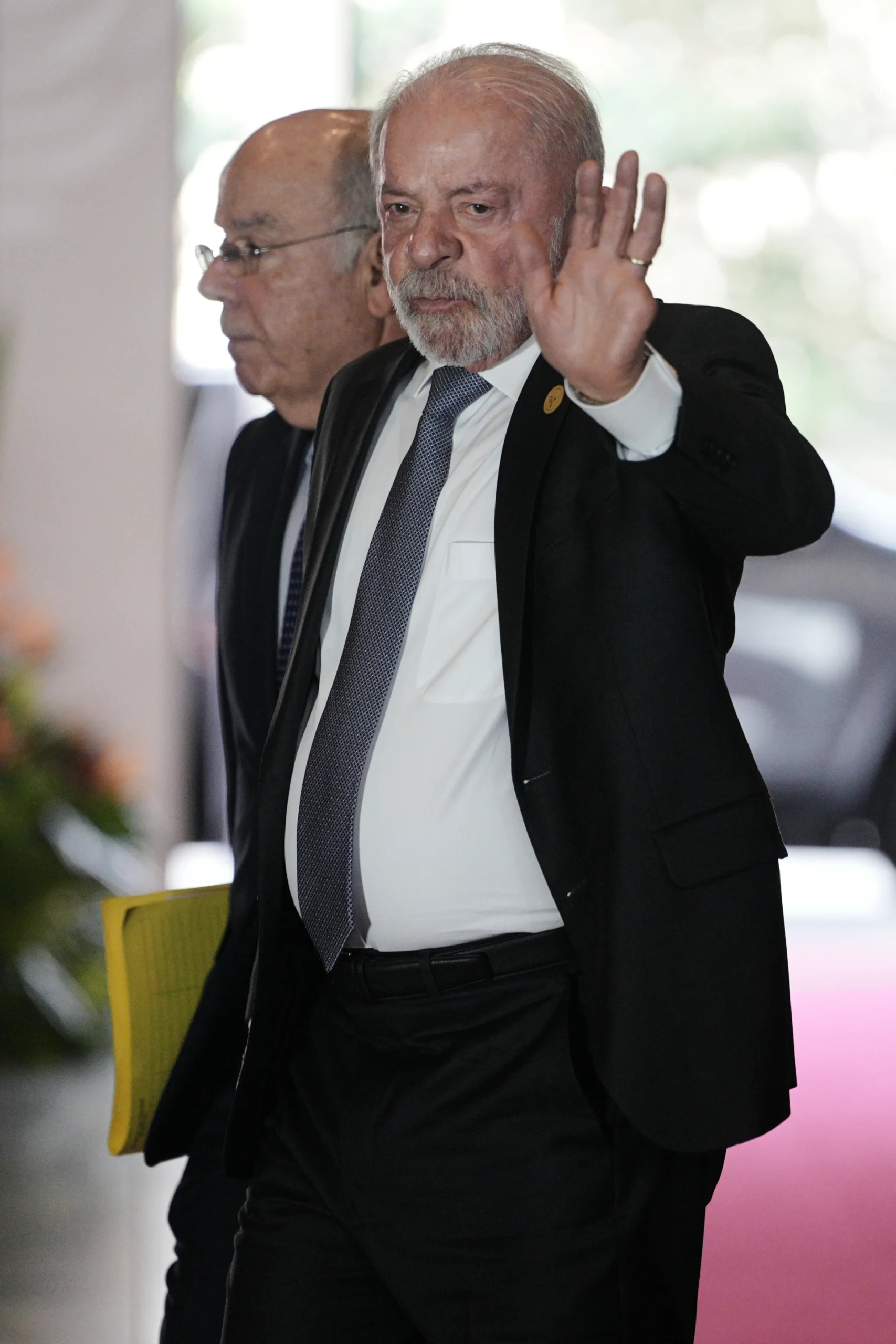
US wants ‘to colonize us again’ – Lula to Latin American leaders
Brazil’s president has slammed the US kidnapping of Nicolas Maduro and the oil blockade of Cuba.
Reported by RT
The Bogota summit highlighted CELAC’s current limitations, significantly weakened by ideological divisions and polarization among the governments of its member countries. Although leaders from all 33 member states were invited, only five heads of state attended: Colombia, Brazil, Uruguay, Burundi, and Saint Vincent and the Grenadines.
This low level of presidential participation once again underscored the organization’s failure to consolidate itself as an effective forum for political coordination.
Latin America faces the threat of a return to colonial rule, Brazilian President Luiz Inacio Lula da Silva has said, describing the White House’s recent moves in the region as undemocratic.
The United States kidnapped Venezuelan leader Nicolas Maduro in January before imposing an oil blockade on Cuba last month after US President Donald Trump accused the island nation of being a threat. Washington has also launched numerous lethal, extrajudicial strikes on boats in the Caribbean and the eastern Pacific in an attempt to fight drug trafficking.
Lula blasted Washington’s foreign policy during the Community of Latin American and Caribbean States (CELAC) summit in Bogota, Columbia on Saturday, while refraining from directly mentioning the US or Trump.
“It’s not possible for someone to think that they own other countries. What are they doing with Cuba now? What did they do with Venezuela? Is that democratic?” he asked rhetorically.
Latina America has already been drained of gold, diamonds and minerals, the Brazilian leader said, referring to US interference in the region since the 1823 declaration of the Monroe Doctrine, which laid claim to the Western Hemisphere as a US sphere of interest. Washington’s presence had subsided significantly following the end of the Cold War in the early 1990s.
“After taking everything we had, now they want to own the critical minerals and rare earths that we have. They want to colonize us again,” he warned.
The leaders of Latin American countries “cannot allow anyone to interfere and violate the territorial integrity of each country,” Lula stressed.
[Note: Forgive me LULA, but what are we going to do? I hope you all in CELAC get to that point – why are we not trading Big Time? If I go into a store in Bogota, can I buy Brazilian Peanut Butter? Bet you I can’t.]
 Colombia’s Petro at CELAC summit: Rubio’s arguments would escalate global conflicts
The most significant moment of the summit came with the remarks by Gustavo Petro, who openly questioned the geopolitical approach defended by Marco Rubio. The Colombian president warned that these arguments, centered on a more confrontational foreign policy, could “lead the world into a new era of conflicts,” a statement that captures his concern about the direction of international relations amid growing wars and tensions.
During Colombia’s CELAC presidency, the president has insisted on the need to strengthen multilateralism and reduce Latin America’s dependence on major powers. In Bogota, that approach translated into a call to strengthen regional integration as a mechanism to withstand external pressures.
President Petro’s speech resonated with other critical voices at the summit, particularly that of Brazilian President Luiz Inacio Lula da Silva, who also warned about the weakening of the international system and the inaction of organizations such as the United Nations.
“Marco Rubio put forward an academic thesis that has been gaining traction in university circles (…) a new era of conflicts marked by war,” Petro said.
In a firm defense of cooperation to overcome conflicts, the Colombian president stated that “the new multilateralism is a meeting of humanity and of the diverse peoples of humanity, seeking common solutions to humanity’s problems through dialogue among civilizations.”
The direct criticism of Rubio also reflects growing ideological tensions between some Latin American governments and political sectors in the United States. For Petro, the risk is not only regional but global: the adoption of more aggressive policies could worsen existing conflicts and open new fronts of instability, a scenario that CELAC seeks to avoid by positioning itself as a “zone of peace.”
CELAC needs to reform and in a hurry. Where was Mexico for example?
or nica?