

Peter Koenig interview : China Moves Forward with Solid Economy Backing – Against All External Odds
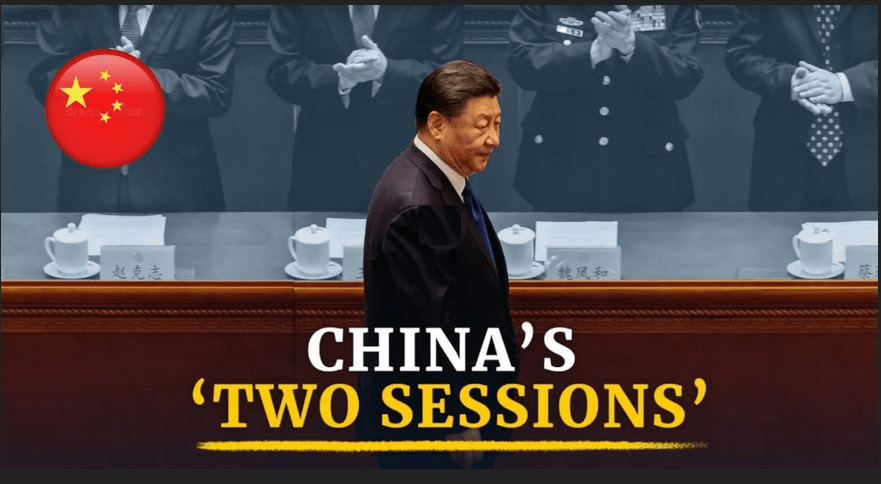
Peter Koenig Interview on 5 March 2026 with Shenzhen TV on China’s Two Sessions March 2026 – “What are They About?” (Two Sessions 4 to 11 March 2026) 18 March 2026
—–
The latest Government Work Report has been released.
China delivered sound economic performance in 2025 and has set a growth target of 4.5%-5% for 2026. With your decades of expertise in global economics, what do you think is the core significance of this growth target for China’s development? Meanwhile, the deficit ratio is set at around 4%, with the deficit scale 230 billion yuan higher than the previous year, and general public budget expenditure will reach 30 trillion yuan for the first time. How do you interpret these fiscal arrangements?
——–
PK Response
First, thank you very much for inviting my comments on this High-Level “Two Sessions” event which this year is also the inaugural year for China’s 15th Five-Year Development Plan (2026 – 2030). Its significance is both short- as well as medium-to-long term – pointing already to the 2035 targets.
From my point of view, and based on China’s 2025 stellar performance, China’s macro-economic targets, 4.5% to 5% growth (5% in 2025), and a deficit ratio of 4% (same as last year), and Government debt / GDP some 90% (like last year’s) [compare this to the US of 127% projected for 2026) and a fantastic public investment budget of 30 trillion Yuan (equiv. ~US$ 4.4 trillion) – is very prudent.
And this, given the ongoing war in the Middle East which may have short-term negative impacts on world economies, including China, because of rising energy prices, disrupted supply chains – and most importantly reduced markets. But this is temporarily, because this war is not about oil, not about territories, not about nuclear weapons, nor about stabilizing the Gulf, nor about religions — and nothing about the mainstream narrative that is going around the world and keeps people on their toes and distracted from the truth.
This war is about the US dollar hegemony, maintaining it, by controlling resources and by further having to financialize the market, because western production and construction, the base for a solid economy, has all been outsourced, to low-wage countries.
It began in the late 70s, 80s and went on into the 90s – the birth of neoliberal economies. It started with the US, and later was followed by Europe.
Now there is not much left to re-channel or re-invest the petro-dollars, other than the financial markets, banks, treasury bills, insurances, and re-insurances. Since there is no longer ground in the west for creating real economy, unemployment and poverty may be on the raise, and Treasury bills interest rates will have to be so high that they are unaffordable, even for institutional investors – which means that the western Ponzi-scheme, or pyramid monetary scheme may implode.
China has well prepared for such a scenario that is bound to happen sooner or later with any “house of cards”, so to speak – by reorienting (1) her currency – the Yuan into an electronic trading currency – an alternative to the US dollar, to which any country may adhere. It is especially attractive for Asian countries and the BRICS, and (2) reorienting her market towards Asia and the Global South in general.
It is literally a race between the US dollar hegemony and the newly emerging alternative China-based Asian monetary system.
This fits perfectly into China’s 15th 5-Year Plan (2026 – 2030).
Shenzhen TV:
The 2026 Two Sessions continues to prioritize artificial intelligence and new quality productive forces as core drivers of high-quality development. What new opportunities do you think this will bring to China’s economy and the broader global economy? ———–
PK Response
Given the above scenario, artificial intelligence (AI) – let me stress, AI with a Human Face, that is essential – will give China further advantages vis-à-vis a crumbling West, especially as AI will boost China’s productive capacity, while that in the West is disintegrating, as we see already today. For example, the US GDP growth has been about 2.2% (and that is not based on production like in China, but mainly on unproductive financial markets), and about 1.5% in the European Union (EU).
Average growth in of the G20s in 2025: 3.2%; and projected for 2026: 2.9% – a downward trend – which runs parallel with the demise of the dollar. [Figures based on IMF projections].
With increasing energy prices and Russia no longer delivering hydrocarbons, mainly gas, to Europe – as President Putin recently indicated – the European economy will further take a hit (you may call it EU economic suicide).
In the US the ongoing war which is already after week one, not going the way the US dreamt of, but so far rather favors Iran, the economy will further depend on a financialized market, i.e., further declining production and more financial assets valuation, widening the gap between poor and rich – potentially leading to an implosion scenario, described before.
For China, it may bring the opportunity to expand her Belt and Road, which is based on solid construction and production investments – ports – transport routes – country-to-country joint ventures – investments made in dollars – repayable in local currencies or Yuan.
China’s dollar reserves stand currently at a staggering US$ 3.4 trillion – a record high. Investing dollars abroad especially in Africa and Global South countries that have been most hurt by the sanction-prone dollar economy, and now potentially by the new West Asian war, will help these countries, softening the economic blow from the war outfall.
————
Shenzhen TV:
The 2026 APEC Economic Leaders’ Meeting will be held in Shenzhen, a landmark city of China’s reform and opening-up. What important significance does this event hold for Asia-Pacific economic and trade cooperation, as well as global open development?
PK
Shenzhen is already recognized the world over as one of China’s most modern, technologically advanced cities – it is Asia’s Silicon Valley, so to speak. The November 18-19, 2026 APEC Conference in Shenzhen, is certainly further promoting China’s state of the art, cutting edge technology, but it will boost its exports to the Pacific APEC adhering 21 members and beyond.
[ APEC members: Australia, Brunei Darussalam, Canada, Chile, China, Hong Kong (China), Indonesia, Japan, South Korea, Malaysia, Mexico, New Zealand, Papua New Guinea, Peru, Philippines, Russia, Singapore, Chinese Taipei (Taiwan), Thailand, United States, and Vietnam.]
Though his is not a “new” opening for China, the APEC focus, and the permanent Chinese ideology to “open up” to the rest of the world will have only positive impacts.
Shenzhen is THE city of the future. In many ways it is a stepping stone from China to the West – in terms of technology development, production capacity and direct liaison with Asia, the Global South, and all those countries of the west that seek a new paradigm for economic development.
———
Shenzhen TV
The unilateral tariff policies and regional military actions taken by the Trump administration have intensified global economic and geopolitical risks. Against this backdrop, what is the key significance of deeper China-Europe cooperation? PK President Trump’s unilateral, chaotic, and irrational tariff policies are against any sane understanding of Economics 101. Even though many countries know that they may protest, especially the European Union, but in the end the go along. Europe unfortunately remains a vassal to Trump’s America. That the European Commission has no courage to exit that false “realm” is one thing, but countries like Germany and France – known to be the trail-blazers for European economic innovation and growth, are falling into the same trap – is nothing but lamentable.
Under these circumstances, a deeper China – Europe relation may not necessarily be an advantage for China.
However, China’s cooperating with China- and eastern–friendly individual European countries, may be a better option. It would enhance their stance against the EU war policy – directed for absolutely no justifiable reason, against Russia, at the same time, their new connection with China, may – and in my opinion WILL – bring other European countries along. Not as EU, but as individual sovereign nations – what they should be, and what the EU still pretends they are.
———
Shenzhen TV:
President Trump will visit China [tentatively planned in April 2026], and China-US relations are showing a stabilizing trend. What is your view on this change? What impact will it have on global peace and development?
—————
PK
It is true, US – China relations indicate a stabilizing trend. In my opinion, this trend is highly volatile and not to be trusted.
Donald Trump has campaigned to become a Peace President, who wanted to stop the Ukraine and Gaza wars in a few days after entering his presidency. To the deception of more than half the American and most of the world population, the contrary is true.
Allow me to just quote the wiseman, President Putin, on one of his recent remarks: “I have already spoken to three US Presidents…when a person is elected, they may have some ideas. Then people with briefcases arrive, wearing dark glasses and dark suits. These people start explaining how things are done and instantly everything changes.’
The permanent imperial state and the corporate and foreign lobbyists that pull their strings are the ones who make the major political decisions no matter who the President is or which party is in power.
The United States is ruled by a corporate oligarchy that seeks to profit and enrich themselves through a permanent war economy based on debt, slavery, resource plunder, and arms contracts.”
President Trump, having been US President before (2017-2021), would he not have known in advance what these men in dark suits wanted him to do?
My hunch for future relations with the Trump-US of A: Prudence. No great expectations.
—————
Shenzhen TV:
Faced with the current complex international landscape, should Europe stick to a more independent development path? Is proactively building new partnerships and expanding diversified cooperation more in line with Europe’s long-term interests? ————–
PK
Of course, Europe should stick to an independent economic development scheme, either as a union, for which it is almost too late, or as individual sovereign countries with sovereign currencies and monetary policies.
That would be the key for real “Independence”, especially since the Euro was never a European idea, but was imposed by those who command the Federal Reserve, according to the moto: Make Europe’s monetary system, a sister scheme to the FED’s – so it is easier controllable.
Of course, it is never too late to take such a drastic step, as exiting the EU, or the Euro-system. And quite a few EU members would like such a move openly, and others tacitly, because they are afraid to say so openly.
One of the scary factors is NATO, because NATO is literally the direct partner, hand-in-hand, the other side of the coin, so to speak, with the EU.
Looking at the EU and NATO charters, it is relatively easy for each EU country to exit either organization. Each Euro-country could also opt to stay in the EU, but bug out of the Euro-monetary system, which would give them back financial autonomy.
Of the 27 EU members, as of March 2026, 6 EU members have kept their own currency [Czechia (koruna); Denmark (krone, with opt-out); Hungary (forint); Poland (zloty); Romania (leu); Sweden (krona)].
Under a “new” Europe, relations between China and Europe – or even only parts of Europe- could open many doors to new ventures and become prosperous for both sides.
————
Shenzhen TV:
China’s diplomatic stance has consistently refused to take sides, while remaining committed to sustained opening-up and deeper exchanges and cooperation. What is your view on this diplomatic position? What positive role does it play in addressing the current dilemmas of global governance?
———–
PK
China’s diplomatic stance is exemplary. It depicts Neutrality, although Neutrality is not in China’s Constitution. But Neutrality is the forerunner of Peace, if not a condition for Peace. A Neutral world would be close to a world of Peace.
Opening-up to the world, one of China’s key objectives, is not at all preventing a neutral stance. To the contrary, one of Chinas Master mechanism for “opening-up”, is the Belt and Road.
At the same time, the Belt and Road creates peaceful relations between countries it connects, creates openings to others, third countries, and creates generally an ambiance of diplomacy between countries that otherwise may not have grown.
From my perspective, China is THE world’s foremost Diplomat. The more she opens-up to connect with the world – something few countries do – the more diplomacy China spreads around the world. And a world in Peace is also a world that will eventually live in prosperity – with shared benefits for all.
———
Peter Koenig is a geopolitical analyst, regular author for Global Research, and a former Economist at the World Bank and the World Health Organization (WHO), where he worked for over 30 years around the world. He is the author of Implosion – An Economic Thriller about War, Environmental Destruction and Corporate Greed; and co-author of Cynthia McKinney’s book “When China Sneezes: From the Coronavirus Lockdown to the Global Politico-Economic Crisis” (Clarity Press – November 1, 2020).
Peter is a Research Associate of the Centre for Research on Globalization (CRG). He is also a non-resident Senior Fellow of the Chongyang Institute of Renmin University, Beijing.