

Either the continuation of the status quo, or, a new regional order
For the first time in decades, the region is facing what could be described as a strategic crossroads: either the continuation of the status quo, defined by American military dominance and the security architecture built around the Israeli entity, or the emergence of a new regional order in which nations in West Asia reclaim political, military, and economic independence.
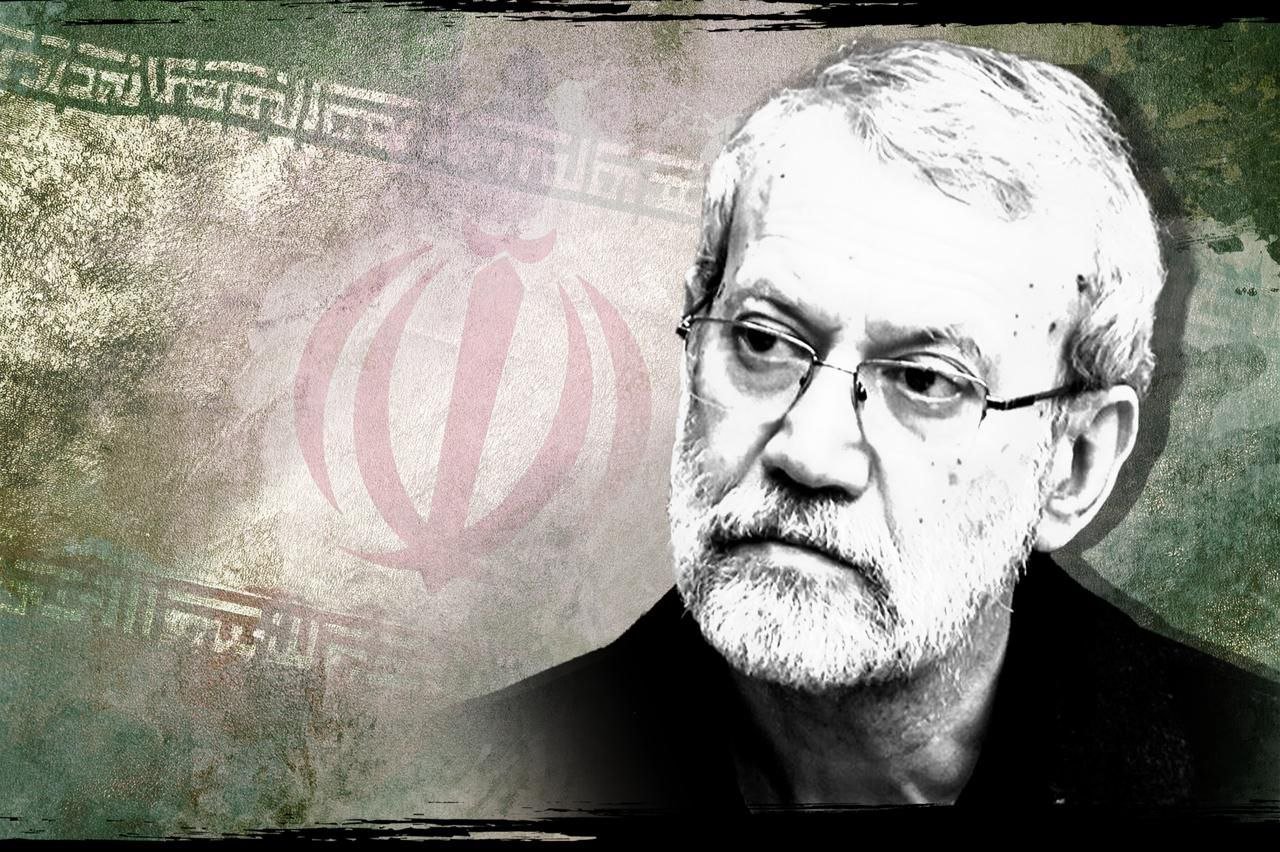
In that context, a notable message was recently issued by Ali Larijani, a senior Iranian political figure and former secretary of Iran’s Supreme National Security Council. His statement, addressed broadly to the Muslim world and the governments of Islamic states, outlines Iran’s interpretation of the current confrontation and what it sees as the broader implications for the region.
Whether one agrees with Tehran’s framing or not, the message reflects an increasingly visible narrative emerging across parts of the region: that West Asia is entering a phase of strategic realignment.
Larijani’s message revolves around several central points.
First, Iran frames the recent confrontation with the United States and the Israeli entity as an act of aggression that occurred during negotiations and was aimed at weakening the Iranian state. According to this narrative, the attack resulted in the killing of senior figures and civilians, but ultimately failed to achieve its objectives due to what Tehran describes as a strong national response.
Second, Larijani highlights what he characterizes as a lack of meaningful support from most Islamic governments. While acknowledging that some states expressed political solidarity, he argues that, in practical terms, Iran largely faced the confrontation alone. Yet, from the Iranian perspective, this isolation did not translate into defeat; instead, it reinforced the idea that Iran could withstand pressure even without formal regional backing.
Third, the message frames the broader confrontation as part of what Iran has historically described as resistance against the “Great Satan”; a reference to the United States and the “Lesser Satan”, referring to the Israeli entity.
Within this framework, Larijani questions what he sees as the contradiction between the political positions of certain Muslim governments and the concept of Islamic solidarity.
Another point raised in the message concerns the presence of American military bases across several states in West Asia. Larijani argues that if those facilities are used in operations targeting Iran, Tehran cannot reasonably be expected to refrain from responding. From his perspective, this creates a strategic dilemma for governments that host American military infrastructure while simultaneously seeking to avoid becoming part of a regional confrontation.
Perhaps the most significant aspect of the message, however, is not the military rhetoric but the political appeal embedded within it. Larijani calls on Islamic countries to reconsider their long-term strategic alignment with Washington, arguing that the United States has historically proven to be an unreliable partner. He also insists that Iran’s objective is not regional domination but rather cooperation among states that share an interest in resisting external influence.
This argument culminates in a familiar theme within Iranian political discourse: the idea of a unified Islamic bloc capable of ensuring its own security and independence without reliance on Western power structures.
Of course, the feasibility of such a vision remains highly contested. West Asia is deeply fragmented, politically, economically, and ideologically, and the interests of regional states often diverge sharply. Nonetheless, the message reflects a broader debate that has been intensifying across the region since the wars of the past two decades.
At its core, the question being raised is simple but profound:
Can West Asia eventually develop a security architecture independent of external powers, or will it remain locked within a system shaped primarily by American influence and the strategic priorities of the Israeli entity?
For many observers, this may well be one of the defining geopolitical questions of the coming decade.
And if the current trajectory of regional tensions continues, the answer to that question may emerge sooner than many expect.