

Who is Ayatollah Seyyed Mojtaba Khamenei, Iran’s new Leader?
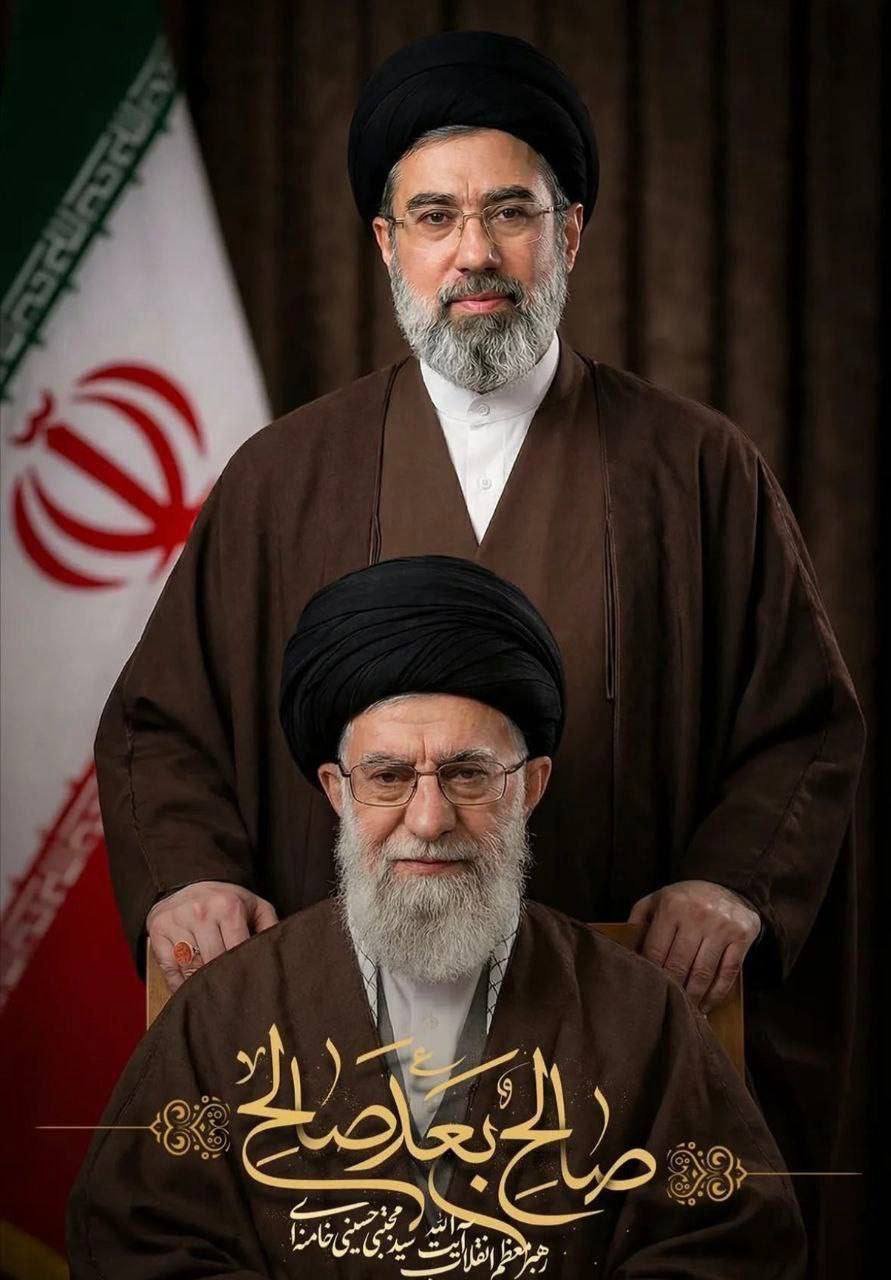
Iran’s new Supreme Leader, Mojtaba Khamenei, lost his father, mother, wife and one of his sons in the strike which killed Iran’s former Supreme Leader, Ali Khamenei.
Mojtaba Khamenei is a mystery to a lot of Iranians, he seldom appears in public and his personality is known only to a close circle of Iranian politicians and military commanders.
One thing is certain, Mojtaba Khamenei will not be looking to make peace with the US and Israel any time soon considering that they murdered his parents, wife and a son on top of the thousand other Iranians killed.
Iranian diaspora journalists write that Mojtaba is a veteran of the Iran-Iraq War and played a significant role in the suppression of the 2009 Iranian presidential election protests which led to the victory of hardline incumbent president, Mahmoud Ahmadinejad and the imprisonment of reformist candidate, Mir-Hossein Mousavi, who still is in house arrest 17 years later.
The same source reports that Iran’s new leader received the backing of the Supreme National Security Council and de-facto ruler of Iran, Ali Larijani and the IRGC, dashing any Western hopes that Iran’s leaders would be more “flexible” to the pressure put on it and let the West loot its resources.
This is the most formal resume, posted by Mehr News Agency.
TEHRAN, Mar. 09 (MNA) – Ayatollah Seyyed Mojtaba Khamenei is an Iranian cleric and religious scholar born in 1969 in the city of Mashhad. He is the second son of Ayatollah Seyyed Ali Khamenei, the late leader of the Islamic Revolution of Iran.
Over several decades, Ayatollah Seyyed Mojtaba Khamenei has pursued advanced religious studies in Iran’s major seminaries, particularly in Tehran and Qom, and has been involved in teaching, scholarly research, and institutional work within the country’s clerical establishment.
Ayatollah Seyyed Mojtaba Khamenei began his seminary education in Tehran at the school founded by Ayatollah Ahmad Mojtahedi Tehrani, where he completed his foundational religious studies.
During the Iran–Iraq War, he joined Iranian volunteer forces and spent time on the front lines.
After the war ended, he continued his studies in the religious center of Qom, one of the most important centers of Shiite scholarship.
Over the following years, he studied advanced jurisprudence and principles of Islamic law under several prominent clerics.
He spent more than 17 years attending advanced courses in Islamic jurisprudence and theology.
Alongside his studies, Ayatollah Seyyed Mojtaba Khamenei began teaching religious subjects at seminaries in Tehran and later in Qom.
He also offered advanced jurisprudence and principles (dars-e kharej) courses in Qom. These courses eventually drew hundreds of seminary students.
Ayatollah Seyyed Mojtaba Khamenei’s academic work centers on Islamic jurisprudence, principles of law, and hadith studies.
Beyond teaching, Ayatollah Seyyed Mojtaba Khamenei has supported the establishment of educational and research centers focused on Islamic jurisprudence and seminary training.
These institutions aim to combine religious scholarship with social engagement, including programs designed to support disadvantaged communities.
In 1997, Ayatollah Seyyed Mojtaba Khamenei married Zahra Haddad Adel, the daughter of Iranian politician Gholam Ali Haddad Adel.
Throughout his career,Ayatollah Seyyed Mojtaba Khamenei has maintained relationships with senior clerics, scholars, and political figures.
He has also maintained connections with the great figures from with the “Axis of Resistance,” including Sayyed Hassan Nasrallah and General Qassem Soleimani.
MNA