

President Putin answered questions from journalist Pavel Zarubin
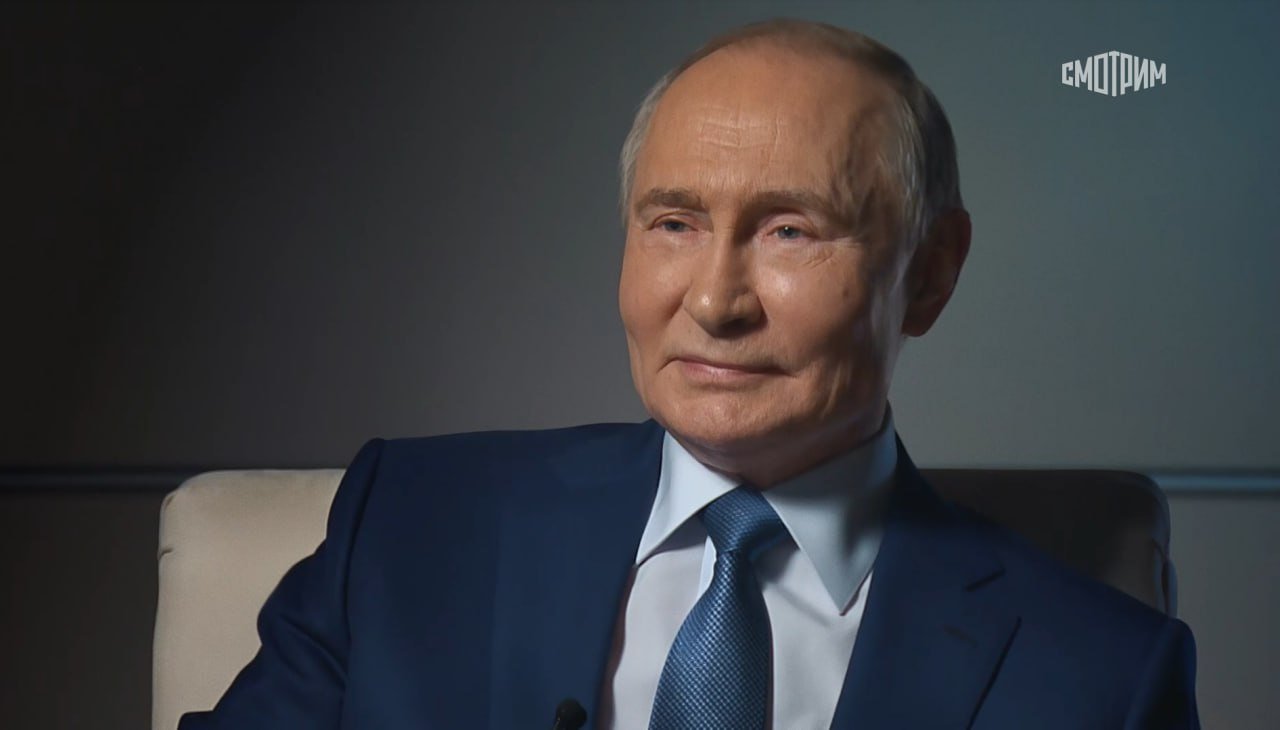
http://en.kremlin.ru/events/president/news/79260
Pavel Zarubin: We watched your meeting. Could you answer a few questions now?
President of Russia Vladimir Putin: Go ahead, please.
Pavel Zarubin: You just mentioned the situation on the global gas markets. Many countries are panicking over the current events. Prices have soared, and it is unclear what will happen with prices and deliveries next.
Of course, this makes one recall that Europe has repeatedly prohibited our gas imports. A new ban, this time on Russian LNG imports under short-term contracts, will come into force as soon as April…
Vladimir Putin: Yes, under contracts that were signed last summer.
Pavel Zarubin: Yes, and there were more bans. They are saying now that the deadline for the bans should be revised in light of the current global developments.
Vladimir Putin: To begin with, Russia has always been and remains a reliable supplier of energy resources to all its partners, including in Europe. We will continue working in this way with those partners who are themselves reliable counterparties, such as Slovakia and Hungary in Eastern Europe.
We are supplying our energy resources there, including oil and gas, and we intend to continue doing this if these countries’ authorities carry on with their policy, that is, if they remain our reliable partners.
As for Europe, the current developments in the European markets are primarily a result of the European authorities’ flawed energy policy, misuse of the green agenda, and the use of all these instruments for internal political purposes, for attaining party or group objectives. This policy has nothing in common with the interests of these countries’ peoples.
Oil and gas prices have increased now. This is understandable with regard to oil and is connected, in part, with restrictions on Russian oil imports. But this situation has been compounded by the developments in the Middle East caused by the aggression against Iran, which has produced a complicated and undeniably unpleasant result for consumers.
As for natural gas, in the current environment there was no immediate link between the surge in prices on the European market and the restricted supplies. After all, the main suppliers have not reduced their deliveries. Who are these main suppliers? They include Algeria, the United States, Norway, and, to an extent, Russia. None of them have reduced their shipments, but this did not prevent prices from going all the way up to $700. Why did this happen? This results from the overall situation on the global markets, including the oil markets, and in this case, the gas market. Again, this is attributable to the overall situation because there are customers who are ready to buy this natural gas at a higher price. In this case, this results from the developments in the Middle East and the closing of the Strait of Hormuz, and so on. Once you have these premium buyers on the market, this means, and I really believe that this is the case, that some suppliers who have been serving the European market for quite some time now, for example, the United States and US companies, will definitely switch to the highest bidder. This is quite natural and is devoid of any political agenda. This is just business as usual, and nothing else.
For this reason, let me reiterate that this stems from the misguided policies of the European governments. Moreover, they have been following this path for many years. Here is what I think in this connection. They have recently announced plans to restrict Russian gas imports in a month, so that the 24th would be the last day before these restrictions are enacted on the 25th. In a year, in 2027, they want to introduce further restrictions up to a blanket ban. But there are other markets which are opening up. Could it be that we could benefit from cutting short our supplies to the European market right away? We could switch to these emerging markets and consolidate our positions there.
On this topic, I would like to make it clear that this is not a matter of politics. If we are set to lose access to their market anyway in a month or two, it could make sense for us to stop supplying them right away and turn to countries which have been our reliable partners in order to get a foothold in their markets. However, this is not a done deal. In this case, I am just thinking aloud, as they say. I will certainly instruct the Government to work this matter through with our companies.
Pavel Zarubin: There was another important news story today about an attack against a Russian gas carrier in the Mediterranean. It sustained serious damage. What would be your comment regarding these developments?
Vladimir Putin: This is a terrorist attack. We have faced incidents of this kind before, so the only surprising thing about it is that it aggravates the situation on the global energy markets, including the gas market, first and foremost for Europe. Consequently, the Kiev regime is actually biting the hand that feeds it, i.e., the European Union’s hand. The European Union has provided the Kiev regime with a boundless stream of aid, including weapons and funding, while the Kiev regime creates one problem after another for the European Union.
As for this behaviour of the Kiev regime in general, it has been quite aggressive and very dangerous. As I have already said, according to information from our intelligence agencies, Kiev is getting ready to bomb the Blue Stream and TurkStream pipelines with the support of certain Western special services, just as they bombed the Nord Stream pipelines some time ago. We have informed our Turkish friends about it. We will see what happens, but this is a very dangerous game, especially today.