

It took 72 hours for the deal architecture to start unraveling.
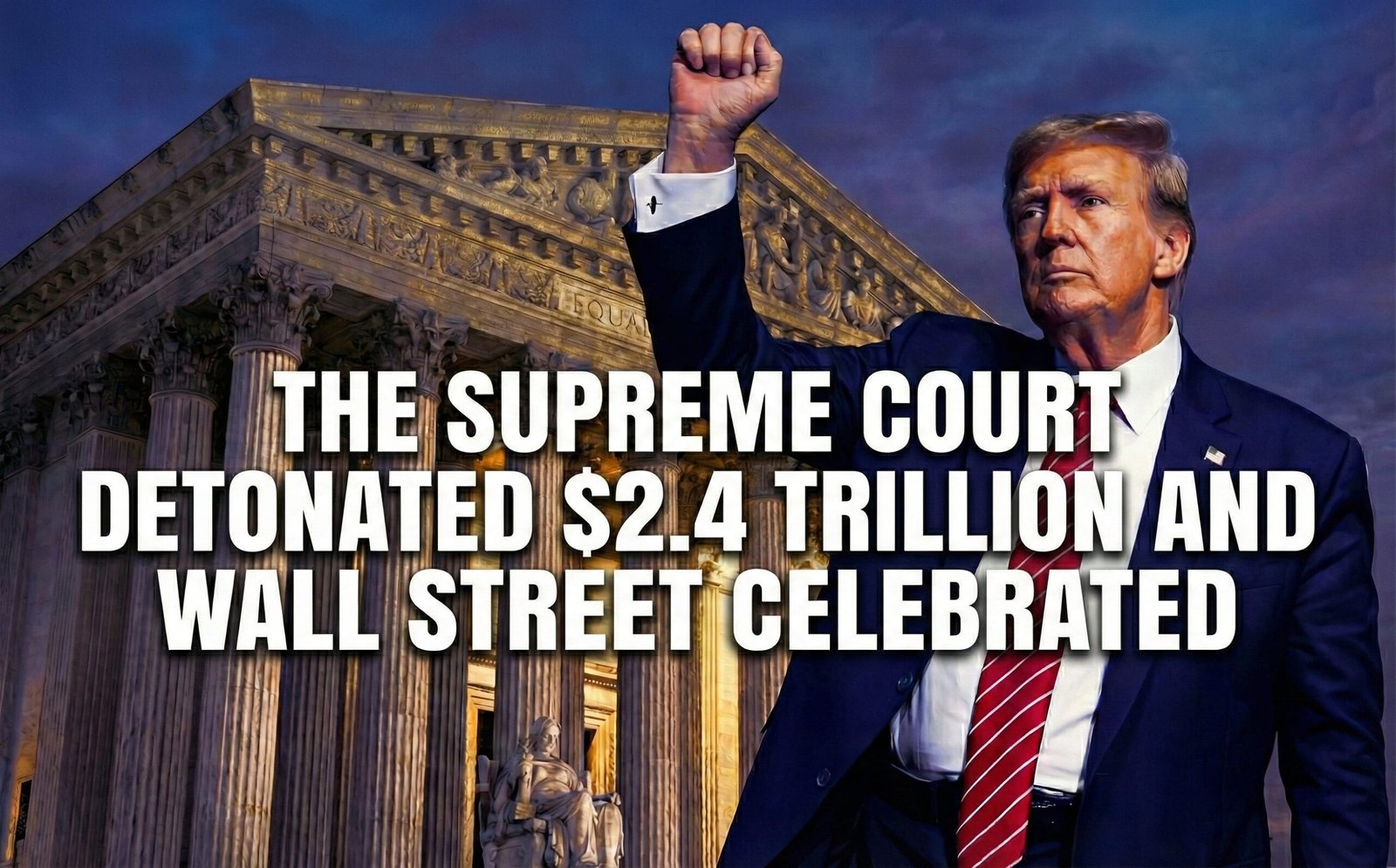
It took 72 hours for the deal architecture to start unraveling. Not months. Not quarters. 72 hours.
The Six Clocks: How a Supreme Court Ruling Detonated the Architecture of American Trade Power
The Most Dangerous 150 Days in American Trade History Started Yesterday and the Market Priced It as Relief
India just postponed its trade delegation to Washington. The trip was scheduled for February 23 to 25 to finalize the interim deal they negotiated at an 18% IEEPA rate that no longer exists. No new date has been set. Their officials want to “assess the implications” of a ruling that made the rate they spent months negotiating legally meaningless.
The European Parliament’s trade chief Bernd Lange is proposing to freeze ratification of the Turnberry Agreement entirely. The deal that exchanged a 15% IEEPA tariff ceiling for $750 billion in EU procurement commitments. He called the situation “pure customs chaos.” This is the second freeze.
The first was over Greenland.
An emergency meeting is scheduled for Monday. Japan’s ruling party tax chief Itsunori Onodera used three words that will echo through every trade ministry on earth.
“A real mess.”
Japan committed $550 billion. They are publicly signaling they will maintain their investment pledges. Read that carefully. They are signaling. Not confirming. When a country with Japan’s diplomatic precision chooses to signal rather than confirm, the internal discussion is far worse than the public statement.
Australia’s Trade Minister Don Farrell called the 15% tariff “unjustified” and said his government will “examine all options.” In diplomatic language, “all options” includes WTO dispute proceedings. Australia has never been shy about challenging American trade actions through formal mechanisms.
This is exactly what I wrote would happen in The Six Clocks. Section 122 cannot discriminate by country. Every nation that negotiated a specific IEEPA rate in exchange for hundreds of billions in commitments now receives the same 15% as countries that offered nothing. The bilateral deal architecture is not under pressure. It is structurally inoperable.
Meanwhile two carrier strike groups are converging on the Arabian Sea. Trump issued a 10 to 15 day ultimatum to Iran on February 19. The implied deadline window opens around February 28.
BloombergNEF projects Brent averaging $91 a barrel if Iranian exports are fully removed. Oxford Economics models $130 under a Strait of Hormuz disruption.
The Iran secondary tariff, the 25% penalty on countries buying Iranian oil, was imposed under IEEPA authority the Supreme Court just invalidated. The non-military pressure tool is legally severed at the exact moment the military option accelerates.
The consensus says the SCOTUS ruling was priced in. India, Europe, Japan, and Australia just told you it was not.
The bilateral commitments were worth over $2 trillion. They were anchored to legal authority that died on Friday morning. The partners are doing their math. The only people not doing the math are the ones who think a 0.69% rally means the crisis is over.
The clocks are running. Four countries just confirmed they heard them.
open.substack.com/pub/shanakaans
Also read … The Six Clocks: How a Supreme Court Ruling Detonated the Architecture of American Trade Power
https://shanakaanslemperera.substack.com/p/the-six-clocks-how-a-supreme-court
Most likely America’s first puppet king (the last not-so Presidential and impaired puppet being his predecessor) or those with real power got the ruling They wanted. The $2 trillion was probably spread over a number of years so probably a few hundred billion in a 30+ trillion (at least on… Read more »
Excellent point. Honestly, the whole $2.4 trillion reminds me of the circular “AI funding” I keep hearing about where lots of money is “committed” but not money is actually “spent”. That $2.4 trillion was NEVER appearing, tariffs or no tariffs. Japan “committed” 500 billion. Yeah right. They offered with one… Read more »
Maybe when it comes to point values they are stuck in 12 August 1982 when the S&P and Dow closed at 102.42 and 776.92 respectively so gaining 47.62 and 230.81 brownie points must be great.