

Middlegame and a Strategy for the Day after Tomorrow
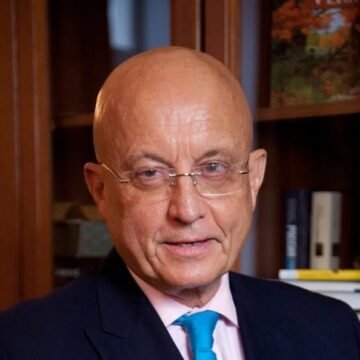
Sergei A. Karaganov
National Research University–Higher School of Economics, Moscow, Russia
Faculty of World Economy and International Affairs
Distinguished Professor, Academic Supervisor;
Council on Foreign and Defense Policy
Honorary Chairman
—
Fear is the only thing the EU understands
Sergey Karaganov argues the conflict with the West has entered its middle game – and that only firm deterrence, including the credible threat of escalation, can halt EU’s ‘war drive’
Restraint, he says, now risks catastrophe
In this polemical essay, Professor Sergey Karaganov calls for rewriting Russia’s deterrence doctrine, accelerating the US exit from Europe, and pivoting decisively toward Greater Eurasia
A radical blueprint for Russia’s future.
—
The current stage of the West’s war against Russia may be ending, but it lasted longer than it should have. Russia has so far lacked the decisiveness needed for active nuclear deterrence, the only solution to the ‘European problem’ that again threatens us.
But the Special Military Operation (SMO) has stimulated Russia’s development. Russia has roused itself. Patriotism and national pride have increased immensely, the value of serving the Motherland has been recognized, the people are displaying their best qualities, the economy and scientific research have revived. The most important professions—engineers, scientists, officers, skilled workers, medics, and teachers—have finally been recognized as such. (Except for teachers, discussed below.)
Drawing the West’s fire upon ourselves, we have used it to undermine the comprador bourgeoisie and its servants in the intelligentsia. (Portuguese colonialists coined ‘comprador’ in reference to local traders who worked for them.) Due to the reforms of the 1990s, we allowed this sector to reach unhealthy proportions. It is good that the process of cleansing Russia—of its Western encrustation, its traitors and Smerdyakovs—has been launched by the SMO without harsh repressions.
Regrettably, the incipient societal and economic recovery has come at the cost of the lives of tens of thousands of valiant warriors. To them—eternal gratitude and remembrance. And if, or rather when, the unfinished war resumes, we must not allow such sacrifices again.
Where to Go? The External Vector
Some personal memories. In 2013, I again warned (much more sternly than before) a group of European leaders that dragging Ukraine into the EU and NATO would lead to war and millions dead. I clearly remember how they dared not look me in the eyes, instead staring at the floor. And then resumed prattling about the benefits of expanding the “area of democracy, trust, and human rights.” They wanted another forty million white slaves. (Which they partly got, in the form of several million Ukrainian refugees.)
They spoke of the need to contain Russia, even though it was still quite accommodating at the time. Unfortunately, our response to NATO’s 2011 aggression in Libya was muffled. So now we are paying for the long years of appeasement, our attempts to please them, and the comprador nature of part of our elite.
By reincorporating Crimea in 2014 and sending troops to Syria in 2015, we temporarily retarded the EU’s military adventurism. But then we carelessly relaxed. If our ultimatum for an end to NATO expansion had been made in 2018-2020, and backed up with strengthened nuclear deterrence, the current war could have been avoided, or at least it would have been much less bloody and lengthy. 2022 revealed that the West and the Ukrainian junta had been intensively preparing for war.
There are many people in Ukraine, primarily in its eastern and southern regions, whom we can call a kindred people. But the core of the Ukrainian population—mainly to the west of the Dnieper—is a different people. They have a different history, different cultural codes, and a strong anti-Russian orientation that was cultivated by the Austro-Hungarians, Poles, and then other Western countries, who eventually set the Ukrainians against Russia. We need reasonable isolation from the Ukrainian and European maladies, and should chart and follow our own path of healthy and sound development.
Today, we are winning the war, but continue to provide muffled responses to open aggression like piratical seizures of our ships, threats to close straits, attempts to organize an economic blockade, strikes on oil terminals, and attacks (with the encouragement or at least covert support of the Euroelite) on our oil tankers. We respond to these and similar provocations, and to attacks on our cities, with intensified bombardment of targets in Ukraine. But this will not solve the problem. Ukraine was deliberately thrown into the fire of war so that the flames would burn us. Ukraine’s people are of no consequence to the Europeans. And this war will continue with greater or lesser intensity until the elimination of its source, and the source of other conflicts—the European elite, which is degrading intellectually, morally, and materially. In a bid to prevent the inevitable collapse of the beneficial status quo to which they are accustomed, they are fomenting war on the subcontinent, refusing to understand that they risk its destruction.
We have not yet destroyed, as we did in 1812-1815 and 1941-1945, the hostile coalition facing us, nor broken its will to aggression. The fight has entered its intermediate stage: the middlegame, in chess parlance. The West-backed remnants of Ukraine will continue to generate instability and terrorism, if a bit less intensively. The economic war against us will not stop.
Europe is preparing for a new clash, and will probably use (not necessarily under Ukrainian banners) the remnants of the Ukrainian army, reinforced and reequipped, along with landsknechts from Europe’s poorer countries.
Even with a new coat of paint, Ukraine’s current compradorial, ultranationalist (essentially Nazi) regime will likely retain considerable military capabilities, variously supported by the EU.
We will have to respond militarily to the inevitable provocations and to the breach of any agreements. We will most certainly be accused of aggression and violating peace agreements. In reality, open aggression against us will likely resume. Most sanctions will remain in place.
But our strategy in that war should cardinally differ from that with which we are waging the present one. The U.S.’s continued withdrawal from Europe, and total exit from the conflict, should be facilitated through fierce deterrence and through the destruction of Europe’s current elite (who grasp at their fading power by inciting hostility towards Russia, fooling their own people, and escalating the conflict).
The Nuclear Argument
The European elite can be stopped only by demonstrating our actual readiness to conduct (initially conventional) strikes against the control centers, critical infrastructure, and military bases of those European countries that play a key role in preparing and executing military operations against Russia. Priority targets should also include the places where the elites (including of nuclear powers) live and work. Let their capitals finally sober up.
If conventional strikes have no effect, and Europe does not capitulate or at least retreat, we should be fully prepared (militarily and, most importantly, politically and psychologically) to launch limited (but sufficient for political effect) retaliatory strikes with strategic nuclear weapons. Our non-strategic and strategic nuclear forces should be developed accordingly. Naturally, nuclear strikes should be preceded by several volleys of conventional tactical missiles.
In the long term, we should consider depriving France and Britain of nuclear weapons, to which they have lost the moral and political right by unleashing a war against Russia. Their elite, and that of other European states—especially Germany—should know well that if they come close to obtaining or enlarging a nuclear arsenal, they will become legitimate targets for preemptive strikes.
Europe—with its history of wars, aggression, serial genocides, racism, and colonialism; with its denial of normal human morality, God, and God in man; with its instigation of yet another war against Russia—should know that it has no right to such weapons.
Even during the Biden administration, the U.S. received and understood Russia’s signals that the Ukrainian war’s continuation risks nuclear escalation (including attacks on U.S. bases in Europe and then on American soil). Now the U.S. is trying to wash its hands of the conflict. Trump has offered seemingly peaceful solutions; they are worth trying, to give peace the chance to heal the wounds inflicted by the long war, and to stop the killing of our heroic fighters.
We can try to establish limited economic cooperation with the U.S. where it is obviously beneficial and reliable, but without any illusion that this can promote peace. Contrary to the myths of naive Marxists and their intellectual siblings, the liberal economists, economic interests are secondary in determining national policy. In serious confrontations, especially war, they inevitably yield to geopolitical, military-strategic, and even ideological considerations. And in any case, the U.S. receives economic benefit from continued confrontation in Europe. The Americans sell weapons, rob their fattened allies, and lure away industrial, financial, and human capital.
Trump’s peace proposals are not aimed at lasting peace. Consider: what would I be interested in, if I were the American president? Clearly, in maintaining a slow-simmering conflict that weakens Russia and distracts it from internal development and from Greater Eurasia (especially China). The de facto Russia-China alliance is already a prevailing force in the world. I would also play on residual pro-Western and pro-European sentiment in the Russian elite and society, to prevent Russia from becoming an intellectually, spiritually, and economically sovereign country, a key player on a rising supercontinent.
This article is not the place to propose a concrete policy regarding the clash with Europe and the West in Ukraine. I will confine myself to advice whose acceptance seems necessary and indeed long-overdue. We cannot allow ourselves to get bogged down in an endless conflict, similar to, but worse than the Israeli-Palestinian one. Our past mistake must be quickly corrected by drastically increasing our reliance on nuclear deterrence in Europe. Its elites must be not only contained, but intimidated. At present, they only give the appearance of fearing us, so as to build up their military strength. But they should actually fear us. They should be in terror of us. They should understand that escalating or even continuing the conflict risks their immediate physical destruction, and that a military buildup is pointless, as it will entail an obliterating nuclear response.
Our previous restraint in using nuclear weapons has proven maliciously counterproductive, playing into the hands of those who fan militaristic hysteria and Russophobia and who prepare for war.
Restraint also amounts to a great power’s evasion of its responsibility to prevent conflicts that could potentially escalate into a humanity-ending Third World War. Caution now borders on irresponsibility.
We should amend our military doctrine to mandate the use of nuclear weapons in any war unleashed by an economically and demographically superior enemy. It is high time, at least at the expert level, to abandon the Gorbachev-Reagan-era view that ‘there can be no winner in a nuclear war,’ which contradicts all military logic and has led, among other things, to NATO’s hot war against Russia.
Of course, I am not calling for a nuclear war. Even if won, it would be a great sin. But we must be fully prepared for it, so that inaction and indecision do not lead to the crime of continuing a military campaign that is exhausting our country and our people and that threatens global thermonuclear catastrophe. Such a crime would be a sin even less forgivable—and, more importantly, it would be a mistake.
Real Multipolarity
Even if and when we strategically defeat Europe, most of it will continue to slip into stagnation, inequality, and social tension, and thus into right- and left-wing versions of fascism. The EU’s dissolution and the U.S.’s exit will restore the Europeans to their historical role as generators of war, instability, and other disasters—but, fortunately, not colonialism, as they will not have enough strength for that in the new world. Ukraine, hopefully, was their last attempt to seize territory.
No matter how things develop, selective isolation from Europe will be necessary in the coming decades. Trade could be partially restored, if possible, but without the previous expectations. But we should not under any circumstances satisfy the likely calls (including from inside our country) to resume discussion of a European security system. I will repeat an unpleasant thought already stated in previous articles: today, continued fixation on Europe is a sign of intellectual limitation and even moral impurity. Any system of security and development is possible only within the framework of Greater Eurasia.
The situation with the U.S. is more difficult to predict. The country is infected with what could be called the ‘European disease,’ but also enjoys a strong resistance to it, as manifested in the MAGA movement and to some extent in President Trump’s domestic policy. The U.S. has preserved its educational, scientific, and technological potential, drawing it partly from Europe. As stated above, the U.S. has begun to relinquish its hegemony, but it still seeks to destabilize the regions it is leaving, and entertains neo-imperial ambitions. Moreover, those ambitions are becoming more explicit and dangerous.
The U.S. remains a dangerous enemy of the world and Russia. Illusions are unacceptable.
Hence, we should continue the policy of deterrence. Even by strengthening its nuclear component, if necessary. Claims about the desirability of further cuts to nuclear arms, including strategic ones, make a mockery of common sense. The U.S. is openly creating national anti-missile and anti-submarine defense systems; hence the attempts to seize Greenland and undermine Russia’s deterrence capabilities.
The main source of anti-nuclear sentiment is an understandable but counterproductive pacifism, the conventional arms industry, and foreign powers that seek benefit from their remaining scientific, technological, and economic advantage. Nuclear weapons make a conventional arms race pointless and neutralize the West’s advantages.
Selective economic cooperation with the U.S. would be beneficial but, again, must be without illusions. The former global hegemon seeks to undermine stability in the places from which it is retreating, covertly stoking tensions around Taiwan, the Middle East, Central Asia, Transcaucasia, and Europe. It exploits economic ties on a historically unprecedented scale, to impose pressure (even while speaking of a truce) and to wage war. It is interested in partially restoring ties with Russia only to weaken our alliance with China. We should perhaps make use of this interest, as the diversification of economic ties is beneficial, but only with great care, and not at the risk of cooling relations with Beijing.
For years, we have called for, and now almost swear by, multipolarity. It seems to have come at last, bringing greater sovereignty for countries and their peoples, bringing the freedom to choose one’s own path of ideological, cultural, political, and economic development. But there are downsides, such as the proliferation of conflicts, which will be exacerbated by climate change and its attendant aridity, food and energy shortages, and waves of migration. Economic wars are becoming commonplace. Existing institutions cannot cope with these challenges; they are outdated and are being destroyed by their own creators, as they no longer benefit the dominant states.
Nevertheless, the situation looks promising for Russian policy in the non-Western direction. We need to strengthen ties with friendly China in all spheres—but avoiding the mass import of migrant labor, any repetition of the 1990s’ abandonment of strategic industry, and the possibility of ties becoming a source of vulnerability and irritation under a change of Chinese leadership. Systematic work is needed to bridge the growing economic and demographic gap.
Rapprochement with India, including the orderly import of its labor, is also necessary.
Likewise, there is no alternative to increasing cooperation—economic, scientific, cultural, and human—with the demographically and economically growing (and generally morally healthier) part of humanity: the World Majority. This is foremost Asia, with Africa to catch up soon.
The Internal Vector
We must adapt to the new international situation. But we need a proactive policy both outside and especially inside the country.
First of all, we should place even more emphasis on education, and especially on the nurturing of children and adults. Schools, universities, and the entire media should cultivate creative patriots. The demographic deficit must be overcome by measures to increase fertility, lifespan, and health, but the quantitative shortage of people should also be ameliorated by their enhanced quality. Like doctors and soldiers, teachers should be ensured a good salary. They should be ready to hone their skills in training and educating creative and enlightened patriots. Artificial intelligence should develop, not replace, natural intelligence. We should follow the path opposite to that of the West, which deliberately pursues the corruption and stupidity of its people.
Special attention should be paid to fostering care and love for nature and our native land.
We should find, as soon as possible, ways to break free of the existing capitalist model, which dehumanizes people and societies. Modern civilization, including its digital component, undermines the very essence of man, making him a mechanical appendage that consumes material goods and unnecessary information, unable to take meaningful action. If this approach is not replaced with a well-designed strategy, it threatens to destroy what is human in man, and then all of humanity itself, even without any global thermonuclear war. Climate change will do the same, if not countered by a proactive strategy of development and adaptation.
Today’s capitalism, devoid of ethical norms, turns a person into the chewing appendage of a computer, exacerbates inequality and climate change, and—most importantly—devalues human life. These are challenges of the highest order, which must be acknowledged and aggressively countered.
The most obvious solution is a shift in our thinking and public policy towards the preservation and development of the person, and particularly the social person who is committed to serving his family, society, country, and state, and who seeks to restore the divine in himself through moral, intellectual, and physical self-improvement.
We need to move as quickly as possible towards a post-capitalist model of development, where business, entrepreneurs, and government economic policy focus less on short-term profits or even mechanical GDP growth, and more on the development of the person-citizen. The goal is improved wellbeing of families, not excessive (let alone conspicuous) consumption.
Naturally, private initiative and entrepreneurship should be encouraged. We saw, in the 20th century, how their suppression leaves most people eking out a meager or even impoverished existence. True, when they were given full ‘freedom’, the result was just as bad. The experience of the 1990s must not be forgotten.
We need a state-supported ideological platform for man and the nation. It will also be our message to the world. Such a platform should be based on serving the common good, aimed at those who are ready to serve and seek recognition for their service. This does not include all of society; being a decent, law-abiding citizen is acceptable and even honorable, but leadership positions should be held by active people with a clear civic position. Instead of the term ‘ideology’ with its various connotations, we call such a platform “Russia’s Dream-Idea.” Its presentation has spurred discussion and self-determination throughout the country and society.
Many arrive at answers similar to ours. One has been proposed by a group of scientists and thinkers, mainly from St. Petersburg, led by Victor Yefimov. It is called the ‘Ecosystem of Creation.’ Like our platform, it not only aims to save man and the biosphere in our Motherland, but also offers an alternative model of development—probably the only reasonable one—for the majority of humanity. A Russia that has nothing to offer the world cannot be Great Russia.
And now about something that I am very much concerned with: the need to shift Russia’s center of spiritual, cultural, economic, and demographic development to the east—to Siberia. Even now, this is a magnificent but sparsely populated and barely explored land of our future. We have called our strategy the ‘Siberization of Russia’, or the ‘Eastern Turn 2.0’. Climate change is expanding the zone of comfortable life in a harsh but splendid environment. A new Russian transport strategy, which we are drafting along with others, should contribute to Siberization. One of its main principles is that roads do not follow people, but lead them. Special emphasis is placed on the North-South transport routes, connecting the Northern Sea Route with rapidly rising Asia (and Africa beyond), and promoting development along the way.
In Siberia and Asian Russia, we need to launch a new human-oriented urbanization policy designed to accelerate demographic growth by creating low-rise, mostly wooden cities and suburbs (much better adapted to family and creative life), clustered around large scientific, cultural, and industrial centers and along existing transport routes.
The SMO may create additional conditions and incentives for Siberization, already needed so urgently.
Needless to say, we will have to rebuild some of the destroyed housing and provide normal living conditions in regions that have been liberated or were near the front. But there is no future in the West, which will continue metastasizing instability and various threats for many years to come. This is why special emphasis should be placed on attracting some of the people from the affected regions, and SMO veterans, to new cities to the east of the Urals, where life should be even more comfortable than in Central Russia. Renewing the ruling class is now even more urgent than usual, as are megaprojects to build the transport routes and cities of the future.
A new transport strategy for Asian Russia, including the possible creation of a fleet of airships, the new development of the great Siberian rivers, and the construction of low-rise cities and suburbs of the future may seem incredible now. But almost everything is possible for a people whose ancestors in the 16th-17th centuries needed just 60-70 years to get from the Urals to Kamchatka, built the Trans-Siberian railway within 25 years (1891-1916), and won the Great Patriotic War. Siberia has the best human capital in Russia, but it should be multiplied. This is a matter of correct, forward-looking strategy and political will. There are countless examples of that in Russian history; they have simply been forgotten over the last fifty years. But the Russian spirit is beginning to revive. Its further development depends on Siberization, the development of a new post-capitalist economy, an ideological and spiritual revival, the construction of new transport routes, and the creation of cities and suburbs convenient for family life.
In place of what Professor Karaganov suggestsand, with which I agree,the opposite is what seems to be taking place as highlighted here: https://johnhelmer.net/stab-in-the-back/
Ernesto, look at the discussion about this in the Hearty Salon —
https://sovereignista.com/globalsouthforum/topic/the-hearty-salon-16-feb-2026-open-thread/#post-77259
https://sovereignista.com/globalsouthforum/topic/the-hearty-salon-16-feb-2026-open-thread/#post-77284