

Colombia Faces Its Past as Camilo Torres Reemerges
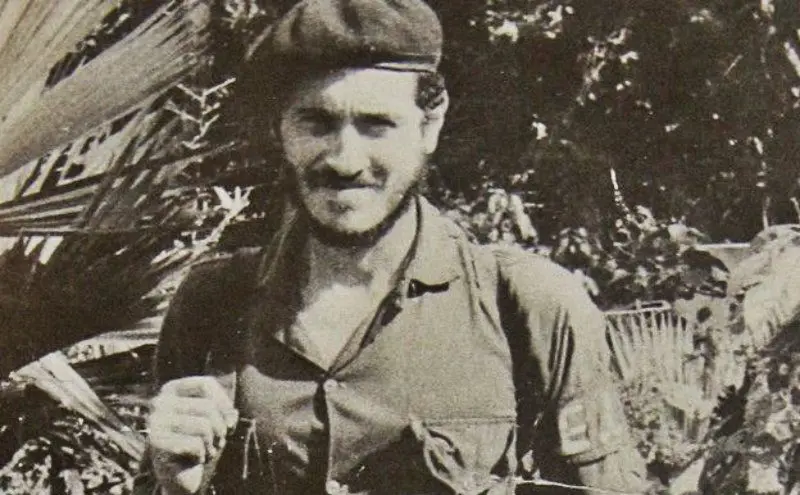
The discovery of the Guerrilla Priest’s remains reopens old wounds and revives revolutionary memory.
For sixty years, Colombia’s ruling elites believed they could silence more than a voice. When the Colombian army killed Father Camilo Torres Restrepo in combat on February 15, 1966, it did not just kill a man; it killed a symbol.
By disappearing his remains, the Colombian military establishment tried to erase the living link between Marxist revolution and Liberation Theology that his “United Front” represented.
But the silence has finally broken. After 60 years of concealment, new forensic evidence and a changing political climate have led to the discovery and identification of the body of the “Guerrilla Priest.”
This is not merely a forensic victory; it is a landmark triumph for historical memory in Latin America.
The Discovery: Breaking the Silence of the Grave
After years of speculation, forensic experts have confirmed that skeletal remains recently found in Colombia belong to Camilo Torres.
The search, revived under President Gustavo Petro’s administration, ended in a site kept secret for decades to prevent it from becoming a place of pilgrimage for the poor and dispossessed.
Specialists carried out detailed DNA testing and bone analysis to confirm the identity. This discovery finally answers the painful question haunting Colombians for six decades: Where is Camilo?
For Colombia’s popular movements and Latin America, this is closure, the end of a forced disappearance that symbolized the repression of the revolutionary dreams of the 1960s.
The Legacy: More Than a Guerrilla Priest
To understand the power of this discovery, one must look past the mainstream label of “the priest who took up arms.” Camilo Torres was a gifted sociologist and one of the founders of the social sciences in Colombia.
His “United Front of Popular Movements” sought to unite workers, farmers, students, and both secular and religious sectors of the left.
He dreamed of a broad coalition standing against the elite two-party system. Joining the National Liberation Army (ELN), he said, was an act of “effective Christian love”, a moral duty to fight injustice in a country where poverty was enforced by privilege.
The Battle for the Body: Politics and Honors
The rediscovery of Camilo’s remains has triggered immediate political debate. President Gustavo Petro has proposed honoring him with a state ceremony and laying him to rest at the National University, the very institution where Camilo founded Latin America’s first Faculty of Sociology.
Yet this proposal has stirred controversy. The ELN and various social organizations warn against any attempt to use his legacy for political gain.
They insist that a “Broad Table” be formed to guide the process collectively, ensuring that the final tribute reflects his revolutionary spirit, not a sanitized, state-approved version of his life.
This struggle over who “owns” Camilo’s memory is, in itself, a reflection of the same forces he fought against: state power versus grassroots autonomy.
The Counter-Hegemonic View: A Victory Against Impunity
From a progressive perspective, Camilo Torres’s disappearance was the symbolic beginning of Colombia’s “Dirty War.”
By hiding his body, the state sent a message: those who challenge power would not only be killed but erased from history.
The recovery of his remains now stands as a defiance of that erasure. It undermines the “official history” that portrayed him as a misguided dreamer and reclaims him as a visionary who knew that polite reforms could never dismantle structural oppression.
His memory continues to nourish what many call the “Church of the Poor”, a living testimony that faith and revolution can walk hand in hand in the struggle for justice and human dignity.
The Seed of Resistance: A Life of “Efficacious Love”
Understanding the sixty-year search for Camilo Torres means understanding a life that blurred the lines between the pulpit, the classroom, and the front line.
Born in 1929 to a privileged family in Bogotá, Camilo’s path was far from typical. He combined rigorous academic work with a deep commitment to pastoral care, walking among the people he served rather than preaching from above.
Ordained in 1954, Camilo traveled to Belgium to study sociology at the Catholic University of Louvain. Upon returning in 1959, he co-founded the first Faculty of Sociology in Latin America at the National University of Colombia.
He developed his social and political vision in poor neighborhoods and rural areas, where he implemented his concept of “efficacious love.”
For Camilo, charity meant nothing without justice. He said that a system that kept the majority hungry and ignorant was not only unjust but also sinful.
By 1965, Camilo Torres’s United Front of the People had become a powerful voice against Colombia’s National Front, an exclusive political pact between Liberals and Conservatives.
Camilo’s message was dangerous precisely because it united Marxists, Christians, and independents under one banner and rejected “bourgeois elections” in favor of transforming society from the ground up.
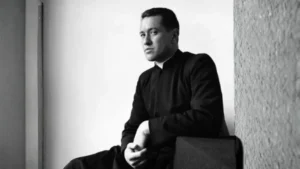
Under government pressure, the Catholic hierarchy forced him to choose between the priesthood and his activism. Heartbroken but determined, he requested to be released from his clerical duties so that his political work would not compromise the Church.
Camilo’s decision to join the ELN was not romantic, but rather a response to repression. Surveillance, threats, and closed legal channels left little room for peaceful change. In the jungle, he sought to live and die, if necessary, alongside the oppressed.
On February 15, 1966, during his first combat mission in Patio Cemento, Santander, Camilo was killed while trying to rescue a fallen comrade’s rifle, a gesture that exemplified his humility and solidarity.
General Álvaro Valencia Tovar’s order to dispose of his body was not just a military act, but an attempt to destroy the myth before it could grow.
For sixty years, Camilo’s remains were hidden from the people he had served. However, this discovery proves that you can bury a person but not a cause. The revolution he represented lives on.
The Seed Returns to the Earth
Camilo Torres once said, “The duty of every Christian is to be a revolutionary. The duty of every revolutionary is to make the revolution.”
Sixty years later, as his remains prepare to return to the National University, this statement echoes louder than ever.
Camilo’s return reminds us that ideas cannot be buried. Even the deepest grave cannot hide the truth or silence the dream of justice that he carried into the mountains of Colombia, a dream that, today, breathes again.