

Fẹ̀mi Akọ̀mọ̀làfẹ̀: A Manifesto for Intellectual Sovereignty
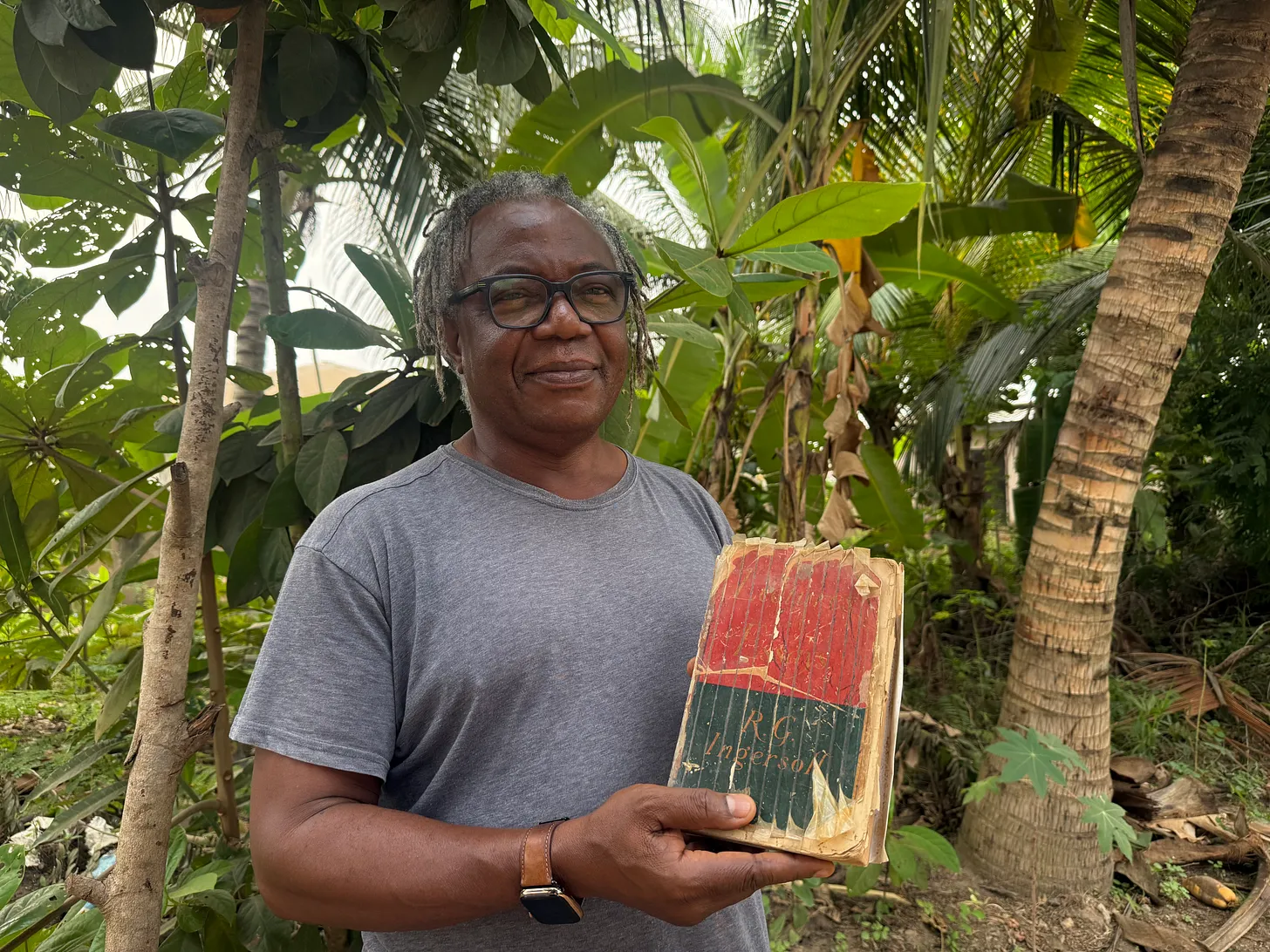
Today, instead of writing about Pan-Africanism or Geopolitics, we will change tack and engage ourselves in philosophical ruminations. Do not worry; it is tied together to the gospel that we preach on this blog.
“I don’t know is an answer.” – Robert Ingersoll.
In a world drowning in the cacophony of manufactured certainty, where the pious preen in their pulpits and the comprador elites grovel at the feet of their Western masters, this simple, five-word sentence from Robert Ingersoll remains the most revolutionary act of intellectual defiance ever uttered. It is the ultimate declaration of sovereignty. It is the refusal to be a slave to the unseen, the unproven, and the unholy alliance of priestcraft and statecraft that has shackled the African mind for centuries.
I am the son of an Akogun, the Defense Chief of our quarter in my hometown. My father was a man of the earth, a traditionalist who understood the weight of the sword and the silence of the ancestors. Yet, in that curious, schizophrenic dance of the colonized mind, he beat us into the pews of the Roman Catholic Church. I was nearly lost to the seminary, a young mind fascinated by the myths of Yahweh, David and Goliath, Samson and Delilah, etc, until I stumbled upon a different kind of scripture in my father’s library: The Essays and Speeches of Robert G. Ingersoll.
To understand the impact of Ingersoll on a young African mind is to understand the metaphysical earthquake that occurs when the “Great Agnostic” meets the “Great Oppressed.”
Ingersoll did not just challenge theology; he dismantled the very architecture of mental slavery. As he so cuttingly put it, “Mental slavery is mental death, and every man who has given up his intellectual freedom is the living coffin of his dead soul.”
We Africans find ourselves today in the midst of what one of my GoTo geopolitical analysts, Alistair Crooke, would describe as a profound ontological crisis. The “Rules-Based International Order, that secularized version of the old celestial tyranny, is crumbling. It was an order built on the same foundations as the medieval church: a set of dogmas that demanded blind faith, enforced by the threat of excommunication (sanctions) and the fire of hell (hellfire and Tomahawk missiles).
Crazy as it might look to rational people, the West, even in its terminal decline, clings to a moralistic, Manichaean “good vs. evil” binary that would make a 19th-century inquisitor blush. They speak of “democracy” and “human rights” with the same hollow piety that the priests of my youth spoke of “salvation,” while simultaneously trampling upon the sovereignty of any nation that dares to think for itself.
Pan African Digest is a reader-supported publication. To receive new posts and support my work, consider becoming a free or paid subscriber.
We see here not merely a geopolitical shift but a civilizational struggle for the right to define reality.
As Ingersoll observed, “The inspiration of the Bible depends on the ignorance of the person who reads it.” Today, the “inspiration” of the liberal order depends entirely on the ignorance of the global majority. It requires us to ignore the data, to disregard the scientific reality of our own exploitation, and to bow before the “gods” of the market forces and the “saints” of the NGOs. We are told to trust the “experts” while our resources are drained and our futures mortgaged.
As we have pointed out several times on this blog, the external oppressor is only half the problem. The greater tragedy lies with our own comprador elite, those “educated” overseers who have traded their people’s sovereignty for a seat at the master’s table.
These are the men and women who have deliberately and maliciously failed to raise the thinking ability of their people.
The plantation supervisors prefer a populace steeped in superstition and fear. They find it easier to govern a nation that spends its Sundays praying for miracles rather than its Mondays demanding accountability. They have replaced the traditional wisdom of the ancestors with the parasitic theology of the prosperity gospel. They know, as Ingersoll knew, that “Ignorance is the soil in which belief in miracles grows.”
By keeping the soil of the African mind parched of reason and scientific inquiry, they ensure a bumper crop of submissive subjects.
Today, we lack the oratorical firepower of Frederick Douglass when we most need it. Douglass, who escaped the physical chains of the plantation, only to realize that the mental chains were far more resilient. He understood that the slave-master’s greatest tool was not the whip, but the Bible. He saw the hypocrisy of a “Christian” nation that bought and sold human flesh. Today, we see the same hypocrisy in a “civilized” world that preaches freedom while practicing debt-slavery.
Frederick Douglass would have asked the Western do-gooders: What, to the African, is your “Rules-Based Order”? It is a sham that conceals your crimes; a thin veil that covers your rapacity; a hollow shell that echoes with the cries of the dispossessed. It is a system where, as Ingersoll noted, “Justice is the only worship,” yet justice is the one thing never found on the menu for the global south.
We are told that to be “African” is to be inherently “spiritual,” a polite way of saying we are expected to be irrational and to be unscientific.
I reject this. I stand with Ingersoll in his embrace of the “holy trinity of science”: Reason, Observation, and Experience.
Robert Ingersoll told us, “Happiness is the only good; the time to be happy is now, and the way to be happy is to make others so. This is not a Western concept; it is a human one. It is the foundation of a truly sovereign society. A society that does not wait for a “reward” in the sky but demands “consequences” on the earth.
Our elites fear this. They fear a people who understand that “In nature, there is neither reward nor punishment, only consequences.” If the people understood this, they would see that their poverty is not a “test from God,” but a consequence of bad policy, systemic theft, and intellectual sloth. They would see that “The hands that help are better far than lips that pray.”
I have been called an atheist, an iconoclast, a polemicist, and a man who hates the church. Like my great mentor, Robert Ingersoll, I am more of an agnostic than an atheist. I do not know whether there is a god. I can’t find the evidence to persuade me one way or the other. But, honestly, I do not care!
No, I do not hate the church; I only detest the chains it places on the human mind. I am an enemy of anything that fetters the intellect. I crave, as Ingersoll did, the “storm and tempest of thought and action, rather than the dead calm of ignorance and faith!”
The struggle for Pan-Africanism is, at its core, a struggle for intellectual and cultural emancipation. We cannot build a sovereign African on a foundation of borrowed dogmas and inherited superstitions. We cannot be free as long as we allow others to do our thinking for us. For, as the Great Agnostic warned, “The man who does not do his own thinking is a slave and is a traitor to himself and his fellow men.”
I chose to pattern my life after Ingersoll because he showed me that one could be a giant of knowledge without a single “divine” revelation. He showed me that “I don’t know” is not a sign of weakness, but a badge of honesty. It is the starting point of all scientific inquiry. It is the first step toward true independence.
Let us stop being the “living coffins” of our dead souls. Let us bury the superstitions that have kept us kneeling for centuries. Let us demand a data-driven, scientific approach to our development, free from the “goblins of the sky” and the “vultures of the West.”
The Akogun in me recognizes the battle. The Frederick Douglass in me acknowledges the injustice. The Alistaire Crooke in me acknowledges the civilizational stakes. And the Robert Ingersoll in me recognizes the only path forward: the path of reason.
If we must become the masters of our own destiny, we must cultivate the soil of our minds with the seeds of doubt, for it is only through doubt that we can find the truth. We must realize that we are the only ones who can save ourselves. No god is coming to help. No Western “partner” is coming to save the day.
Thanks for reading Pan African Digest! This post is public so feel free to share it.
Per Ingersoll, the time to be free is now. The place to be free is here. And the way to be free is to think.
Let the coming years become Africa’s Age of Reason, the title of one of the greatest essays ever penned. In the coming days, I will try to write about Thomas Paine, another one of my intellectual mentors.
May 2026 be a year of good health and joy for all of us!
Fẹ̀mi Akọ̀mọ̀làfẹ̀ (1st Dan)
(Farmer, Writer, Published Author, Essayist, Satirist, Social Commentator, Geopolitical Analyst.)
My Mission: Ignorantia et stultitia delendae sunt / Ignorance and stupidity must be destroyed.
I am an unapologetic Pan-Africanist who is unconditionally opposed to any form or manifestation of racism, fascism, and discrimination.