

History lesson: Mark Twain, Yankee Imperialism & War in the Philippines
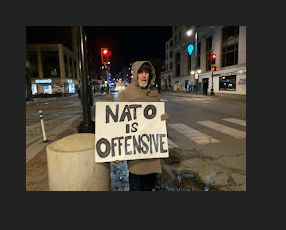
With thanks to Bruce Gagnon – coordinator of the Global Network Against Weapons & Nuclear Power in Space.

It started in 1898 with the Spanish-American War. America entered the war to wrest the Philippines from Spain because the US wanted a foothold in trade in Asia, particularly with China, and feared European and Japanese domination of commerce in the region.
Under the pretext of helping Filipinos in their war of independence against Spain, the US fought Spain and bought the Islands from the Spanish and then fought the Filipino insurgents who still wanted independence.
And Mark Twain was absolutely furious.

Mark Twain’s View of the War
At first, Twain believed the war to be a humanitarian one. Like America had done against the English crown, the Filipinos were now doing against their Spanish colonial masters; they wanted to be freed from the yoke of colonial subjugation. While the US did not keep Cuba in the deal with Spain, America did opt to retain control of the Philippines, for economic reasons. When Twain saw the tide turning to pure business interests and not humanitarian ones, he spoke out vehemently.

As the war dragged on, the brutality of American forces became more dramatic. In letters home, soldiers compared shooting Filipinos to hunting rabbits and referred to Filipinos as the N-Word. Back home, the Filipinos were thought of in the same way Americans thought of African-Americans. Understand, this was a time when the Ku Klux Klan were considered heroes and that Americans believed in the spread of Anglo-Saxon America; in fact, American was equated with white skin.

see……..The conquest of the Philippines by the United States, 1898-1925 at archive. https://ia600606.us.archive.org/27/items/afj2371.0001.001.umich.edu/afj2371.0001.001.umich.edu.pdf other formats> https://archive.org/details/afj2371.0001.001.umich.edu some fragments>The president called this a “brilliant feat of arms.” This is what Twain had to say: The enemy numbered 600 – including women and children – and we abolished them utterly, leaving not even a… Read more »