

Quietly and professionally China may have ⬇️ The Unit

China did not like the Unit. They said so in banking circles and in circles committed to trading in local currencies. Being China, they did exactly what they thought was productive, and it is. China also took FinTech to 21 nations in Africa south of the Sahara. They may have set up another bank for BRICS, but the deep business dealings are not yet visible.
Congratulations to Standard Bank on the official launch of its Cross-border Interbank Payment System (#CIPS), making it the 1st African bank to join CIPS as a direct participant! This milestone will enhance China-Africa cross-border payment efficiency, reduce transaction costs,… pic.twitter.com/na9OnC4MMi
— 杜晓晖DU Xiaohui (@DGAfrica_MFA) December 5, 2025
Standard Bank is a leading African integrated financial services group offering a full range of banking and financial services. Major problem solved ✔️
It operates in 20 countries in sub-Saharan Africa and in major global financial centres. Immediate network, no fuss, no muss ✔️
The group owns a controlling stake in the South African-listed insurance and wealth management group Liberty Holdings. The group operates as three business units: Personal & Business Banking, Corporate & Investment Banking, and Wealth. The gamut of operations, which China will no doubt buy into, if it has not already been done ✔️
Pure local currency trading with local resources ✔️
As a bank committed to driving Africa’s growth, Standard Bank recognises the importance of China to our continent’s growth. As the continent’s largest bank by assets, operating in 20 markets across sub-Saharan Africa, our vision for Africa’s growth is reflected in our partnership with the Industrial and Commercial Bank of China (ICBC). This 15-year partnership with the world’s biggest bank has enabled Standard Bank to build the world’s leading Africa-China trade and investment platform. As a result of this relationship, in 2022 alone, Standard Bank facilitated trade flows between Africa and China totaling $600 million. This strategic and mutually beneficial partnership broadens China’s relationships with Africa and gives African businesses access to the world’s largest and most dynamic market.
How does CIPS work? Simple. Someone buys from China, goes to the CIPS bank, and the system does it all, fast and cheap, without touching a US Dollar, and it ends up in the corresponding CIPS bank in Hong Kong. There are no single points of failure (power, yes, but a financial system cannot cover a power outage; it’s peer-to-peer, basically, no muss, no fuss).
BRICS Pay, administered by the BRICS Business Council, is being further developed to enable fast, secure, and seamless cross-border transactions. Designed on principles of interoperability, sovereignty, and inclusion, BRICS Pay connects national and commercial payment systems across BRICS+ nations — creating a resilient alternative financial infrastructure for businesses and individuals. If I live in a BRICS country and have a BRICS pay card, with a specific code, I can pay in dollars (local currency) in a dollar country. In addition, BRICS pay has connectivity to many other payment networks, even PIX in Brazil and WeChat Pay in China.
Both systems are fully compliant with current international financial law.
A basic comparison with The Unit:
There are no single points of failure, and these two systems do not use someone else’s blockchain for their transactions.
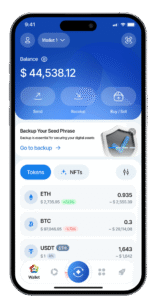
BRICS Pay offers a self-custody wallet for storing multiple cryptocurrencies that looks like an everyday crypto wallet. Self-custody is hugely important because you don’t hold your currency in a fund, a bank, or an exchange in the hands of someone else, but in your own pocket. It is supposed to be peer-to-peer electronic cash.
So, the Unit is supposed to be usable for a direct gold buy. So, why not simply use BRICS Pay or your CIPS account and buy gold? The Unit is also supposed to be used to exchange for Cash. But there are no existing banking networks yet. This stuff does not work on hope. We used to call this in the trade Vaporware. It really seems as if The Unit wants to solve problems that have already been elegantly solved between CIPS and BRICS Pay. Where is the need for a Unit that, at the moment, is clunky and lacks key parts? The next step must be to adopt a BRICS currency, but doing so is difficult. The last I heard from Russian circles on this is that they are studying what went right and what went wrong with floating the Euro, so as not to make the same mistakes. The first issue that came up was that some countries were not at all ready for a European currency. And as Michael Hudson once told me: What About The Debts?
In terms of reading all of this, BRICS Pay and CIPS in their use of language tick all the modern FinTech boxes. BRICS Pay card for me, please, and I can use Brazil’s Pix to buy some Brazilian Brew. The very positive note is that it is done: Two cross-border financial trade mechanisms do not touch the US Dollar.