

Chinese Characteristics of Socialism: Civilisational Factors in CPC Governance

But over centuries and millennia, the collective “recipes for living” (Clifford Geertz’ famous definition of culture) that emerges from particular conditions and trajectories does become a force which also shapes history.
Materialism is the foundation and primary key to understanding human society in the capitalist era. But at the same time, the accumulated effects of culture, solidified into sets of distinct arrangements and convictions, in other words, civilisation, does also play a great role in national politics, in world affairs, in revolutionary process, and besides Marxism, in the rise of modern China.
The ideology of the Communist Party of China is not only socialism, but Socialism With Chinese Characteristics.
In this essay we will examine some of those characteristics as shaped by historical development, so that we may better understand The Central Realm, its contemporary governance, future trajectory, and what the coming Chinese millennium might mean for the world.
Daily Customs
Seemingly trivial and insignificant, ordinary social conventions are often results of entrenched philosophical foundations and expressions of core cultural values. Lets take brief stock of a few in China and beyond, particularly pertaining to food.

Chinese chopsticks are longer than Korean and Japanese chopsticks because everyone shares the dishes placed at the center of the table, rather than only eat one’s own portions.
When Chinese people sit down to eat together, it is considered rude and childish to serve oneself first. Instead, one should always pass food to others before oneself, with the order determined by seniority — but the senior, for example an older sister, is also expected to make sure that her younger brother has enough to eat before she does herself.
Ordering food for a party is always a complicated group effort: the meal is a collective composition of contrasting and complementary elements that works for the entire group, but should also satisfy the particular palettes of every member — an experience more than the sum of its parts.
In restaurants of not only China, not only East Asia, but also South, South East, West Asia, as well as many parts of Africa and South America, it’s typical for people to argue over who gets the privilege of paying the bill — partly because who ever pays is seen as the bigger person. Travellers to every part of the Global South and anywhere indigenous cultures and sensibilities survive, have noted a supreme generosity, and that locals, complete strangers, often insist on buying or inviting them to their homes for a meal.
This generosity and propensity for sharing is biologically rooted in the evolved behavioural traits of human beings. It is seen clearly in indigenous cultures all over the world, especially those in arid and difficult conditions, such as the Amazigh of the Saharan desert who will slaughter their last goat for a starving stranger knocking at their door in the middle of the night.
State formation coinciding with the world-historic rise of Proprietary Patriarchy and its attendant class society around 6,000 years ago began a process of erosion and suppression of this original human convivial sociality, but not equally, not in the same way, and not to the same extent around the world. This is the main reason, not any innate deficiency of humanity, for extreme divergence from indigenous hospitality in some parts of the world; for example, cash apps in Northern Europe where friends request 2 or 3 Euros from each other for having consumed half a sandwich more than the other during lunch.
Keep these observations in mind while reading the rest of this essay; their relevance and meaning will become increasingly apparent.
INTERNAL GOVERNANCE

Massive, prolonged, recurring floods regularly devastated the Yellow River valley, destroying settlements and agriculture. It was a repeating crisis that threatened the very survival of the nascent civilisation.
After countless failed attempts to solve this problem, legend has it that Emperor Yu mobilised tens of thousands of people from various clans and chiefdoms, and laboured tirelessly for 13 years, digging channels to divert and manage water to the sea. Because of his monumental success in taming the floods and making the land habitable and fertile, Yu gained immense prestige. The various groups of people were so impressed and grateful that they transferred their loyalty to him, which allowed him to consolidate power and found the Xia Dynasty (c. 2070–1600 BCE), the first centralised state in Chinese history.
The very first state in China formed for the explicit purpose of combatting the existential threat of catastrophic natural disasters; its primary Staatsräson was building infrastructure, massive public works for the benefit of all.
The Xia dynasty was followed by the Shang and Zhou dynasties, the “Spring and Autumn Era, then a chaotic, roughly 300 years long Warring States period in which warlords fought for dominance and populations greatly suffered, ending in roughly 200 BCE.
During the Warring States era there emerged 3 main strands of political doctrines: Daoism, Legalism, and Confucianism.
Daoism and Legalism

Daoism, commonly referred to in the West as the grandfather of anarchism, focused on the natural energy flow of the universe (the Dao, or “path”), which human beings should not go against, but seek alignment and harmony with. The central concept of “Wu-wei”, roughly translated as “Do Nothing”, “Non-Action”, “No Force”, or “Spontaneously living in the moment”, is the way towards tranquility and happiness.
Daoism cautioned against competition and instructed that the emptying of the mind and ridding of Earthly desires is the way for humanity to change its violent ways that creates so much needless suffering. (The later fusion of Daoism with Buddhism came to be known as Chan Buddhism, late exported to Japan as Zen). Politically, Daoism is suspicious of centralised power, and urged rulers to be humble, restrained, pacifist, to avoid stringent laws and harsh punishments.

Stringent laws and harsh punishments are main features of Legalism. In many ways the dialectical antithesis of Daoism, this rigid ideology became the guiding principle of the Qin dynasty that ended the Warring States period in 220 BCE.
Legalists see human nature as inherently selfish and violent, and devises a system of absolute monarchic authority atop a centralised bureaucracy, enforcing unbending codes and severe punishment, as the only method with which it can be controlled. And for them, suppression of rival philosophical doctrines was the only way to prevent contending factions from gaining power. In Legalist society, warriors were rewarded based on the number of enemy severed heads they brought back.
Legalism produced very strong police and military, but also widespread resentment among the population, and quickly lead to a series of large scale rebellions that overthrew the Qin after merely 17 years, ending the only, very short period of Chinese history where Legalism dominated.
Brute force failed to maintain peace and unity, but its opposite, the lofty and relaxed, nature-loving, profoundly unfettered ideals of Daoism also, unsurprisingly, was not enough to deal with the real problems faced by monarchic governance over such a large and diverse territory, with objective contradictions between farmers and land lords, between land lords and merchants, between the people and their rulers. The succeeding Han dynasty rejected both, and chose Confucianism as its ideology and political system.
Daoism remains a constant underlying influence on Chinese culture and politics in countless ways, and will always be an important philosophy of life.
Elements of Legalism also live on in Chinese statecraft, even today: the punishments for political corruption and white collar, elite crimes, including seizure of entire companies, long prison terms, and the death sentence, is often much more harsh than those in the West.
In many ways, the most contentious political debates in China, regarding a general definition of good governance and optimum organisation of society, management of contradictions, were more or less settled around 2000 years ago. With some variation through out the eras where different ideas gain and lose favour, Confucianism would come to be the main guiding principle of Chinese governance, beginning with the Han dynasty.
Confucianism
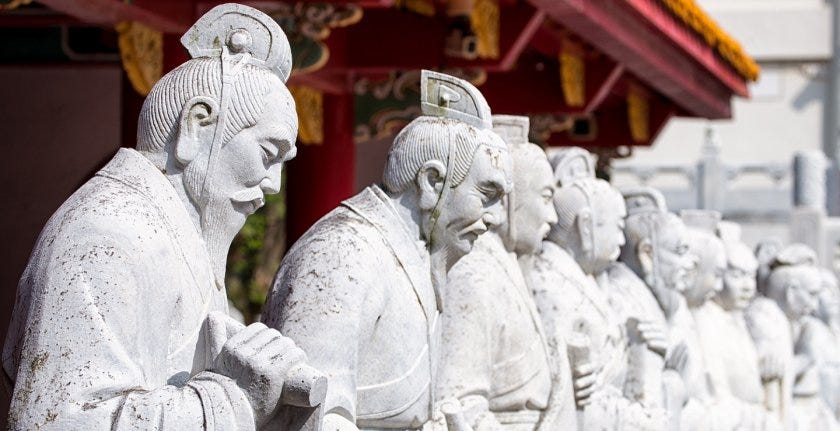
Confucianism posited that human nature is essentially good; that with education, everyone can become virtuous; and that emperors should lead by example, with benevolence. At the same time, the Confucian state retained Legalist centralized bureaucracy, strict laws, and the option of forceful methods to control and maintain power.
Confucianism (儒家, Rújiā) provided a concrete set of guidelines for preserving balance between emperors and people, in attempt to recreate, approximately, what Confucian scholars and historians remembered as an ideal, peaceful, prosperous, harmonious era of the first, Xia dynasty some 2 millennia prior.
Classic Confucianism centered around Man’s connection to the heavens (universe), and posited that social order depends on individual autonomous study and ethical cultivation.
But at the same time, Confucianist doctrine also clearly stated that individual virtue is not possible with poverty — the idea that the state is responsible for the eradication of poverty and wellbeing of citizens was enshrined in China some 2000 years ago (a relative new, about 500 years old, idea in Western politics).
The creation of equality was always a centrally important goal of the state, the precondition for a harmonious society.
In response to continued social unrest and another period of chaotic infighting between warlords, the era of the War of Three Kingdoms (263 – 280 CE), over the centuries scholars further adapted Confucianism in attempt to make political hierarchies increasingly less arbitrary and less unjust, by reducing the importance of inheritance, and further basing the justification of power on objective merit and virtue.
Mandate of Heaven
The concept of the Mandate of Heaven (天命, Tiānmìng) is a foundational ideological principle of Chinese governance, and its origin is precisely dated to the founding of the Zhou Dynasty around 1046 BCE. The Mandate is granted by “the heavens” (the cosmos, nature, the supreme force of order and morality in the universe, not a single deity) to only virtuous and just rulers who made the people happy. If an emperor becomes corrupt or ineffective, Heaven will withdraw its support, leading to social unrest, natural disasters, and ultimately, the emperor’s downfall and replacement.
In later millennia, the idea increasingly came to mean approval of the population, becoming, essentially and effectively, an ancient version of democracy.
Crucially, as much as justifying monarchic rule, the “Mandate of Heaven” also embodies the “right to rebel”: the very concept was created by the founders of the Zhou Dynasty in order to justify their rebellion against and overthrow of the previous Shang Dynasty.
The Zhou leaders argued that the last Shang kings had become tyrannical, morally corrupt, and dissolute, neglecting the rituals, oppressing the people, and had lost the virtue necessary to rule. Based on these allegations, leaders of the Zhou rebellion claimed that Heaven had withdrawn the Shang’s right to rule and transferred the Mandate to King Zhou, who was virtuous and fit for the responsibility.
This was a revolutionary idea. The Mandate of Heaven moved the source of political legitimacy away from mere ancestry (the Shang’s claim) to moral performance and just rule.

Since the very beginning of China, the authority of the emperor, the “Son of Heaven” (Tianzi), has not been absolute, but conditional on incorruptibility, honesty, prudence, generosity, benevolence, and wisdom.
To keep the Mandate of Heaven, a ruler must be ethical, prioritise wellbeing of the people, and perform the correct rituals. A ruler who became corrupt, unjust, and lets society fall into chaos shows that he had lost the Mandate — at which point it is not only right but righteous to overthrow him. The success of a rebellion, dependent upon the will of the population, was itself proof that Heaven had transferred its mandate to a new dynasty.
Neo Confucianism
Neo-Confucianism emerged during the Tang Dynasty (618-907 CE), was fully systematized in the Song Dynasty (960-1279 CE), and reached its canonical form in the 12th century. It was influenced by Buddhist and Daoist metaphysics, outlined a pragmatic methodology for social balance and well being, developed concepts like **Principle (_Li_ 理)**—the underlying rational order of the universe—and **Material Force (_Qi_ 气)**—the psychophysical stuff that constitutes all things, and later introduced ideas like learning based on evidence (influenced by Western empiricism).
In practical application, in more recent millennia Neo-Confucianism developed a fraught, as symbiotic as contradictory, relationship with Legalist-style statecraft. The question of when to lead by inspiration, example, and moral instruction, and when to use law and force to preserve order, was a constant dialectical debate.
During the Song Dynasty, in the 1070s, Confucianism took an explicitly leftist turn:
“The state should take the entire management of commerce, industry, and agriculture into its own hands, with a view to succoring the working classes and preventing them from being ground into the dust by the rich.”
– (attributed to a summary of Wang AnShi)
Wang AnShi advocated for alleviation of suffering among the peasantry, by preventing the consolidation of large land estates. He called elements that came between the people and the government “jianbing”: owners of large estates, rural usurers, urban businessmen, speculators responsible for instability in the market, those who monopolized wealth and made others dependent on them, and the bureaucrats who represented their interests in government. Wang believed that suppression of the jianbing is one of the most important goals of politics.
“Today in every prefecture and subprefecture, there are jianbing families that annually collect interest amounting to several myriad strings of cash without doing anything… What contribution have they made to the state to [warrant] enjoying such a good salary?”
— Wang Anshi
Wang Anshi and the left wing of Confucianism was ultimately defeated by the rightists, but this strand was later revived and today serves to inform and guide the Communist Party of China.
Social Harmony
It must be noted that the Confucian idea of “harmony” is emphatically not “sameness”, as the word partially implies in the Western definition.
An important passage in the Analects of Confucius (Book 13: Zilu) reads:
“君子和而不同,小人同而不和。”
Which translates to: “The noble man seeks harmony but not conformity; the petty man seeks conformity but not harmony.”
The confucian state does not demand uniform opinions in the state, in the population, or of its neighbouring countries, but strives for peaceful co-existence and balanced diversity between people and groups with different ideas. This is how there can be multiple ideological factions within Chinese government today: to the right of Xi JinPing there are politicians calling for expanding the private sector and further liberalisation, and to the left of Xi JinPing there are those who call for re-collectivisation and Great Cultural Revolution Part 2.
This diversity of ideas and a political culture of vigorous debate is how Chinese governance and policy under the same party can change, adapt, and evolve, according to circumstance and historical necessity, so drastically. The Communist Party is constant, but its policies during the Great Leap Forward, during the GCR, during Reform and Opening up, and even between the early 2000s and the current Xi JinPing period — are extremely different.
The idea of “Harmony without conformity” in Chinese political philosophy since ancient times is also what makes possible the “One country, two systems” arrangements that the central government has used for Hong Kong before reclamation, for Macau with its unique laws with regard to gambling, for Taiwan with a government independent of the CPC, etc. No other nation has any similar tolerance for different ideologies, political systems, and laws within its borders.
This Confucian tolerance for difference is in sharp contrast to the ideological homogeneity demanded by liberal democracy, which tries to impose the same values on not only their own populations but also on other nations with extremely different histories and cultures, and force developing countries to adopt the same neoliberal economic model.
Da Tong (大同)

The concept of Da Tong, “The Great Unity,” “Grand Harmony,” is one of the most influential and enduring political and social ideals in Chinese thought: a vision of a perfect, utopian world order.
The most famous and definitive description of Da Tong comes from the “Liyun” (Record of the Rites) chapter of the Confucian classic, the Book of Rites (Liji). It is presented as a description of the golden age of antiquity, before decline.
Here is the key passage, which is memorized by generations of Chinese students:
“When the Great Way (Da Dao) prevailed, the world was shared by all alike. The virtuous and the able were selected. Sincerity was emphasized, and harmony was cultivated. Thus, people did not love only their own parents, nor did they treat only their own children as children.
The elderly were provided with a means to see out their lives; the adults were employed in work that utilized their abilities; the children were supported to grow and learn. Compassion was shown to widows, orphans, the childless, and the disabled—all had the means of support.
Selfish schemings were repressed and found no development. Robbers, filchers, and traitors vanished. Hence, the outer doors remained open and were never shut. This was the age of the Great Unity (Da Tong).”
The core tenets of Da Tong:
- Public Spirit over Private Interest (天下为公, Tianxia wei gong): This is the most famous phrase from the text. It means “The world is shared by all.” It opposes the idea of “the world is for one family” (家天下, jia tianxia), which describes a hereditary monarchy. It implies a communal ownership of resources and a government that works for the common good.
- Meritocracy and Selection of the Virtuous: Leaders are chosen for their virtue and ability, not through hereditary succession. This was a radical idea in a feudal society.
- Universal Care and Social Welfare: The concept of family and care extends beyond one’s own blood relations. The entire society functions as one large family, ensuring that every member—the old, the young, the widowed, the orphaned, the sick—is cared for and has a place.
- Trust and Social Harmony: With people acting for the common good, there is no need for scheming, dishonesty, or theft. The fact that “outer doors remained open” is a powerful symbol of the absolute trust and safety within this society.
- Full Employment and Productive Labor: Everyone contributes to society according to their ability, and everyone enjoys the fruits of collective labor. There is no waste of resources or human potential.

Immediately after describing Da Tong, the original text contrasts the ultimate ideal for future society with the current era of Xiao Kang (Small Tranquility), a lower, more pragmatic level of a well-ordered society. In the time of Xiao Kang, society before Da Tong can be acheived, people love their own parents and children; rulership is hereditary; and rituals and righteousness are established to maintain order in a society of propriety and stability built on distinctions (self vs. other, ruler vs. subject).
The deeper understanding of confucianism is that the adherence to strict heirarchies, to filial piety, etc. are not end goals, but temporary features during the current era of Xiao Kang, which anticipates and will eventually lead to a much better future time of perfect human harmony on Earth.
This confucian idea of historical progress through struggle is akin to the Leninist socialist path towards global communisation, on which political power, in its continuous optimisation, striving for more legitimacy and further intimate reflection of the will of the people, will incrementally dissolve. As human understanding and society advances, the trust, respect, empathy, mutual care, and harmony within the family and extended family will increasingly expand to include the neighbourhood, then the city, the province, the nation, clusters of nations, and eventually, the world.
The concept of Da Tong, China’s native, classical vision of the permanent resolution of societal contradictions, of a harmonious, egalitarian, and moral society, has served as a powerful inspiration and a critical standard for political thought for over 4,000 years. Da Tong became the ultimate Confucian ideal, a benchmark against which all governments were measured, inspiring countless later thinkers, including the founder of modern China, Sun Yat-sen, whose Three Principles of the People were aimed at achieving a modern form of Da Tong.
Many Chinese intellectuals in the late 19th and early 20th centuries saw parallels between Da Tong and communism/socialism, which helped facilitate the acceptance of Marxist theory in China. The Communist Party of China has also invoked the language of Da Tong to describe its socialist and communist goals, framing the ultimate aim of communism as a modern realization of this ancient Chinese idea of utopia.

During the 20th Century revolutionary period, Confucianism, the ideology of feudal China which justified monarchism, was widely discarded as outdated and decadent. But on the road of socialist construction in the contemporary era, the ancient wisdom of Confucianism found new purpose and application for steering society during a transitional period full of not-yet-resolvable contradictions.
Today, the Mandate of Heaven and Confucian meritocracy endures in the Chinese version of Democratic Centralism, the political system of the Communist Party of China (same as that of USSR 1.0). Just like in ancient times, legitimacy of the CPC and its leadership rests entirely on approval of the population. If Xi JinPing loses support of the central committee and the higher governing bodies, he would have to step down immediately; and if the communist party itself loses support of the people, another will soon take its place.
In this democratically centralised hierarchical system, local leaders of villages, cities, and provinces are chosen by popular elections; while leaders in the central government are appointed by the party. Democratic centralism ensures that the entire government is connected to the wishes and will of the people, at the same time able to make big decisions concerning the nation and the world, such as those regarding climate and geopolitics, free from the short sighted financial self-interest of citizens. (more on contemporary PRC domestic and foreign policy in the essay “The Long Game and its Contradictions”)
INTERNATIONAL RELATIONS
Tributary System
China has never been an “empire” in the European definition and understanding of empire.
Instead of constantly seeking to conquer and directly administer neighboring territories, like Rome and every Western empire, ancient China set up the Tributary System. Neighboring states (such as Korea, Vietnam, Tibet, and various steppe peoples) would acknowledge Chinese cultural and political supremacy by sending periodic tribute missions. In return, they received gifts, legitimacy for their own rulers, and the benefit of trade. This was a more cost-effective and stable way for China to secure its borders and maintain its perceived cosmic role than conquest, occupation, violent and coercive domination.
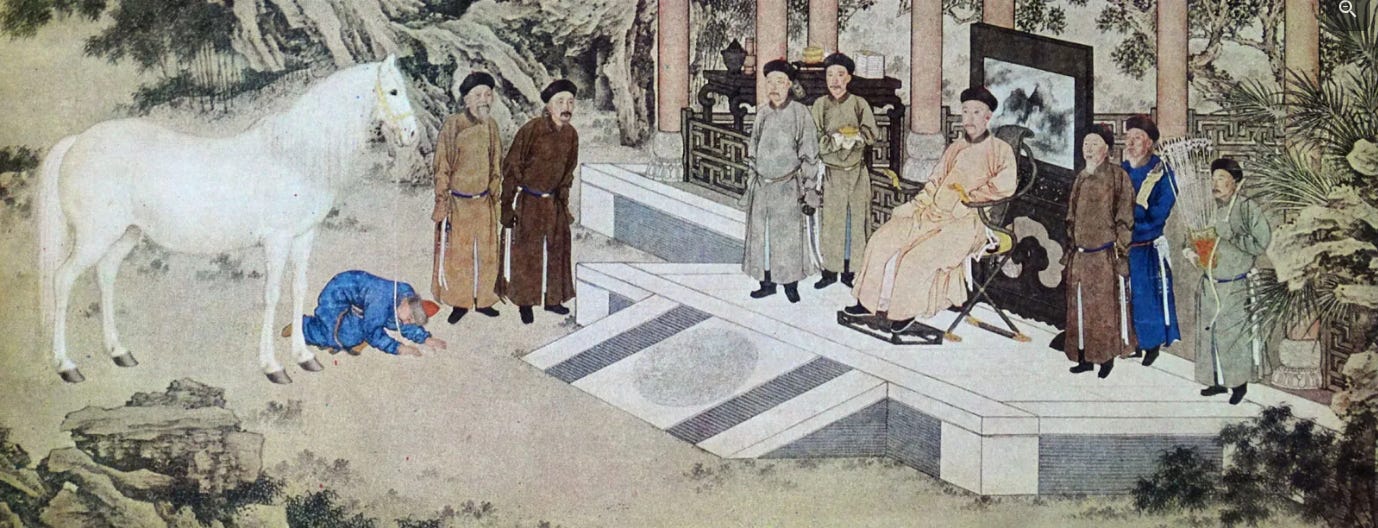
In the tributary system, often overlooked by Western understanding, the return gifts to the smaller nations must always be of greater value than the tributes — because a bigger, “superior” nation should of course be more generous, and has a responsibility for ensuring the wellbeing of others, for the preservation of peace and the promotion of prosperity.
If a greater nation takes more than it receives, or acts in an immature, impulsive, imposing, controlling, or even violent way, it would no longer deserve its perceived greatness on the international stage, and the emperor responsible would lose face and legitimacy at home. All of this is especially true of the greatest nation of all, the central celestrial kingdom.
This was also a kind of “supremacism”, but a drastically different kind than that of Wesern civilisaion: “superiority” and “dominance” means being more charitable, considerate, tolerant, patient, wise, fair, ethical. To be domineering, manipulative, to force one’s way of life on others, to meddle in the affairs of others, to use coercive methods or even military force to get one’s way, was seen as stupid, ugly, vulgar, petty, arising from insecurity and a low level of understanding, the behaviour of small minded weaklings.
The contemporary Chinese political principle of non-interference emerges from such a value system, and is merely the next step in the continuous evolutionary path of a mutualist political philosophy.
Peace and War
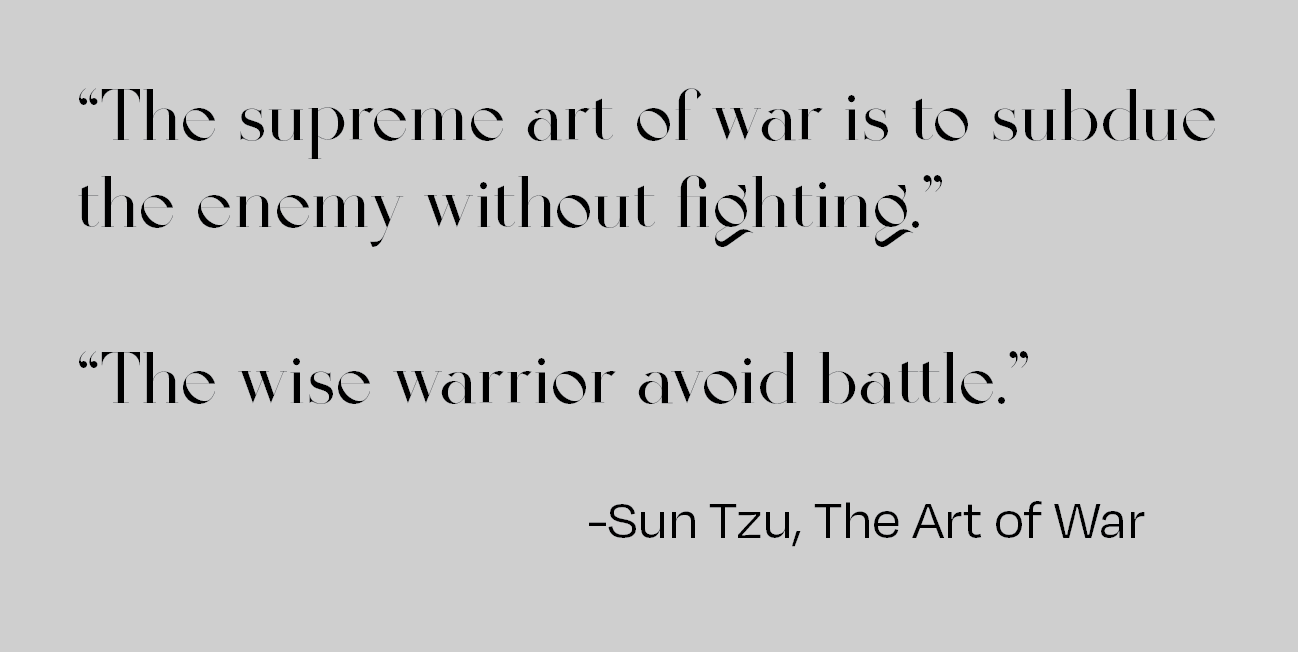
The central emphasis and conclusion of the famous Daoist treatise on war-strategy, The Art of War, is that war should be always and absolutely avoided with diplomacy, because who ever “wins”, both sides lose, and the civilian populations of both suffer. If war cannot be avoided, it should be fought strategically and psychologically to minimize damage and the wasting of resources. Warfare should only be the very last resort after all attempts at negotiation fails, and heading into battle is already admitting a kind of defeat.
In imperial China, a statesman who resorts to military methods without exhausting every possible peaceful means of settlement and even beyond (if an agreement is not reached, a certain amount of self sacrifice in order to preserve peace is expected), is considered an inferior and stupid leader, and would, after the dust settles, face demotion or worse.
Compare and contrast this with the valorization of violence in the West, regarding the successful waging of war as sign of a great leader. Currently USAmerican politicians are attacking each other for being “too soft on (insert official enemy)”, for not being aggressive enough. The competition to be seen as the most combative and bellicose is something that does not exist in Chinese political competition, which proceeds according to a set of very different core values. Speaking in broad general terms, non-violence, restraint, and patience is usually seen in the West as weakness — for evidence we only have to look at contemporary Western mockery of its geopolitical enemies’ caution and moderation, interpreting it as weakness.
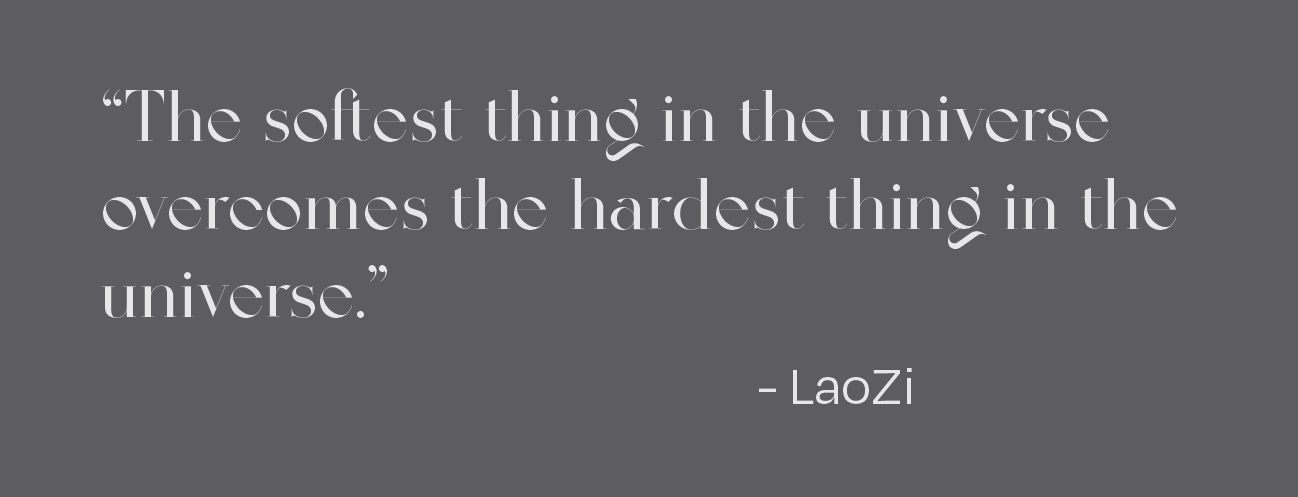
Softness is central to Asian ideas of strength. In the age-old concept of “Bamboo Diplomacy”, the ability to bend (while being firm) is seen as an attribute of power. And indeed, Chinese Traditional Medicine has maintained for thousands of years after the fall from the harmonious period of antiquity (the first Xia dynasty), that “the world is too Yang”, meaning too masculine, too calculating, too hard, not enough feminine, not enough empathy, not enough softness. And to this imbalance can be attributed much of the great illness of the world.
While in European culture to be soft tends to be seen as a shortcoming, as feminine, as silly, as embarrassing, as inferior, and as cause for mockery and ridicule.
Clash of Civilisations
These policies, arrangements, modes of engagement with others, are very different from those of Western empires, and emanate from a fundamentally different set of core values and ideas of governance.
But Chinese society in antiquity was basically the same monarchism/feudalism as that of ancient Greece or Rome, with the same hereditary hierarchical power structure presiding over the population. So class alone cannot explain why Zheng He, with ships and fleets 10X bigger than those of Christopher Columbus and 100 years earlier, equipped with unmatched weapons and technology, sailed around Asia and Africa, and merely traded, instead of conquering, colonising, or enslaving.
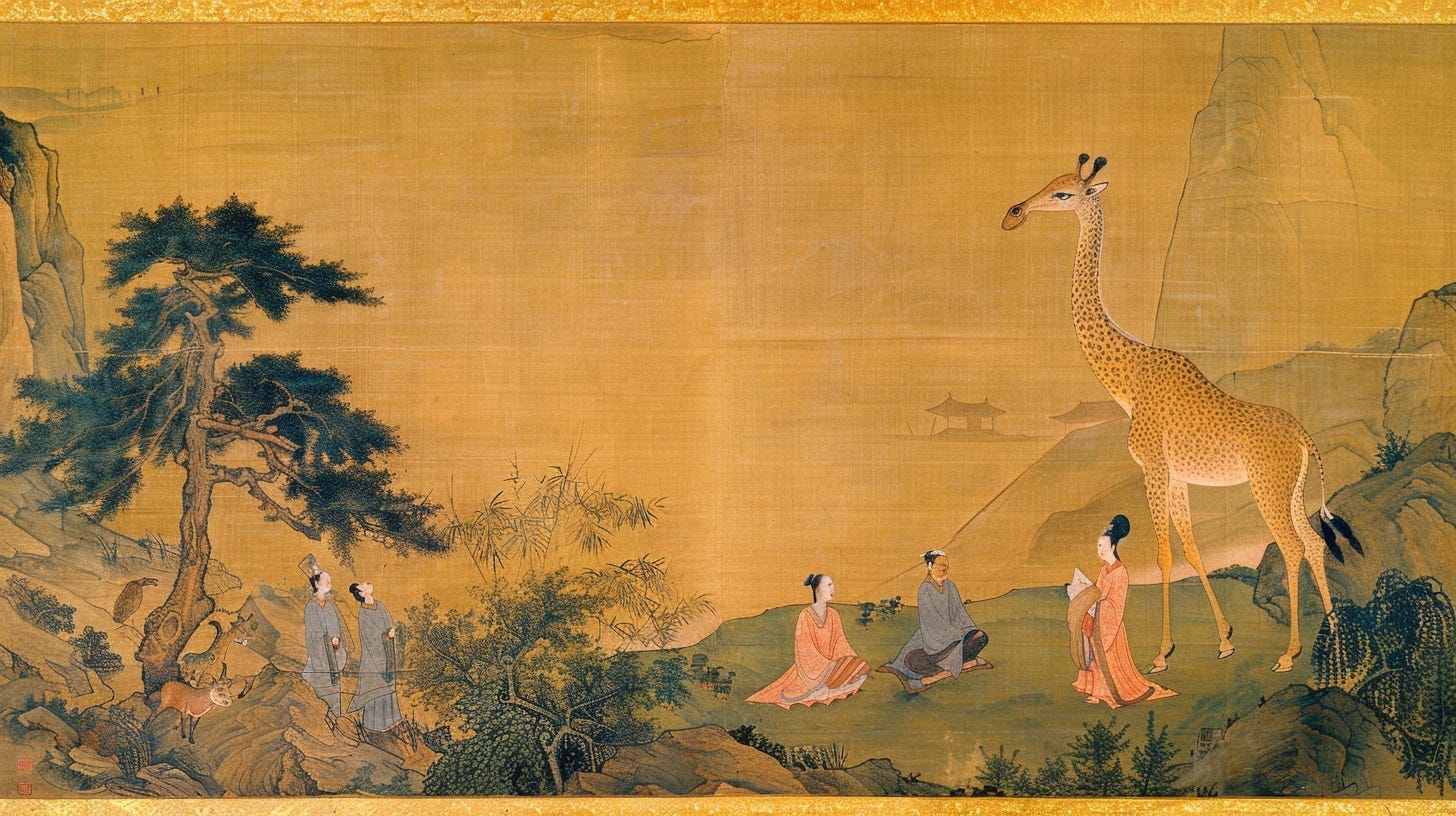

For much of the past 2000 years, the Central Realm, world’s top economic, military, cultural super power, was relatively stable, prosperous, and self satisfied, with a form of internal governance and foreign policy which prized above all the preservation of harmony and peace. During the last 1000+ years, China engaged in virtually zero expansionist wars.
Contrast with Europe at the time of global colonisation: emerging from 1000 years of constant warfare, Roman infrastructure laid waste, rampant diseases, peasants living without much hope under brutally oppressive feudal theocracy — all of which made European peoples accustomed to violence, excel at military matters, and thirst for new horizons where the oppressed poor can become oppressive kings (or at least that was the propaganda to get the peasants and prisoners to take the gruelling and dangerous journeys to the New World and do the dehumanising work of genocide, all to create new markets for the newly emergent bourgeoisie).

Seems obvious but it must be said: It isn’t due to any innate, unchanging qualities within the people that China tended to trade and Europe tended to conquer, but only different sets of socio-economic conditions and path of historical development. But at the same time, the real cultural, civilisational differences do objectively exist, and continues to shape geopolitics.
Class must be foregrounded, but to reduce the complex interplay of ideas and objective factors to *only* a straight forward, deterministic materialism, to only economic concerns, is to neglect entire dimensions of social dynamics, the dialectical part of dialectical materialism.
And this kind of reductive, one-dimensional thinking is itself an expression of a certain deeply seated civilisational character, shaped by the developmental path of the Western philosophical tradition, in many ways typified by the work of René Descartes. It is a perspective that tends toward a mechanistic and discontinuous conception of the world, where independent actors are motivated solely by short term self interest, producing a predilection for playing the game of zero sums, of “winner takes all”, rather than one of continuous reciprocity and mutual benefit.

As China continues to rise, and re-assumes its position at the center of world affairs after a brief aberrant period, let us not mistakenly make universal claims about “all empires”, “all governments”; make false equivalencies between socialist and capitalist states and between Western and Eastern civilisations; project the motivations, intentions, and modus operandi of the US and European colonial empires onto the People’s Republic of China.
China emerges from 2000 years of statecraft focused on the preservation of peace and building of mutually beneficial relationships, and very literally does not have the institutional genes for domination, colonisation, or imposing its cultural values, political system, and economic model on the rest of the world.
The socialist super power is embarked on a world-historic mission to re-balance global economy by developing under-developed regions, to democratise international power by displacing uni-polar hegemony, to build a New Silk Road connecting the world, to bring a permanent end of the historic imperialist era.
If we take a sober look at the 20th Century, how strong waves of international movements toward socialism in the 1930s, in the 1950s, were brutally crushed by imperialism, we see that there has been 1 single block on the road of human progress —— and that removal of this block can only mean global socialism, the planetary path towards Da Tong.
Internationalism
Any kind of exclusively unique Chinese disposition that is conducive to modern socialism is the wrong conclusion to draw from this essay. Lets remember that the outcome of the civil war which ended with communist victory was anything but certain, that it was a very close fight, and that China could have strayed away from its Daoist and left-Confucian roots to embrace Legalism and nationalism, and become an imperialist power.
And we must remember that while the same choice is open to all nations, every people on this planet comes from ancient egalitarian traditions with matricentrality, animism, and a deeply embedded sense of community with high levels of trust, empathy, and cohesion. For these are the evolved social traits, the inherited biological reality, of the Homo Sapien Sapiens species, which is only, to various degrees in different places, ruptured by the proprietary/patriarchal world historic counter-revolution of 6 to 10 thousand years ago (much more on this in separate essays).
Sure, different cultures in different regions are to different levels connected to or severed from their pre-proprietary/patriarchal roots. But no matter how buried, how cut-off, all peoples have the potential of remembering, drawing from, and restoring their own ancient traditions of sharing and cooperation, towards building home grown socialism with local, native cultural/civilisational Characteristics.
Thanks Jeff: An excellent historical overview of China which very nicely addresses our contemporary situation. I particularly liked the reference to the pre patriarchal era in Western history when, just like all early cultures, cooperative mutually supportive traits were the social norm. In the West Patriarchy developed to an unbalanced… Read more »