

Venezuela Denounces U.S. Airspace Threat as Illegal Colonial Aggression
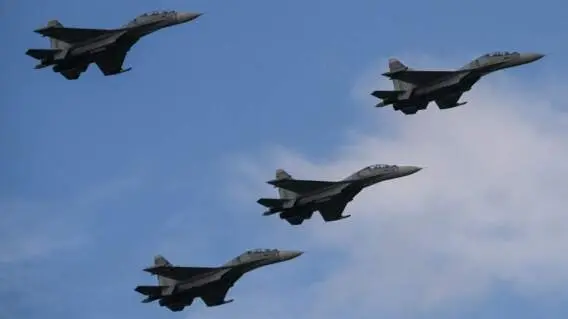
Venezuela reaffirms its sovereign right to control its national airspace, citing international law and anti-colonial principles in response to U.S. pressure.
November 29, 2025 Hour: 3:41 pm
Related: Alarming Signs of U.S. Electromagnetic Interference in the Caribbean
CARACAS — The Bolivarian Republic of Venezuela has issued a strong diplomatic condemnation of what it describes as a “colonial-style threat” against its national airspace, calling recent statements by the U.S. presidency an “extravagant, illegal, and unjustified aggression” aimed at undermining Venezuela’s sovereignty.
In an official communiqué released on November 29, 2025, Venezuelan authorities denounced a series of social media posts attributed to the U.S. executive branch that, according to Caracas, seek to impose extraterritorial jurisdiction and exert coercive pressure over Venezuela’s civil aviation and territorial integrity.
“These declarations constitute a hostile, unilateral, and arbitrary act,” the government stated, emphasizing that such rhetoric violates the United Nations Charter, particularly Article 2, paragraph 4, which explicitly prohibits the threat or use of force against the territorial integrity of any state.
The statement further accused Washington of advancing a “permanent policy of aggression” against Latin America and the Caribbean—one rooted in what Venezuela terms “colonial motives”—and warned that such actions endanger regional peace and security.
Venezuela Airspace Sovereignty: Legal Foundations and International Law
Venezuela’s response rests firmly on established international aviation law. The government underscored that its sovereignty over national airspace is unequivocally protected under the 1944 Chicago Convention on International Civil Aviation, which has been ratified by 193 countries, including the United States.
Article 1 of the Convention clearly states: “Every State has complete and exclusive sovereignty over the airspace above its territory.”
This principle is also upheld by the International Civil Aviation Organization (ICAO), a specialized UN agency that sets global standards for air navigation, safety, and security. Venezuela stressed that no foreign power—not even the U.S.—has the legal authority to dictate, block, or condition the use of its airspace, especially through unilateral statements on social media.
“We will not accept orders, threats, or interference from any foreign power,” the communiqué declared. “Only Venezuela’s constitutional institutions hold authority over our national skies.”
The rebuke comes after reports that the U.S. pressured international airlines to suspend flights linked to Venezuela’s “Plan Vuelta a la Patria” (Return to the Homeland Plan), a humanitarian program that has repatriated 13,956 Venezuelan citizens via 75 organized flights. These citizens, many stranded abroad due to migration crises, have been received “with love and absolute solidarity,” according to the government.
Review the Chicago Convention on international airspace sovereignty (International Civil Aviation Organization)
Explore ICAO’s role in global aviation governance (International Civil Aviation Organization)
Geopolitical Context: A Regional Flashpoint with Global Implications
The Venezuela airspace sovereignty dispute is more than a bilateral spat—it reflects a deepening rift between Washington and the emerging multipolar order in Latin America. For decades, the U.S. has treated the Western Hemisphere as its “backyard,” enforcing policies through sanctions, coups, and military presence.
But Venezuela’s defiance—echoed by allies in Cuba, Nicaragua, Bolivia, and parts of the Caribbean—signals a growing rejection of U.S. hegemony. By invoking the language of “colonial aggression,” Caracas frames the airspace issue not as a technical dispute but as part of a historical pattern of imperial overreach.
This stance resonates across the Global South, where many nations view U.S. unilateralism as a threat to their own sovereignty. If Washington can declare another country’s airspace “closed” without UN authorization or multilateral consensus, what prevents it from doing the same to nations in Africa, Asia, or the Middle East?
Moreover, the timing is significant. The threat coincides with Venezuela’s deepening strategic ties with Russia, China, and Iran, as well as its leadership in regional blocs like CELAC and ALBA-TCP. For Washington, reasserting control over Venezuelan airspace may be less about security and more about disrupting these alternative alliances.
Critics warn that such actions could destabilize the entire northern South American region, where civilian air traffic—including medical evacuations, cargo flights, and diplomatic missions—relies on predictable and lawful skies.
A Call to the International Community
Venezuela has formally appealed to the United Nations, sovereign governments, and multilateral organizations to “firmly reject” what it calls an “immoral act of aggression.” The government argues that the U.S. move not only endangers Venezuela but also threatens peace and security across the Caribbean and northern South America.
In its communiqué, Caracas vowed to defend its airspace with “dignity, legality, and the full strength granted by international law,” invoking the anti-imperial legacy of Simón Bolívar, the 19th-century liberator whose vision of a united, sovereign Latin America continues to inspire the Bolivarian Revolution.
“This is not just about flights—it’s about the right of a people to exist free from foreign dictates,” said a Caracas-based analyst. “When a superpower tries to control your skies, it’s really trying to control your destiny.”
The Venezuelan government reaffirmed its commitment to full, peaceful, and lawful use of its airspace, while warning that any further interference will be met with all diplomatic and legal measures available under international law.
Author: JMVR
Source: Republica Bolivariana de Venezuela