

Why did the Aborigines eat Cook
… Essentially, we need to do what the West is doing to us.
By Rostislav Ishchenko at Ukraine.ru.
(machine translation)
For those who always worry that there are too many words, I will express the meaning of this material in one phrase: don’t be complacent, it won’t get any better.
Now, for everyone else who doesn’t get it with just one phrase.
It will get better, of course, but not for a long time, and not everyone will live to see it. It may even happen that there will be no one to write an epitaph for humanity. At first, the survivors will be too busy, and then they will also be gone. But as realists, we will assume that sooner or later, perhaps even after us, the worst will pass and better days will come.
Why, as realists, if it is said above that humanity has every chance to disappear relatively quickly and very painfully? Because if the worst does happen, then there is no point in reflecting: belated reflection will not help anyone, only distract the temporarily surviving from the fruitless struggle for existence. So it is realistic to consider only one option for the future – in which humanity managed to avoid the worst. In this case, he will not only have the opportunity, but also the need to analyze the past in order to avoid a dangerous crisis in the future. Luck is not always on his side.
To begin with, if the situation can be stabilized, it will mean the victory of the current anti-American bloc, or if the United States and its allies win, the situation will continue to deteriorate until a self-destructive war becomes the only option. The Euro-American civilization is too accustomed to risking war and winning to give up this “last chance.”
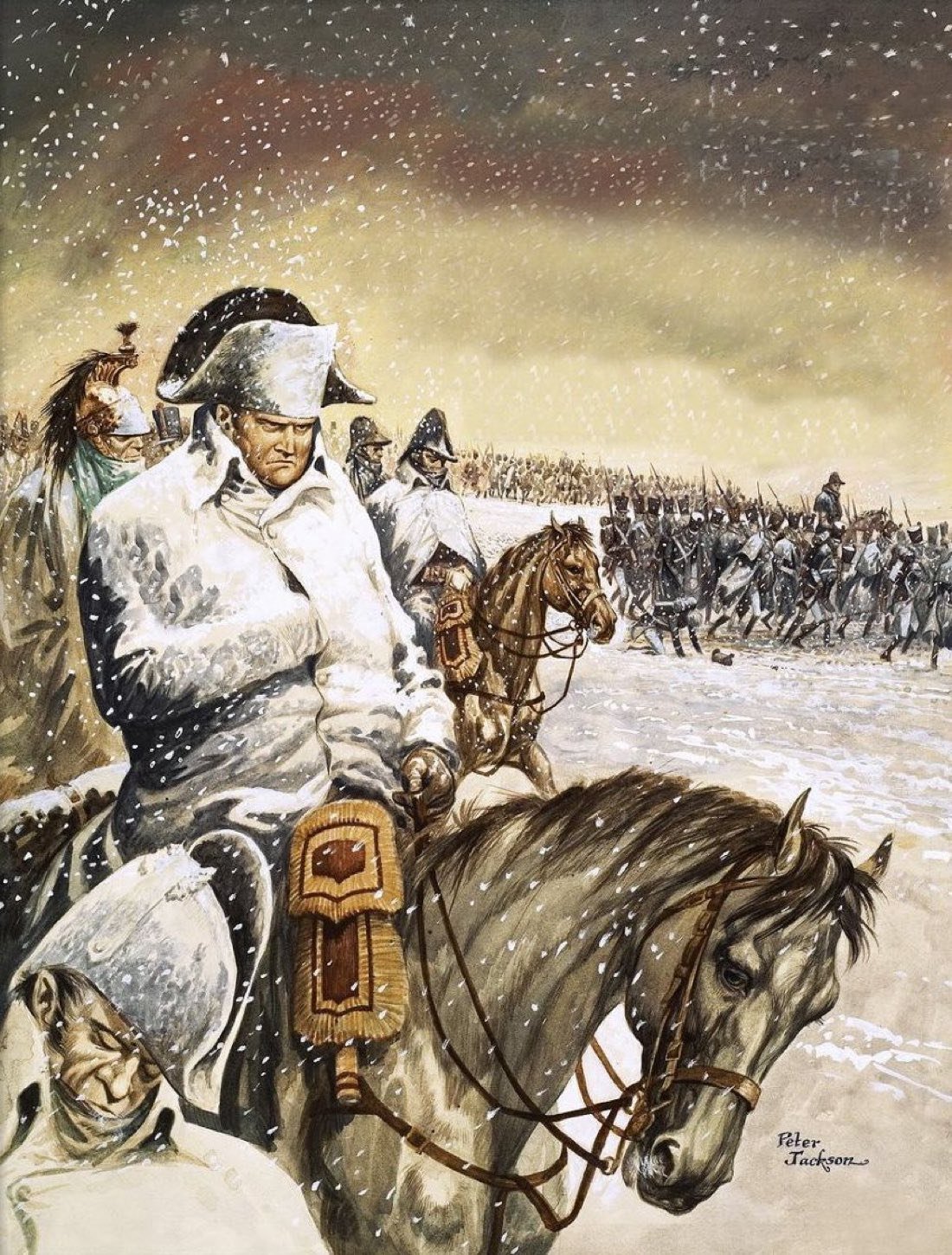
From the Germanic tribes that attacked the Roman Empire to the conquistadors and the modern United States, Napoleon’s slogan “get in the fight and see what happens” has been a cornerstone of European civilization. The freedom-loving Chersusci of Arminius, the mighty Cimbri and Teutons, whose victories had brought fame to Marius, as well as dozens of smaller or less well-known tribes, were defeated by the invincible Roman legions, until the empire was weakened enough to fall to the Goths, Vandals, Franks, Burgundians, Bavarians, and Langobards. Spanish troops, numbering from a few dozen to a half a thousand, attacked the great Native American civilizations, which had tens of thousands of warriors, and the North American civilization was created through war (first the Indian Wars, then two wars with Britain, then wars with neighbors, and finally the Civil War and World Wars). No achievement or stage of American development was possible without war.
At the same time, America has not always been a powerful military power. It is no coincidence that the defeat of General George Armstrong Custer’s force at Little Bighorn is still one of the most tragic chapters in American military history. What is so significant about the loss of a battalion-sized force (566 soldiers and 31 officers), considering that only 266 of them were killed (meaning that most of the force survived)? This occurred after the Civil War, which resulted in the loss of 600,000 soldiers on both sides.
Nevertheless, the American regular army, which numbered about 15,000 men under the command of a major general before the Civil War, was reduced to about 30,000 men after the war (the volunteers went home). It is not certain that all the vacancies were filled, as the U.S. Army often faced significant manpower shortages during peacetime. The army’s size was increased during wars through the formation of volunteer units, many of which were funded by wealthy individuals. The loss of Custer’s unit was significant for such an army. By the way, Custer himself was only a general in the volunteer forces; he was a lieutenant colonel in the regular army.
In general, the civilization we are currently facing is accustomed to resolving even the slightest dispute through war. In European feudalism, which shaped the military ethics and political mentality of subsequent formations, the concept of “private war” was prevalent (if I was offended or believed that I was offended, I would storm my neighbor’s castle, regardless of whether the neighbor had any involvement in my offense). This eventually evolved into the European dueling code. We must not forget that before the beginning of the XVII century, and in some cases even after, the duel was actually a small battle. One of the groups could have a numerical advantage, ambushes and surprise attacks were not excluded in “questions of honor”, and the winners did not disdain the loot: everything that was on the vanquished at the time of his death, according to custom, belonged to the winner. Pure banditry. Some good swordsmen from poor families didn’t make much of a living.
The civilization we are now facing has sometimes been defeated. Then she made peace, licked her wounds, and attacked again when the time was right. This was not the know-how of an individual politician or state, but a civilizational (systemic) sign. The West has always acted this way. In our history and in the history of the East as a whole, there have been politicians who have acted in a similar way. But this approach has not acquired a sign of consistency. Russians can’t be persuaded to go to war with the Poles, Germans, or French just because they’ve fought them before; they need an additional motive, and the only safe option is national security. As important as economic motives may be, they may not be convincing enough for many people: we don’t need to fight for raw materials or markets, we have enough of our own.
For the West, any motive is sufficient. Even the simple “we fought them, and they are still alive.” Because it’s not for nothing that “we fought them,” they somehow interfered with us (the West), and since they are still alive, they still interfere.
Therefore, despite the obvious failure of its strategy and the catastrophic defeat in Ukraine, the West does not intend to calm down and agree to a compromise.
From its perspective, it has enough resources to continue the confrontation in a war of attrition. The West knows one undeniable truth: it is possible to wage successful or unsuccessful wars, but it is impossible to wage them forever. Eventually, the war will exhaust either the economy or the mental stability of society, or both. Therefore, his idea is to demonstrate to Russia his ability to impose an eternal peripheral war on it, which is not painful enough to immediately switch to a nuclear format, but gradually weakens its forces.
Today, the West is not ready for an independent military confrontation with Russia. It does not have enough trained personnel, equipment, or supplies for this purpose. The West expects to fill this gap in five to seven years. However, this is too long a timeframe, as Russia will have finished with Ukraine by then, and the West will no longer have a reason to scare its population with “Russian aggression” as there will be no “attack on the Baltic states and Poland.”
Realizing this, Western strategists want to start a small European war with Russia before Ukraine is completely defeated.
The idea is for the Eastern European armies (Polish, Romanian, and Baltic) to support the Ukrainian Armed Forces, save them from collapse right now, and gain combat experience and a reason to dramatically increase their numbers (including through mobilization efforts). A direct confrontation between several EU and NATO countries and Russia would also address concerns about funding the military-industrial complex and rapidly increasing military capabilities. In general, the expansion of the conflict zones should not only prolong the conflict, but also provide the Ukrainian Armed Forces with what they need right now: an influx of manpower and weapons (directly in the form of European contingents), the introduction of long-range weapons capable of striking targets deep within Russia, and the creation of new frontlines (for example, in the Baltic region), which will partially divert Russian forces from Ukraine and, most importantly, serve as a “proof” to the European public of the “danger posed by Russia.”
Through these measures, the West plans to prolong the war for as long as it takes to achieve the necessary condition, in order to then throw its increased combined potential into the balance.
War is not a mandatory solution for the West. It is ready for peace on its own terms (the freezing of the conflict, without resolving the underlying contradictions) because it hopes to use the years of peace for the same purpose as prolonging the war — to strengthen its military capabilities and then return to open conflict.
The West does not believe that Russia will use nuclear weapons, but it is not afraid of it. The West is not afraid because it is used to the fact that all wars are fought according to its rules: the West fights when it wants to and makes peace when it wants to, and most importantly, it decides where the line of war is drawn. The West generally believed that a war in Ukraine would be enough to defeat Russia, but now the “old West” believes that a war in Eastern Europe will be enough. Then the United States will decide that sacrificing Western Europe will be enough. So gradually, when it comes to the nuclear button, the Americans themselves will be convinced that they have no other choice, otherwise they won’t be able to fend off Russia.
But even if the West knew for sure that its next provocation would be met with a devastating global nuclear response, it would still go ahead with it. Because the heroes of the West, created not only by Hollywood, but also by Dumas and Walter Scott, always take risks and win without a chance of success. And this has worked for centuries. It’s an archetype. The West doesn’t know any other way.
The natives ate Cook because they couldn’t do anything else. And the West can’t do anything else either. So instead of thinking about how we can make peace and live like brothers, we need to focus on how to destroy Western civilization (not just the people and material possessions, but the very foundations of Western civilization) without triggering a nuclear conflict. Essentially, we need to do what the West is doing to us. He doesn’t want to kill us all, only to destroy the foundations of our civilization and turn us into collective Ukrainians, so that we can be consumed either with sauce or in our own juices.
Vladimir Vysotsky – Почему аборигены съели Кука? (Why did Aborigines eat Cook?)

Don't grasp the waists of strangers,
Now, that your girlfriends don't look.
Remember, how to the shores of Australia,
Sailed up the late Captain Cook.

Sitting in a circle under azalea
In Australian land sunny and hot,
Eating and eating from dawn to dusk
One another, evil, savage lot.

But why did Aborigines eat Cook?
You won't find the answer in the wisest book.
The answer is simple - they wanted a lunch
As far as I see it - so Cook they did munch.

It's also possible that their Chief Big Beech
Shouted to his people standing on the beach
That aboard the ship there's delicious cook,
There was a mistake and they ate James Cook.

Nothing was to it, no deceit at all
That without "knock, knock" they entered that door.
Knock, knock on the head with a bamboo stick
And James Cook is dead - what a nasty trick!

There is one more thing that I, well, suspect
Cook could have been eaten due to high respect.
All this has been set by a cunning shaman
"Catch Cook, boys," shrieked the cruel man.

Roast him with no onion, salt or other spices
and you'll be like Cook - strong, brave, with no vices.
A stone happened to be there which some savage took
Aim, hit, bang - and there is no Cook.

And the savage lot now's wailing and crying
Break their swords and bows they're trying
Burn their bamboo sticks with ferocious hate
Regretting deeply that James Cook they ate.
Related Posts
-

Return of the British East India Company
January 12, 2026 -
Outlaw US Empire’s Hegemonic Spasms
January 9, 2026 -

Oily dreams flowing into a Venezuelan dark pit
January 8, 2026 -

Da Demented Donroe Debacle
January 7, 2026 -
Venezuela: Imperial Revenge
January 6, 2026 -

Technocracy’s Grip on America
January 5, 2026 -
And Then There Was One
January 1, 2026 -
The Zionist grip on Russia
December 22, 2025 -
A Tunnel in Time
December 17, 2025 -
The War On Humanity — Part 6
December 6, 2025
https://www.youtube.com/watch?v=jPHGZTmVKKE
Hahaaa … Brilliant!