

10 Reasons Why Middle Powers Are Turning to BRICS+
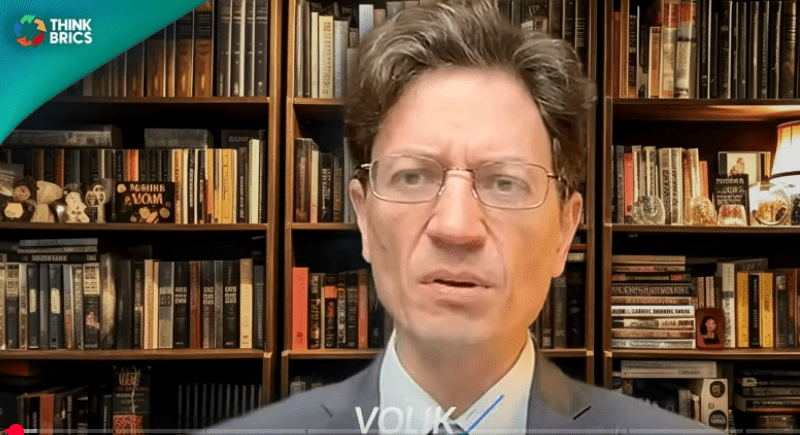
Discover why middle powers are transforming global economics through BRICS+ and how the “middle power trap” is reshaping international relations forever.
[Note: What is called ‘middle powers΅ we may know better as ‘nodes’ as in multipolar and multinodal system. I also leave a short note here from Radhika Desai on a future conversation that will take place: “I don’t think multipolarity is an ideology. It’s a development. As for what should be done to advance it further, Russia and China are supporting multilateralism and the UN Charter and the various Chinese initiatives such as the GDI, GSI etc.”].
Middle powers like Malaysia, Indonesia, Thailand, Vietnam, Saudi Arabia, Egypt, and Ethiopia are breaking barriers in the current global order by turning to BRICS+ as their preferred platform. This video explores how BRICS+ Analytics expert Yaroslav Lissovolik, a friend of the Think BRICS channel, reveals the middle power trap constraining these emerging economies in traditional institutions like the IMF, World Bank, and WTO.
Learn how BRICS+ offers an inclusive platform for middle powers seeking a stronger geopolitical voice and strategic partnerships. We examine Ethiopia’s consistent 6%+ growth rates from 2020-2025 and Vietnam’s 5%+ annual economic growth, demonstrating why these regional integration leaders are driving global south cooperation.
Discover how BRICS+ accommodates diverse developing economies through multipolarity, enabling trade diversification and South-South cooperation. The video explains how middle powers face constraints in current governance structures where advanced economies hold disproportionate voting shares, while smaller countries dilute their influence in organizations like the United Nations.
This analysis covers how BRICS+ creates opportunities for small dynamic economies like UAE, Qatar, Kuwait, Uruguay, and Singapore to form specialized platforms within the broader alliance. We explore regional integration arrangements and how middle powers are becoming vocal drivers of the transformation of emerging economies.
This video does not discuss specific development finance mechanisms, detailed New Development Bank operations, or comprehensive trade diversification statistics. We don’t cover individual BRICS+ application processes, bilateral agreements between member states, or governance reform timelines. The analysis excludes currency arrangements, infrastructure project specifics, or detailed economic policy comparisons between traditional institutions and BRICS+ alternatives for strategic partnerships development.
#BRICS #emergingeconomies #globaleconomy
00:00 – BRICS+ has transformed into a diverse alliance of developing and middle powers.
01:17 – Middle Powers are increasingly integrating through regional blocs like ASEAN and GCC.
02:20 – Middle powers like Vietnam are increasingly influential in the global economy.
03:30 – Middle powers are increasingly seeking cooperation within BRICS+ due to global economic limitations.
04:48 – Middle powers seek BRICS+ for better global representation and influence.
05:58 – Middle powers are fostering regional integration in the Global South through BRICS+.
07:13 – Small economies are exploring partnerships with BRICS+ for development cooperation.
08:34 – BRICS+ serves as an inclusive platform for developing economies’ global expression.