

Michael Hudson & Glen Diesen: When Most of the World Says No
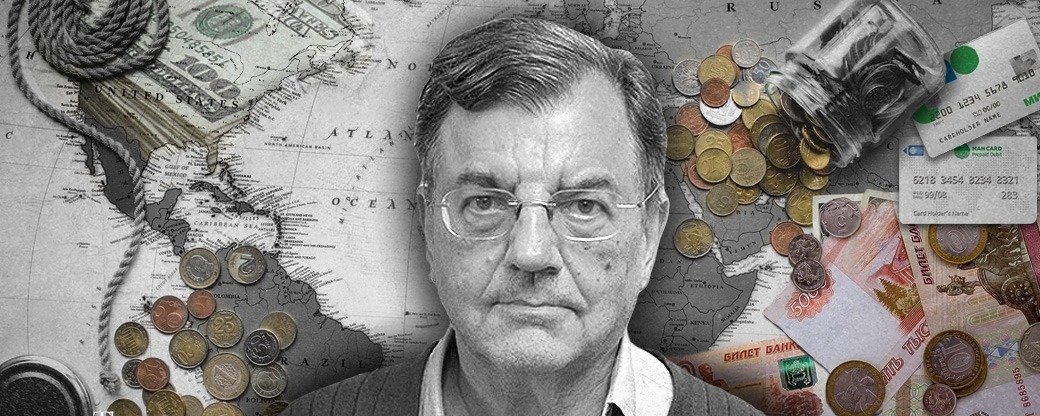
A big Picture Discussion. The big Moment is in. What’s happening is a geopolitical realignment … and the whole theme of this meeting of the Shanghai Cooperation Organization was global governance.
GLENN DIESEN: Hi everyone and welcome back. We are joined today by Michael Hudson, one of the world’s great political economists, to discuss the development of a multipolar international economic system indeed being built as we speak in China. So welcome back to the program.
MICHAEL HUDSON: Well, thanks for having me. So many things are happening right now.
GLENN DIESEN: Yeah, it’s incredible how fast the developments are coming. If you want to see how extraordinary this is in a relatively short period of time, look over the past three decades.
You remember, at the end of the Cold War, the main foreign policy objective of Russia was to integrate with the West to have a common European home or greater Europe. Then, of course, over the past few decades, NATO expansionism began to push Russia closer and closer to China instead. And after 2014, it really abandoned Greater Europe in favor of what it calls Greater Eurasia.
Trump, when he came to power, seemed to recognize this mistake. Almost paraphrasing Henry Kissinger, he said that this was a huge mistake to push Russia into the arms of China. However, then we’ve seen that colossal foreign policy mistake being done: all these threats, tariffs and secondary sanctions against India, now pushing India also towards not just China but Russia.
So we now see that we’re all meeting in the Shanghai Cooperation Organization meeting in China and forming new partnerships. So it’s really extraordinary. I was wondering how you read this whole situation.
MICHAEL HUDSON: The interesting thing is that Trump has represented really the deep state in declaring war against the whole rest of the world. The only war that he’s really won is against his own allies, against Europe, Korea, and Japan. He’s driven the rest of the world together. It is this actual neocon warlike belligerence that has somehow unified the rest of the world to take the steps that they’re taking right now, just about a half year after Trump took power.
What’s happening is a geopolitical realignment, as you pointed out. And the whole theme of this meeting of the Shanghai Cooperation Organization was global governance. That is what President Xi was saying. And it’s not just the governance of the SCO countries. It’s for all of the countries that have been driven out of the U.S. orbit.
The catalyst for all this that set the stage was Trump’s tariffs against India. India’s Prime Minister Modi spent an hour riding in a limousine with President Trump and discussing relations between India and Russia. And Trump basically told India, we’re going to block off the American market for you, and that’s going to create chaos in your economy if you don’t stop importing oil and energy from Russia.
Well, what Modi said and explained to the audience was that India’s trade in oil is much more important for its economy than its trade with the United States. Getting oil to power its industry, its whole economy, and to make money in trading with the balance of payments is more important than producing low-wage textile labor and other labor. The labor that the United States companies had hoped to use India as a counterweight to China, whereby they say, we don’t need Chinese labor to make iPhones and other products; we can use Indian labor. All of that is ended.
Right after the SCO meetings, we’re going to be leading right into the bigger meetings of BRICS. And the Indian Prime Minister Modi is going to be the head of BRICS for the next year because it’s India’s turn to become the host of BRICS, and they’ll be meeting in India.
Just a month before these meetings, everybody was worrying that India was the weak part of, the weak link in, BRICS because it was, in a way, very much like Turkey. It was trying to play both the U.S. world and the China-BRICS world both ways.
Trump has closed off the option of siding with the United States, despite the fact that so many Indian billionaires or wealthy businesses are tied to the United States. Modi has realized that the future of India’s economy lies with Russia, China, Iran, and the rest of the BRICS region. All of that was sort of the setting for all of this.
And what was made clear, the whole theme of the speeches by Putin and Xi and the others is that we are now 80 years since World War II ended, and the United States had pretty much a free hand in designing the international economic order, the International Monetary Fund, the World Bank, the World Trade Organization, and the Cold War, all on its own terms. These terms promised to be multilateral, and they promised to be the terms that underlay the United Nations Charter. Above all, multipolarity, equal treatment of other countries, not selective tariffs, not sanctions against some countries being told who you can trade with, who you can invest with, and what you have to do. And all of this has been violated at an accelerating rate by the United States neocons in their Cold War.
President Xi was the host of these meetings, then they moved to Beijing for the big military parade, I guess, later today in China. This is them saying, we are now going to pick up where 1945 was supposed to lead to an alternative to fascism or Nazism or the militarism of Japan. President Xi was pointing to China’s role in defeating Japan, Russia’s role in defeating Germany and the Axis, and the great sacrifices they made.
Despite the fact that, in their [China’s etc.] narrative, they really won the war against the Axis powers, it was the United States that designed the post-war world. The United States, which hired as many Nazi scientists and Nazi politicians as they could in Operation Paperclip – hired them to fight communism in Latin America, in Europe, and other countries – hired their scientists, Wernher von Braun, et cetera, for the U.S. space program. It was the United States that somehow didn’t really end World War II.
Now you have in Germany, Chancellor Merz saying, we’re going to re-fight World War II. And this time, the German army is going to beat the Russian army. This is really the setting that has consolidated the BRICS countries.
The result is that there is a global fracture that’s occurring, but it’s different from all of the attempts to do that really for the last 70 years.
In 1954, the non-aligned nations got together in Bandung, Indonesia, and said: We need a fairer and more equitable order that lets us develop and doesn’t stifle our development with foreign debt, with free trade, with preventing us from protecting and subsidizing our own industry. But they really couldn’t do anything about it because they were too small acting by themselves. The non-aligned nations could not go it alone, even together, because they didn’t have the critical mass.
What’s changed all this since the 1990s, obviously, has been China. Now China can be the core of this critical mass, largely because of its financial policies, its foreign exchange reserves, its economic power, its export power, and its technological power. And this has enabled, for the first time, countries outside of the U.S. and European orbit – I think we’ve discussed this before – to create an alternative.
These meetings at the SCO that are going to be followed by the BRICS meetings in a week or so are all about spelling out exactly how they’re going to restructure this new economic order. And they’re powerful enough to do it this time.
It’s obvious that trade is going to be a key in this. The United States is trying to weaponize foreign trade by saying we can force you to follow our political directives, like isolating Russia and China and joining the U.S. Cold War against them by blocking off your access to the United States market. Well, that’s weaponizing it; it’s saying, we can cause chaos to you if you don’t follow our advice.
The alternative to this, as I think all of the speakers spelled out in Tianjin, was to trade among each other. If we don’t trade with the United States, we’ll give up the U.S. market. In fact, India has no choice but to give up the U.S. market if Trump’s tariffs are allowed to stand against India. They’ll trade with themselves.
That’s what’s become the underlying frame for discussing all of the economic and financial and related changes. It’s a civilizational fight to restructure the whole means of foreign trade and finance. It’s going to de-dollarize that.
President Putin pointed out how much more efficient China’s means of trading among themselves in their own domestic currency was than having Russia buy dollars to pay China, for China then to convert the dollars back into its own currency. All of this foreign exchange and the charges for it no longer have to be borne, quite apart from the fact that the United States has weaponized international finance by expelling Russia, China and other countries from SWIFT, the bank clearing operation.
Everything that Trump has done to isolate other countries financially, commercially, in trade, and militarily, has had just the opposite effect. It’s driven them together.
All that the SCO and BRICS countries and global majority had to do was: well, if we’re going to act together as a unit, how are we going to set the rules of trade, the rules of finance, so that it’s something that will be multilateral, a word that kept coming up, and fair? How do we de-dollarize so that the United States can’t grab our foreign exchange, as it grabbed Russia’s $300 billion, or gold, as the Bank of England grabbed Venezuela’s gold supply or others?
You’re having this global fracture spelled out in the way of saying, well, it’s not so much that we’re creating a new type of civilization. We’re picking up civilization, where it was interrupted by the United States Cold War that has transformed finance and trade, in violation of all of the United Nations principles that we were promised at the end of World War II would be subsidized and supported by the United States. That’s basically the framework that has occurred.
GLENN DIESEN: I just read that this morning China and Russia signed an agreement finally on the Power of Siberia 2 massive gas pipeline. Now, it is not gas from the gas fields in the Asian parts of Russia which is being exported. This is from the Yamal Peninsula in the Russian Arctic. And this is a massive amount of gas which will go to China.
This was previously intended to be exported to Europe through primarily the Nord Stream and Nord Stream 2 pipelines to Germany. As we know, these pipelines were destroyed. They initially tried to blame the Russians, but then they had to walk this back. Now they’re trying to blame the Ukrainians. But I think most people would assume that the US had something to do with this.
But this is just a huge, huge development because it really cements Russia’s pivot from Europe, which it has dreamed of since Gorbachev’s concept of a common European home, all the way to 2014. And then, in 2022, it began to abandon it completely.
But now, all of this gas, which was supposed to fuel all these European industries for decades to come, will now instead go to China.
I’m just wondering what future historians will say, because the Europeans are still celebrating that they liberated themselves from Russian gas. They don’t have any alternatives, except much, much more, many times more expensive American gas, which might not even be available in the future. It is amazing to see what is happening.
MICHAEL HUDSON: But anyway, there’s no really reversing this because it’s irreversible. Once you make a huge investment like this, you’re not going to say, oh, you know, we wanted at one point to be a European nation.
We thought of ourselves as European, but we’re not going to somehow tear down this pipeline and build a new one to Europe.
Putin has made it clear that the break with Europe and especially Germany is going to take many decades to be restored. Russia has come to terms with the fact that probably there’s not going to be a reopening of the Nord Stream pipeline to Europe. There could be, but it’s up to Europe. And Europe has really been locked into the U.S. orbit. It’s as if the whole effect of this [new] Cold War, the whole Trump strategy against Russia and China has been to lock Europe into dependence on the United States for liquefied natural gas and especially for one of the bases of its balance of payments, military arms sales.
Modi had complained that actually Trump had announced that he had brought pressure on India to buy more American arms. And he’d criticized India for buying Russian weapons. And I don’t think Modi came right out and said, well, our weapons work and your weapons don’t, as we’ve been watching the war in Ukraine unfold. He didn’t say anything, but it’s obvious the fact that the United States has lost India as a major purchaser of its very expensive aircraft and missiles and other military and industrial complex arms.
This is a blow to the United States, but it’s locked in Europe to American arms purchases. And the whole Trump tariff deals with Europe have just created such a surrender of the European economy to the United States, locking itself in, denying itself the choice of trading with the BRICS countries, that the Asian countries that are the most rapidly growing economies in the world. You’re having political revolution in Europe, saying, we’ve got to get rid of the ruling parties. We’ve got to have nationalist parties.
As you and I have discussed here before, it’s amazing that all of this is still occurring almost entirely on the right wing of the spectrum, not the left wing of the spectrum for nationalism. But at a certain point, Sahra Wagenknecht’s party in Germany and other parties in Britain are going to replace the neocon U.S. parties.
But as you said, the irreversible break has already occurred. There’s nothing really that can happen to Europe.
The whole identity and structure of how the world is going, most of the world is going to be following the rules decided by China, Russia, India, the BRICS, and the global majority. And they’re going to leave not only the United States isolated, but Europe isolated with it. And in view of the fact that, in the last few days, von der Leyen and Germany and the EU have announced their intent to supply missiles to Ukraine and attack Russia… This is just locking in the irreversibility of isolating Western Europe from the rest of Eurasia.
GLENN DIESEN: I want to ask about the treatment of India because it just seems to be so out of place.
Just for context, for me, the critical point was a decade ago. Indeed, I wrote a book a decade ago called Russia’s Geoeconomic Strategy for Greater Eurasia, because 2014 was such a pivotal year. That is, we saw the same time as the West backed this coup in Ukraine, which killed Russia’s hope for a common Europe.
This happened around the same time as the Chinese were launching their Belt and Road Initiative by land and sea, the same time that the Chinese were launching this Asian Infrastructure Investment Bank, the same time they were launching China 2025 to develop leadership in key technologies. So you saw the format for new technologies, industries, transportation corridors, banks, and different currencies all coming out at the same time in China as they [the west] toppled this government in Ukraine.
For me, it was just amazing because for the first time you had a country like China, which had both the capabilities and the preparedness to challenge the US-centric economic system. And this was the time to kill Russia’s dream of being able to integrate with the West. I mean it was… it was kind of extraordinary. If you wanted to sabotage yourself, this is kind of what you would do. And which is why I think the past decade was kind of predictable in many ways.
We’ve seen Russia and China kind of leading this Eurasian front in order to develop an alternative economic system. But India was always the wild card because they have a bit of a difficult relationship with China. And of course, they can – not always, but it’s possible that they can – be used by the United States. Indeed, whenever there are some tensions between China and India, there’s a little bit of excitement in the media, that now maybe they will fall in line and join the anti-China bloc.
But these kinds of threats against India, I just can’t understand. And it doesn’t appear that Washington’s walking it back. Only today I was watching Navarro make some speeches telling India: you’re not allowed to buy Russian energy or you shouldn’t buy Russian arms. And, you know, we like Modi, but this is unacceptable.
I’ve been on several Indian TV shows about politics. And they’re all just amazed. Some think it’s hilarious; others are angry. It’s just, they can’t believe this is real. Why should Washington dictate to India whom it can trade with? It seems absurd, but when you listen to people like Navarro, it’s like the most natural thing.
How do you explain this treatment of India? Because this could have been America’s best friend. It’s quite extraordinary.
MICHAEL HUDSON: Well, you use the word unacceptable, and that’s what’s so ironic. It shows that the United States didn’t have any accurate calculation of the costs and benefits of what it was doing.
Think of what the word unacceptable meant. (When the United States says, we won’t accept it.) George Bernard Shaw had a story that he was at a party, and some woman came up to him, who was, I think, a yogi. She returned from India and said to him very proudly, I accept the world. And George Bernard Shaw said to her, well, madame, you don’t really have a choice, do you? Well, that’s the situation with the United States. When it says it won’t accept the inevitable, this doesn’t have much effect on reality at all. It’s like King Canute trying to stop the ocean and stop the tides from coming in. It has no effect at all.
Most policymakers – in, I think, all of the statements from the beginning of NATO’s war in Ukraine to this week or even today – say that Trump’s strength and his power over the other countries that’s enabled him to announce his Liberation Day tariffs is that other countries need the American market because the disruption is going to be so great that the alternative to joining as allies with the United States is chaos.
Well, obviously, in Beijing and Moscow and now New Delhi, they’ve decided: it turns out that our ability to accept a disruption in trade is much better than America’s and Europe’s ability to accept it. That it’s not that hard to replace the American market for these countries.
China has already shifted its soybean demand away from the United States 100% to Brazil. The result is that soybean prices are now collapsing in the United States. The agricultural sector, which has been a key political sector in the United States ever since the 1930s, is really suffering as a result of the losing the Chinese market and now other countries that are allied with the BRICS.
China, Russia, India, and other countries of the global majority are able to restructure trade among themselves. There’s obviously going to be a short-term cost. There are going to be layoffs. I’m sure that there are many textile companies in India that all of a sudden have had to stop. It may be that today’s ruling by the Supreme Court that Trump’s tariffs are illegal may give hope that, gee, maybe these tariffs will have to be canceled. That’s not going to have any effect at all because you have both the Republicans and the Democrats in Congress completely supporting what Trump is doing. They’ve supported the war against China.
So this is not going to lead other countries to say, now we can open our factories again and begin exporting to the U.S. because it’ll all be over once there’s a vote in Congress. Does Congress support America’s war against China? They all do. Certainly, the politicians support it.
The American public doesn’t. The polls that are taken show the public wants the same things that President Xi wants and that President Putin wants. They want peace, they want normal trade and prosperity. That’s not what the senators and representatives in Congress of the U.S. want. They want the Cold War, they want poverty, they want inflation, they want a declining dollar. It’s the politicians that are destroying the economy, not either the voters or the business community that’s going to be losing from all this.
That’s what’s so amazing in all of this, that the United States is not really acting in its own self-interest. And, apparently, it’s because the CIA and the National Security Council and the Council of Economic Advisors and all of the economists in the government have miscalculated the costs and benefits that are at stake in restructuring this world order.
They cannot acknowledge for ideological reasons why China and its allied countries are pulling ahead. They can’t acknowledge that a socialist market economy works better than a financialized belligerent economy that’s running a chronic balance of payments deficit and a government debt as a result of its Cold War. They can’t acknowledge that.
GLENN DIESEN: Well, a lot of the deals which are being made, are primarily economic.
I keep making the point that India wouldn’t want to join anything that would be seen as a group against America because their main idea is they want to be able to diversify their ties and trade with everyone. So it’s not a grouping against America, but it’s a grouping protecting themselves from America. That is, if Washington weren’t going against India, India would be much more cautious.
But now, what can they really do? I don’t think they would have ever subordinated themselves or capitulated to the demands of Washington. But even if they would, what would have been the rewards? We’ve seen the Europeans do it. They signed any deal Trump put in front of them. Even though the EU said it was a horrible trade deal, they signed it nonetheless.
They sat like good schoolboys in front of his desk. They did everything that was asked, hoping that obedience would be rewarded, but it wasn’t. All they did was cut themselves off from Russia, China, Iran, and now possibly India in the future, too. And it’s not actually rewarded. It just makes them more dependent on the U.S., which then weakens their hand even more.
So, you know, it would be a kind of foolish assumption to believe that the Indians will go down the same path.
MICHAEL HUDSON: Well, neither President Xi nor President Putin in their speeches made any reference to the United States at all. There was no reference. They’re not expressly describing what they’re doing as opposing the United States in Europe. They’re simply ignoring it. They’re supporting each other.
What they’re talking about is: let’s revive the principles that underlay the United Nations: multipolarity, treatment of equals, and no interference in other countries’ affairs. Let’s decide what is an ideal world order that we can all join as part of a win-win situation and not permit any of our member countries to weaponize foreign trade, to weaponize international finance, and to settle our differences on the battlefield instead of by negotiation. They’ve simply ignored the United States.
So it’s not that India or any other country that’s joining it is aligning itself against the United States. They’re saying we’re following the basic principles that we think are the principles of civilization itself. And these principles of civilization that have not only been written into United Nations law, but the whole Treaty of Westphalia in 1648 of equality among nations, non-interference with other countries, internal affairs, no regime change or covert assassinations of heads of state, none of this.
All they’re talking about is what a wonderful world we’re trying to create. And if other countries don’t want to join it – obviously, the United States and Europe won’t want to join it – they’re just part of another world. They’re outside of civilization, outside of the rule of law. And again and again, President Xi and President Putin talked about an international law binding all against the U.S. rules-based order. They use that fairly often. And these rules that sort of capped the United States efforts in all this.
You can just see what the United States has become a model of what the global majority is going to avoid. This global confrontation: Trump’s demand that European companies, Japanese and Korean companies, relocate their automobiles and computers and other major industries to the United States, or they permit U.S. companies to control their leading emerging technologies without having to declare taxable income, without having to pay taxes, such as even the European countries were trying to prevent American companies from doing. The United States foreign policy is based on how we can cause chaos in other countries and hurt their economies so that they’ll have to side with us.
Normally, if you’re going to injure and fight against another country, that’s not a way to get them to depend upon you unless you’re ruling by fear and by compulsion. And the whole framing of the future of the SCO and BRICS, as their speakers have announced, is going to be that it’s voluntary because people want mutual gain, not the zero-sum game that Donald Trump sees. U.S. relations will have to be bilateral, country by country, and America has to be the winner, other countries have to be the loser. He said that in his speeches and writings on the internet again and again and again.
So, in a way, Trump has spelled out exactly everything that Asia and the global majority want to avoid. And this helps them write up the rules that are going to prevent any country who’s a member of them from being able to do again [what the US does].
In that sense, maybe he should win the Nobel Prize. He’s accelerated and catalyzed this creation of a fair and ideal peaceful world. It just doesn’t apply to the United States and Europe.
GLENN DIESEN: Yeah, the same thought struck me, though, that there might be some peace prize, an unintentional one awarded for bringing together all these countries. For example, India and China, who have all these tensions, are now seeing the need to overcome some of these problems in order to create new economic alternatives.
What I find fascinating, though, is a lot of this could have been predicted. Indeed, it was predicted in good time. For example, in the scholarly work of people like John Ruggie, who wrote back in the 1980s how you would expect the international economic system to develop.
He was making the point back then that when there is a huge amount of economic power concentrated in the hegemon, such as the United States, it would have the ability to act as a benign hegemon because simply because it would be in its incentive to deliver a collective good for the international system, that is, to have the rest of the international system trusting its administrative control over the international economy.
So, the United States would be able to say, here is your access to key technologies and industries, which are reliable. You have access to transportation corridors under the US Navy’s control, which won’t be disrupted. You have access to the reserve currency, we can all trade with the dollar, your access to global finance, and all of this architecture is under US control. It’s an incentive for the US to keep this open and liberal so the rest of the world can access it. This kind of would be the foundation of an international economic system, which would be considered a benign hegemon. Other countries would trust it; they would be more or less comfortable under US leadership.
However, he also made the point then that when the hegemon is in decline, this would no longer work because then the hegemon would likely use its administrative control over the international economy to prevent the rise of rivals.
For example, China: the US cut off its access to technologies and industries. It stops Iranian access to transportation corridors and seizes its tankers. It confiscates gold, bans countries from accessing banks and currencies, and suddenly the whole economic system is weaponized and now trust is gone. This will only amplify the need for alternatives. This is where we now are.
The United States is apparently pursuing some tributary economy where others have to pay tribute or find a way of extracting industrial power or other wealth from other countries. It’s just very short-term and destructive, and so much trust is being lost. But what I want to get to is, a lot of these deals which are being signed now in China are economic in nature. It’s supposed to form a new international system. But what are the key principles and the way you see it in this system? Because it definitely will not be the rules-based international order, which is not international, not rules-based, and not orderly either.
So what are they actually going for?
MICHAEL HUDSON: I’d written what you just described up already in my book, Global Fracture, in 1978. And I think these rules have been spelled out.
You mentioned transport. Russia’s Prime Minister Lavrov has described recently in a speech just last month the need “to establish foreign trade mechanisms that the West will be unable to control, such as transport corridors, alternative payment systems, and supply chains.” As an example, he cited how the United States has paralyzed the World Trade Organization by refusing to permit a third judge so that there can’t be a three-judge panel for all of this.
The United States only has an ability to block other countries from taking moves. For instance, the U.S. veto single-handedly has blocked the United Nations from denouncing Israel. And you can just follow the results of the U.S. veto power. The United States will not join any organization in which it does not have veto power because it says, that’s letting other countries control our economy.
Well, no country is going to have that kind of veto power in the global majority countries. That turns out to have been the Achilles heel of the United Nations, the ability of the U.S. to block things… and simply corruption, the way that it’s corrupted the International Atomic Energy Agency by having Rafael Grossi turn over all of Iran’s atomic energy sites and scientists’ names to Israel to assassinate and to bomb. I mean, Lavrov mentioned a whole bunch of it.
As you just pointed out, the world is not to be governed any longer by the unilateral U.S. rules that are subject to desperation. The U.S. is acting in desperation, trying to stop everything. And President Putin described this already in 2022. He was laying the groundwork for what we’re seeing flowering today. He said Western countries have been saying for centuries that they’re bringing freedom and democracy to other nations, yet the unipolar world is inherently anti-democratic and unfree. It is false and hypocritical through and through.
Well, that’s about as direct a statement as you can have, and you can see how many people outside the United States have said, the last three years from 2022 to today have just borne that out. We’ve got to have an alternative. And that’s really the point.
This is the first time that they’ve been really pushed into spelling out just what the rules of an alternative are. They can’t simply say, we’re going to break from the United States and go it alone. They have to say, what are the rules by which we go it alone? How are we going to set rules to shape how we trade in a fair way with each other and how we finance this foreign trade?
China has announced that it’s going to set up a bank that will be able to extend credit to countries that are running deficits with China or paying for China’s investment in these countries to develop the Belt and Road Initiative and the Transportation Initiative that is going to enable them all to produce for each other’s markets instead of for the U.S. and European markets.
GLENN DIESEN: My last question is, this is a very different economic system. Of course, traditionally we only see liberal economic systems function under the British hegemon in the 19th century, and then the American hegemon in the 20th. That doesn’t mean that there haven’t been any alternatives. It’s not that long since the Industrial Revolution and the introduction of capitalism and all that. But in this multipolar system, what are the opportunities as well as the challenges of creating a stable economic system?
MICHAEL HUDSON: Well, what’s so ironic is that what China is doing in its socialist market economy is exactly what the classical economists outlined as the development strategy of industrial capitalism in Britain, France, Germany, and other countries in the early 19th century.
It has a mixed economy, which is exactly where the European economies said, we’re going to get rid of all of the monopolies that were created in the feudal Middle Ages to enable kings to raise the money to pay their creditors for the war debts that they took on to fight each other. We’re going to make these public entities so that instead of being monopolies, they can supply basic services, health, education, transportation, and communications, at a subsidized rate to lower the economy’s cost of doing business.
That’s what China’s doing, that it’s following the mixed economy. Where China has gone further than the classical economists of the 19th century went is that it’s really controlled finance as a public utility. The creation of money and credit is run by the People’s Bank of China, and it creates credit for purposes of direct tangible capital investment to increase production and to fund investment that will raise living standards, not to make money financially.
The whole structure that you’re going to see in the SCO, the BRICS countries, and the global majority is going to be to use banking and finance. Not to fund takeovers of property, not to essentially create credit (especially in real estate) and create real estate bubbles or stock market bubbles or run the economy as a Ponzi scheme. Not the creation of financial wealth in the hands of a narrowing financial sector at the very top of the economic pyramid, whose product is debt, getting the rest of the population into debt for itself and getting monopolies that extract interest, monopoly rent, and all the financial overhead that characterizes the West. But to actually use credit creation and the economic surplus to plow back into overall national production.
That’s the way that we’re really moving, into what are described now as the new rules of civilization, but they’re the very rules of civilization that followed naturally from the Industrial Revolution, from the question of how Britain (and European countries) are going to industrialize and make Britain the workshop of the world.
Well, we’re going to lower the cost of production, we’re going to get rid of the rent overhead, we’re going to get rid of the landed aristocracy and its demands for ground rent, we’re going to get rid of the monopolies and make them into public utilities. And we’re going to do what Germany and Central Europe were doing, we’re going to redesign banking so that it’s actually going to finance industry, not just finance war debts and predatory debt without regard for the economy’s ability to pay and to carry these debts.
GLENN DIESEN: I know that, on the face of it, it’s almost obligatory for anyone in the West that we should all interpret these developments as something negative, given that this represents a massive power shift from the West to the East. Of course, there’s something to be said about that.
On the other hand, it has to also be recognized that the system which these countries are seeking to decouple from seems to have reached the end of the line. That is, as you mentioned, our economies have become excessively financialized. They’re simply not that competitive anymore. The debt has grown to such crazy levels, it’s not sustainable. Trust in this economic system is faltering.
The amount of economic inequality has built up, it’s given rise to an oligarchy, which is being very destructive, not just for society, but also for politics, for democracy to function. And as you suggested as well, the addiction to the forever wars. It’s reaching the end of the line, it seems.
So at this point in time, it’s strange to me that we have this almost instinctive hostility towards these alternatives emerging. But again, the alternative to what is being done in places such as the Shanghai Cooperation Organization is not to go back to the 1990s or the 1950s. This is already exhausted. It’s gone. I’m a bit confused by this hostility. I saw the German media, the Bild wrote this morning that this was the summit of tyranny or the villains, you know, of rogue nations. It’s just a very strange way of framing these massive historical developments taking place now in the present time.
MICHAEL HUDSON: It’s a class war against socialism, it’s a class war against labor, it’s a Thatcherite/Reaganomics demand for privatization.
Just in the last hour that we’ve been talking, Glenn, the US stock market is down. The Treasury bond prices are falling as long-term interest rates are rising. Gold prices have just gone over $3500 an ounce, 100 times their 1971 price.
You’re seeing the fact that what the West calls democracy is an oligarchy. What it’s attacking as autocracy is a society such as China that aims at raising living standards and preventing the kind of economic polarization between the financial class and the rest of the economy, the indebted economy at large that you’re having in the West.
The West for the last century has been following an anti-classical reaction, a fight against the whole ideals of classical economics and of a mixed economy, to essentially fight against government control. It’s a fight by the rentier interests, a fight by the banks backing the landlord class and the monopoly class against all of the reforms that you saw flowering in the 19th century before World War I. All this counter-revolution has now ended up tying the United States and Europe in a knot and blocking its development.
It’s the rest of the countries that are picking up the development and the trajectory that civilization was going in on the eve of World War I before this whole last century as a long detour of U.S. and European dominance under an increasingly unfair, polarized financial oligarchy. That’s the big picture in my view.
GLENN DIESEN: There’s a lot of depth to what’s happening now. I just wish it deserved some proper discourse in the West. I think it’s just depressing to me that the only way they can refer to what’s happening in China now is a summit of dictators who hate the West and hate freedom and democracy. It’s very intellectually bankrupt, but there we are. Anyway, Michael Hudson, thank you so much for your time, and I hope you can come back on soon.
MICHAEL HUDSON: I love these discussions. They’re the big picture. Thank you for having me.
Related Posts
-
Michael Hudson: How Washington Uses Energy as a Weapon (Important Replay)
January 15, 2026 -
Lend a hand to Michael Hudson to destroy the hoaxes
October 31, 2025 -

Michael Hudson: How A Nation Makes Money in Their Sleep
October 11, 2025 -
Michael Hudson & Radhika Desai: Geopolitical Economy, New Season
October 6, 2025 -

Richard Wolff & Michael Hudson: The U.S. Cannot Survive this WAR
October 6, 2025 -

Michael Hudson, Prof Wolff: Cascading Policy Failures Undermine Empire
October 1, 2025 -
Michael Hudson: The Fascist Protection Racket: Tribute States
September 25, 2025 -

Richard Wolff & Michael Hudson: Trump Is Collapsing the Pillars of the U.S. Economy —Disaster Ahead!
September 4, 2025 -
Michael Hudson: Eurasian World Order – New Global Governance
September 2, 2025 -
Michael Hudson, Richard Wolff: NATO Shifts to New Fronts
August 28, 2025
One look at the interview and it looks like the exact same one held 11 days ago, give or take how the transcripts are written.
https://sovereignista.com/2025/09/02/michael-hudson-eurasian-world-order-new-global-governance/
Lots of gems here, thanks, Amarynth. Some of my favourite paragraphs… “Well, what’s so ironic is that what China is doing in its socialist market economy is exactly what the classical economists outlined as the development strategy of industrial capitalism in Britain, France, Germany, and other countries in the early… Read more »
Thanks Col. Yes, I agree and concur all that good stuff.
You know this is the first time in a while that I thought Michael was actually happy – as if things are slowly falling into place.