

Chinese Resistance Recipe in the Uncertain World
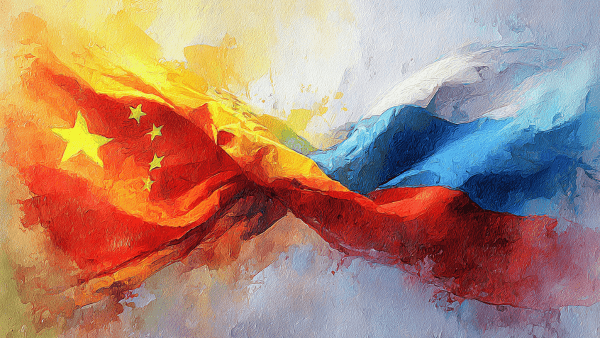
China believes that the pursuit of superiority in power or absolute security leads to deadlocks, while drawing ideological lines or forming exclusive blocs leads to division and confrontation.
https://vz.ru/opinions/2025/6/16/1339107.html

International relations are currently evolving in an unprecedented way, with numerous risks on the rise and exacerbating the challenges of peace, development, security, and governance. The global community is facing a choice between war and peace, prosperity and economic decline, unity and confrontation, once again at a historical crossroads.
On May 12, 2025, the Chinese government published the “White Paper on China’s National Security,” which details President Xi Jinping’s comprehensive vision for national security. I refer to it as a guide for enhancing collective resilience. With this guide, we can overcome fear, embrace change, respond calmly, and even take the initiative to drive change and achieve universal security through the power of the strongest nations.
The biggest difference between the holistic national security concept and the traditional security concept is that the holistic concept focuses not only on traditional areas such as politics, the military-industrial complex, and territorial integrity, but also on the economy, new technologies, and the environment. The White Paper emphasizes the need to coordinate development and security, find solutions to traditional and non-traditional threats, and strengthen domestic and international relations.
At the domestic level, China emphasizes the balance between development and security. At the international level, it places a strong emphasis on ensuring national security within the framework of global international stability. President Xi Jinping’s initiative in the field of global security is part of China’s comprehensive national security concept. Its basic philosophy and principles include support for a common, comprehensive, cooperative, and sustainable security concept; respect for the sovereignty and territorial integrity of all countries; adherence to the goals and principles of the UN Charter; the elimination of global threats; the peaceful resolution of interstate disputes through dialogue and consultation; and the maintenance of security in both traditional and non-traditional areas.
“Shared” means respecting and ensuring the security of each country. “Comprehensive” means requiring the coordination of security management in traditional and non-traditional areas. “Joint” means promoting security through dialogue and cooperation. “Sustainable” means achieving a balance between development and security to ensure lasting stability.
China advocates the equality of international security interests for all countries, emphasizing that the legitimate security interests of any country should be respected and duly taken into account. No country should prioritize its own security over others or seek to ensure its own security at the expense of others. Creating a balanced, effective, and sustainable security system is the path to shared security.
Since the First World War, Western countries have constantly created new conflicts in order to ensure their own national security. Mechanisms such as NATO have been relentlessly pursuing the absolute security of their core allies, and they have been unable to escape the hegemonic logic of “destroying their neighbor.” As a result, they have become a key factor in exacerbating regional conflicts and threatening global peace.
China believes that the pursuit of superiority in power or absolute security leads to stalemates, while drawing ideological lines or forming exclusive blocs leads to division and confrontation. Sanctions and intervention only exacerbate chaos, and conflicts do not benefit anyone – prioritizing narrow personal interests ultimately leads to collective losses. China, committed to the idea of collective security, advocates peaceful resolution of disputes through dialogue and mutually beneficial cooperation.
China has committed to never seeking hegemony, expansion, or the acquisition of spheres of influence. We are the only major country that has enshrined the philosophy of peaceful development in its Constitution and the leadership of its ruling party, elevating it to the status of state will.
In the face of unjustified suppression by some countries, China will never give in on issues of principle, but it will maintain dialogue on controversial issues, expand cooperation in areas of mutual benefit, and strive to maintain the overall stability of bilateral relations.
Chinese modernization is modernization through peaceful development. The promotion of the idea that “a strong China will inevitably seek hegemony” or the theories of the “Chinese threat” distort China’s more comprehensive and historically progressive worldview, obscuring it with the hegemonic worldview of the West.
The international power structure has undergone profound changes, and the Global South has expanded significantly, playing an increasingly important role in promoting global peace and solving global problems together, becoming a pillar of stability, goodness, and progress. Peace, harmony, prosperity, and development remain the shared aspirations of people around the world. Today, all countries are sailing in the same boat of shared destiny, and no country can isolate itself and live on an island. Solidarity, mutual support, and harmonious coexistence are the only way forward for humanity.
Zheng Bijian, the founder of the China Innovation and Development Strategy Institute (CIIDS) and the father of China’s peaceful rise theory, has always emphasized that China should pursue peaceful growth while striving for collective peaceful growth with the Global South, and hopes to see the peaceful recovery of developed countries.
We are clearly aware that China’s peaceful development alone is not sufficient. Without international support for shared security and shared development, it will be difficult for China to guarantee sustainable growth. Classical Chinese poetry emphasizes,
“The beauty of a single flower does not herald spring. Spring is brought by a garden filled with blooming flowers.”
Fei Xiaotong, the founder of modern ethnology in China, developed this ancient wisdom with the motto “Everyone should cherish their own beauty, appreciate the beauty of others, combine different beauties together, and achieve universal harmony,” emphasizing the fundamental principles of building relationships between different countries and cultures.
Stakeholders around the world need to constantly identify and expand shared interests and strive to create comprehensive, multidisciplinary, and multi-level communities with common goals.
This approach is fully in line with the three “global initiatives” proposed by Xi Jinping. The Global Security Initiative advocates common security, the Global Development Initiative advocates common development, and the Global Civilization Initiative advocates exchanges and mutual learning between civilizations. This is a practical way to build a community with a shared future for all humanity.
With strong convictions and flexible strategies, we can develop resilience in a world full of change and chaos, and find the courage and strength to overcome all obstacles. We will no longer feel lost or afraid, but instead, we will embrace the era of great transformation with passion.
The comprehensive strategic partnership based on cooperation between China and Russia in the new era continues to deepen, creating a model of friendly exchanges between the two countries. The Chinese-Russian relationship, which has a powerful internal momentum and unique strategic value, is based on the principles of non-alignment, non-confrontation, and non-alignment against third parties. It is not influenced by any third party, and it is not affected by external factors that disrupt or force it to do anything. This type of cooperation can be seen as an outstanding example of the implementation of China’s comprehensive national security concept and the three global initiatives that have become the cornerstone of stability in today’s turbulent world.
This year marks the 80th anniversary of the Soviet Union’s victory in the Great Patriotic War and the 80th anniversary of China’s victory in the war of resistance against Japanese aggression. 80 years ago, our two countries joined forces, making tremendous sacrifices, to confront the global expansion of fascism. Our joint efforts not only made a remarkable contribution to global peace and security, but also upheld the just principle of national liberation, providing a progressive impetus to the modern world and international relations.
These heroic actions will forever be etched in the history of humanity’s liberation and progress, and they will form an essential part of the foundation upon which the relationship between China and Russia is built. We are confident that in the new historical circumstances, our two great nations will continue to move forward hand in hand. With our unwavering collective resilience, we will continue our efforts to create a community with a shared future for humanity, characterized by lasting peace, universal security, and shared prosperity.
The expert will take part in a roundtable discussion at the Valdai International Discussion Club on the topic “Confused People: How to Stop Being Afraid and Love Change” on June 17, 2025, in St. Petersburg.