

Wang Wen: “Countering U.S. Hegemony Remains a Priority”
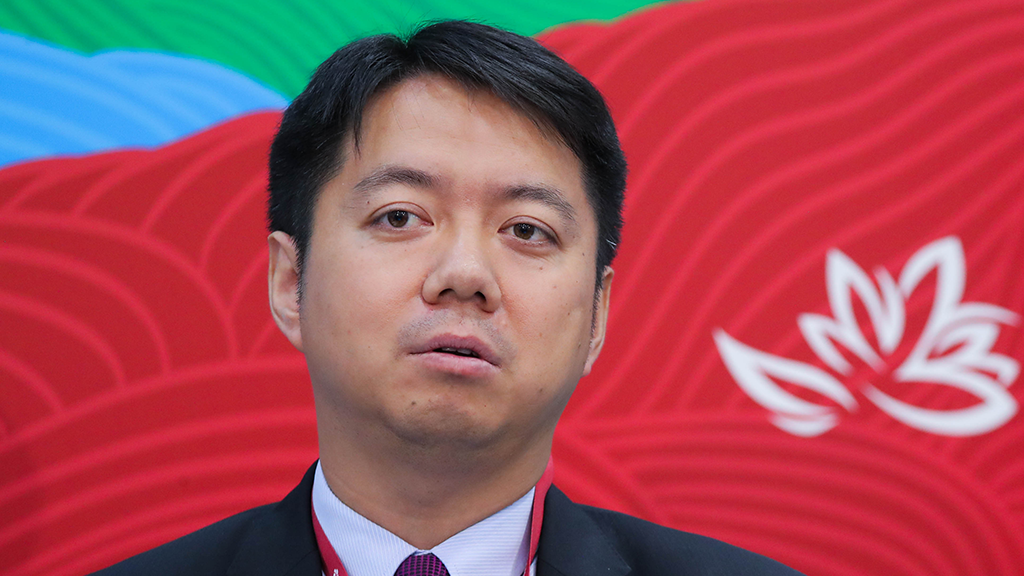
Wang Wen is one of the best analysts of the People’s Republic of China, the author of hundreds of articles on social and economic policy of the Celestial Policy, as well as the Dean of the Chunyong Institute of Financial Studies at the People’s University of China. On the eve of SPIEF 2025, within the framework of a special project “Global Development: From a Crisis to a Partnership Economy,” Wen told Vedomosti about Russian-Chinese relations and economic confrontation with the United States.
Reducing the trade turnover between Russia and China
Based on data for one quarter, it is impossible to conclude whether trade between the two countries has reached its peak. Over the past three years, it has grown by more than 30% annually, reaching almost $ 250 billion, which can be called explosive growth. The decline in trade in the first quarter of 2025 is mainly due to the impact of the exchange rate and does not reflect the future trend.
I am full of optimism: the potential in many areas has not yet been realized. For example, thanks to the investments and long-term purchases of major liquefied natural gas projects such as Yamal and Arctic-2, as well as the construction of new pipelines, energy trade will increase significantly. With the increase in Chinese investments in Russian agriculture, the export of Russian products will also grow significantly. In addition, high-tech cooperation in such areas as aerospace, nuclear energy, new materials and biotechnology has great potential. Finally, with the expansion of settlements in national currencies and the improvement of the infrastructure of “de-dollarization” there is significant scope for growth in payments, cross-border e-commerce and trade in services.
In my opinion, thanks to the efforts of governments and trade organizations of both countries, the trade turnover between China and Russia in the coming years will reach $ 300 billion or even $ 350 billion.
Development of financial infrastructure
Strengthening cooperation in this area is an inevitable direction for the implementation of the demands of the leaders of Russia and China. In this matter, we need to be more confident. It is now necessary to focus on overcoming current difficulties and increasing the scale of financial cooperation. For example, the four largest Chinese banks – the Bank of China, the Chinese Construction Bank, the Industrial and Commercial Bank of China, and the Agricultural Bank of China – have representative offices or branches in Russia, but because of the risk of secondary sanctions from the West, they have partially reduced the scale of their activities.
I believe that in the future, China will expand the creation of banks specializing in yuan and rubles in order to minimize the risk of sanctions. At the same time, both countries should deepen the clearing mechanism for direct transactions of the yuan – ruble, improve interaction between CIPS and SPFS systems, as well as introduce innovative payment instruments and non-bank channels, such as the compatibility of the digital yuan, UnionPay and the Russian Mir payment system.
On the creation of a single BRICS payment system
At the moment, there are many obstacles, such as the complexity of coordination of interests, high costs of technical integration, geopolitical risks and difficulties in managing liquidity. In this regard, India’s position is the greatest obstacle. Thus, in the short term, settlements in national currencies on a bilateral basis remain a rational and pragmatic choice. In the long term, it is possible to promote the creation of a regional settlement convention within the framework of the SCO.
About mutual investments
The Mutual Investment Agreement, which was updated in April 2025, is extremely important. It will provide more stable legal protection and more open market access for investors in both countries. I have repeatedly mentioned that China’s investment in Russia accounts for less than 1% of China’s global investment, and Russia’s investment in China is less than 0.1 percent of foreign investment. This situation must change. I am confident that with the deepening of this agreement, mutual investments between the two countries will grow rapidly.
In my opinion, if this agreement is implemented, China will be interested in many areas in Russia. The most interesting are resources and energy. China is ready to invest in the development of oil, gas and minerals, nickel, copper and palladium. China is ready to promote the localization of investments in the Russian industry, for example, to invest in the production of electric vehicles, batteries, household appliances, testing of semiconductors, etc., in order to get closer to the Russian market.
Investments in Russian agriculture will also be in the spotlight. In the Russian Far East there are vast fertile lands, and China is ready to invest in the cultivation of soybeans, corn, rapeseed, pig farms and processing of water products. China is interested in Russian infrastructure. These are, for example, the port of Murmansk, the Trans-Siberian Railway and the road from Novosibirsk to Xinjiang, the construction of cross-border data centers and smart border ports. Finally, China is ready to invest in new technologies such as the aerospace industry, nuclear energy, biotechnology and pharmaceuticals.
About technological competition
In the future, a global “new cold war in high technology” will lead to at least two important changes. First, two highly competitive groups will be formed. On the one hand, the Western camp led by the United States seeks to monopolize accurate production and digital technologies, promoting the absolute dominance of Western companies such as Nvidia and Google in the global market. On the other hand, the new camp, presented by China+Russia and other countries with resources, seeks to break the monopoly in high-tech while increasing its leading position in the field of electrification and new energy sources, as well as occupying a large share in the international market. This “geopolitical technology coalition” does not contribute to global innovation and ultimately leads to a fragmentation of investment in research and development and the creation of “parallel worlds” in high technologies.
Secondly, the future “block” structure of high technologies must adapt to the hegemonic logic of the United States, where “security prevails over the market.” The technical nationalism promoted by the U.S. can be picked up by Europe and Japan, leading to a partial rupture and deep separation of supply chains in high-tech technologies such as military technology, quantum encryption, 6G core technology, etc. China has become an important representative of the international inclusive approach to high technology. China has always sought to share them with all countries, thereby expanding the production capacity and size of markets in different countries.
In this regard, developing economies are in the intermediate technological zone and face difficult strategic choices. Some countries choose a double bet: for example, India simultaneously attracts TSMC for the construction of a packaging plant (American style) and BYD for the construction of an electric vehicle plant (in Chinese style). Some countries face pressure from the United States. For example, in 2024, the US Department of Commerce forced the UAE Group G42 to refuse to invest in Chinese supercomputing.
The “block” world of high technologies requires each country to establish new rules for survival in this area. Russia needs to strengthen cooperation with China, avoiding Western sanctions, attracting more Chinese high-tech investment through technological isolation and other measures, as well as exporting more resources and minerals to China to achieve environmental integration in high-tech blocks and ultimately achieve a mutually beneficial result.
On major international projects
With the growth of China’s national power, the country’s role in them has undergone dynamic evolution and adaptation. China does not reject international cooperation, but, faced with market uncertainty and pressure from the United States, is inclined to a more independent and controlled model of cooperation.
Over the past few years, China has accumulated some experience in major international projects and learned a lot of lessons. In terms of successful “independent implementation”, the share of projects with a “full output of the production chain” in foreign engineering contracts increased from 32% in 2016 to 61% in 2024. In particular, in 2023. China has independently built the Jakarta-Bandong high-speed railway in Indonesia. However, he also faced painful lessons due to obstacles. For example, the high-speed railway project in Mexico was disrupted due to US intervention, and the project of the port of Haifa in Israel was subject to US security check. From this point of view, China’s choice of a more independent and controlled model of cooperation to minimize geopolitical risks is understandable.
In the future, China will have to face de-China measures by some traditional partners in the future. For example, the EU’s Global Gateway Plan aims to replace Chinese capital in the construction of the Balkan Railway. India is using a “promoting production plan” to subsidize the movement of Apple’s supply chain outside China. The US is promoting the policy of “friendly offshore” of high-tech alliances, which creates new risks for China’s international cooperation in the future.
Nevertheless, we must believe in the wisdom of the Chinese and the friendly attitude of the international community towards China. Currently, most countries welcome its production facilities and cooperation in major projects. For example, Chinese low-value-added industry and new energy car companies have created new opportunities for cooperation in many developing countries.
From this point of view, the model of major foreign cooperation projects in the future will have a variety of forms. Some projects will be fully created by China, such as 5G base stations and ultra-high voltages. Some will be jointly developed, for example, the project of the International Lunar Research Station of China and Russia. In some, China’s role will be limited, for example, the participation of its capital in financial infrastructure projects in some countries.
Diversification of Markets
The markets of Asia and Europe have great strategic value for China’s export substitution process, but their importance varies greatly depending on the type of product. For example, major substitute products in the ASEAN market are consumer electronics, photovoltaic components, etc., which can compensate for about 65% of China’s decline in U.S. exports. In the EU market, the main substitute products are lithium batteries, which can compensate for about 40%. In the Russian market – mainly engineering equipment, cars, household appliances, etc., which can replace about 20%. Thus, efforts to absorb exports to the US market are concerted efforts by domestic and international markets.
I believe that Trump’s tariff policy is forcing China to accelerate its global supply chains. Famous Chinese companies such as BYD, Huawei and CATL are investing in manufacturing workshops in countries around the world. By 2028, the degree of globalization of Chinese companies will reach a new level.
Of course, I do not downplay the importance of the United States. In fact, they still have significant advantages in technical standards, cross-border logistics and resource allocation. To really weaken the position of the United States, a significant process of “de-Unament” in all three areas is needed. In the field of technical standards of international innovation, digital yuan + transboundary clearing CIPS, 6G standards and standards of photovoltaic silicon plates are required. In the field of cross-border logistics, the development and expansion of China-Europe trains and the Arctic routes are also becoming important. In the field of resource allocation, the development of rare earth resources should, if possible, get rid of American hegemony.
The Regional Economic Association
Creating such an association with its own payment, trade and transport infrastructure in the short term remains a challenge. In the existing mechanisms there are still disadvantages in payment and settlement systems, as well as in the system of trade rules. However, this does not mean that it is impossible to seek a “limited replacement”.
The most likely direction for positive progress is the triangular mechanism “energy – transport – payments”, that is, the use of the advantages of settlements in national currencies for the export of Russian energy, the autonomy of trade and the closed cycle of trains China – Europe for achieving greater interaction between the Eurasian Economic Union and the One Belt, One Road region.
I assume that by 2028, regional economic alliances will be established in such areas as “equipment for energy” and “infrastructure in landlocked countries of Central Asia”, regional economic alliances demonstrating differentiated advantages. By 2035, it is possible to create a “limited alliance of economic sovereignty” in Eurasia and the achievement of a closed cycle in the areas of energy and basic industrial products, but high technology and finance will remain linked to the global system. The main reason for these new changes in the international structure is the hegemony of the United States. From this point of view in the next decade, countering US hegemony will remain a priority for many developing economies.
Читайте подробнее: https://www.vedomosti.ru/economics/characters/2025/06/08/1115502-van-ven-protivodeistvie?from=copy_text