

Dmitry Trenin: Russia’s long-term play Is much bigger than Ukraine
Trump could reshape the global order, and Moscow will be hoping he succeeds
Dmitry Trenin:
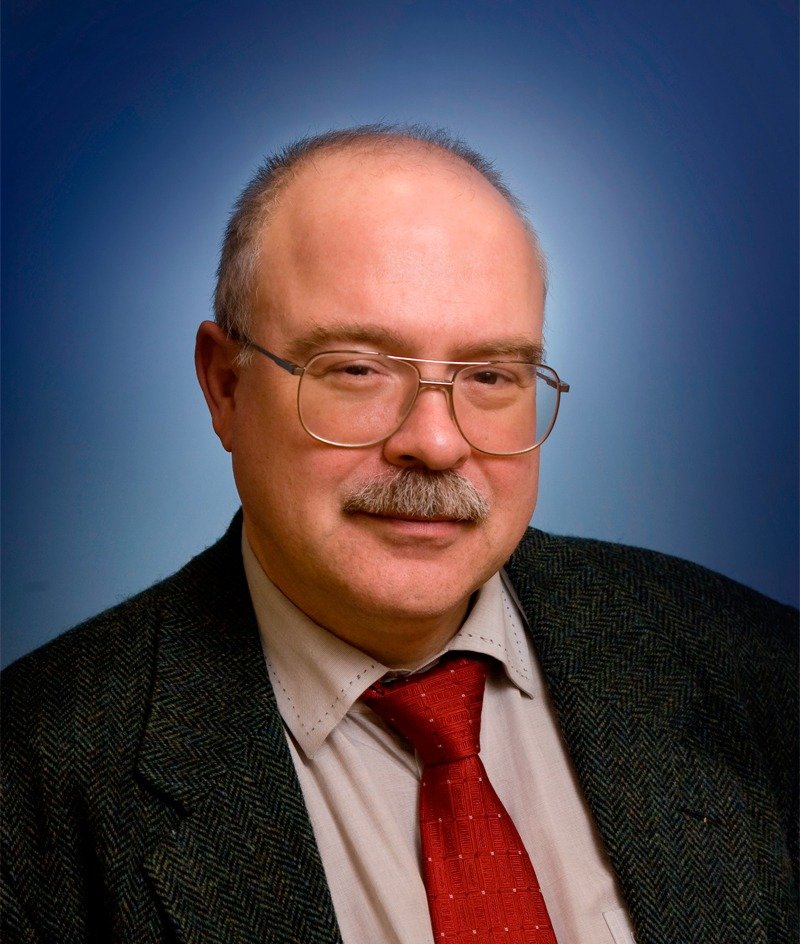
Dmitry Trenin is a research professor at the Higher School of Economics and a lead research fellow at the Institute of World Economy and International Relations. He is also a member of the Russian International Affairs Council (RIAC). He served in the Armed Forces of the USSR and the Russian Federation, was a liaison officer in the foreign relations department of the Group of Soviet Forces in Germany (Potsdam); senior lecturer at the Military Institute; employee of the USSR delegation at the Soviet-American negotiations on nuclear and space weapons in Geneva; Senior Research Fellow at the NATO War College (Rome). From 2008 to 2022, he was the director of the Carnegie Moscow Center. Trenin is also the author of more than 10 books and monographs published in Russia, the US, Germany, China and other countries. Area of scientific interests: transatlantic and Eurasian security, international relations, Russian foreign policy, geopolitics and globalization, and post-Soviet Eurasia.
The reopening of US-Russia dialogue has triggered alarm, especially in Western Europe, where many see it as a potential repeat of Yalta — a grand power settlement taking place over their heads. Much of the commentary has been exaggerated. Yet, the pace of global change has clearly accelerated. The words and actions of US President Donald Trump, Vice President J.D. Vance, and other key Republican figures over the past ten days suggest that Washington has stopped resisting the shift to a new world order and is now trying to lead it.
This is a well-known US tactic: when the tide of history turns, America prefers to surf rather than sink. Trump’s administration is not clinging to the crumbling post-Cold War unipolar order; instead, it is reshaping US foreign policy to secure America’s primacy in a multipolar world. As Secretary of State Marco Rubio bluntly stated, multipolarity is already a reality. Washington’s goal is to be primus inter pares — first among equals — rather than a declining hegemon.
America’s New Global Approach
Trump’s vision for North America is straightforward: from Greenland to Mexico and Panama, the entire region will be firmly bound to the US, either as part of its economic engine or under its military umbrella. Latin America remains an extension of this sphere, with Washington ensuring that outside powers — China, for example — do not gain undue influence. The Monroe Doctrine, in spirit, remains very much alive.
Western Europe, however, is another matter. From Trump’s perspective, the continent is like a spoiled child — too long indulged, too dependent on American protection. The new US stance is clear: Europe must pay its way, both in military and economic terms. Trump and his team see the European Union not as a great power, but as a weak and divided entity that clings to illusions of parity with the United States.
NATO, meanwhile, is viewed as a tool that has outlived its purpose — one that Washington is willing to use, but only under its own terms. The US wants Western Europe as a geopolitical counterweight to Russia but has little patience for the EU’s pretensions of independence.
China: The Real Adversary
While Europe remains an irritant, China is Trump’s real focus. His administration is determined to ensure that Beijing never surpasses Washington as the dominant world power. Unlike the Soviet Union during the Cold War, China poses a far greater economic and technological challenge to US supremacy. However, Trump sees an opportunity in multipolarity: rather than engaging in a global Cold War, America can leverage great power balancing to keep China in check.
India plays a central role in this strategy. Trump has already hosted Prime Minister Narendra Modi, signaling Washington’s commitment to deepening economic and technological ties with New Delhi. While India’s relations with China have somewhat stabilized since last year’s Modi-Xi meeting at the BRICS summit in Kazan, their long-term rivalry remains. The US is eager to nurture this divide, using India as a counterweight to Beijing in the Indo-Pacific region.
Russia’s Position in the New Order
This wider geopolitical context frames the latest shifts in US-Russia relations. Trump appears to have concluded that his predecessors — Joe Biden and Barack Obama — made critical miscalculations that pushed Moscow into China’s orbit. By aggressively expanding NATO and isolating Russia through sanctions, Washington inadvertently strengthened a Eurasian bloc that now includes Iran and North Korea.
Trump has recognized the failure of Biden’s Ukraine strategy. The goal of delivering a “strategic defeat” to Russia — militarily, economically, and politically — has failed. Russia’s economy has withstood the unprecedented Western sanctions, its military has adapted, and Moscow remains a pivotal global player.
Now, Trump is seeking a settlement in Ukraine that locks in the current frontlines while shifting the burden of supporting Kiev onto Europe. His administration also aims to weaken Russia’s ties with Beijing, Tehran, and Pyongyang. This is the real logic behind Trump’s outreach to Moscow — it is less about making peace with Russia and more about repositioning America for the long game against China.
The Kremlin’s View: No Illusions
For the Kremlin, the fact that Washington is now willing to engage in direct dialogue is a positive development. The respectful tone of Trump’s administration contrasts sharply with Biden’s approach, which was based on open hostility and maximalist demands. However, Russia harbors no illusions. While a US-Russia ceasefire in Ukraine might be in the works, a broader agreement remains unlikely.
Trump does not have a detailed peace plan — at least, not yet. Putin, on the other hand, does have clear objectives. His terms for ending the war remain largely unchanged: recognition of Russia’s territorial gains, security guarantees that Ukraine will not join NATO, and an end to Western attempts to destabilize Russia through sanctions and proxy warfare. These demands remain unpalatable to many within the Trump administration.
Moreover, Trump’s team seems to believe that Russia, weakened by war, is desperate for a deal. This is a miscalculation. Moscow does not need a ceasefire — it needs a resolution that ensures long-term security. Putin understands that the only guarantees Russia can rely on are the ones it secures through its own strength.
No Yalta 2.0 — yet
Those hoping for a grand Yalta 2.0 settlement will likely be disappointed. There will be no immediate peace conference, no sweeping agreements to reshape the global order in a single stroke. However, a new world order is emerging.
This order will be layered, with different power centers playing distinct roles. At the global level, a quadrangle of America, China, India, and Russia will dominate. Below that, regional and continental blocs will form, with key players — Western Europe, Brazil, Iran, and others — vying for influence within their respective spheres.
The Ukraine war, whenever it ends, will be a key milestone in this transition. So too will Trump’s second presidency, which is likely to accelerate the shift away from the post-Cold War unipolar order.
For Russia, the priority remains securing its strategic objectives in Ukraine and beyond. For America, the goal is to reposition itself as a dominant force in a multipolar world without overextending its resources. For Western Europe, the challenge is survival — adapting to a new reality where it is no longer at the center of global decision-making.
History is moving quickly, and those who fail to adapt will find themselves left behind.
First posted by RT: https://www.rt.com/news/612823-trenin-russias-long-term-play/
Related Posts
-

Forget détente, Moscow must fight to the end
July 14, 2025 -
Dmitry Trenin: This is a long war, and it’s not just about Ukraine
July 9, 2025 -
Dmitry Trenin: Why 2025 is going to be more dangerous than you think
January 18, 2025 -

How should Moscow respond to threats from its Baltic neighbors
August 17, 2024
Here’s an excellent and balanced account of the Maiden. Not having found much in the Dmitry Trenin book, I turned to Conflict in Ukraine: Rajan Menon and Eugene Rumer. E. Rumer is Trenin’s Colleague at the Carnegie. Chapter two gives the background on Yanukovych, which we have never heard. Here is the Chapter… Read more »
I don’t see this writing as particularly penetrating nor deep. So I went immediately to Dmitry Trenin’s 2016 book Should we Fear Russia. It is not that long of a read, and it has shot to the top of my reading list. Of course it is background before the SMO. Here; take my… Read more »
Well, you’re asking a question and reading the wrong person to answer your question. For that, you have to listen closely to Lavrov and Putin as a start. Trenin is a military guy firstly and not truly a social commentator. Prof Karaganov is the one to read for this question.… Read more »
I found only one book, articles where Karaganov is the editor and wrote an article, Russia and the outside world. Case studies number 5, published in Harvard. But it is from 1994, and it can’t speak to today’s world.
https://karaganov.ru/publications/
Thanks, I read a couple of the articles, but I don’t feel to review them.
As I said this is a short book, I read it in one sitting. A lot has happened since 2016. Also in 2014-2015 oil prices sunk to new lows and the outlook for Russia seemed bleak. Trenin sees a lot of corruption interfering with Russian successes, but he is too pessimistic in his… Read more »
I prefer to go with what Putin ha been saying since Munich, and i do not think there is any way in hell that the USA can avoid actually growing up geopolitically any more. Is there any realistic adult diplomatic exchange happing? Is there any pause in the killing? Zero… Read more »
“Trump could reshape the global order, and Moscow will be hoping he succeeds…. Washington’s goal is to be primus inter pares — first among equals — rather than a declining hegemon.” The Trump global order is a rebranded version of the Biden global order, which was a continuation of the… Read more »
Much truth in your post, imho. Remarking that victory in war occurs when the enemy comes to agree with the victor, that Russia and the US are at war, The Russian alliances of Heartland are vital to their victory, therefore they won’t betray them (imho), and in time the US… Read more »
“Dmitry Trenin is spilling the beans and saying that Russia will tacitly get in bed with this American Empire” Trenin does not speak for Russia. He has an opinion, like us here. He is at best a red herring dangled to counter-seduce, to while away the time as rigor mortis… Read more »
Yes, Trenin does not speak for Russia in general, but he’s not a random person. Trenin is an influential foreign policy expert in Russia. And RT is funded by the Russian state, so the fact that it published his article is not insignificant. As for Syria, this country was subject… Read more »
Korybko is not the most reliable commentator. If one listens regularly to the Russians in the UN Security Council, there is no support of the colonizer state .. absolutely nothing. In fact, there is utter contempt for both Israel and for the US. Korybko talks of a situation that was… Read more »
I think Dr Trenin understates goals with: “Putin, on the other hand, does have clear objectives.” Indeed, these are stated in the December 2021 proposed treaties. They remain. imho the goal of the SMO and Russian Policy is unchanged. I expect the technical action will continue until the goal is achieved.… Read more »
Have to disagree with Mr. Trenin re: India. No matter how rich India has become under Modi, they won’t ever get to the level of China in terms of economic growth or a military power in the level of Russia and the US. Even most of weapons systems used by… Read more »
“india plays a central role in this strategy.”
agent orange ought to refrain from deporting indians.