

Surviving in Gaza: An Interview with a Volunteer from “Gazzella”
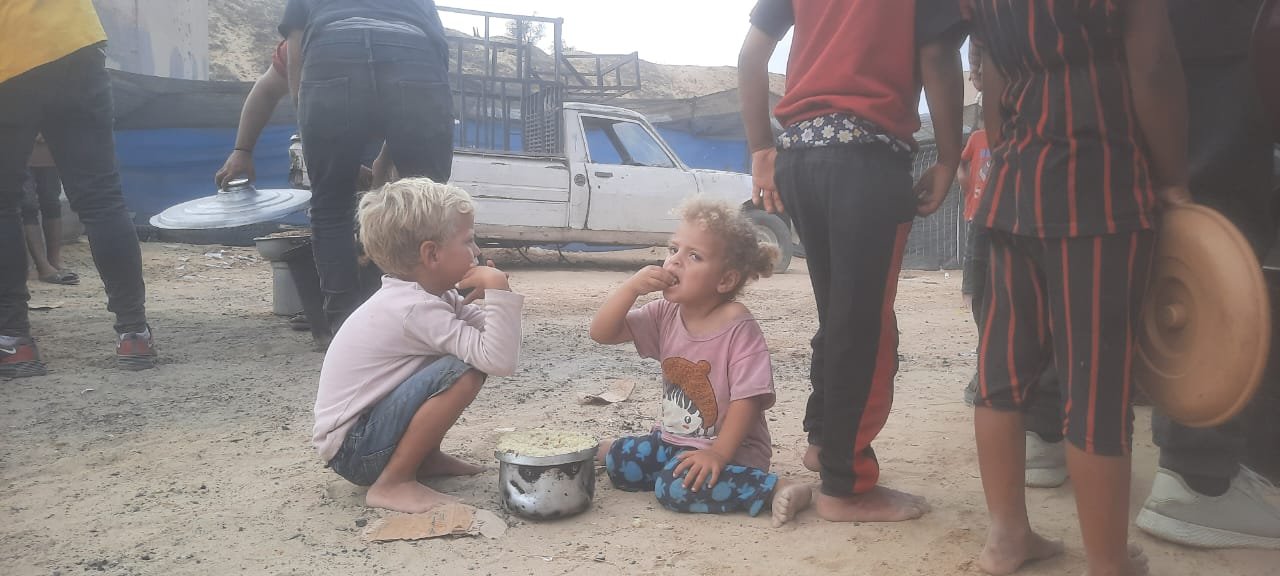
An interview with a volunteer working for the non-profit organisation “Gazzella” in Gaza. “Families, even those who are residents and not displaced, are unable to buy practically anything, because the prices of what is available on any given day – and it is not certain that those products will still be available the next day – are so high that ordinary people can’t even feed themselves with the bare essentials.”
by Alessandro Bianchi – l’AntiDiplomatico
translation edited by Nora Hoppe
Ed. This article is probably 2 weeks old, and there is a hope to raise funds. This is not why I am posting it. The situation has worsened immeasurably ever since it was written. It also illustrated the far corners of the world that is beginning to work and draw together while we watch genocide.
At l’AntiDiplomatico we are personally involved, in collaboration with “Edizioni Q”, in raising funds for the activities of the non-profit organisation “Gazzella” in Gaza. By purchasing the book “Il racconto di Suaad” (in Italian) from this link, you will be donating the proceeds to their acts of daily heroism that you can follow on their Facebook page.
We reached a volunteer, M.A., by phone and asked him some questions so that we here in Italy could understand how they carry out their initiatives… How do people live in Gaza? How do they survive with the mediaeval blockade imposed on them by the Israeli executioners? Why are we in the West unable to provide concrete rebuttals to governments (including the Italian one) that finance and arm the exterminators?
For the images of Gaza that will reach you below, we ask the readers to conduct a small experiment – for at least for one day: do not scroll through them distractedly as if they were all part of a macabre TV series, remember these words spoken by M.A. and take five minutes of your day to reflect on them. Because – and this is the powerful warning that this hero of our times delivers to us – once the genocide has been “normalised” and legitimised, it can easily be replicated. Anywhere….
THE INTERVIEW
Can you explain to us how the distribution of your meals takes place? In which areas of Gaza is it concentrated? And how many meals do you manage to distribute weekly?
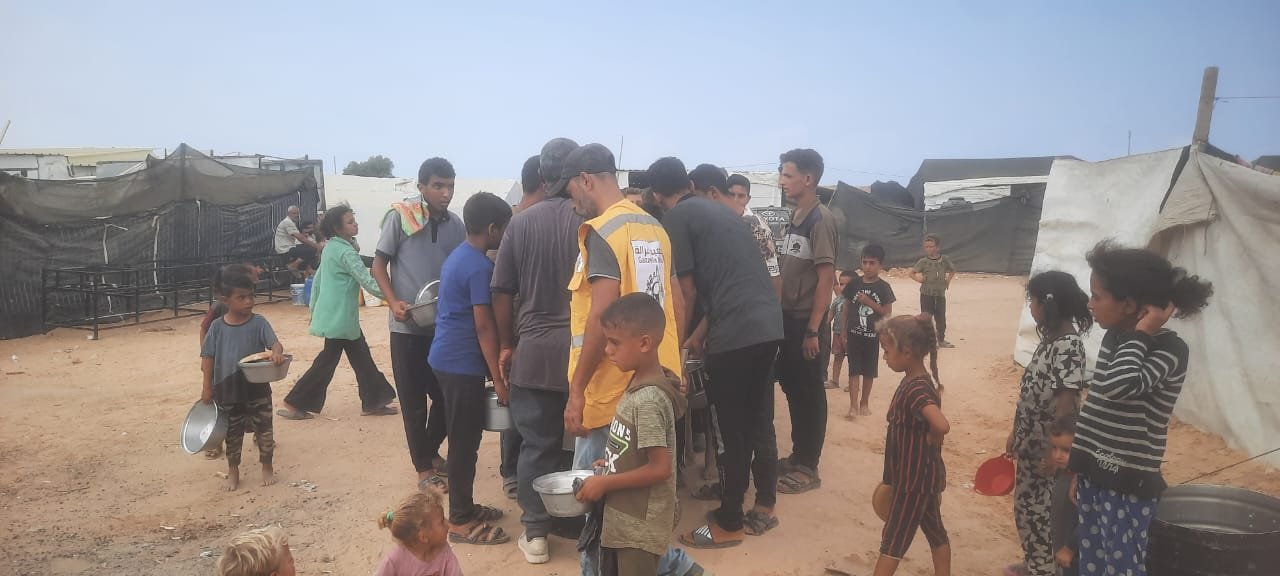
We volunteers at “Gazzella” in Khan Younis distribute both hot meals and basic necessities. The selection depends on many factors, especially two: a) how much money we have at our disposal; b) what is the best value for our purchases. Furthermore, we always need to check whether there is available firewood which we need for cooking. So the first thing we check is whether there is firewood and how much it costs. In our town it is sometimes possible to find a gas cylinder, but we never use gas. The costs for it are exorbitant. We prefer to distribute basic necessities – for example, we make packages for large families which could include a bar of soap, a litre of oil, a kilo of rice, a kilo of pasta and so on… depending on the availability of the goods and the amount needed to buy them. Just to give you an idea: a kilo of sugar cost 2-2.50 shekels (50-75 cents) before 7th October 2023; today it can cost 68-75 shekels (17.00-18.00 euros); flour reached 70 shekels per kilo, and to make bread you need an oven and you need wood, yeast and salt, and everything is expensive. Prices vary greatly depending on the supply, which is always scarce. On average we manage to make one distribution per week to cover the needs of about a thousand displaced people. We distribute to the displaced people in Khan Younis and sometimes in the surrounding areas, but moving involves risks for us that we try to avoid, especially if we have to use a car. In that case one needs to have petrol which is not easy to find and to afford. For this reason we usually load and distribute everything on foot…
How do you get food and basic necessities in Gaza today?
Families, even those who are residents and not displaced, are unable to buy practically anything, because the prices of what is available on any given day – and it is not certain that those products will still be available the next day – are so high that ordinary people can’t even feed themselves with the bare essentials. Food supplies arrive bit by bit and are sold at the market, which we can call a “black market”. Obviously I am only talking about Khan Younis and its surroundings. I know that in Gaza City and in the whole of the north of the Strip, the situation is even more dire. The majority of families and all of the displaced, who are almost one million three hundred thousand, live on international assistance… that is, thanks to what we volunteers manage to procure. But, it must be said, that even here in Khan Younis we are experiencing famine.
How do people survive in Gaza today?
Many manage to organise themselves in an incredible manner. I’ll give you an example: the few schools still standing are occupied by thousands and thousands of displaced people. The children have already lost a school year, but some teachers organise special classes in their tents and continue with their teaching tasks. These makeshift schools are everywhere. I see them all the time when we go to the various tent cities to distribute food. Likewise, all hospitals have been destroyed, and those who are resisting have no abodes, and they do not have the tools and medicines to treat the wounded and sick, but we normally see nurses and health workers on the streets who carry out their work itinerantly – by going in person to every emergency. Every time there is a bombing – that is, several times a day and more at night – dozens of people immediately arrive on the scene to help dig through the rubble in an attempt to save someone. Nurses and doctors all rush to help. All of this saves many human lives every day.
Can you describe a typical day for a Gazan today?
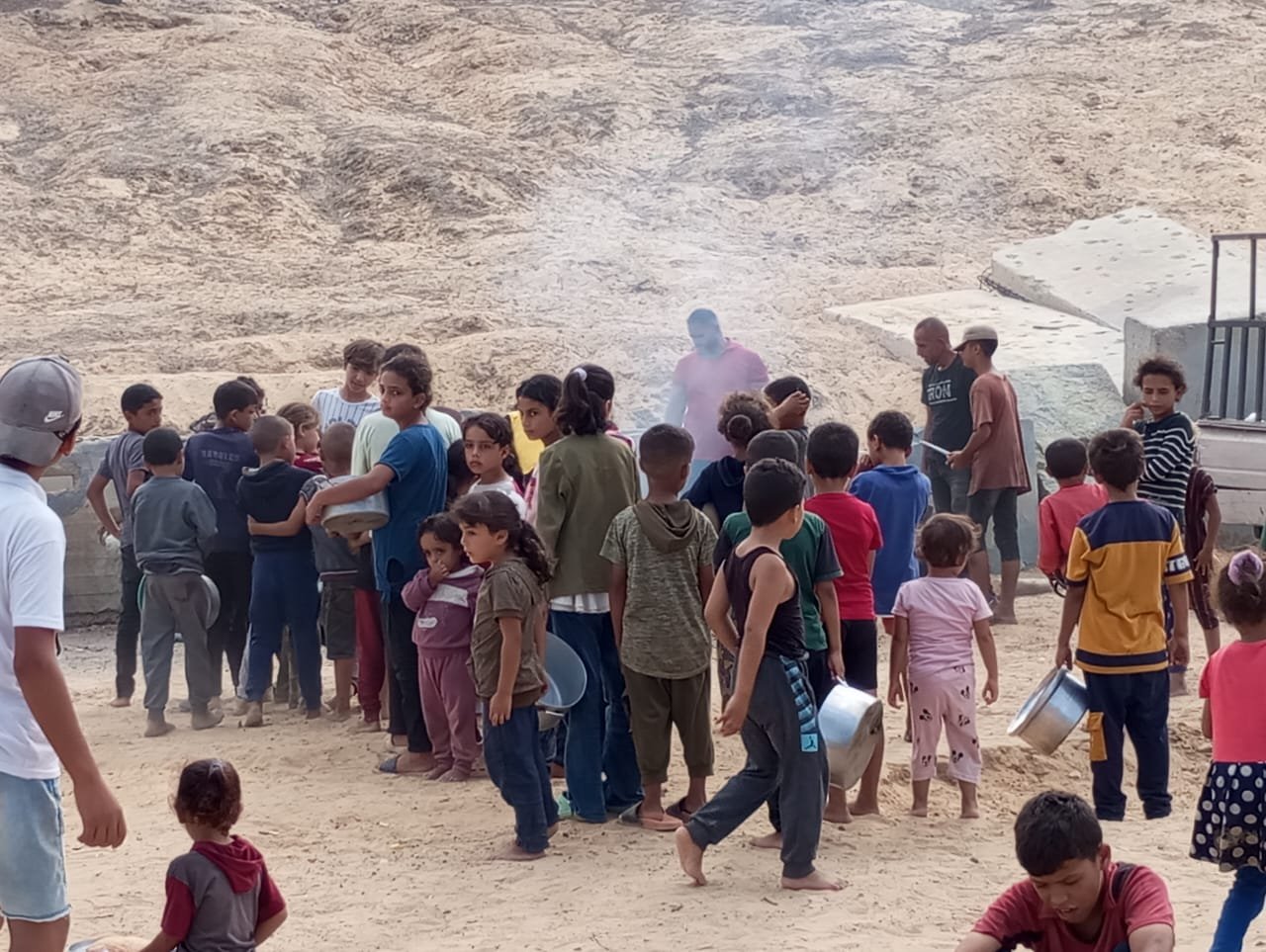
We must distinguish between displaced people and non-displaced people. Today, displaced people represent the majority of the population. A displaced person may be a guest of a relative or acquaintance, or live in an occupied school – they are the “luckiest” ones – but the majority of the population today lives in tent cities that are often not composed of tents, but of improvised shelters, that is: ad hoc dwellings rigged together with blankets, mats, plastic or whatever else is found. Many of the adult displaced people try to lend a hand wherever they can, others have hunkered down and are simply waiting for who knows what. Others still wander about, rummaging for food, unable to work… It is not possible in the current situation to work. Those who are not displaced, like me, try to carry on with their work. Many carry out voluntary work to assist the displaced, the injured, children alone, etc.
What would be the message you would most like to convey to a western citizen who might haphazardly be observing the images of this massacre as though he were watching some action film?
I would say to those who have become accustomed to this genocide – and I am convinced of what I say – that it could happen to them too. Once we accept the atrocities that the Palestinians are suffering, those atrocities can be replicated in any other part of the world.
——————-–
If you want to actively participate in the fundraising for the non-profit organisation “Gazzella”, please purchase the book “Racconto di Suaad” from this link.