

BRICS: Contradictions – South Africa, similar to Brazil
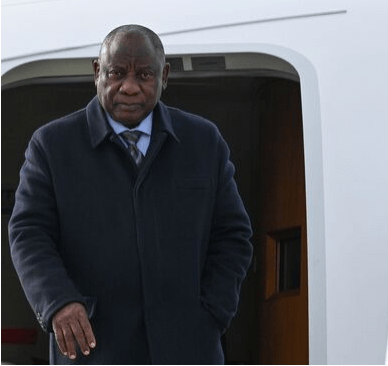
We often talk about Brazil as a country that does not truly satisfy what we consider a BRICS country should be. There is one other and this is South Africa.
With the previous election, nobody could set together a government as nobody had sufficient votes. The leading ANC, who throughout the years since the 1994 freedom election, has consistently reduced their lead at the ballot box as they led the country literally into rack and ruin. Their loss in these previous elections a few months ago was large and they lost their Parliamentary Majority with just over 40% of the vote. The second highest was the Democratic Alliance (DA) with +- 22% of the vote and there was deadlock. The smaller parties were numerous and gained such a small vote share, that the ANC could not ally with even one of them to meet a 50% for its parliamentary majority. At the end of the day Cyril Rampahosa made agreement with the DA (Democratic Alliance) as well as the smaller ones and they set together via proportional representation a GNU (Government of National Unity). Needless to say, there is a reason why there is opposition in elections and the GNU is plastered together from factions that have very little in common in terms of vision or even mission to lead a country. This carries over into international affairs and foreign policy.
In the local South African media to my very great surprise there was not one media article on BRICS in South Africa. Nothing at all. All of the other countries featured positive BRICS media. Digging a little deeper, I found:
South African Government in Disagreement Over Putin, Russia
South Africa’s two biggest parties in its Government of National Unity is in disagreement over whether Russia should be considered an ally.
In a briefing held at the Kremlin before the XVI Brics Summit in Kazan, Russia, South African President Cyril Ramaphosa told Putin that Russia will remain South Africa’s ally: “We are rather pleased that with your support, in every respect, we have been able to reach this point in the history of our country. We continue to see Russia as a valued ally, as a valued friend who supported us right from the beginning, from the days of our struggle against apartheid, right through to now.”
The leader of the DA, the ANC’s biggest partner in government, John Steenhuisen made a statement:
South African opposition statement on Russia / South Africa relations
“Putin is your ally, Mr President, not South Africa’s”
Issued by John Steenhuisen – Leader of the Democratic Alliance
The Democratic Alliance (DA) distances itself from recent comments made by President Ramaphosa during bilateral engagements with Russian President Vladimir Putin, where he stated that “Russia is a valuable ally and friend.”
The DA, as a key partner in the Government of National Unity (GNU), rejects this characterisation in no uncertain terms.
The Democratic Alliance does not consider Russia, or Vladimir Putin, to be an ally of our Nation.
We cannot and will not agree that South Africa should consider an authoritarian regime, that is currently violating international law by waging an imperialist war of aggression against a sovereign state, as an ally.
At a time when South Africa is experiencing renewed optimism with the first real prospects of economic growth in almost two decades, our government simply cannot afford to make statements that could jeopardise international relations and trade opportunities, which are crucial for realising our key objectives of growth and job creation.
As Leader of the Democratic Alliance in the GNU, I reiterate the importance of positions expressed on behalf of the GNU being the subject to full and proper debate within the government mechanisms before being announced as positions of the GNU to ensure maximum consensus and agreement amongst the parties to the GNU.”
I always say South Africa is difficult to trust, because of one takes takes the voting numbers on the face of it, there must be at least 25% (adding a few from the other smaller parties) that is anti-BRICS and pro-west. The comment about international relations has more to do with trade opportunities, as there are trade agreements with the US. So, for these trade agreements, 25% of the South Africa population will deny the reality of BRICS in order to keep peace with the west as well as their trade agreements and they routinely are threatened by the US that these trade agreements can be nullified.
These are some of the contradictions within BRICS. For years Cyril Ramaphosa never made any statements on BRICS. That was left to the previous Foreign Minister. Ramaphosa however likes to be in the limelight.
Whereas the sore point in Brazil is the resistance against the Monroe doctrine and the legacy of being the back-yard of the US, the sore point in South Africa is that during the time of the USSR, they supported the ANC and trained soldiers and cadres for a violent overthrow of the minority colonial government. The institutional memory is fear of the Russians and for that fear, Steenhuisen is correct. The ANC is a partner in BRICS and not South Africa. With the ANC losing its leadership and top position in the local government, South Africa will have to become united for BRICS before the next election in that country. In the big scheme of things, Steenhuisen and his party will have to understand the economic dividends that a united BRICS can bring and for that to happen, they must consider a split from the west. As the problems in Brazil are not trivial, the problem inherent in South Africa is not trivial. This is however Ramaphosa’s opportunity to lose, if he does not start educating his people. Why is no-one from the DA at BRICS? Steenhuisen asks for maximum consensus and agreement amongst the parties to the GNU. This is a fair request.
“We cannot and will not agree that South Africa should consider an authoritarian regime, that is currently violating international law by waging an imperialist war of aggression against a sovereign state, as an ally.” Does that mean that South Africa (and the “Democratic” Alliance) are terminating all diplomatic ties with… Read more »
Yes absolutely, Amarynth – the ‘S’ in ‘BRICS’ is choc full of the contradictions you list. Add to that the fact that their central bank (SARB) is 100% owned by a cartel of private banks – it then becomes very much a case of follow dah money. There are only… Read more »