

2. 30 Years… From Gliders to Drones, And From Syria to “Karish” to Al-Aqsa Flood
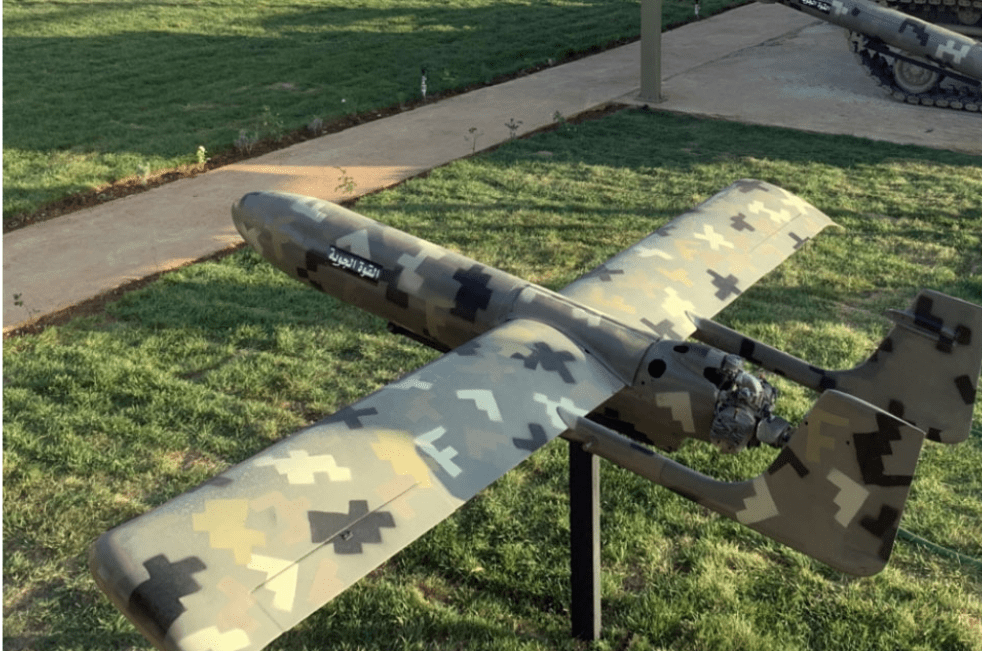
The story continues:
1. Kings of the Sky! – The Story of the Air Force of Hezbollah
2. 30 Years… From Gliders to Drones, And From Syria to “Karish” to Al-Aqsa Flood
3. The enemy is haunted by the “Karar” drone: Hezbollah’s technical superiority has amazed our army and terrified us.
4. Intelligence and Military Confrontation and High-Tech Systems:
What Are The Details of the Electronic Warfare Between the Resistance and the Enemy?
5. Cost of Drones vs. Cost of Countering Them
6. The Hezbollah Drone Family
7. How did Hezbollah’s needle deflate the legendary balloon?
The commander in the air force explains that “in the late 1980s, the first discussions among Hezbollah’s
military leaders about the air force took place. All the efforts being made to develop the work of resistance groups inside the border strip did not prevent a group from being assigned to explore ways to confront the “king of the sky,” who had defeated all the Arabs due to air superiority. This arrogance in the enemy’s mind was also linked to its need for the entire region’s sky because, after all, the sky over Palestine remains limited for the “israeli” air force. They had developed continuous programs to prevent any competition in the air force realm across the entire Middle East.
In the early 1990s, practical thinking began on establishing the ‘air force’ within the resistance. This force initially consisted of a group of fighters, with martyr Hassan al-Laqis being one of the most prominent figures in its early stages. He, along with a team, initially trained on gliders with the aim of carrying out martyrdom operations behind enemy lines or against its positions.”
In June 1994, Jamil Skaff was martyred during training. After that, work continued on a second aircraft, and we agreed to carry out a new operation. The fighter Hussein Ayoub was chosen, and he was martyred during the operation in 1996. Others were martyred later, and even today, the air force continues to offer martyrs.
The jihadi commander adds, “From the very first day, Hezbollah knew it was digging a mountain with a needle. Therefore, determination was the hallmark of the work for everyone involved in this endeavor. When we transitioned from gliders to drones, it was due to scientific advancements, and the spirit and readiness of the fighters remained the same. The goal was clear: the enemy cannot be allowed to dominate the sky!
After 2000, everything changed. In Iran, a major workshop on drones began, and we had to benefit from that. We succeeded in creating surprises during the 2006 war, even though some work was still incomplete. Several drone launches occurred, and it was important for us—and troubling for the enemy—that we succeeded in breaching the borders. This indeed happened.
There were groups working under heavy bombardment to prepare attack drones, not just reconnaissance drones like the ‘Mirsad’ which we started using in 2004. During the war, we launched a drone to Haifa. At that time, the air force accomplished a series of reconnaissance and attack missions.”
He continued, “After 2006, we moved to a new phase. The question was how to face new challenges after the enemy began working on producing the ‘Iron Dome,’ which operates on four layers of defense. When we were able to learn about the enemy’s technological capabilities, we compared them to our material capabilities. The differences were immense, which could have led us to stop. But the decision to develop was already made, and there was no room for retreat or cessation.”
In discussing the phases of the work, the jihadi commander says: “Between 2006 and 2008, the martyr leader Hassan al-Laqis undertook an exceptional mission to elevate the level of the ‘air force.’ Martyr Hassan played a significant role in various specialties and was an icon here and among our brothers in Iran. He left his mark in all branches of the forces (naval, air defense, aerospace, missile, and drones).”
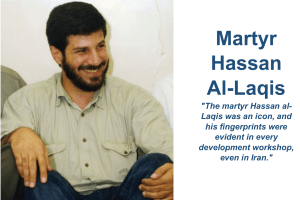
In Iran, they attest to Martyr Hassan’s contributions and remember his significant role in the development of drones. He always reiterated that this weapon is unique and impactful, and we will rely on it in future wars. Therefore, everyone entrusted him, and his presence in Iran was as influential in the field of drone development as it was in Lebanon.
Martyr Hassan was deeply immersed in the technology of this type of weapon. He was knowledgeable about everything the United States was doing in this field. When he was martyred at the end of 2013, he had nearly completed all the required tasks and more. He trained many who continued his work, and to this day, we operate with weapons that he oversaw the manufacturing of. There has been significant advancement in this field. If the enemy believes that everything Iran has in this domain is available to us, let them think so. However, the truth is that this is not the worst scenario they should consider.
The jihadi commander also discussed the experience of the air force during the war in Syria, revealing that “the drone program was very secretive and entirely closed until the ‘air force’ participated in the battles in Syria. This began in the famous Battle of Qusayr. The nature of aerial operations cannot be hidden, especially amid immense security and intelligence challenges with the enemy. The enemy knew we were present at the airports, had our own flight programs, and were activating our frequencies to control the drones we launched.
The enemy was closely monitoring us, and knowing this, we operated under the principle that their observation of our participation in the Syrian war was an opportunity for them to learn more about our operations. But we always aimed to turn this opportunity into a threat for the enemy, controlling the extent to which we allowed them to learn about our capabilities.
The enemy monitored everything the ‘air force’ did. They were interested in knowing our tactics. Many times, when we sent a reconnaissance squadron, the enemy would mobilize their air and intelligence forces to gather information about the launch sites, locations of the human crew, frequencies, and control tools. However, due to their arrogant nature, the enemy behaved as if they knew everything about us. In any case, time will show that what they knew was only what we allowed them to know. The Syrian experience represents a tremendous treasure for Hezbollah’s air force. We learned in eight years what would have taken 16 years, and today, we are learning in nine months what would have previously taken over three years.”
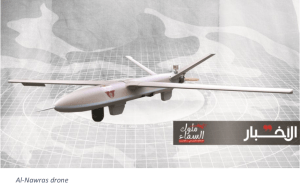
He adds: “In Syria, we carried out thousands of sorties, and our reconnaissance operations provided us with hundreds of thousands of aerial images. Although our fight was against the takfiris, our eyes remained on ‘israel,’ as the confrontation with them cannot be compared to any other battle. During the Syrian war, we had encounters with the enemy. We were just a step away from the Golan Heights. Many things happened during that period. The enemy assumed several times that it had downed our drones or taken control of them, but all of this was part of a plan we had prepared to achieve certain goals. We were able to understand their detection capabilities and the functioning of their radar systems, as well as the ranges of their air defense weapons.
On one occasion, we conducted a test to determine the ranges of the Patriot system that was launched against our drones. The missiles fell in Jordan, while our drones returned safely to their bases. This caused a commotion among the enemy, who questioned why the missiles reached Jordan while they claimed to have intercepted drones over Syria. Our operations in Syria allowed us to learn about the enemy’s capabilities in detecting certain types of resistance drones and identifying weaknesses in their radar systems.”
The jihadi commander notes that “the air force also participated in the war against ISIS in Iraq. This was an additional opportunity for new experiments, and we compared it with the experiences in Iran and Yemen. However, when the confrontation is with ‘israel,’ it becomes a different matter because what ‘israel’ possesses does not exist in other theaters. Specifically, the enemy’s intelligence-gathering capabilities are immense and cover very wide areas. They are forced to adopt a special method of working with us.
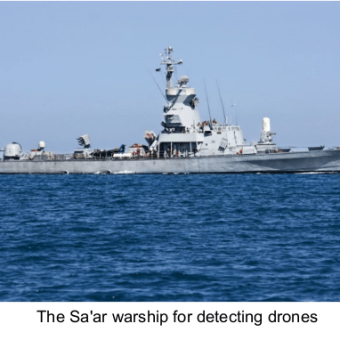
For example, regarding radars and coverage areas, typically there are hundreds of kilometers between radars. In large countries, there are only 10 to 15 radars. But the enemy installs a radar every 30 km along the border with us. They distribute multiple layers of air defense far beyond what any other country does.”
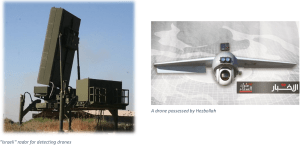
The jihadi commander pointed out that this type of intelligence deployment by the enemy “forced us to adopt a different method of operation. More importantly, it provided two things: First, it required adapting the drone weapon to be capable of overcoming the enemy’s systems. Often, the enemy would shoot down drones and boast about their actions, even though these were tests and reconnaissance of their operational mechanisms. Many times, our drones would enter and return successfully. We made adjustments to the drones to address the ever-evolving ‘israeli’ threats. When we say ‘we,’ we mean all the axis forces, not just Hezbollah, noting that we have become significant producers of this type of weapon in very large quantities.”
The jihadi commander adds, “In July 2022, we carried out the mission known as ‘Operation Karish,’ which threatened the ‘israeli’ gas field at sea. Following the statement by His Eminence the Secretary General, the enemy made significant preparations in the maritime domain. Even though we lost the element of surprise, we launched three drones with varying missions, including diversionary and reconnaissance tasks.
The enemy boasted that it had succeeded in shooting down the drones. However, the message reached the relevant experts. They knew that we had drones capable of penetrating despite the extensive air and sea coverage. If people heard a drone, it doesn’t mean they knew how many drones there were or how deep they were operating. There were four or five squadrons of warplanes and helicopters in the air, yet the drone reached above the Karish field. This means the message was delivered. The enemy shot down two drones, and the third fell on its return journey. The enemy understands the significance of what happened, both in terms of the operational area and the nature of the open, flat region. This forced them to make concessions in the negotiations.”
Regarding the period following “Operation Al-Aqsa Flood,” the jihadi commander notes, “We faced the most challenging scenario that the Hezbollah air force could have anticipated, as all plans were not based on the assumption that our operations would be confined to the periphery. Nevertheless, we began reconnaissance missions and then execution.
This presented a significant challenge because we are constrained by many limitations. If we were in a full-scale war without restrictions, our operational capabilities would be vastly different. The enemy knows that in a comprehensive war, it will not be able to focus solely on drone warfare but will face a new challenge, with thousands of rockets falling daily on all its military and vital centers, of various types and ranges. The battlefield will not just be the border front.
In practice, both we and the enemy know that their air defense systems, including aviation, are focused on one target: drones. This is why we consider this the most challenging scenario. The enemy must know, and they do know, that in a full-scale war, they will face a different kind of momentum from drones and other weapons. What they see today is entirely different from what they will face. The enemy knows what is happening now, as the air force is heavily constrained. Therefore, there is a constant question among the enemy’s political and military leaders: What prevents Hezbollah from targeting any strategic or sensitive objective?”
The air force commander emphasizes, “We are now in a crucial testing ground. We have learned a lot in a few months. At the beginning of the war, the success rate was low. But over time, things reversed. After we became acquainted with our enemy, learned from the field, and introduced new tactics, the scales tipped, effectiveness increased, and the success rate improved. We say that in the air force, our limits are the sky.We work day and night, knowing that the enemy is not complacent. We have reached a stage where we can identify their weaknesses and anticipate their moves. While the enemy was confident that we could not match them, they are now shocked because they do not know how our drones can go and return when all other aircraft are affected by jamming. When we say we are working on solutions, it means that all experts in the resistance axis are working on this, including our brothers in the IRGC in Iran.” Regarding operational mechanisms, the jihadi commander notes, “Before the war, we needed special permission to know how to operate our reconnaissance drones. Now, the war has opened the door to all kinds of tests. Even though we are constrained by the scope and nature of our work, we do not stop working. We have a principle based on Imam Ali’s saying that ‘war is the uncle of vigilance,’ meaning that the team remains constantly anxious and thinking about everything, both what we have and what the enemy might do. We prepare, develop, and seek new things. What helps us in the air force is that drones are very dynamic and flexible for development, and we can add all new technologies to
everything we haven’t used from drones.”
The jihadi commander also refers to advanced technologies in the drone world, stating, “There are aspects related to artificial intelligence. Everyone knows that the Supreme Leader, Sayyed Ali Khamenei, said years ago that 2021 would be the year of artificial intelligence and urged everyone to focus on this field. We consider the leader’s request as an order. The ‘israeli’ or American enemy cannot claim to monopolize this knowledge. We entered this field even before the leader’s recommendation. Therefore, we confidently say that the enemy has seen only a small part of our strength and will see more.”
Related Posts
-
4. Intelligence and Military Confrontation and High-Tech Systems: What Are The Details of the Electronic Warfare Between the Resistance and the Enemy?
July 30, 2024 -

The enemy is haunted by the “Karar” drone: Hezbollah’s technical superiority has amazed our army and terrified us.
July 29, 2024 -

1. Kings of the Sky: The Story of Hezbollah’s Air Force
July 27, 2024